

Haiti is facing an acute security crisis as rival gangs battle for control of the capital Port-au-Prince and surrounding areas, terrorizing local communities through extortion, sexual violence, kidnapping for ransom and murder.
UN member states agreed to impose an arms embargo on Haiti in 2022 – so what went wrong? Here are five things you need to know.
How many guns are there in Haiti?
Haiti does not produce firearms or ammunition, but according to the latest figures According to figures from the UN Human Rights Office, there are an estimated between 270,000 and 500,000 illegal weapons in circulation.
Not only are they in the hands of the many murderous gangs that control most of the capital, they are also common among the growing number of vigilante groups trying to protect people and property in Port-au-Prince’s troubled neighborhoods.
The impact of so many weapons in a metropolitan area of approximately 2.6 million people is devastating. In 2024 alone, more than 5,600 people were killed as a result of gang-related activities, according to the UN.
During just five days in early December 2024, at least 207 people were killed by gangs controlling the Wharf Jérémie area of the capital.
© UNOCHA/Giles Clarke
Thousands of people have died in Haiti as a result of gang wars.
Human rights violations documented by the UN include mass killings, kidnappings for ransom, rape and sexual exploitation, destruction of property and severe restrictions on access to essential services, especially health and education.
Which firearms are in circulation?
It is difficult to accurately estimate how many illegal firearms are in the hands of gangs and vigilante groups, but there are indications that more sophisticated and deadly weapons are being used.
Haitian authorities have had limited success in stopping the flow of weapons. One shipment of weapons purchased in Miami, United States, and intercepted in the Dominican Republic in February 2025, included a heavy Barret M82 semi-automatic rifle, sniper rifles, an Uzi submachine gun and more than 36,000 rounds of ammunition.
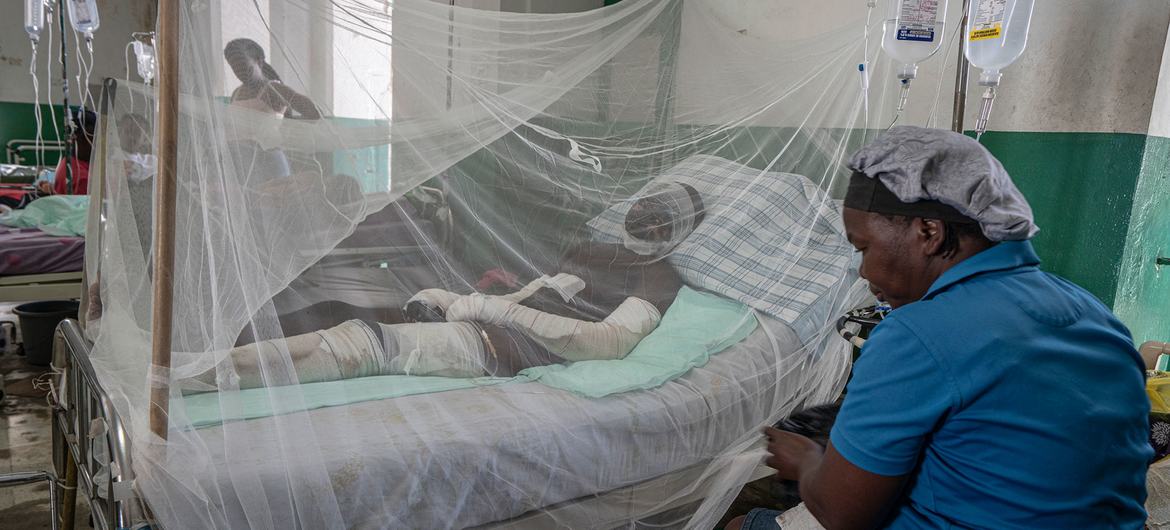
© UNOCHA/Giles Clarke
A man is being treated in hospital for serious burns after gangs attacked the petrol station where he worked and caused a fire.
What does the embargo say?
The arms embargo, travel ban and asset freeze on individuals were approved by the UN Security Council in October 2022.
The report specifically targets gangs and individuals deemed responsible for threatening the peace and security of Haiti and calls on UN member states to ban the supply, sale or transfer of weapons and related materials of all types, including technical assistance, training and financial support related to military activities.
It recognizes that the situation in Haiti poses a threat to regional peace.
How is the embargo circumvented?
Well-known smuggling routes from the US, mainly from Miami – but also from New York via the Dominican Republic – continue to be exploited, often due to weak customs enforcement and corruption.
Some shipments are intercepted by US authorities before reaching Haiti.
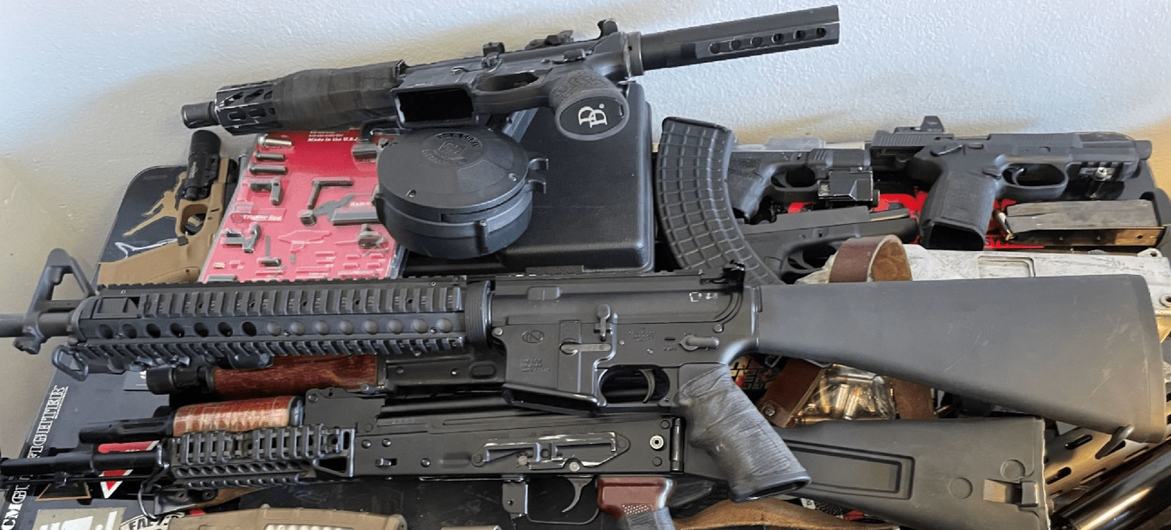
© CPB/HSI
Weapons seized by U.S. law enforcement authorities and destined for Haiti are on display.
There is also evidence of weapons being shipped from Venezuela and other South American countries.
Weapons are often hidden in general cargo or declared as humanitarian or commercial goods to avoid inspection.
There are also growing concerns that assault rifles originally registered to private security companies operating in Haiti are ending up in the hands of gang members.
What needs to be done to ensure compliance with the embargo and how is the UN helping?
The UN Office on Drugs and Crime (UNODC), which works on human trafficking issues, has said that ensuring compliance requires a “comprehensive and coordinated approach at national, regional and international levels.”
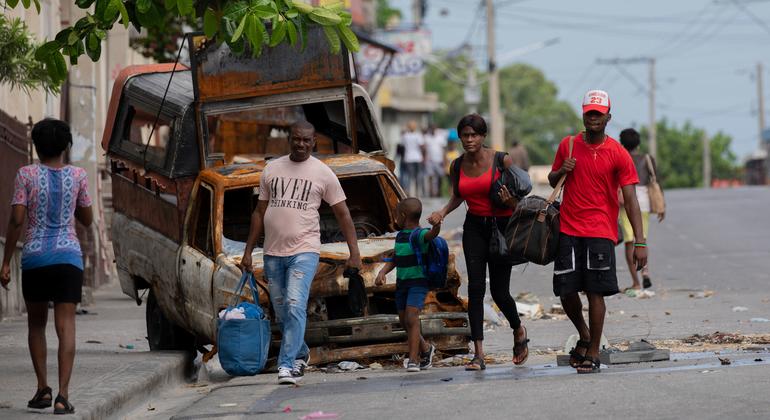
© UNICEF/Ralph Tedy Erol
This means equipping Haitian customs, port and border control authorities with the technical capacity to detect, interdict and investigate illicit arms shipments. Currently, there is not even one large format scanner in all of Haiti that can efficiently identify the contents of a shipping container or truck.
Since most weapons enter Haiti through maritime routes, improving maritime and port security – including inspections – is essential, as is more effective cooperation with law enforcement authorities in countries of origin.
Providing more resources along the porous border with the Dominican Republic, which shares the island of Hispaniola with Haiti, would help stop illegal trafficking through unofficial border crossings.
The UN is helping coordinate Haiti and other countries in the region to ensure compliance, as well as providing technical assistance to strengthen arms tracking, customs controls and financial investigations.
“Fighting corruption and illicit financial flows also remains crucial for embargo compliance,” UNODC said.
Since Haiti produces neither weapons nor ammunition, cutting off the supply of bullets alone would end the ability of gangs to fight each other and terrorize communities.
#Haiti #arms #embargo #illegal #weapons #circulation