

General Motors’ Milford Proving Ground has been used for more than 100 years as a place to test new cars and the technology they contain. The original 1,125-acre site was purchased by GM in 1923 for just over $100,000. When Milford opened, it had 5.5 miles of test roads and two buildings on them, with a 250-foot elevation gain. Since then, the Milford Proving Ground has become the oldest vehicle testing facility in the world, one of the interesting facts that every car enthusiast should know about General Motors.
Today, the Milford Proving Ground covers more than 4,000 acres, with 150 buildings on the site. Milford is located west of Detroit and is approximately a 45-minute drive from Motor City. The road inventory in Milford includes 130 miles of paved roads and 16 miles of unpaved roads. At last count, a total of 15 million miles were traveled each year during vehicle testing and development in Milford.
The 130 miles of paved areas and roads within the Milford Proving Ground are highlighted by a 67-acre testing area known as “black lake,” so named for the waterfowl that try to land on it, thinking it is a body of water. There is an oval track almost 4 miles long, a straight with no speed limit, a circular track with a curve 4 miles in circumference, and the Milford Road Course which simulates part of Germany’s famous Nürburgring.
Interesting car features developed at the Milford Proving Ground
In addition to testing GM vehicles on Milford’s roads, many vehicle tests also take place in the numerous buildings on the Milford campus. Some of these buildings are used for testing GM cars in extreme conditions, such as altitudes as high as 12,500 feet and as low as 700 feet below sea level, temperatures as high as 130 degrees Fahrenheit and as low as minus 40 degrees Fahrenheit, wind speeds ranging between 0 mph and 100 mph, and humidity as high as 90% and as low as 10%.
Other buildings are used for crash testing of GM cars, with the Milford crash lab supported with 70 tons of reinforced concrete to stabilize the structure. There are also buildings on the Milford Proving Ground site that serve community functions. Milford has its own medical facilities that operate 24/7/365, plus ambulance and fire personnel, a wastewater treatment plant and an on-site electrical distribution facility.
What else is happening at the Milford Proving Ground?
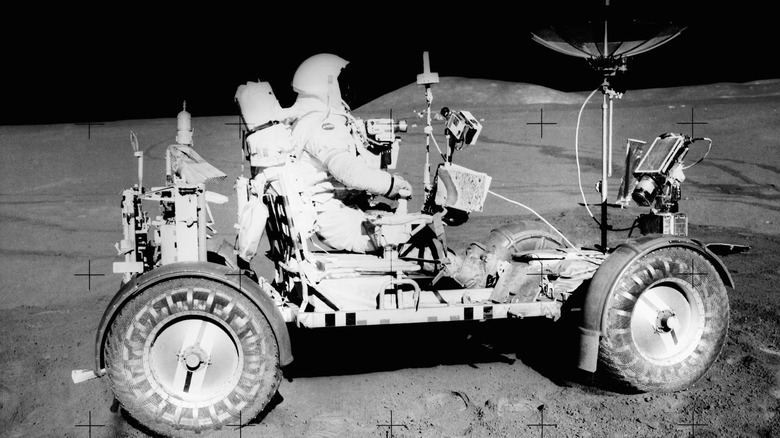
The astronauts rode in what appeared to be aluminum webbed lawn chairs, with Velcro straps attached to the seats and their life support packs to hold them securely. The fenders on the woven wire mesh wheels were designed to minimize the dust that would be kicked up as the Rover did its work exploring the lunar surface. The Lunar Rover was an electric car, powered by two 36-volt batteries made of silver and zinc that powered four 1/4 horsepower motors, one at each wheel, eliminating the need for a transmission. To bring this story current, GM is getting back into the space race by developing a next-generation lunar lander for the upcoming crewed NASA Artemis missions.
#owns #citysized #plot #land #test #prototype #cars #SlashGear