

With the exception of the 911GT1, within the Porsche 911 hierarchy, the GT2 RS is often at the very top, and is built on a motorsport line that started in the 1990s with the air-cooled 993 GT2. The GT2 RS isn’t just a faster GT3 RS; it’s a completely different beast. The 2018 991.2 generation model took things to another level and is important for several reasons. This example, listed with duPont REGISTRY, has only 7,504 miles on the odometer.
Where the GT3 RS has a naturally aspirated engine, the GT2 RS has an M64/60 3.8-liter twin turbo flat-six that, with increased boost (1.55 bar), produces 700 horsepower and 553 pound-feet of torque. For some context, the same unit in the 991.2 Turbo S produces 580 hp. Furthermore, unlike the Turbo S, power goes exclusively to the rear wheels via Porsche’s lightning-fast 7-speed PDK. It accelerates to 100 km/h in 2.7 seconds and reaches a top speed of 340 km/h.
But it’s on the track where the GT2 RS (Weissach) really shines. When Porsche unveiled the 991.2 GT2 RS at Circuit Paul Ricard, Porsche factory drivers and racing legends Walter Röhrl and Mark Webber were among the first to demonstrate its potential. Porsche set a lap of 6:47.3 on the Nürburgring in 2017, a record that made it the A 991.2 GT2 RS came equipped with the Manthey Performance Kit, which clocked a 6:43.3 in 2021. For some context, that’s still the second-fastest time for a road-legal car on the Ring, behind only the 6:29.09 time of the 2022 AMG One.
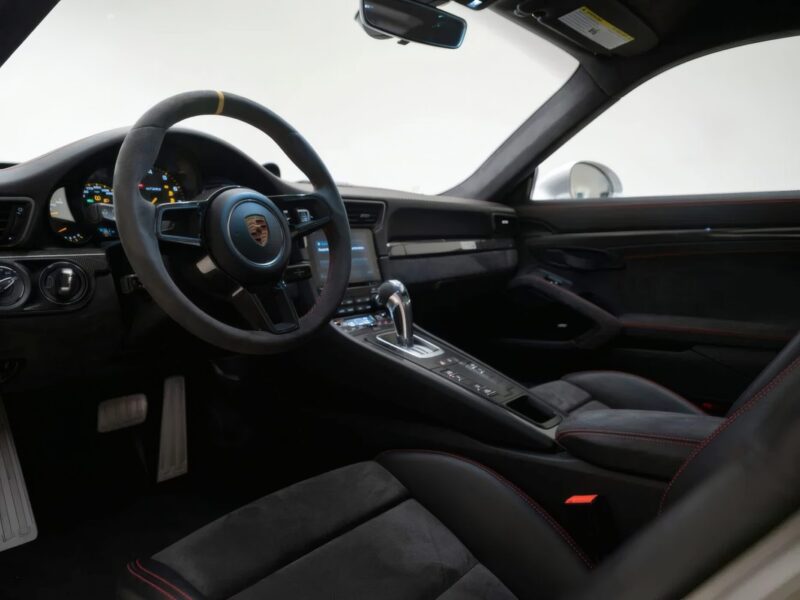
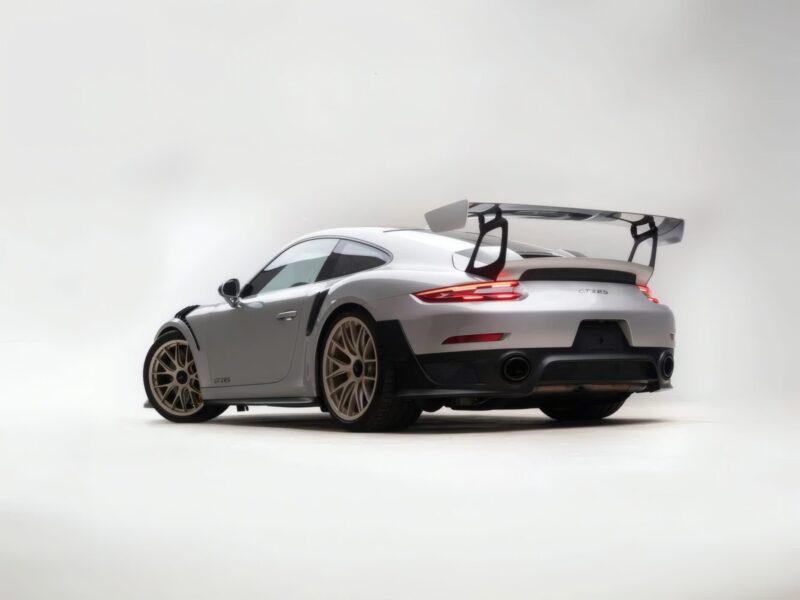
This particular example is finished in GT Silver Metallic with gold wheels, and the yellow brake calipers mean carbon ceramic, which was standard on the GT2 RS. Inside you’ll find a black interior with a mix of Alcantara, carbon fiber, red contrast stitching and minimal insulation. This is a cockpit that prioritizes functionality over everything else.
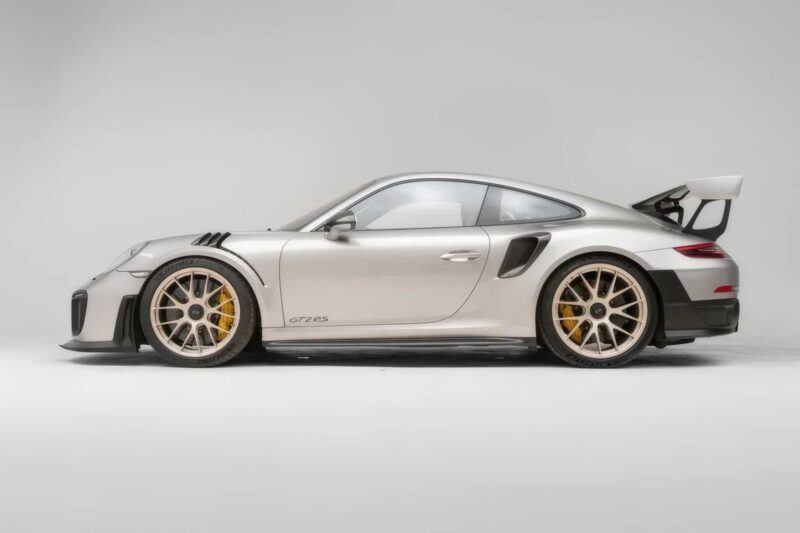
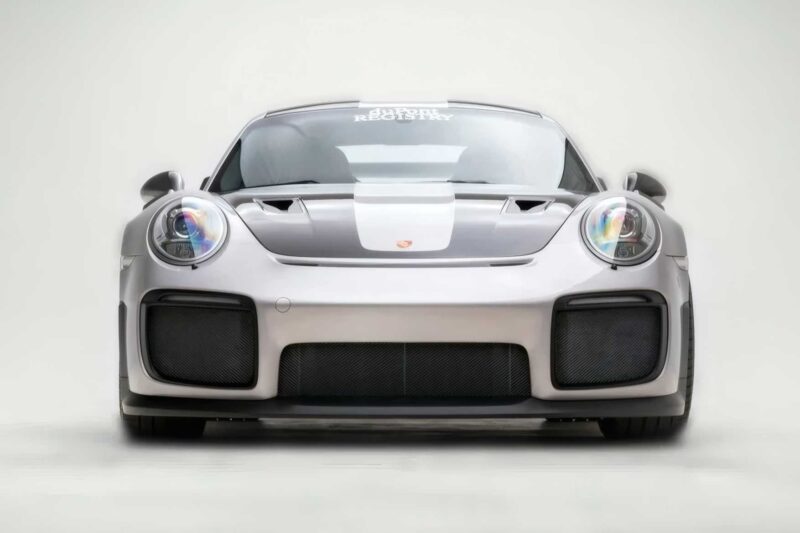
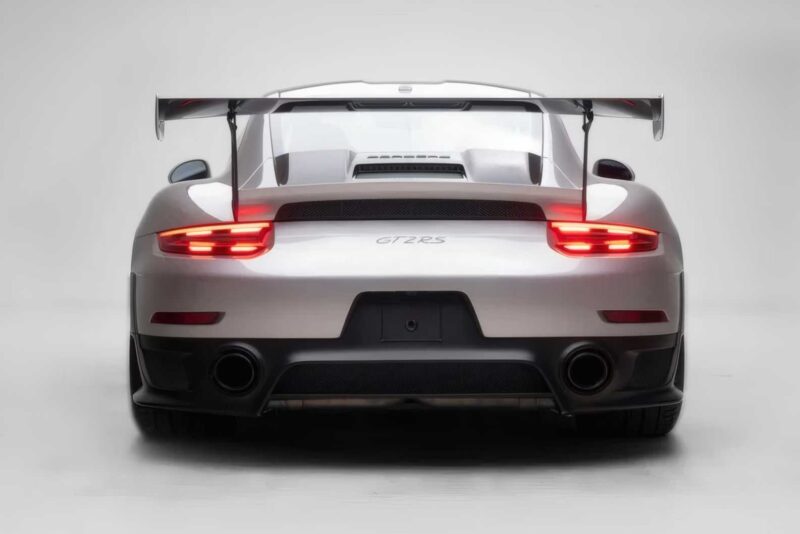
While the car comes with several premium options, it also comes equipped with the highly sought-after optional Weissach package, an $18,000 upgrade when new. It replaces the roof, hood and rear wing with exposed carbon fiber and adds magnesium wheels that shave 25 pounds of unsprung mass. The result is a curb weight of just over 3,240 pounds, which is a nod to Porsche’s obsession with weight reduction.
Every vent, NACA channel, scoop and surface has a function, from brake cooling to downforce optimization. Another distinction is the painted center sections on the hood and roof, for a more distinctive look. Another highlight that sets it apart from a GT3 RS is the larger intakes in the front bumper, to allow more airflow for the larger radiators.
Porsche built fewer than 1,000 GT2 RS units worldwide, with between 450 and 500 units reaching the United States. Demand was so high at launch that most cars traded above $500,000 at launch. Prices have since stabilized and, depending on condition and specification, are still holding steady in the current market.
If you’re looking for one of the purest forms of Porsche engineering, the 991.2 GT2 RS represents the last of the brutally mechanical RS cars before hybrid systems begin to define the next era with the rollout of the T-Hybrid system, first seen on the 992.2 GTS, and more recently on the 992.2 Turbo S.
Images: duPont REGISTRY
#sale #Porsche #GT2 #kind #electrification