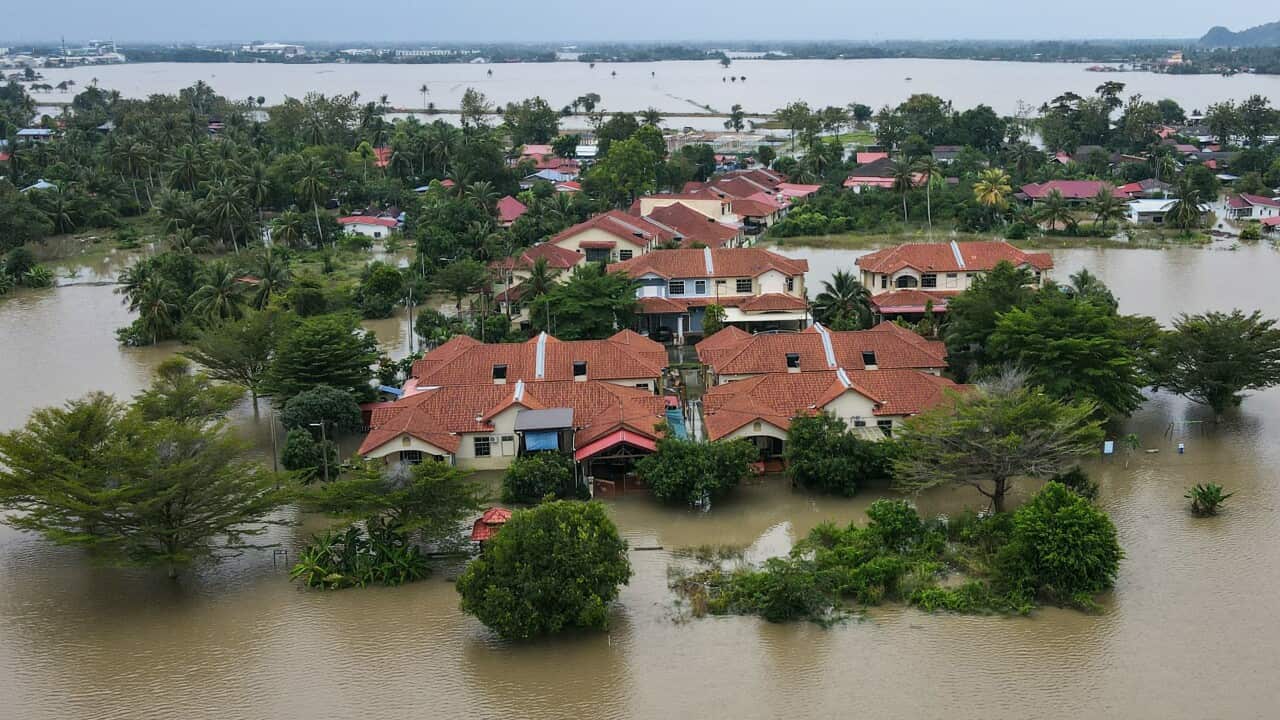
Floods in Southeast Asia kill at least 250 people as rescuers ramp up recovery operations

Floods in Southeast Asia kill at least 250 people as rescuers ramp up recovery operations

3 minutes, 23 seconds Read

Days of devastating flooding in Southeast Asia have killed more than 250 people in Indonesia, Thailand and Malaysia, authorities said Friday.
Heavy monsoon rains, combined with a tropical storm system, flooded areas in the three countries, stranding residents on rooftops and cutting off entire communities.
In Indonesia, authorities struggled to reach the worst-hit areas on the island of Sumatra, while authorities at a hospital in southern Thailand brought in refrigerated trucks to store bodies after the morgue exceeded capacity.
In West Sumatra, 53-year-old Misniati described a terrifying battle against rising waters to reach her husband home.

When I returned from early morning prayers at a mosque, “I noticed that the street was flooded.”

“I tried to run back to my house to tell my husband, but the water was already reaching my waist,” she told Agence France-Presse.
Fighting the current that nearly knocked her over, she arrived home to find the water at chest height.
“We didn’t sleep at all last night, we just watched the water,” said Misniati, who uses only one name.

Officials in Sumatra said floods and landslides this week have killed at least 111 people, while nearly 100 remain missing.

Floods and landslides caused by Tropical Cyclone Senyar have killed at least 94 people in Indonesia. Source: EPA / Hotli Simanjuntak

North Sumatra police spokesman Ferry Walintukan said authorities were focusing on “evacuation and providing assistance.”

Access to some areas and communications were still cut off, he told AFP.
“Hopefully the weather will clear up so we can move the helicopter to the (hardest affected) locations.”
In the Indonesian island’s Aceh province, receding water left behind mud that buried cars almost up to their windows.

More rain is forecast for much of Sumatra, although the intensity is expected to decrease, officials said.

‘I couldn’t do anything’

One of the worst-hit areas in the region is southern Thailand, where floodwaters left Hat Yai residents clinging to rooftops as they waited for rescue by boat.
At least 145 people have been killed in the country’s southern provinces, government spokesman Siripong Angkasakulkiat said on Friday, as receding waters allowed a clearer picture of the disaster.
Most of these are concentrated in Songkhla province, where authorities at Songklanagarind Hospital said they had run out of space to accommodate bodies and were now relying on refrigerated trucks.

“The morgue has exceeded its capacity, so we need more,” Charn, a mortuary official who gave only his first name, told AFP.
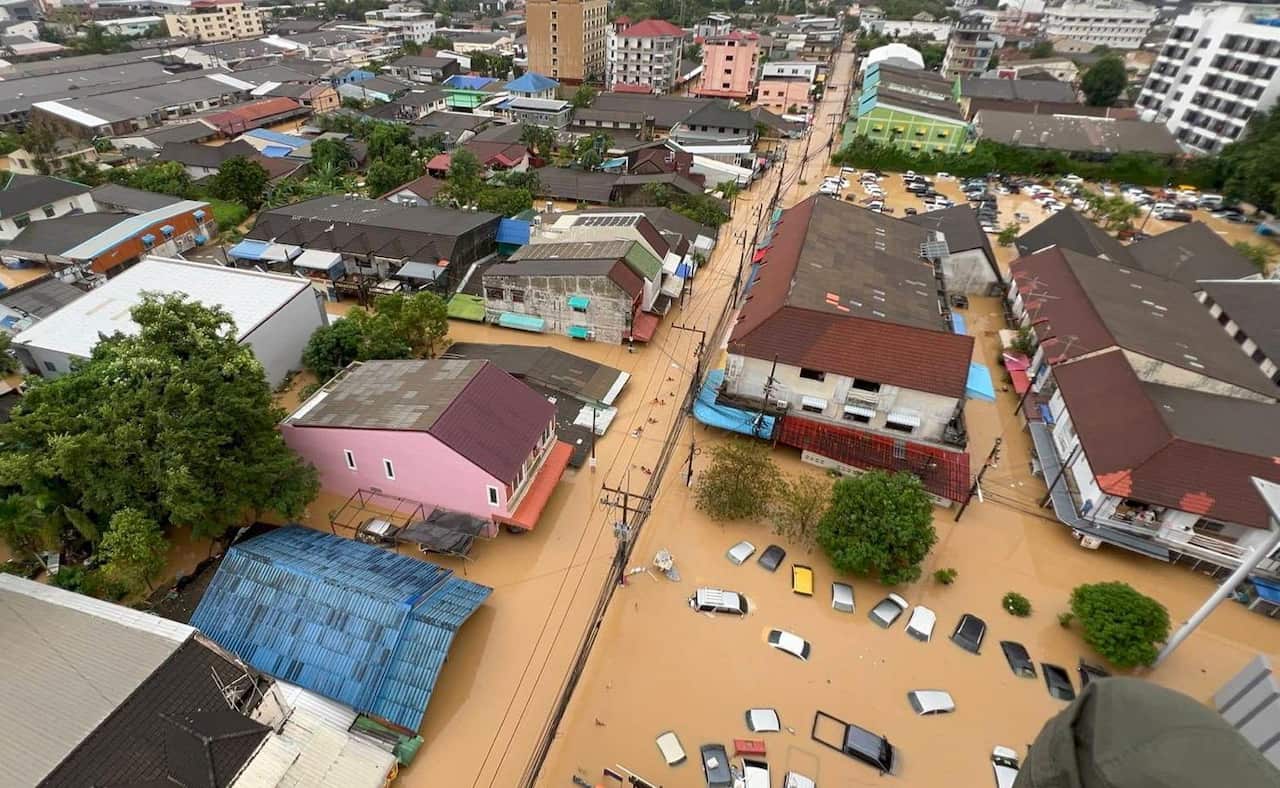
Houses in a flooded area

Heavy rains have caused widespread flooding across southern Thailand. Source: EPA / Royal Thai Army

There has been increasing public criticism of the flood response and two local officials have now been suspended over their alleged failures.

Residents of Hat Yai described the water rising rapidly.
“The water rose to the ceiling of the second floor,” Kamban Wongpanya, 67, told AFP on Thursday, explaining that she had to be rescued by boat.

Shop owner Chayaphol Promkleng initially thought his business would be spared because the floods “only reached his ankles”.

He returned the next day to find his store “flooded up to his waist.”
‘I couldn’t do anything. I left the store to save my life.”

Two people have died in Malaysia in floods caused by heavy rains, which left parts of the northern state of Perlis inundated.

‘Extreme weather’

The annual monsoon season, typically between June and September, often brings heavy rainfall, causing landslides and flash floods.
But a tropical storm has worsened conditions, and the toll in Indonesia and Thailand are among the highest in recent years for flooding.

Climate change has affected storm patterns, including the duration and intensity of the season, leading to heavier rainfall, flash flooding and stronger wind gusts.

A warmer climate holds more moisture, causing more intense rainstorms, while warmer oceans can amplify the strength of storm systems.
“Climate scientists have already warned that extreme weather events… will continue to worsen as temperatures rise,” said Renard Siew, climate change advisor at the Center for Governance and Political Studies in Malaysia.
“That’s exactly what we saw.”

#Floods #Southeast #Asia #kill #people #rescuers #ramp #recovery #operations

Similar Posts

Leave a Reply

Your email address will not be published. Required fields are marked *