

Gone are the days when an exhibition meant hushed voices, velvet ropes and a passive walk past static displays. The modern visitor is no longer just an observer; they are a participant, a co-creator and an active node in a network of information. This shift in audience expectations, accelerated by our increasingly digital lives, has given rise to a powerful new paradigm in exhibition design: the seamless merging of the physical and the digital.
This isn’t about throwing a QR code on a sign and calling it a day. It’s about creating rich, layered environments where the tactile and the technological reinforce each other to tell more compelling stories, promote deeper engagement and create lasting memories. Here are the key trends defining this exciting frontier.
1. Immersive projection environments: walking into the story
Perhaps the most visually spectacular trend is the use of large-scale, immersive projections. Designers are going beyond flat screens and transforming entire rooms into dynamic canvases. Floors, walls and ceilings come to life with animated content, allowing visitors to literally enter a painting, a historical moment or a scientific concept.
This technique creates a powerful emotional connection. Imagine standing in a room where Van Gogh’s starry night swirls around you, or walking through a projected rainforest where your movement makes digital butterflies flutter away. The success of exhibitions such as teamLab Borderless has proven the enormous appeal of this trend. The key to excellence here is narrative coherence; the technology should serve the story and not overshadow it. The best immersive rooms use synchronized soundscapes and carefully choreographed visuals to create a truly transportive experience.
2. Tactile interfaces and haptic feedback
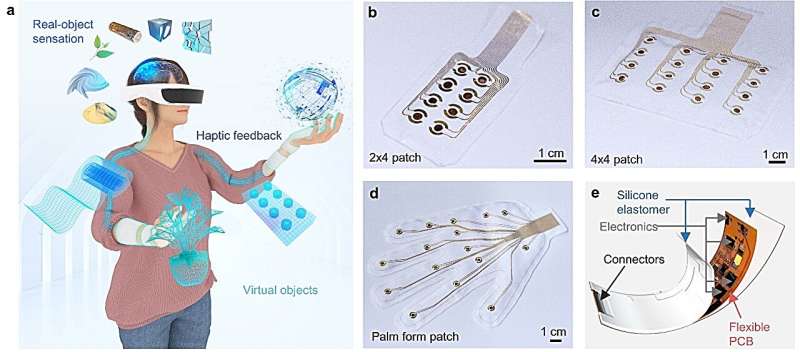
In a world of touchscreens, designers are moving backwards by creating digital interactions that are satisfyingly physical. This trend focuses on using real-world objects as controllers for digital content. A visitor can turn a physical dial to navigate a timeline on a wall-sized screen, or place a sculpted artifact replica on a table to activate a 3D model and its history on a screen above.
This approach, often called ‘phygital’ design, grounds the digital experience in haptic reality. It satisfies our innate desire to touch and manipulate, making the information feel more concrete and memorable. Haptic feedback, such as a subtle vibration in a controller when a user makes a selection, further bridges the gap and provides tactile confirmation of a digital action. This trend is especially powerful in contexts where the subject is abstract, because it gives intangible concepts a physical form.
3. Personalized journeys through data
Exhibitions are becoming less of a one-size-fits-all lecture and more of a personal conversation. Upon entry, visitors are often given an RFID badge or card or can simply use their smartphone. As they move through the room, they can ‘tap’ or scan to gather information, save their favorite pieces or vote on clues.
The exhibition can use this information to respond. A screen can welcome a visitor by name, or a screen can change its content based on the interests he or she has shown in previous sections. At the end of the visit, they receive a digital summary, a personalized ‘microsite’ of their trip with links to more information, their saved artwork or photos taken at interactive stations. This not only extends the life of the exhibition beyond its physical walls, but also gives every visitor the feeling that the experience has been made uniquely for them.
4. Augmented Reality (AR) as a curatorial layer
Although AR is often associated with gaming, it finds its mature foundation in exhibition design as a powerful curatorial tool. Instead of replacing reality, AR adds a dynamic information layer on top. Using a smartphone or AR glasses, visitors can point their device at an exhibit to view historical reconstructions, anatomical breakdowns or artist commentary.
The beauty of AR is its ability to reveal the invisible. A static fossil skeleton can come to life with muscles and skin. A minimalist sculpture can reveal its complex internal structure. A historical photo can transform into a 3D video reenactment. This trend democratizes depth; it allows casual visitors to enjoy the object at face value, while enthusiasts can dive deeper without cluttering the physical space with excessive text.
5. Socially integrated and shareable moments
In the age of social media, the exhibition experience is inherently shareable. Designers are now consciously creating “Instagrammable Moments,” installations that are visually striking and encourage visitors to become brand ambassadors. However, the trend is evolving beyond a simple photo session.
We now see interactive installations that are inherently social. A floor projection that responds to multiple people walking across it, a collaborative digital painting station, or a kinetic sculpture controlled by the collective voices of the audience: these experiences create shared memories and foster a sense of community. By designing for connection, both within the space and online, exhibitions transform from solitary viewings to collective events.
The human-centered future
The ultimate goal of combining physical and digital is not to demonstrate technological prowess, but to create more human-centered experiences. The most successful exhibitions that leverage these trends are those that prioritize emotional resonance, intuitive interaction and meaningful storytelling.
The future of exhibition design lies in this hybrid space. It’s a future where the warmth of a physical object is enhanced by the cool magic of digital augmentation, where personal curiosity is met with responsive intelligence, and where the memory of the visit lives on long after you leave the building. As designers, our challenge is to weave these threads together so seamlessly that the boundary between the real and the digital disappears, leaving only the wonder of the experience itself.
About the author

#Exhibition #design #trends #combine #physical #digital #experience