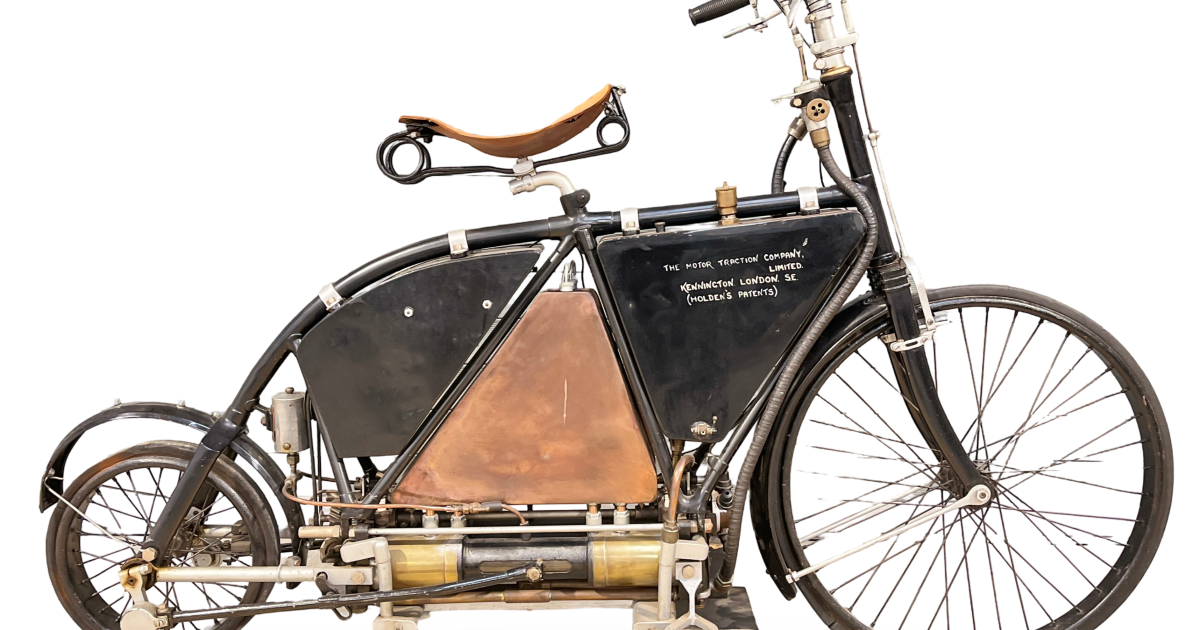

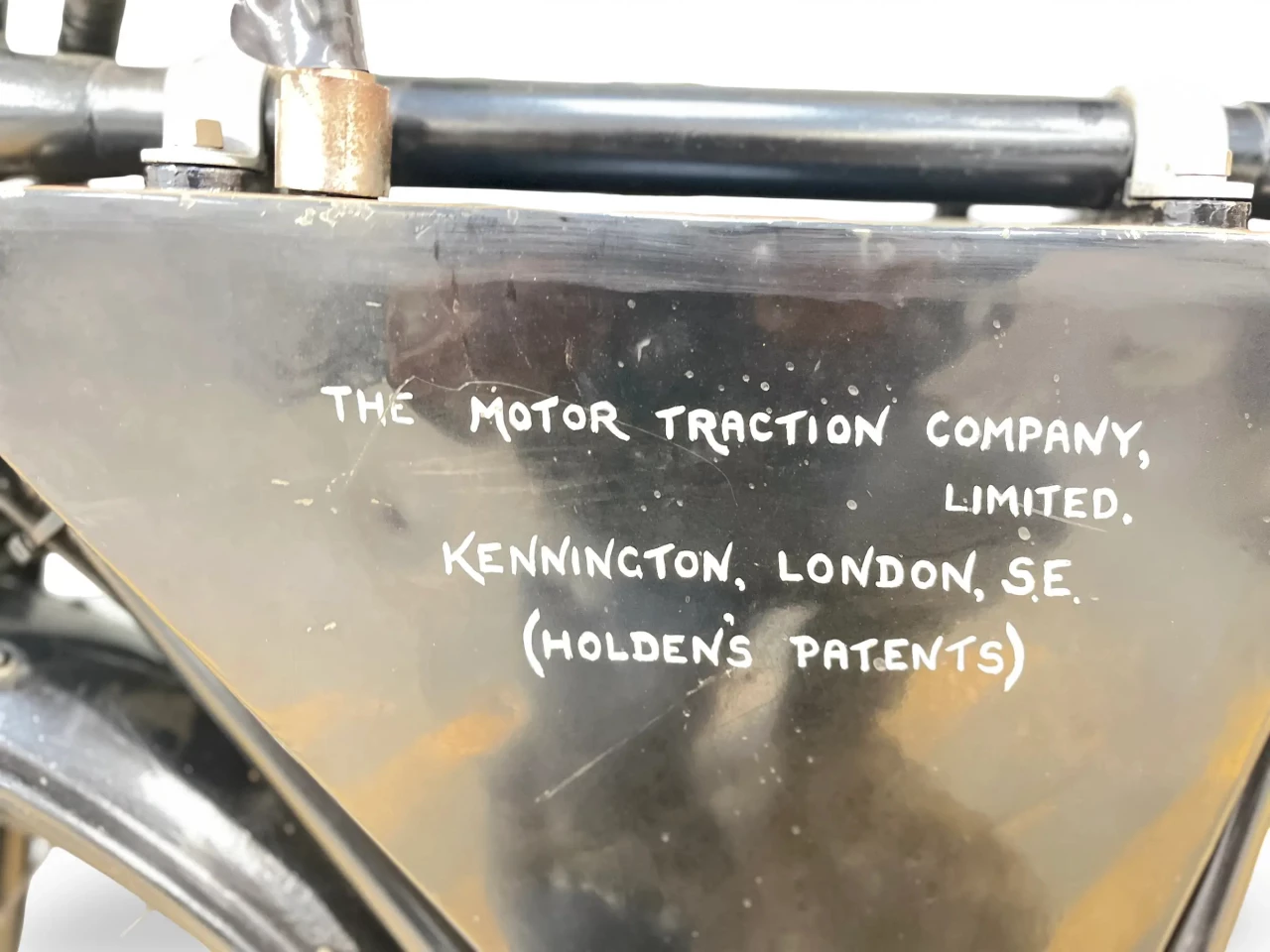
Among the headline lots in the collection is a Holden motorcycle from circa 1902. Built by The Motor Traction Company Ltd under the Holden name, it is a truly remarkable piece of motoring history. Its age, novelty and sheer mechanical curiosity could send collectors to the moon.
The Holden is equipped with a massive 1,172.8cc flat-four engine, representing one of the earliest experiments in high-cylinder motorcycle design. Talk about the sheer audacity of packing four cylinders in an era when single and double cylinder machines were the norm.
Designed and patented in the mid-1890s by engineer Colonel Henry Capel Lofft Holden and produced by The Motor Traction Company Ltd. from London, this engine layout placed two pairs of opposing cylinders horizontally in a flat configuration. Interestingly, the 1895 prototype Holden is widely regarded as the first British two-wheeled motorcycle.
While early versions of the motorcycle were air-cooled, the 1902 iteration (which you see here) began using water cooling. A remarkable technical refinement in an era when most engines quickly overheated under stress.
The engine was mounted on a primitive frame, with one small rear wheel. And in a departure from the belt-driven machines of the time, the rear wheel was connected directly via connecting rods and crank pins, effectively functioning as a flywheel.
Inspired by locomotive technology, this direct drive worked well for power transmission, but there was a major problem. It made control at low speeds exceptionally difficult – an oddity many riders used to encounter due to the lack of clutch systems or multiple gears.
Bonhams
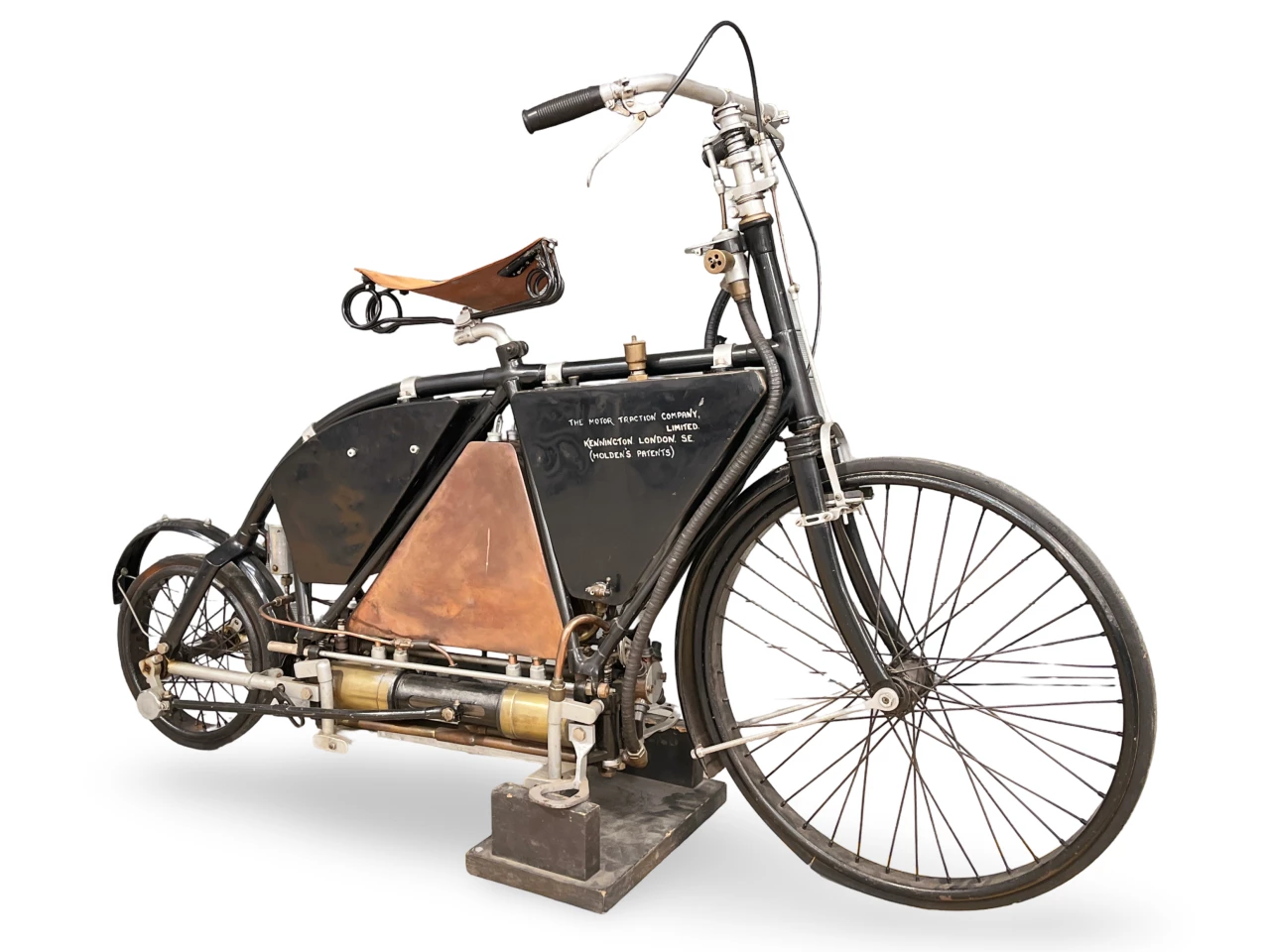
Above the engine are three triangular housings: the vibrating coil and battery of the ignition system at the rear, the water tank in the center and the gas tank, which also has a surface carburetor, at the front. The Holden’s four-cylinder engine revved higher than most motorcycles of the era. The small diameter of the rear wheel was clearly influenced by the need for good gearing for a bike like this.
While most 1,000cc+ bikes of the modern era reach impressive triple-digit top speeds, the Holden was the exact opposite. Please note that the legal speed limit at the time was only 12 mph (about 20 km/h), although the manufacturers did state that the motorcycle could be adjusted from walking pace to 25-30 mph (40-48 km/h). It is also said that the engine could produce 3 horsepower, although there is scant documentation to support these claims.
Bonhams
Visually, the motorcycle looks like an amalgamation of a bicycle and a steam traction engine. And because motorcycles of this era were essentially motorized bicycles, many controls, including ignition settings and ignition timing, were integrated directly into the handlebar mounts – long before standardized levers and switches existed.
Production of Holden machines ceased in 1902 when the design was overshadowed by rapidly evolving technologies and lighter, more practical engines from other manufacturers. Although I think price was a major reason the bike didn’t sell in large numbers. In 1902 a Holden cost £75 in Britain, while most of the competition cost between £40 and £45.
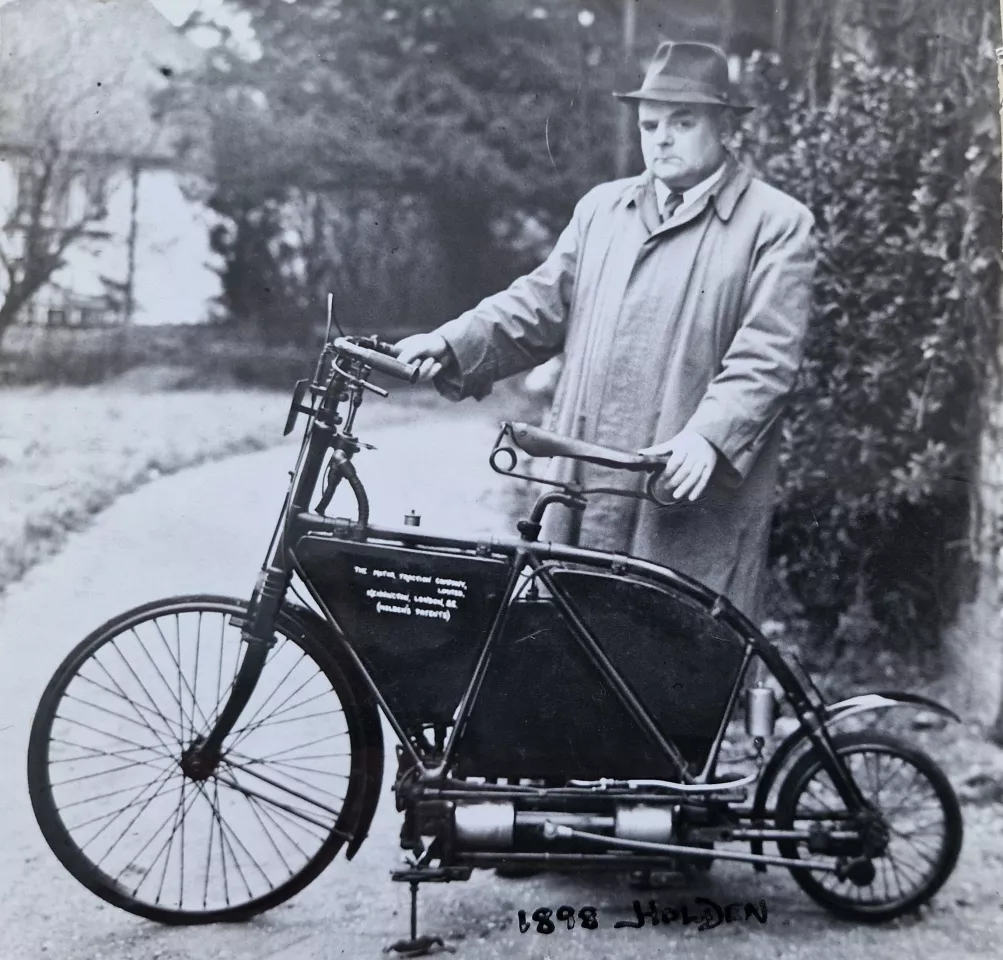
Apparently Rex Judd acquired a Holden in the late 1920s or early 1930s. He raced it in the 1938 Pioneer Run. He made only one unofficial stop to refill his water tank during the run to Brighton, and finished with a silver medal.
Bonhams
Motorcycles from the dawn of the internal combustion era are extremely uncommon at auction, and motorcycles with unusual engineering stories usually attract serious attention from collectors. The Bonhams listing lists an estimated auction price between £40,000 – £70,000 (US$54,000 – $95,000).
When it goes under the hammer at Bonhams’ Spring Stafford Sale at the end of April, it could well exceed $100,000 once buyer’s premiums are included.
Source: Bonhams
#Centuryold #1172cc #flatfour #moto #fetch #auction