

There’s a lot more nuance to it, but in a way it boils down to a Montreal Canadiens fan referendum between Alexei Kovalev and Nick Suzuki.
Alexei Kovalev on the 2007-2008 Montreal Canadiens
Under normal circumstances there would be little reason to compare the two. While Suzuki is clearly leading the Habs as captain right now, it has literally been 13 years since Kovalev last played in the NHL, 17 years since he last played in Montreal… and 18 years since he led them with a near-unheard of 84 points in Montreal, along with an impressive Northeast Division championship with a 47-25-10 record.
Since then, the Canadiens have clearly had more success. They have won three additional division titles (2012-13, 2014-15, 2016-17) and of course reached a Stanley Cup Final (2021), a Cinderella postseason run despite the eventual loss, to which Suzuki clearly contributed. However, 2007–08 was their last Eastern Conference regular season title. Furthermore, by scoring 257 goals in the 2007–08 season, they finished second overall (Ottawa Senators) in that one category, with an average of 3.13 goals per game.
Needless to say, for anyone who has watched the team with any regularity, the Canadiens have consistently struggled to score since then. However, with 172 goals in 51 games so far this 2025-26 season (3.37 goals per game), which ranks third in the NHL, they can surpass that mark, albeit in a dogfight for home ice in the 28-16-7 playoffs. With a relatively balanced attack that includes not one, but two effective scoring lines (give yourself room to breathe if you’re feeling lightheaded), the Habs lead the NHL with five 40-point scorers so far: Suzuki, Lane Hutson, Cole Caufield, Ivan Demidov and Juraj Slafkovsky.
Canadiens lead the NHL with five 40-point scorers#GoHabsGo pic.twitter.com/w9h7tLkjWY
— Sportsnet Stats (@SNstats) January 20, 2026
As impressive as that may be, consider how the 2007-08 Canadiens finished with seven… 50-point scorers: Kovalev, Tomas Plekanec (69), Mark Streit (62), Andrei Markov (58), Saku Koivu (56), Andrei Kostitsyn (53) and Chris Higgins (52). That also led the NHL, with the next highest teams having ‘only’ five.
Of course, there was also a downside to it. Despite all those weapons (not to mention an upstart Sergei Kostitsyn and a departing Michael Ryder in a down year) and the impressive debut of one Carey Price in net, the Habs fell far short of the promised land. They may have gotten past the Boston Bruins in seven games in Round 1 (despite being heavily favored as top seeds), but they fell in Round 2 to the Philadelphia Flyers, one of the teams with five 50-point scorers for whatever that’s worth.
Current Canadiens gaining experience with each game
So it’s far beyond the realm of possibility that the current Canadiens will enjoy more success, even if they realistically fall far short of first place in the (Atlantic) division. Context is king here, because while the 2007-08 Habs were coming off a non-playoff season with low expectations, the circumstances are significantly different as the team is currently youngest in the NHL. Kovalev may have been the oldest of the core of the above 2007-08 team, but he wasn’t exactly an outlier. Despite being in his third NHL season, Streit turned 30 that season. Koivu turned 33. All three would be gone within the next two seasons, along with Higgins, who was eventually dealt to the New York Rangers as part of the infamous Scott Gomez/Ryan McDonagh trade.
That trade, as much as its mere mention may trigger Canadiens fans, is important here. It marked the end of the Koivu era, as the Finnish captain signed with the Anaheim Ducks just days later. Players like Brian Gionta, who joined Gomez, his ex-New Jersey Devils teammate, and Michael Cammalleri, signed instead that summer and represented a changing of the guard, albeit via free agency, with veterans continuing to form the core of the organization, in stark contrast to how the team is now constructed.
Brendan Gallagher is currently the absolute oldest Canadiens player at 33 years old. Kovalev, who turned 35 mid-season in 2008, has since been surpassed in age by not one, but two teammates in Bryan Smolinski (35) and Patrice Brisebois (36). In total, there were nine players age 30 or older on the 2007-2008 team, while there are literally only four players on the team today. Only one of them, Mike Matheson (32), is a member of what most consider the core and appears to have a long-term future in Montreal as general manager Kent Hughes focuses on youth rather than experience, which for good reason everyone is actually winning with each passing game.
Related: Canadiens keep Matheson in fold with big for both sides
It shows that with Suzuki (2030), Hutson (2034), Caufield (2031) and Slafkovsky (2033), i.e. four of the five NHL 40-point scoring leaders, locked up for the foreseeable future, the window is significantly larger than it was for the franchise 18 years ago, when the Canadiens must have been in win-now mode because there was barely a tomorrow for that team, as everyone knew. It. The fifth, Demidov, is only in his first full season, but it is strongly believed he will follow suit and eventually commit in the same way.
Can the current Canadiens achieve similar success?
It almost doesn’t matter, as the general consensus is that they will develop into an attacking powerhouse in the coming years. However, the answer is clearly ‘yes’, even if they do not achieve the same score of seven 50 points. The core five above will almost certainly all reach that pinnacle. Defenseman Noah Dobson (31) could get there, but the next man up, rookie forward Oliver Kapanen, is expected to fall short (27).

However, that is not necessarily a sign of weakness. Instead, the offensive depth of this latest edition shows the Canadiens are on pace to still outscore the 2007-08 team. To advance in the postseason, they need offensive contributions lower in the lineup. Against the Flyers in the second round, they literally gave up one goal outside of those seven star players all those years ago, from Tom Kostopoulous (a recognized OT winner in Game 1).
Kovalev vs. Suzuki
However, it all went downhill from there. Notably, Kovalev scored two goals in that match, including a tying goal with 30 seconds left. However, aside from a two-point effort in the decisive Game 5, he remained relatively calm for the rest of the match, which, with all due respect to Kovalev, was somewhat of his calling card. He would be the most impactful player one night and invisible the next, which made his 2007-08 season so important, as he consistently made it to the point of putting up a superstar-like mark per game, which, until Suzuki accomplished this feat last season, had remained elusive for Canadiens players ever since (and for some time before that).
So on the one hand you have Kovalev, who, despite being a legitimate star talent who graced the franchise for parts of five seasons, had a tendency to play multiple games in a row without giving it his all. On the other hand you have Suzuki, the current team ironmanwho has literally never missed a game in seven seasons. There may be games where he plays visibly injured and can’t make as much of an impact as he would like, but the effort level always seems to be there. So if it’s a referendum between the two players, it shouldn’t be a contest, especially as Suzuki gets closer to the 100-point area.
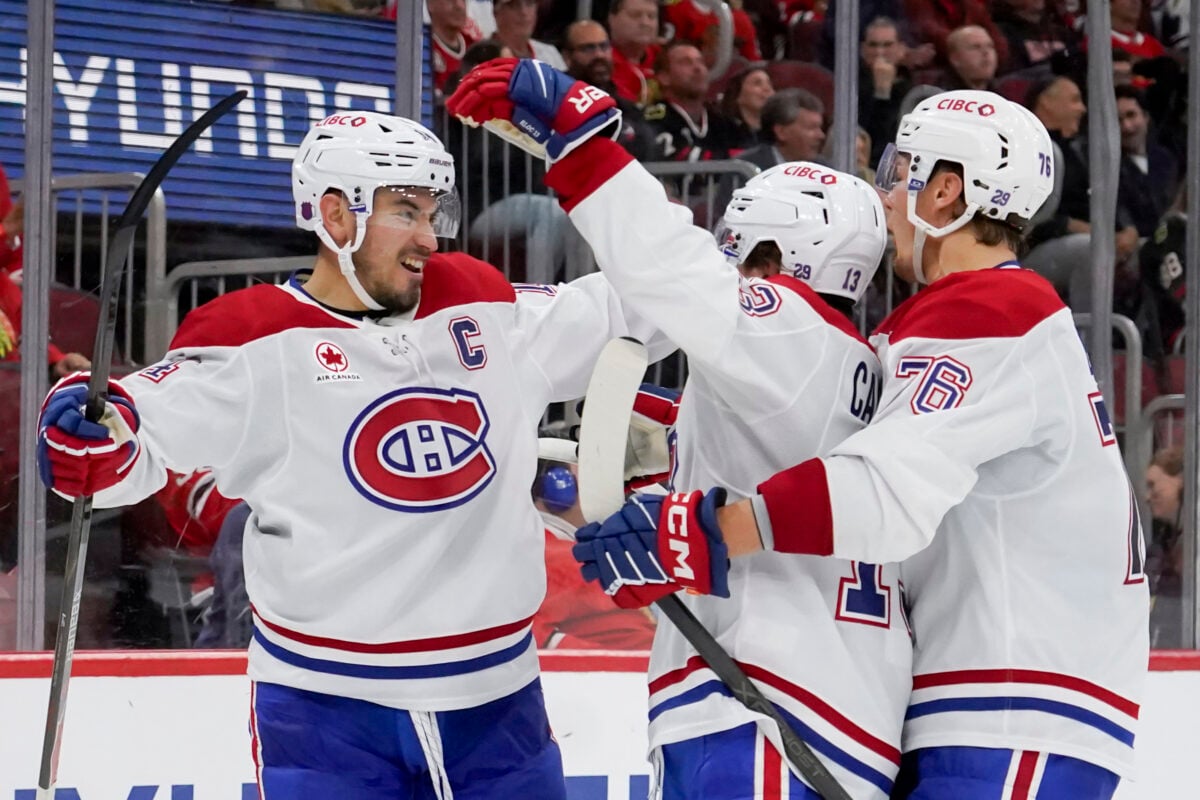
That sentiment sums up in a nutshell why the Canadiens should hold a more special place in fans’ hearts right now. Forget the 2025-2026 team. Just the team in general. The season seems more like a stepping stone to something bigger, while 2007-08 was, in large part in retrospect, a one-off.
Suzuki may not reach 100 points this season, but like every NHL season he has played before, he has improved from the last. So there is a very real feeling that he will get there eventually. For the record, Kovalev never did that, although he did win the Stanley Cup with the New York Rangers in 1994. It may not be this year (or possibly ever), but the optimism is practically palpable. Suzuki will eventually lead them to a championship as the core grows together for the rest of the decade, and this is the key: to the next one. That’s a lot of kicks in the can… and a lot of projected goals, even if only one really matters.
Like Suzuki, the team as a whole has only gotten better each season since bottoming out in 2022 (the year after reaching the Finals). This year it’s more about how much they’ll do again, not whether they can match the 2007-08 offense. Of course it would be nice if they did that. It would be even better if they won more than five games in the postseason after being shut out in just five games last spring. That is the clear priority.
#Canadiens #fall #short #teams #firepower #Hockey #Writers #Montreal #Canadiens #Latest #news #analysis