

Too many of us, myself included, spend too much time hunched over a screen, and our bodies pay the price. Do you get that heavy, tired feeling in your calves around 3 p.m.? You are not alone! Many office workers experience this sluggish feeling, where even getting up to get more coffee is a chore.
This is why it happens. Your calves help circulate your blood back to your heart. If you sit for long periods of time, you won’t get the exercise they need to do their job. This gives you that weightless feeling in your legs that we all fear.
So what can you do about it? Combat leg fatigue with these five simple exercises that you can do at your desk all day long, even while reading your emails!
Why Your Legs Feel Like Lead (and Why It Matters)

Your calves are made up of three muscles. They are your gastrocnemius, soleus and plantaris. These muscles work together to pump and recirculate your blood to your legs. When you sit all day, gravity works against your body and blood can pool in your lower extremities.
This is what gives you the feeling of fatigue, stiffness and sometimes restlessness.
A few simple calf exercises can wake up your legs and get your blood flowing again. You will quickly feel the difference and your legs will thank you.
Discover how aerobic exercise can transform your health in our analysis of the top benefits of cardio, from heart health to fat burning.
5 Groundbreaking Under-Desk Calf Raises (Calf Workout)
1. The classic seated calf raise
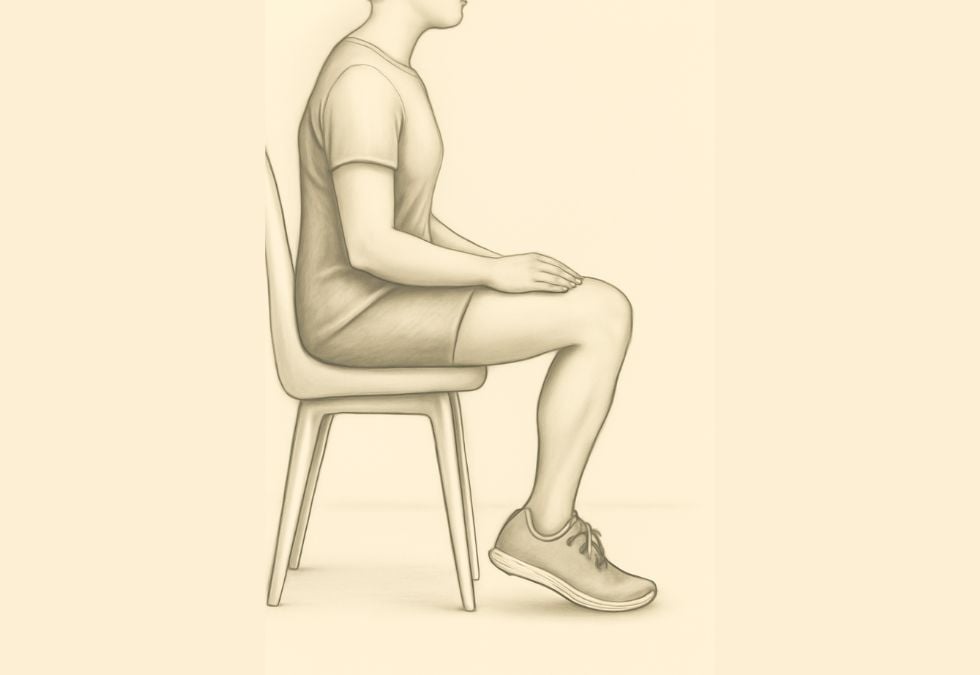
This exercise is the foundational move that will become your new best friend.
How to do it:
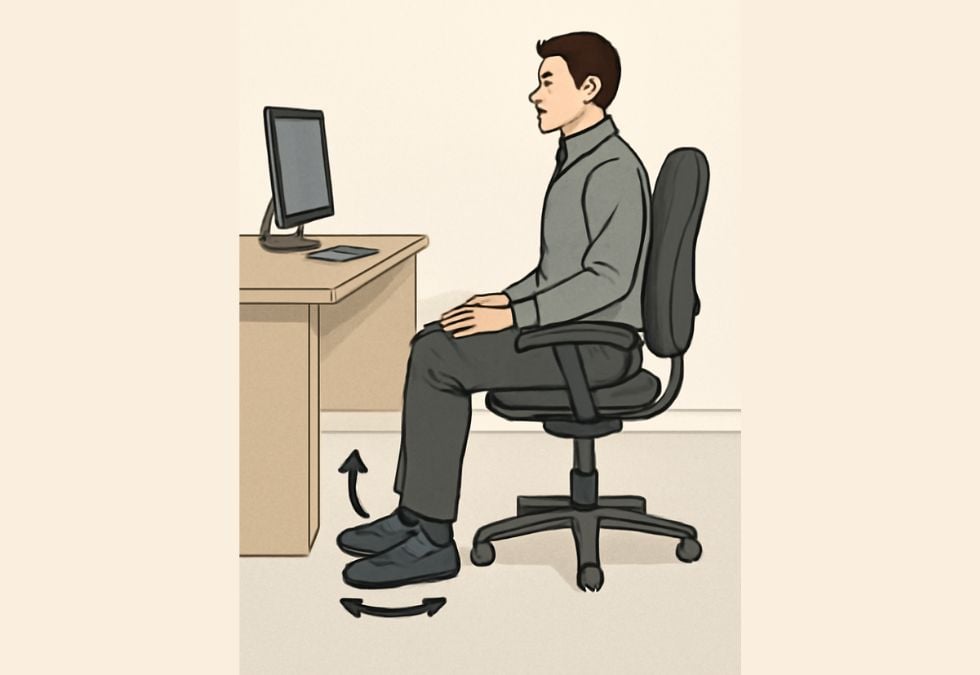
- Sit with your feet flat on the floor, hip-width apart.
- Slowly raise your heels as high as is comfortable.
- Hold for 2-3 seconds and tighten your calves.
- Lower again.
- Repeat for 15 – 20 repetitions.
This one is great because it’s subtle. No one will even know you’re doing it. Try 15-20 reps to start, or until you feel the blood starting to flow again.
The sitting position focuses on the deeper calf muscle, your soleus. This increases your blood circulation and your endurance.
2. The reinforced seat booster
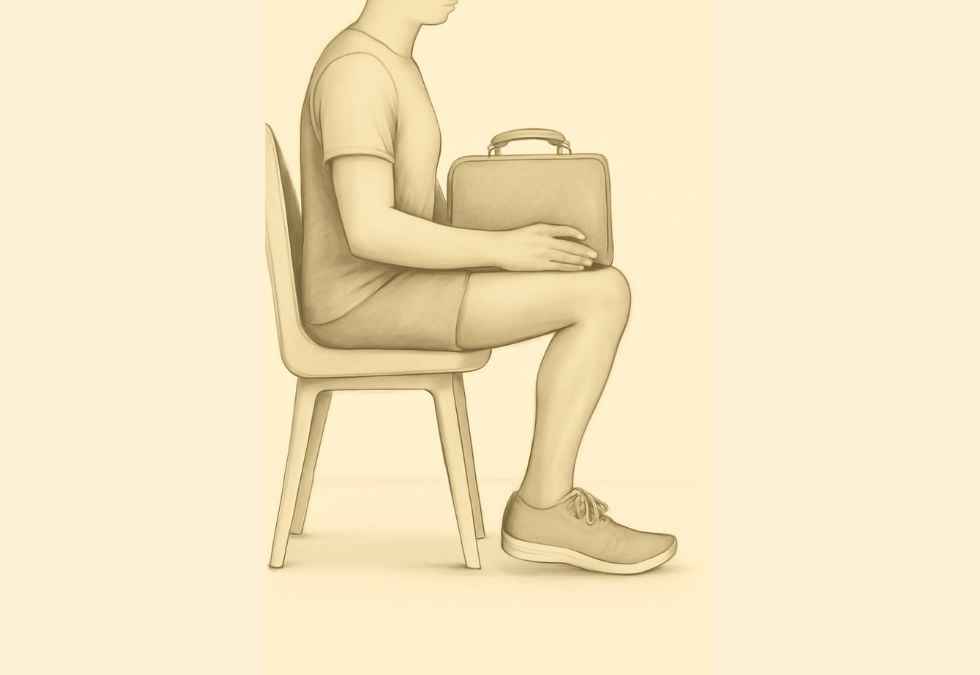
Let’s level up! Add resistance to the standard Classic Seated Calf Raise.
How to do it:
- Place a weight on your lap. It could be a heavy book, a bag or even your full water bottle!
- Perform the classic seated calf raise with control.
This extra weight will force your calves to work harder through muscle activation. This means better circulation and stronger calf muscles.
3. The single-leg power movement
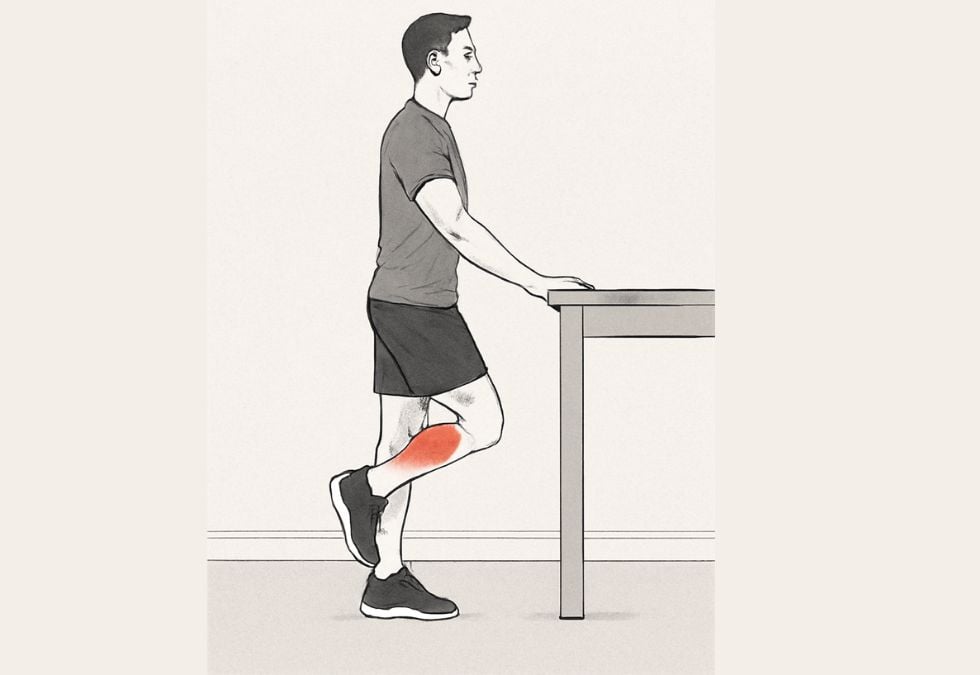
Are you tired of sitting? Try this standing exercise.
How to do it:
- Stand with your feet hip-width apart.
- Lift one leg and let it float off the ground.
- Perform calf raises with your standing leg.
- Switch legs halfway through your set.
- Complete 8 – 10 reps per leg.
The good news is that you can use your desk for stability.
This unilateral exercise works because it helps correct muscle imbalances and is a more intense workout for each calf.
4. The pulse and hold
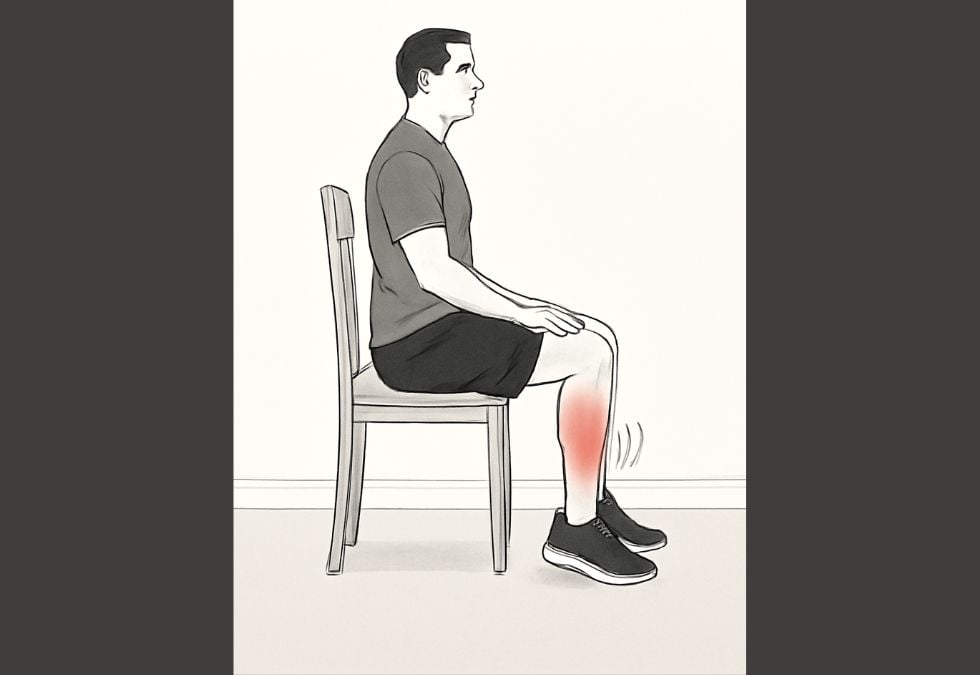
Add a twist to your classic seated calf raise with the Pulse and Hold.
How to do it:
- From your chair, with your feet flat on the floor, lift your heels.
- Once you reach a comfortable height, pulse up and down for 5-10 seconds.
- Lower it slowly and repeat 3-5 times.
You should be able to feel the difference immediately. These small pulses will target your muscle fibers, unlike the extended poses that work on endurance.
This combination of holding and pulsing increases the time under tension, which improves circulation.
5. The toe-point combination
Let’s focus on your ankle mobility!
How to do it:
- Start with the standard calf raise. Instead of stopping at your highest height, continue lifting until your toes point. Hold for 3 seconds.
- Release by flexing your feet and returning to the starting position.
- Repeat for 10 reps.
As with any part of your body, nothing works alone. Adding an ankle mobility exercise to your routine targets the muscles in your feet and lower legs.
The toe-pointing motion provides a gentle stretch for your shins and the tops of your feet.
The science behind the squeeze
Squeezing your calf muscles acts like a pump, pushing old blood back to your heart and improving the removal of waste products. These actions can reduce the risk of blood clots, build stronger calves, improve balance and reduce ankle injuries. This is especially important for athletes outside the office.
The best thing about these exercises is that they are virtually invisible to your colleagues and easily accessible to most office workers. You don’t need any special footwear or equipment and you shouldn’t sweat.
That means these movements can easily fit into your workday.
How to be consistent with under-desk calf raises
Here’s how to turn these exercises into habits to combat fatigue every day.
- Set hourly reminders. Set a reminder on your phone or computer to ping you every hour. It only takes a few minutes or an hour to make a difference.
- Combine with existing habits. As with any new routine, combine calf raises with something you already do so the habit sticks. On the phone or reading emails? Start lifting.
- Start small. You don’t have to exercise ten minutes an hour every day. Instead, start small and see what fits into your schedule. Before you know it it will become second nature.
- Listen to your body. Every day is different. Some days you are more active than others. The key is consistency. If you find yourself sitting for hours, get up and move.
Strengthen your lower back and improve posture with these targeted erector spinae exercises designed to support spinal health and stability.
Common mistakes to avoid

- Going too fast. Speed will not help you with these exercises. Use slow and controlled movements.
- Ignoring the descent. Lowering your heels is just as important as raising them. Check the movement in both directions.
- Forgetting to breathe. Pay attention to your breathing. Are you holding it? Don’t. Breathe as you normally would throughout the movement.
- Exaggerate at first. You may feel sore after the first few sessions. Build your endurance.
Why are strong calves important?
Building strong calves is so much more than just combating leg fatigue. Strong legs improve your performance in almost all physical activities, such as climbing stairs or exercising in your spare time.
They are also crucial for your balance and stability. Consider them an investment in your future self!
Build a stronger core and shape your midsection with these effective ab exercises for men, specifically designed to improve definition and performance.
Final thoughts
You don’t have to live with tired, heavy legs. In just a few minutes you can transform how you feel. If you start now, you will be rewarded with more energy, better circulation and stronger calves.
Even five minutes a day will change everything!
#Calf #Raises #Desk #Simple #Exercises #Combat #Leg #Fatigue #Work