

That may be obvious, but the end result is something we are all very familiar with. Wide arches, oval exhausts and your choice of sedan or Avant body styles. Audi has also retained the non-RS4 V6 power, which is crucial considering how controversial the launch of the electrified four-cylinder Mercedes-AMG C 63 was, and it means it has as many pistons as the now six-year-old G80 BMW M3, albeit with a 129bhp difference in favor of the RS5. So while Audi hasn’t decided on the name of its RS5 yet, it appears it has timed its arrival at the right time.
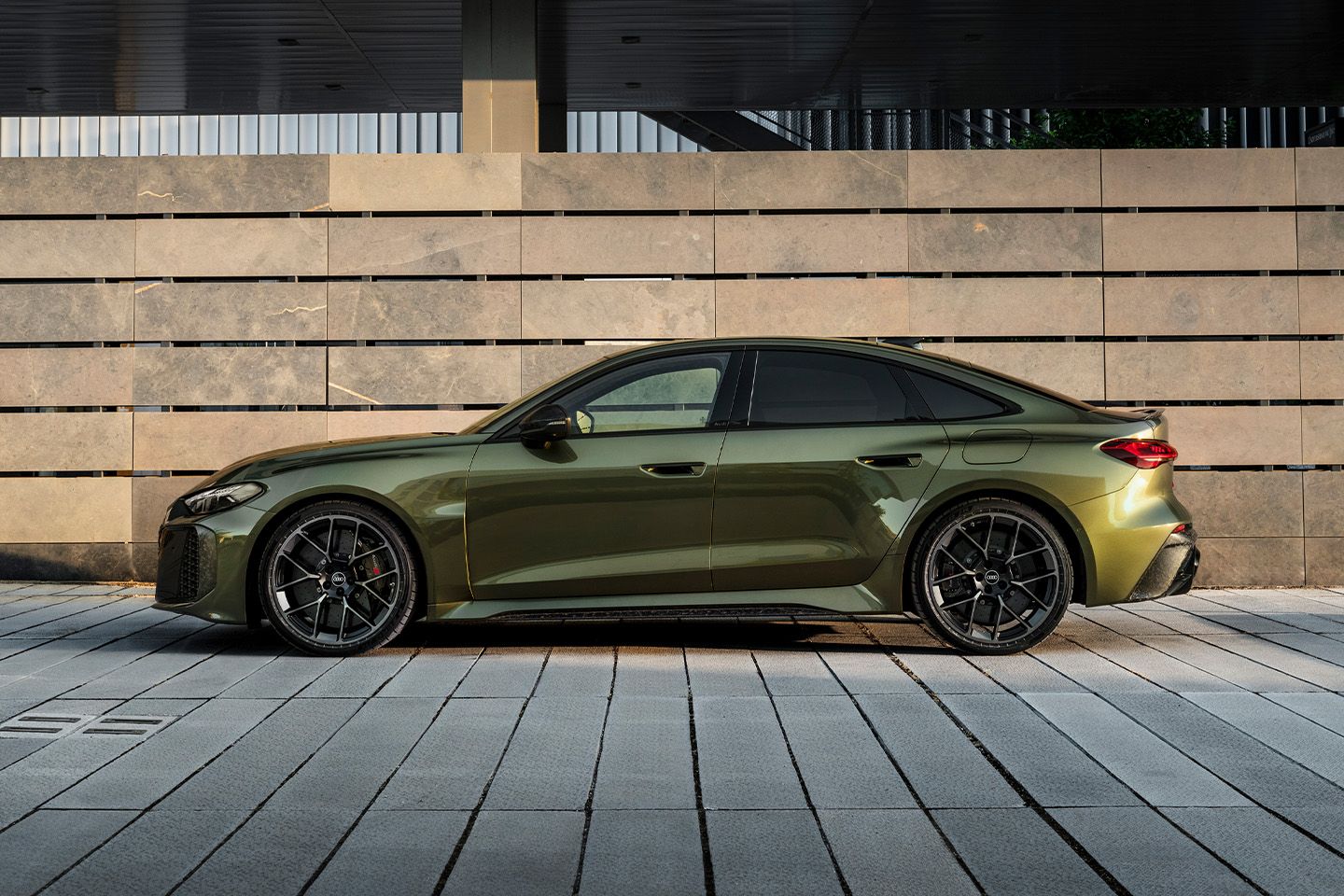
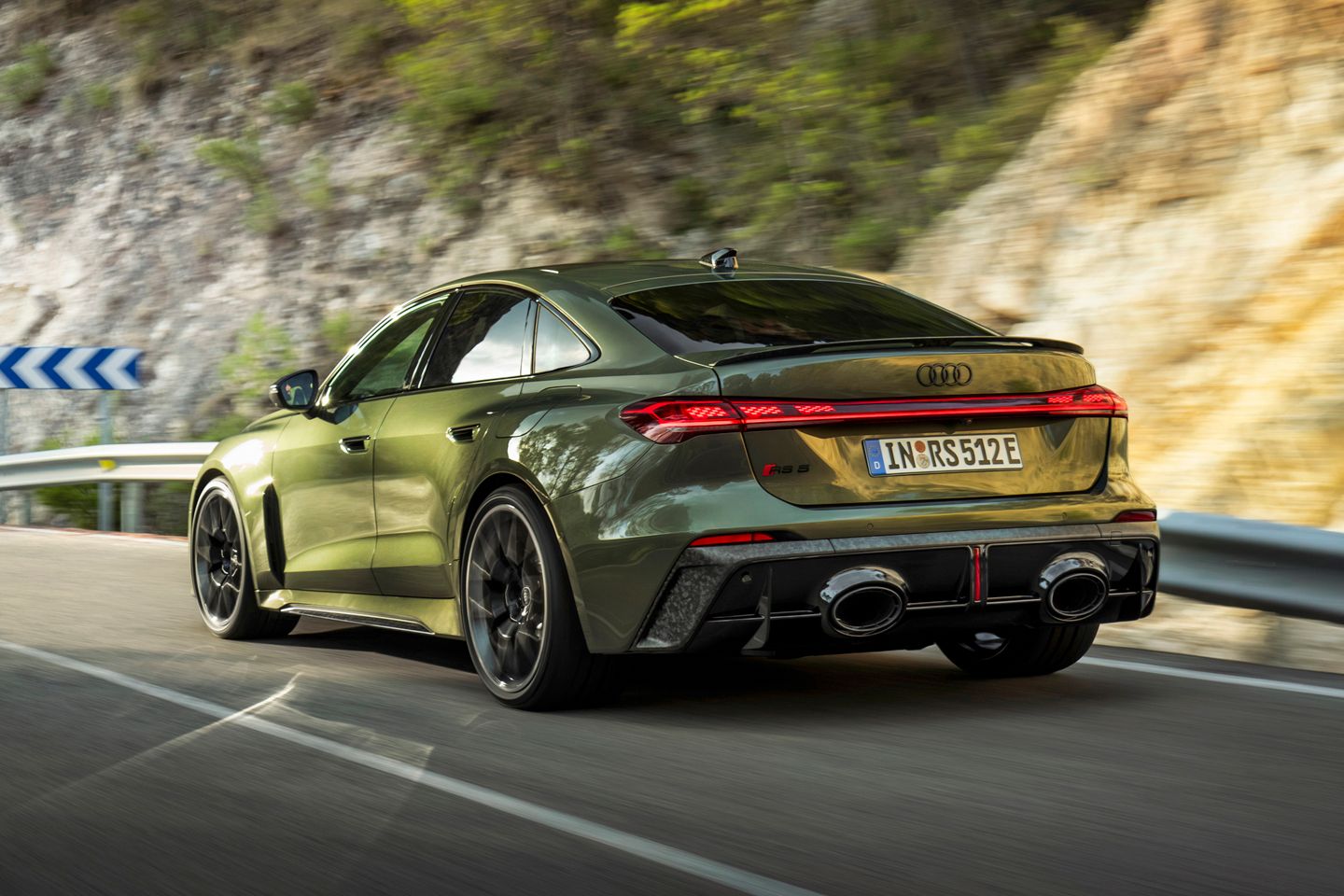
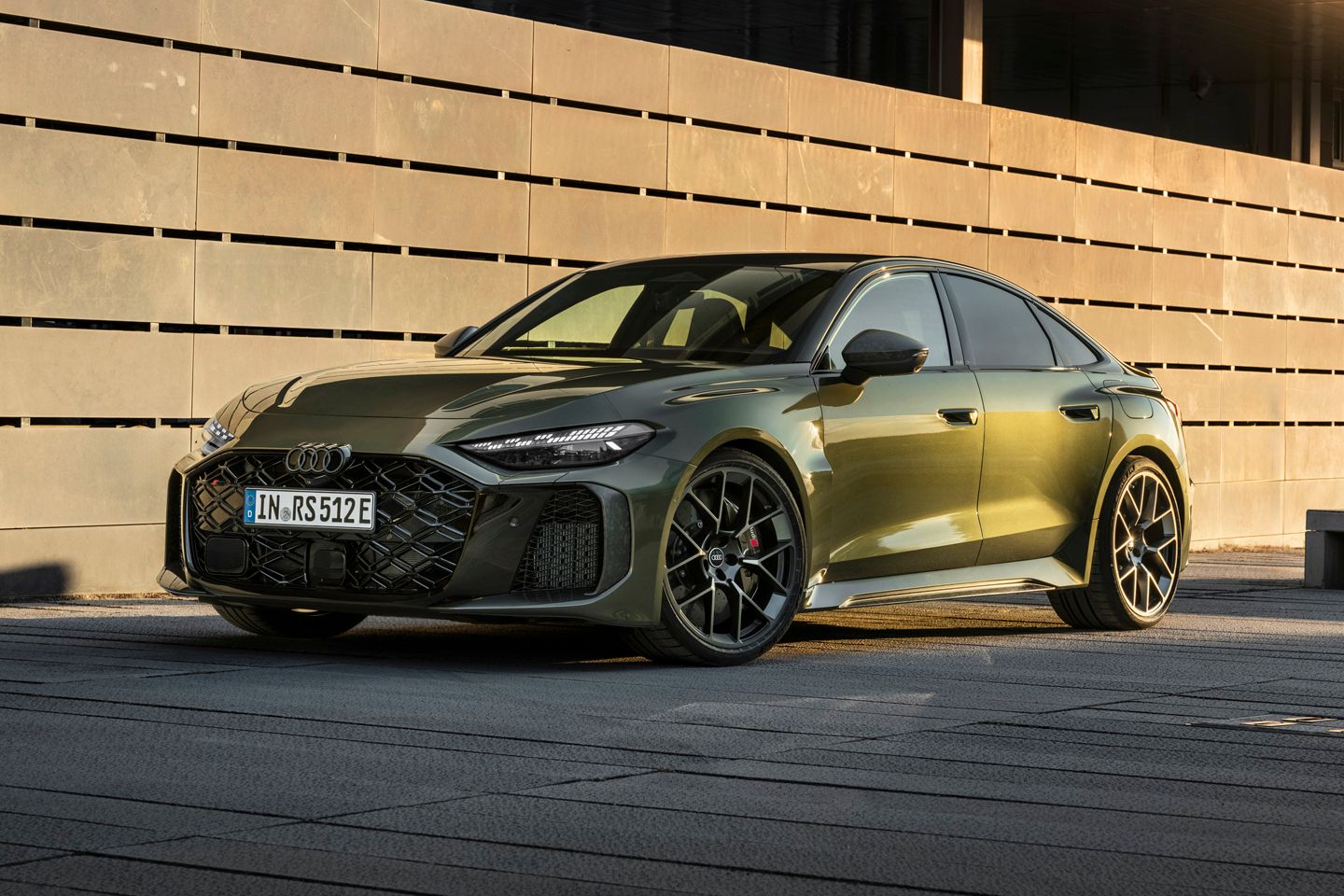
You have your own opinion on what it looks like, but it certainly won’t be as divisive as the snout on the M3. After seeing it in the metal, the RS5 isn’t exactly lacking in presence. It’s epically wide, with wheel arches adding 40mm either side (!) front and rear, while the new front and rear bumpers house a massive single-mould grille and molded diffuser respectively. Admittedly, it looks almost cartoonishly puffy in photos, which isn’t helped by the fact that the twin 70mm oval exhausts are placed closer together in the rear diffuser, making it look even wider from the rear. But in person it looks as stocky as an RS with blisters and bowed arches should.

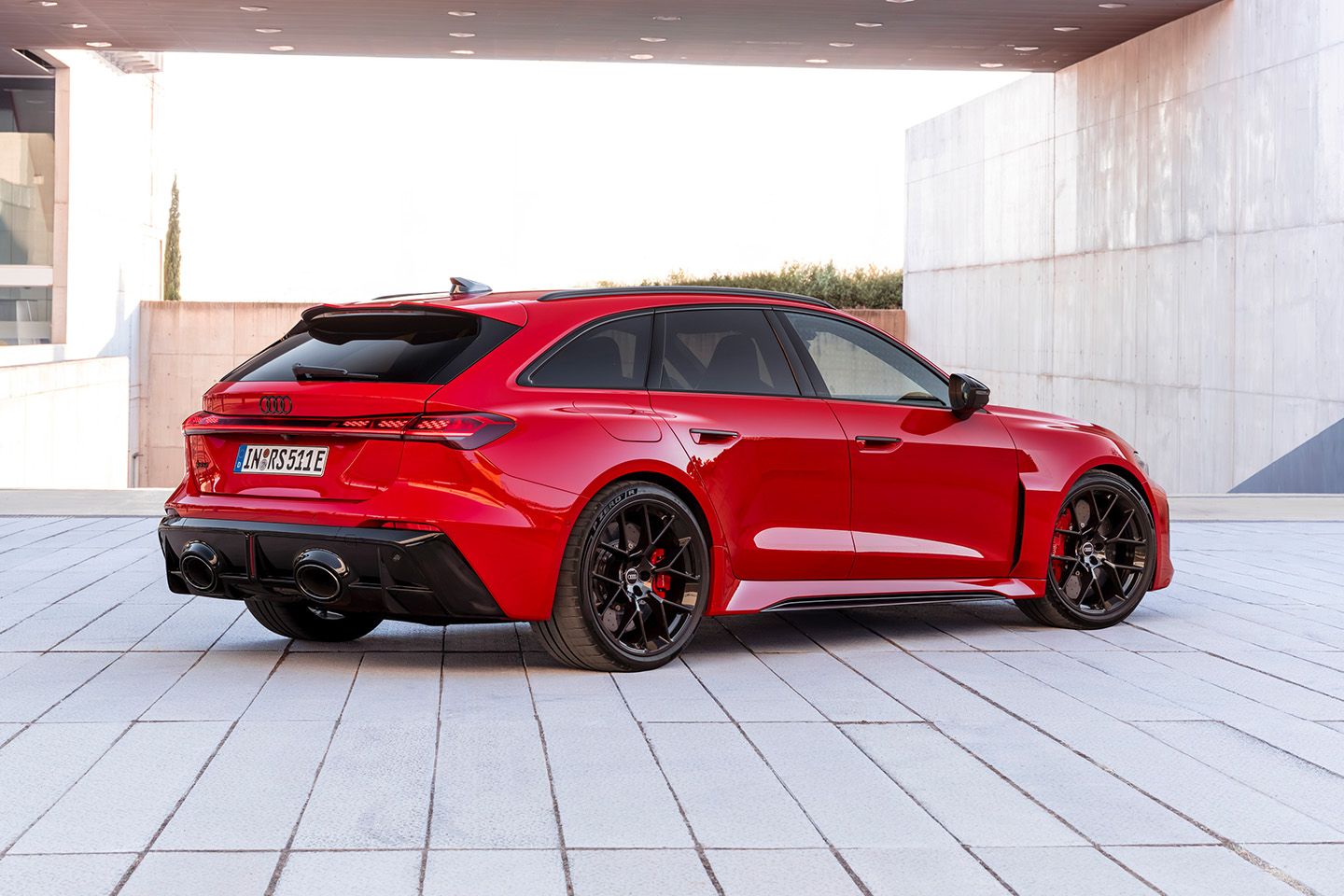
Adding to the visual theater are a pair of fins in the front bumper that channel the air around the front wheels, while the air vents integrated into the wings look straight out of the RS6 GT and are functional too. Deeper skirts connect the wider arches, which, like the grille and diffuser, are highlighted in gloss black as standard. However, you can have them finished in ‘carbon camouflage’, Audi’s version of Lamborghini’s forged composites, where fibers are chopped and set in resin. And you want to save weight where possible, because the sedan and Avant weigh 2.35 and 2.37 tons respectively. Staggeringly, that’s over half a ton more than the old car, a good chunk of which lurks under the boot floor.
That’s right, the RS5 is a plug-in hybrid. It is the first time that Audi Sport uses piston and electric propulsion, with a 177 hp electric motor integrated into the eight-speed automatic gearbox, powered by a 22 kW battery (that’s a usable capacity) located under the luggage compartment. Because it’s a plug-in you can plug it into a charger at home, with a full battery you can drive up to 87 kilometers on electric power, and Audi claims up to 20 percent less fuel consumption “under high load” when it works together with the combustion engine.
Oh, and a huge combined output to go with it. Combined with the 2.9-liter twin-turbo V6 up front, the RS5 produces a mind-boggling 639 hp – a jump of 189 hp over the previous (non-hybrid) RS4 – and 624 Nm of torque. That translates to a 0-62mph time of 3.6 seconds, half a second quicker than the RS4 (though only three-tenths ahead of the competition), while the optional Audi Sport package boosts the top speed to 175mph and adds a sports exhaust among some jazzier visual upgrades.
While the 2.9-liter twin-turbo V6 may sound familiar, it has been extensively reworked, with around 60 percent of the components being new. This includes new water-cooled intercoolers, another RS first, plus variable geometry turbos, a revised air intake and an improved fuel system with higher injection pressure. So if you run out of battery power, you’re left with 510 hp from the combustion engine alone, which is still over 60 hp more than the old RS4. It’s funny that when this scenario was presented to some Audi engineers, they found it inconceivable that you would either a) charge at home, or b) charge on the go. Little do they know how negligent British PHEV owners can be. Either way, the upshot is that as long as you have charge in the battery, you get the full 639 horsepower. Sweet.
That’s not all, because underneath the battery is another electric motor, although this is responsible for handling the new electromechanical torque vectoring system. It’s an “invisible maestro that conducts an orchestra of driving pleasure and safety,” says Audi, consisting of an 8-horsepower engine that works with a conventional differential to distribute torque between the two rear wheels in just 15 milliseconds. Additionally, a limited-slip differential is connected to the transmission, which helps manage front and rear torque. This is set to a 70/30 split as standard, but if you activate the rear RS torque mode, up to 85 percent of the torque is sent to the rear axle for a more playful rear end.
Then there’s the suspension, with twin-valve dampers at each corner that can modulate compression and rebound independently, and can of course be adjusted to suit your needs via the different riding modes. Meanwhile, there’s a quicker steering rack with a 13:1 ratio that, alongside Audi’s new trick dampers, should help disguise the RS5’s immense weight. All that weight is brought to a halt by brake discs measuring 420mm and 400mm front and rear respectively, which are operated using brake-by-wire, while optional ceramic increases the diameter to 440mm front and 410mm rear. In front of this are standard 20-inch wheels, with 21-inch rims and firmer Pirelli P Zero R tires, bundled with the aforementioned Audi Sport package.
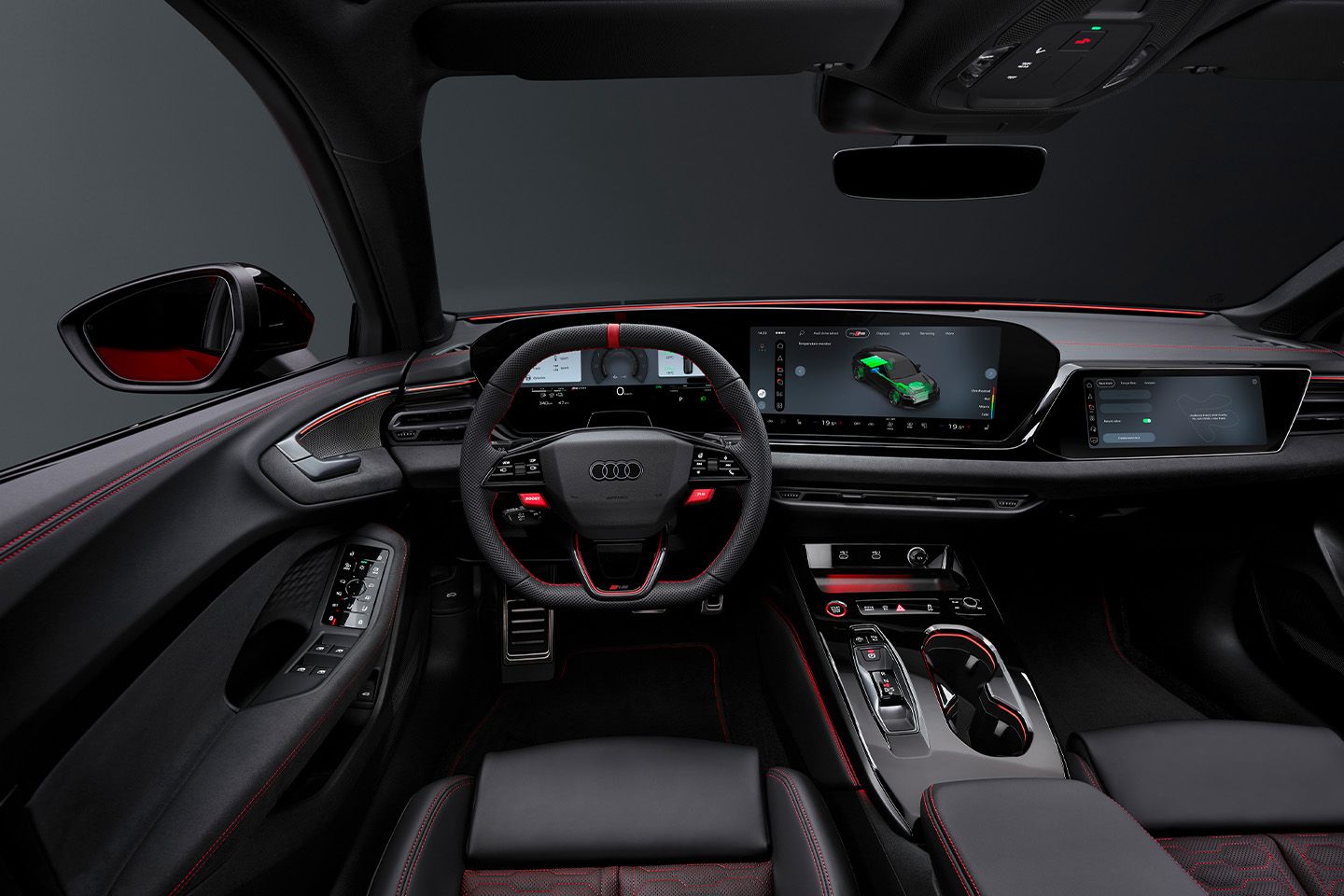
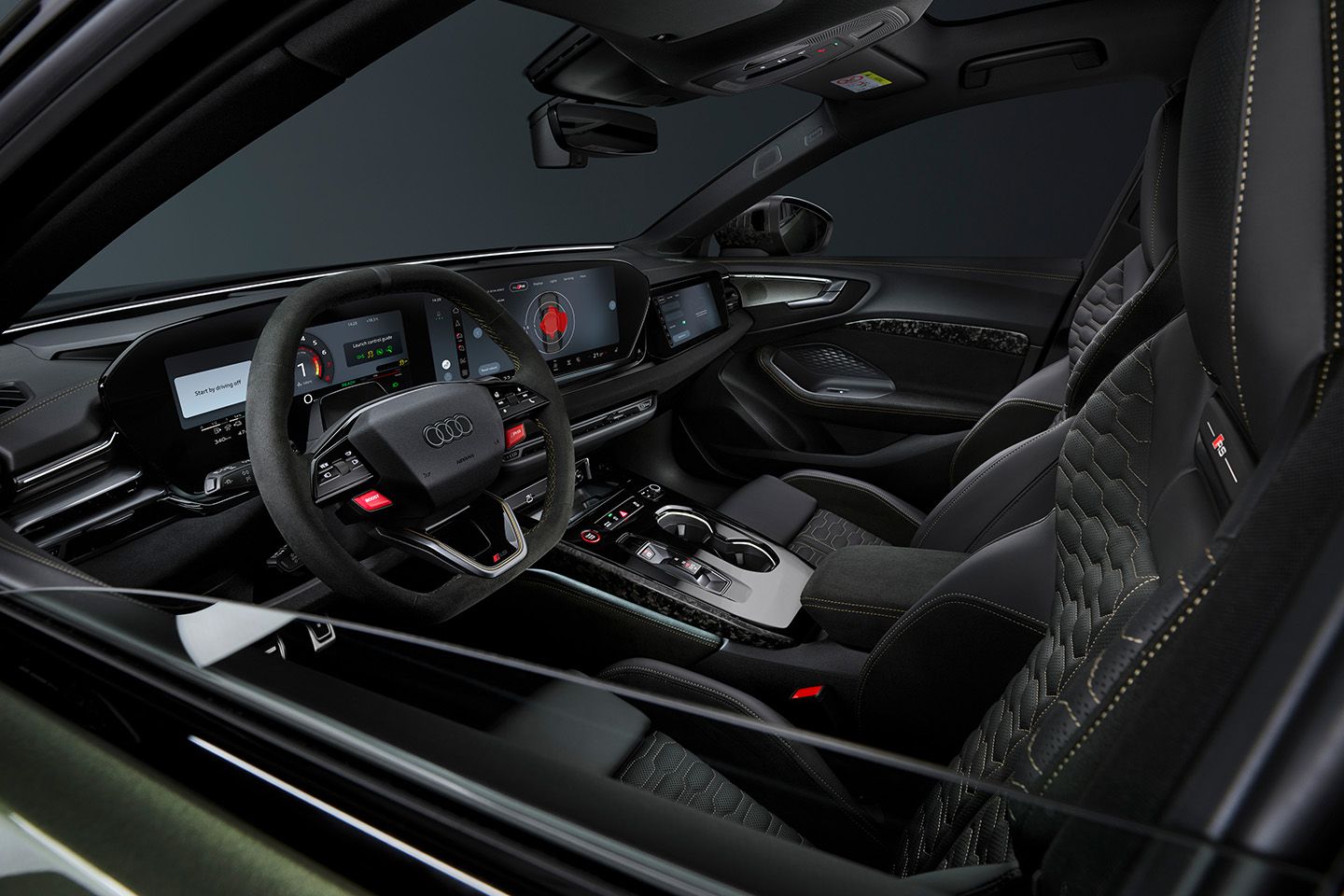
Stepping inside you’re greeted by deeply bolstered sports seats finished with Audi Sport’s usual honeycomb stitching, plus a sportier steering wheel that’s flat at both the top and bottom. Interestingly, the paddle shifters can be used to adjust the regenerative braking system when running purely on battery power, which can be activated via the A5’s gigantic 14.5-inch infotainment screen. You’ll also find your telemetry there, which can record lap times and many other statistics on pre-programmed circuits. And if there is no circuit on the system, you can create your own circuit as a custom layout. Just think of the possibilities.
Audi boss Gernot Döllner said: “The new highlight of the A5 model series is our first high-performance plug-in hybrid. Our newly developed quattro drivetrain with Dynamic Torque Control is the world’s first electromechanical torque vectoring system in a production car. The advanced technical interplay between combustion engine and electric drive brings performance and efficiency together in a new way at Audi. Customers can experience top sportiness as well as everyday comfort.”
The RS5 is therefore wider and faster than ever, and also a lot more expensive. Prices start at £89,400 for the sedan and £91,300 for the Avant, and you can expect the Audi Sport package and all its chopped carbon trim to add quite a bit more on top of that. Knowing that the old RS4 started at around £65,000 doesn’t make those figures any easier to swallow, but that was almost a decade ago. Things have moved on, with an M3 Competition Touring costing £93,585 and a Mercedes C 63 costing £100,935 (although the latter is about to be scrapped). So the RS5 is right in the mix, with orders starting in the summer. Hard to imagine that Audi will have problems filling the books…
#Audi #replaces #RS4 #plugin #RS5