‘At a loss’: NSW bushfire victims in shock as disaster payments are unlocked

‘At a loss’: NSW bushfire victims in shock as disaster payments are unlocked

5 minutes, 2 seconds Read

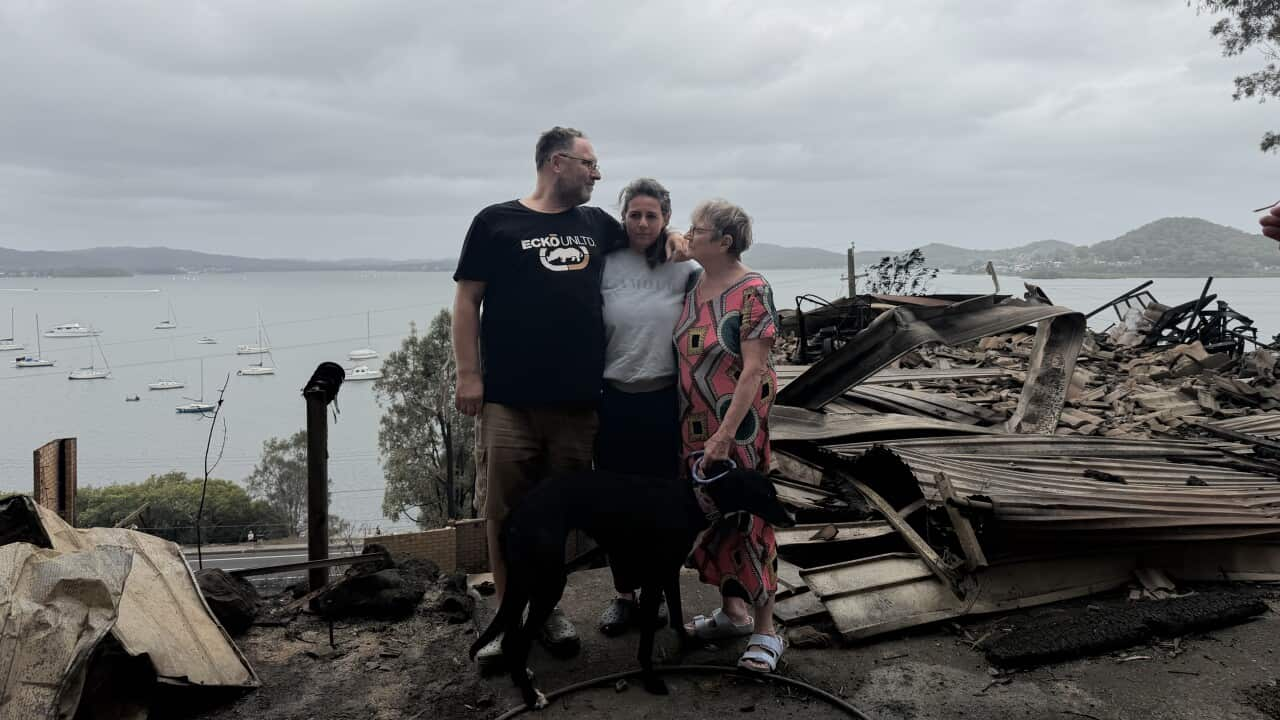
Janice Rattray has lived in her home in Koolewong on the NSW Central Coast for 11 years. It was completely destroyed on Saturday, with Janice not having time to retrieve a single possession – or save her pets.
“We didn’t take anything. I didn’t even have my bag with me. I just walked out straight away,” she told SBS News.
“I am most sad about the loss of my cats.”
Janice said the fire front was moving alarmingly quickly towards her home, which she shared with her daughter Elise, her daughter’s partner Nick Gibbs and the couple’s young son Oscar.
“We saw all this fire and Nick said, ‘we have to go, we have to get out of here’.”

“He didn’t even put on his shoes and walked on this asphalt road, burned all the soles of his feet and spent the night in the hospital,” she said. “He had the baby on his shoulders.”

She said the family saw the destruction of their home.
“We went to the park and watched it all happen. We get a direct line from the park straight to the house so we could see it burning.
Janice says the family received four nights of crisis accommodation through the Diggers, while locals had offered them short-term accommodation.
“We’ve been here for 11 years and we’ve never had to evacuate… I don’t remember,” she said.

Natural disasters have been declared in six NSW LGAs, unlocking federal and state support. Source: MONKEY / Then Himbrechts

About 76 bush and grass fires were still burning in NSW on Sunday morning following earlier extreme heatwave conditions. A further four homes were lost further north, at Bulahdelah on the mid-north coast.

NSW Premier Chris Minns traveled to the bushfire-affected area earlier today and spoke to families who had lost their homes in the run-up to Christmas.
“They were able to fit as much as they could into the car and evacuate in a short space of time,” he told reporters at the Gosford RSL Club’s makeshift emergency evacuation centre.
A fire in Milsons Gully, west of Muswellbrook, has scorched more than 11,050 hectares and another in Redhead, south of Newcastle, was burning at emergency level on Sunday morning before the threat was reduced.

Natural disasters have now been declared in six local government areas in NSW – including Central Coast, Mid Coast, Upper Hunter, Dubbo, Muswellbrook and Warrumbungle – unlocking federal and state support.

A challenging season ahead

Forecasters warn that this could be the start of a difficult summer.
The Bureau of Meteorology’s (BoM) long-term outlook predicts above-average temperatures across most of Australia and below-average rainfall over large areas, creating drier conditions that increase fire risk.
That combination means that “significant forest fires” are possible in January and February, the BoM says.
The Australian and New Zealand Council for Fire and Emergency Services (AFAC) has also flagged an ‘increased risk’ for fires in parts of Western Australia, NSW and Victoria, due to long-term rainfall shortages, high fuel loads and ongoing soil moisture shortages.
Minns said it remains difficult to predict the severity of the season, but urged preparedness.
“We cannot set in stone what summer will look like,” he said on Sunday. “Due to the uncertain weather forecasts, it is extremely important that you expect the unexpected.

“Have a wildfire preparedness plan in place and be ready to go, maybe even at a moment’s notice.”
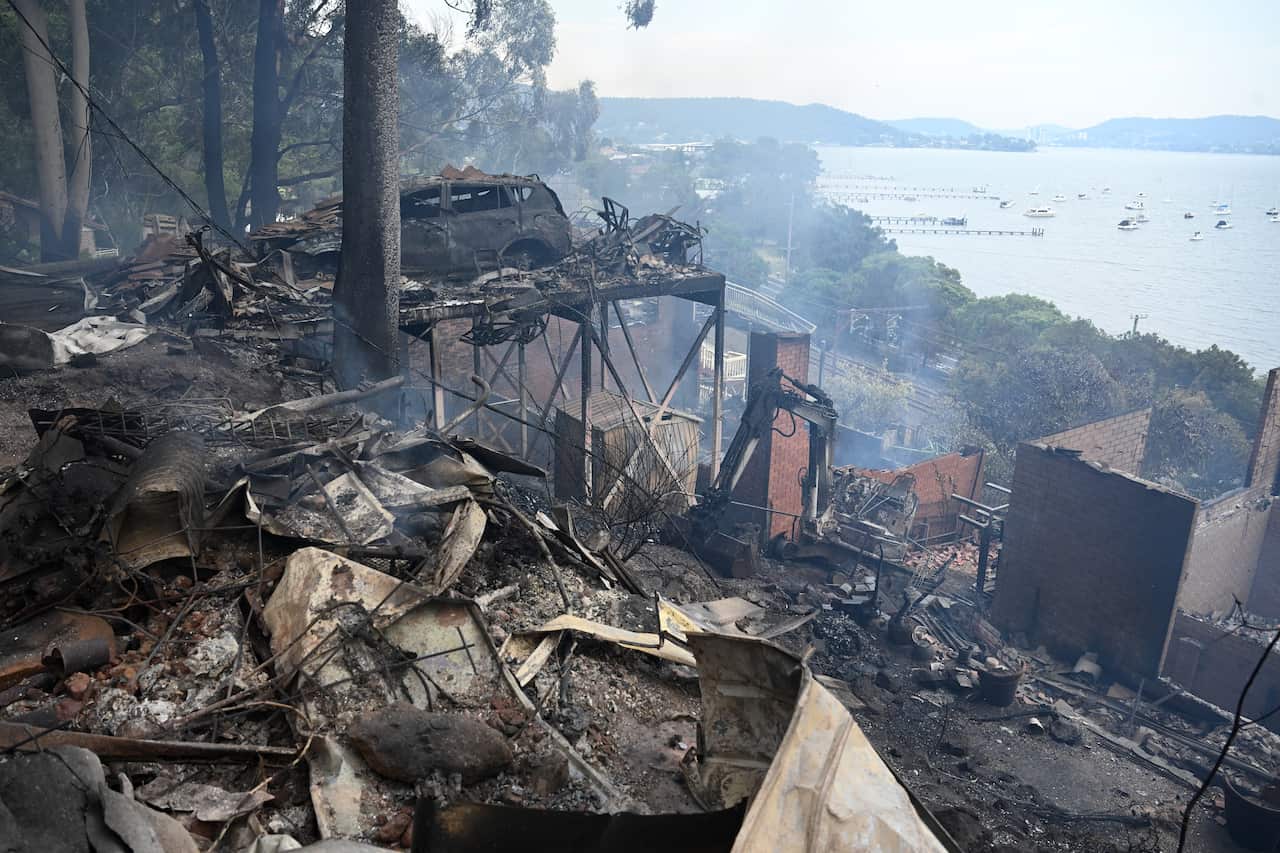
Houses burned down with smoke surrounding them.

Seventy-six fires were still burning in NSW on Sunday morning. Source: MONKEY / Then Himbrechts

Premier Anthony Albanese said he expected NSW to face a “pretty difficult” fire season this summer as devastating bushfires continue to burn across the state.

“This summer, of course, like all summers that would appear in recent times, is going to be a difficult one,” Albanese told ABC’s Insiders program on Sunday morning. ‘But New South Wales in particular has some conditions for it to be quite a difficult situation.

“Houses [were] lost yesterday. Happy, [there was] no loss of life – that is always the priority.”

What disaster declarations mean

A disaster declaration provides access to financing that helps with both immediate relief and long-term recovery.

Residents, businesses, primary producers and municipalities have access to:

  • Assistance with personal hardship and need, including emergency shelter and cash payments.
  • Reparations and concessional loans for small businesses and primary producers.
  • Supporting disaster response operations.
  • Community Recovery Funds.
  • Clean-up and restoration subsidies.

Hardship grants will also be available for people who have lost their homes.

Minns said the grants would give businesses and local councils access to support, with state officials on the ground to help residents.
“They can provide immediate housing support, and in some circumstances cash … that can be absolutely essential,” he said on Sunday morning. “I’ve talked to a number of families who have lost their phones, lost everything, medications, everything.”
Recovery Minister Janelle Saffin said the government was “acting quickly” to provide basic aid.

“To those in shock and distress today: I [send my] “I just want to express my condolences to them and just give them the assurance that we will do everything we can to support them,” she said.

Persistent problems with disaster benefits

But historically, access to disaster financing has been far from smooth for some.
Following the 2019 Black Summer bushfires, the National Bushfire Recovery Agency told the Royal Commission that eligibility for disaster reparations “unfortunately” depended on where you live, with support varying even across local authority boundaries.

Earlier this year, some communities also struggled to access adequate support on the back of Cyclone Alfred.

Taree resident Holly Rankin told SBS News many residents received a one-off federal payment of $1,000, but said this was not nearly enough to cover the widespread losses.
“Thousands of families in Taree, Wingham and the surrounding area have lost everything,” she said. “Anyone who makes a weekly budget knows that $1,000 can only last you a week.”
“These people are facing an enormous financial burden.”
According to analyzes by the Federal Ministry of Finance, natural disasters cost the economy $2.2 billion in the first six months of 2025.
– With additional reporting by the Australian Associated Press.

#loss #NSW #bushfire #victims #shock #disaster #payments #unlocked

Similar Posts

Leave a Reply

Your email address will not be published. Required fields are marked *