

Arman Tsarukyan didn’t follow the typical route to mixed martial arts. The UFC’s number one lightweight contender spent most of his youth dreaming of the NHL, not the octagon. In a recent interview with Daniel Cormier, the 29-year-old revealed a childhood marked by hardship, cutting weight at the age of seven and locker room brawls that foreshadowed his fighting career.
Arman Tsarukyan reveals all
Born in Akhalkalaki, Georgia, Tsarukyan moved to Russia while in the area three years old. The transition was brutal. “We had no house, my father worked all day, we had nothing,” Arman Tsarukyan told Cormier. “We slept in the car. We didn’t have a house at the time, it was cold and I also lived in a cold place.”
The family’s fortunes changed when a Dagestani family offered shelter. “A Dagestani family said: ‘Oh, come and you can live with us, don’t pay any money.’ We stayed with them for a year until we built our house,” he explained. His father, Nairi Tsarukyan, worked in construction and eventually built a successful business. By the time Arman was twelve, life had stabilized.
Wrestling, weight cuts and why he quit
Tsarukyan’s martial arts journey began at the age of six with freestyle wrestling, although karate came first. “Before that we went to karate, but karate was a bit far from our house and my father couldn’t take us there, and near our house there was a freestyle wrestling school,” he said. He stayed for three or four years and showed enough promise that coaches believed he could become an Olympic champion.
But there was a problem that distracted him from the sport: extreme weight loss for a child. “When I was seven, I was losing weight. Seven, eight years old,” Tsarukyan remembers. The coaches didn’t understand the damage they were doing. “They told us, ‘You don’t eat for two days, you don’t drink anything, you have to cut and you have to go for this weight class.’ I hated that sport because I lost weight.”
He is determined to protect future generations from the same experience. “Even if I get kids who wrestle, I don’t make them lose weight. That’s the worst thing for a wrestler, especially from seven, eight to fourteen years old, there’s no point. It’s just practice, it doesn’t matter if you win or lose.”
The hockey years
At the age of nine, Tsarukyan made a decision that would shape the next chapter of his life. “All my teammates from school played playing hockey all day. I played with them amateurishly and was still struggling. I competed in wrestling when I was nine, but in the winter I went to the ice three times a week to play with them,” he explained. A coach saw potential and suggested he start training seriously.
His father fully supported the move, despite the costs. “My dad bought me all the hockey stuff because it’s a little expensive. He said, ‘If you need a professional coach or go somewhere, send you to Canada or wherever you want.’ I said, ‘This is pretty good,’ and I stayed there.” Tsarukyan played for the junior team of Hockey Club Amur in Khabarovsk, a region near Alaska where hockey dominated the sporting landscape.
“I started at nine. I was supposed to start at five or six because those three years are big in hockey. When I was nine or 10 they had already been playing for four or five years. The competition is on a different level,” he said. Of the approximately thirty players, only three reached professional clubs and one friend reached the NHL. Tsarukyan was not there.
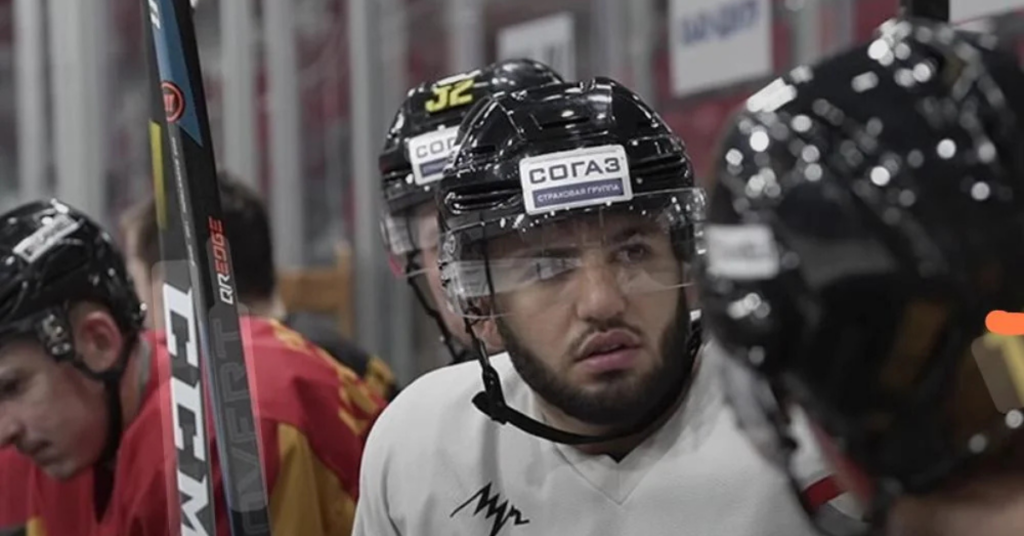
Locker room fights – where fighting and hockey came together
While Tsarukyan struggled on the ice, his wrestling background gave him a different kind of advantage. When Cormier asked how much he used his wrestling skills in hockey, the answer was revealing. “I used wrestling mainly in the locker room. We were fighting in the locker room and I used my wrestling. On the ice I wasn’t very good at fighting, so my teammates didn’t try to bother me”.
“Where I grew up, that’s why fighting is easy for me. I like fighting, I don’t know where it comes from, maybe because of my blood,” he said. His father would encourage children’s leftovers. “Even as a kid, we would go somewhere with two families and there was a kid and my dad would always say, ‘Can you beat this guy?’ I’d say, ‘Yes,’ and we’d fight. Ten-year-old children in the village, that’s how it goes. I never lost those childhood fights because I knew wrestling – I knew how to shoot singles and doubles and that was enough.”
The turn to MMA
At the age of 17, Tsarukyan’s hockey dreams ended. He returned to martial arts through wrestling, which was gaining popularity in Russia at the time. “Wrestling was so popular at that time and I said, okay, what I can do, I can’t be a hockey player, I should try this wrestling and I tried wrestling and I immediately won the Russian league and I said it was so easy, maybe I should fight.”
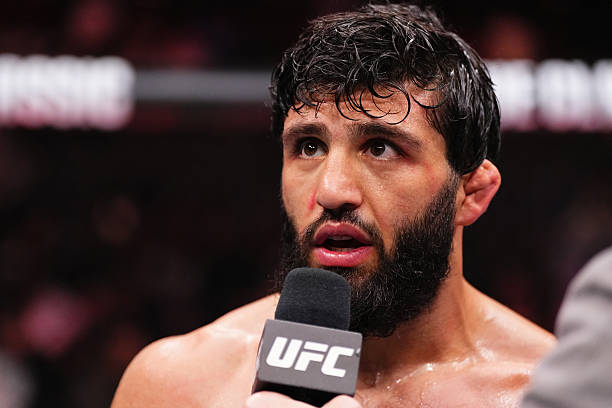
Unlike many Russian fighters, Tsarukyan’s father took a hands-off approach. “He never pushed me. He just supported me. He never said to me, ‘Why are you sleeping? You have to go train.’ He has never done sports, he doesn’t know how sports work. He just supported me; I did what I wanted to do.” That family success gave him freedom. “I told my dad, ‘If I’m not a good fighter, just tell me and I’ll do something else.’ But I started winning and became champion, and he saw it.”
The single- and double-leg takedowns he learned between the ages of six and nine remained his foundation. “The same single and double legs that I photographed when I was 6 to 9, I still photograph to this day.” Those early wrestling years, combined with locker room leftovers and a late start in professional fighting, created one of the UFC’s most versatile lightweights.
His path to gold was derailed when he withdrew from a scheduled championship fight with Islam Makhachev at UFC 311 in January 2025 due to a back injury suffered during his weight cut. With undisputed champion Ilia Topuria set to return to face Gaethje between April and June, the boy who learned to fight in hockey locker rooms now faces another test of patience; waiting for his moment to prove that those child remains in the village were just the beginning.
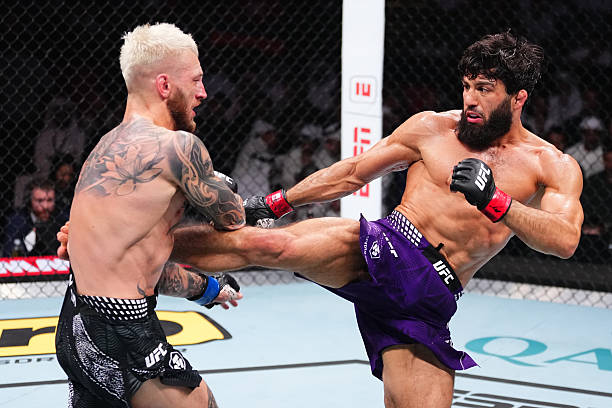
#Arman #Tsarukyan #reveals #sleeping #cars #fighting #hockey #locker #rooms