

Have you noticed how wearable health trackers are everywhere these days? From the gym to the school pick-up line, everyone seems to have a smart gadget that monitors their steps, sleep or stress.
And it makes sense. Most of us are trying to take better care of ourselves. But with so many options on the market, it can be difficult to know which one is which actually worth buying and which might end up in a drawer after a few weeks.
If you are curious about the Apple Watch, WHOOP band, Garmin smart watchor smart rings like the Oura Ring and RingConn, this guide will show you what each device has to offer, what kind of person it’s best for, and how to get the most for your money if you decide to buy one.

Apple Watch: the all-in-one lifestyle tracker
The Apple Watch is probably the most well-known wearable on the market, and for good reason. It’s sleek, easy to use and integrates perfectly if you already have an iPhone.
The latest Apple Watch models track your heart rate, steps, sleep and workouts, and even offer ECG and blood oxygen readings. You can also receive text messages, calls and notifications, so it doubles as a mini smartphone on your wrist.
The pros: You get an all-in-one device. If you’re into technology and want to track your fitness and stay connected all day, it’s hard to beat the Apple Watch as a fitness tracker in 2026.
The disadvantages: The price can be high and the battery life is short (often charged every other day). And if you don’t use most of the smart features, you could be paying for more than you need.
Best for: Busy moms who want one gadget that handles everything: health tracking, notifications and convenience.
Money saving tip: You can save by purchasing Apple Watch SE or a model from last year. They can often be found at retailers like Walmart or Best Buy and perform almost as well as the latest version.

WHOOP: The fitness professional’s favorite
Unlike most smartwatches, the WHOOP band has no screen or apps. It is a band designed purely to monitor your body’s load, recovery and sleep quality.
It’s perfect for athletes or serious fitness enthusiasts who want in-depth insight into how hard they train and how well they recover. WHOOP gives you a “recovery score” each day to help you decide whether you should rest or push harder.
The pros: The data is impressively detailed, especially for tracking sleep stages and recovery. If you like analyzing your workouts or want to train smarter, this is a fantastic tool.
The disadvantages: The biggest disadvantage is the cost. WHOOP requires a monthly membership (minimum $12-$16/month after purchasing the band). That can add up quite a bit over time. Smartwatch functions such as texting or calling are also missing.
Best for: Someone who is serious about fitness or training and wants advanced performance data instead of daily health monitoring.
Money saving tip: If you just want to stay active and track daily movements, a one-time purchase tracker (like Garmin or Oura) will likely give you enough information at a lower cost in the long run.

Garmin: the workhorse of the active family
Garmin watches are known for their durability, long battery life and accurate tracking, especially for running, cycling and outdoor activities. Models like the Lively or Precursor balance between affordability and functionality.
The pros: Garmin excels at fitness tracking and GPS accuracy. It can track your heart rate, stress, and sleep, while offering multi-day battery life, something most Apple Watches can’t match.
The disadvantages: The smartwatch’s features aren’t as polished as Apple’s, and the designs can feel bulkier. Some high-end Garmin models also get pricey, running up to between $400 and $800.
Best for: Active moms and families who enjoy running, walking or outdoor workouts and want reliable tracking without daily charging.
Money saving tip: Garmin regularly discounts older models when new ones are launched. You can often save $50-$100 by choosing an earlier version that performs almost identically.

Oura Ring: the sleek and subtle wellness tracker
If you don’t like wearing something bulky on your wrist, then the Oura ring is a wonderful alternative and one of our favorite fitness trackers for women. This smart ring focuses on tracking your sleep, readiness, and daily activity without notifications or distractions.
OurThe company’s detailed sleep and recovery insights are among the best available, and the ring’s small size makes it easy to wear 24/7. The battery lasts up to seven days, which is a big plus.
The pros: It’s discreet, comfortable and ideal for anyone who wants to focus on overall well-being rather than workouts or notifications.
The disadvantages: It’s pricey (starting at around $349) and there’s a small monthly membership fee for access to full data insights. Some users also note that it can wear out when worn during workouts.
Best for: Mothers who want to gain insight into their sleep and stress patterns, improve recovery and prefer something minimalist.
Money saving tip: Please ensure you check sizing carefully before ordering as returns or exchanges may take some time. And if you’re curious about how it compares to the RingConn, you can read our full Oura vs. RingConn review here.

RingConn: the budget-friendly smart ring
The RingConn Smart Ring offers many of the same features as the Oura Ring, including sleep tracking, heart rate monitoring and stress insights, but without the monthly membership fee.
It’s a newer brand, but early reviews are promising. The app provides easy-to-understand data and the ring costs around $199 – $279, making it more affordable than Oura in 2026.
The pros: No ongoing costs, lower price and surprisingly detailed cost tracking.
The disadvantages: The app and brand are newer, so long-term software support is still proven. It may not yet feel as polished as Oura.
Best for: Anyone who wants a wellness-focused smart ring without the premium price tag.
Money saving tip: The RingConn often runs promotions or bundles on its website. Buying directly can sometimes provide additional benefits, such as a free charger or case.
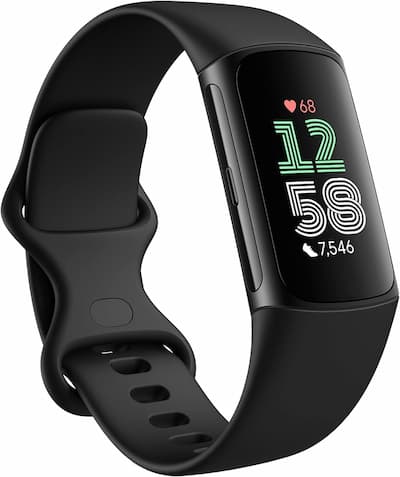
Fitbit: the practical, budget-friendly tracker for everyday use
If you want the best fitness tracker for women but don’t need all the bells and whistles of a full smartwatch, Fitbit can be your perfect middle ground. It’s one of the most popular and affordable fitness tracker options that let you track your steps, heart rate, sleep, and activity without spending hundreds of dollars or going through a steep learning curve.
Fitbit offers different models, from the slim Fitbit Charge 6 to the more watch-like one Fitbit Versa4.
The pros: Fitbit is known for being easy to use and giving you the essential features without unnecessary extras. The app is clear and beginner-friendly, and Fitbits syncs with both iPhone and Android. They’re also lightweight, comfortable, and often half the price of many smartwatches.
The disadvantages: Fitbit doesn’t offer as many “smart” features as an Apple Watch or Garmin. On most models you can receive notifications, but not full app integrations or text messages. Some advanced metrics, such as detailed sleep or stress reports, require a Fitbit Premium subscription (about $10/month).
Best for: Moms who want an easy, budget-friendly tracker that encourages healthy habits without feeling like they have one more thing to take care of. If your goal is to exercise more, sleep better, or monitor your heart rate and stress, Fitbit can do it all affordably and reliably.
Money saving tip: Fitbit models often go on sale, especially around Black Friday and New Year’s, when health resolutions kick in. Usually you can get the Fitbit Charge 6 or Versa 4 under $120 at stores like Walmart, Target or Best Buy.
Make the best choice for your needs
At the end of the day, the best wearable fitness tracker is the one you will actually use consistently. Choosing the most expensive gadget doesn’t guarantee better results if you never wear it, charge it, or dig into data.
Here are a few budget-friendly takeaways to consider:
- Determine your “must-haves”: Do you really need GPS? An app ecosystem? Follow all day? Or is sleep + basic wellness enough?
- Consider the total costs over time: Some devices require subscriptions (such as WHOOP and Fitbit Premium) or need to be replaced/upgraded regularly.
- Portability is important: If it’s uncomfortable, bulky, or difficult to integrate into your busy mom routine, you won’t use it.
- Search for offers: Brands regularly give discounts on older models or hold promotions.
- Let the gadget support your habits, don’t let it become a distraction: Your well-being comes from what you are Doing (exercise, sleep, recovery), not just what you track.
So choose deliberately, spend within your budget and let your wearable be a toolno trouble.
Do you use a wearable fitness tracking device? We’d love to hear your experiences and recommendations in the comments!

Do you need help to make sure your habits finally stick?
Join our FREE habit tracking challenge!
#Apple #Watch #Oura #Ring #WHOOP #fitness #tracker #worth #money