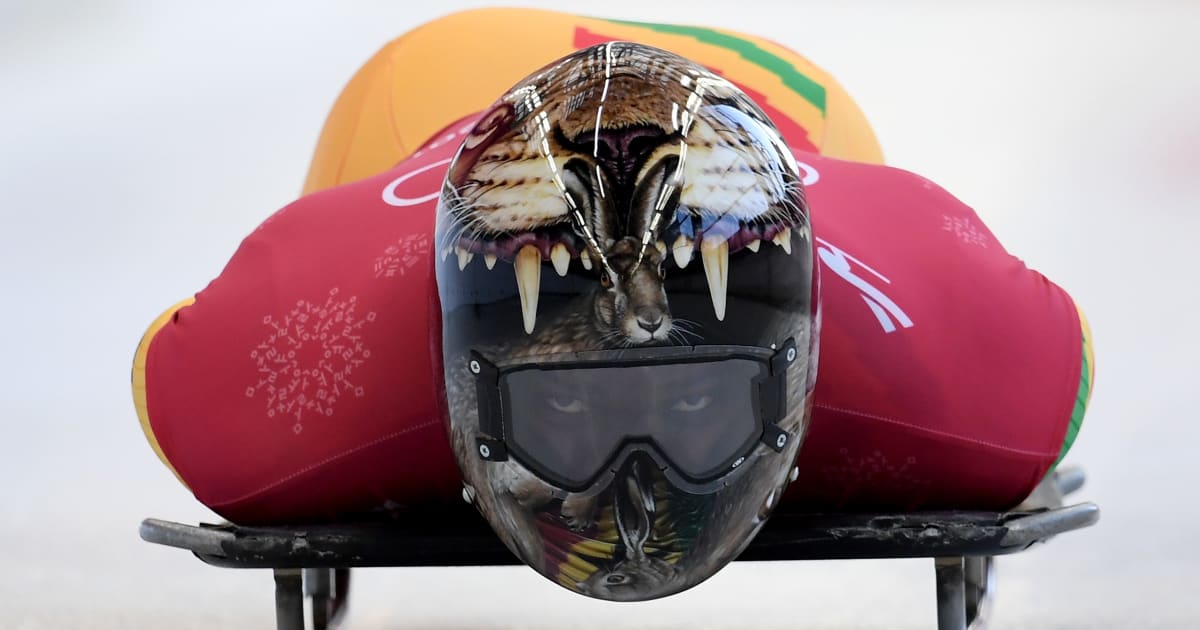

Skeleton helmets as an expression of inner strength
Frimpong, Ghana’s skeleton pioneer Pyeongchang 2018explained in an interview with Olympics.com that helmets symbolize the alter egos of athletes. “Skeleton athletes love to express their secondary personality through their helmet designs,” he said.
For many athletes, the helmet represents inner strength and motivation, which drives them to push harder on the ice. Whether it’s a superhero, patriotic symbol or metaphor, it serves as a source of inspiration and focus.
“It helps you give the best of yourself,” the 39-year-old said.
At PyeongChang 2018, Frimpong wore a helmet with a lion’s head with a rabbit escaping from its jaws. It symbolized his journey as an athlete, overcoming countless challenges to eventually become Ghana’s first skeleton competitor at the Winter Olympics.
Athletes often start their mental preparation for races with a special ritual. “When you look at the athletes, you see that they look at their helmets before putting them on. In that moment they remind themselves why they are here, at the top, and what drives them.”
Pride, culture and courage play a crucial role in the skeleton. “If you rush around the rink at 130 to 140 kilometers per hour, you’re like a superhero. Maybe a little crazy, but still a superhero,” Frimpong said with a smile. “We all try to drive as flawlessly as possible and take every opportunity to go faster.”
Other athletes at PyeongChang 2018 also wore helmets with deep personal meaning, such as Canada’s Mirela Rahneva. Her helmet featured a horse, a tribute to her late mother. “When you race that, it should light a fire inside you,” Frimpong noted.
#Alter #egos #ice #Whats #extraordinary #skeleton #helmet #designs