

Be afraid. Be very afraid.
That’s the message that has caught fire in the media-tech world when it comes to artificial intelligence (AI).
This column, for what it’s worth, is written by a fallible human on a battered keyboard, without technological assistance.
It’s extremely rare (once in a while) that I read a piece that completely changes my perspective on an issue.
Like most people, I have viewed the rise of AI with a mixture of concern, skepticism and bewilderment.
DEMOCRATS LOSE AI DUE TO MAJOR MESSAGING PROBLEM
For example, it’s fun to call up images on ChatGPT, and I understand some people use it for hyperspeed research. But then you hear anecdotes about AI messing up math problems or spitting out things that just aren’t true.
Of course, we’ve all seen warnings that this burgeoning technology will cost some people their jobs, but I assumed this would happen mostly in Silicon Valley. The age of air travel didn’t wipe out passenger trains and buses, although it did put a curtain on the horse-and-buggy industry.
But now comes Matt Shumanwho works in AI, and he doesn’t just join the prediction competition. He tells us what is happening right now.
Last year, he says, “new techniques for building these models enabled much faster progress. And then it got even faster. And then faster again. Each new model wasn’t just better than the last… it was better by a larger margin, and the time between new model releases was shorter. I used AI more and more, going back and forth with it less and less, and watching it handle things that I thought required my expertise.”
On February 5, two major companies, OpenAI and Anthropic, released new models that Shuman likens to “the moment when you realize the water around you has risen and is now on your chest.”
Bingo: “I’m no longer needed for the actual technical work of my job. I describe what I want, built in plain English, and it just seems… not a rough draft for me to fix. The finished thing. I tell the AI what I want, walk away from my computer for four hours, and come back to see the work done. Good job, better job than I would have done it myself, with no corrections. A few months ago I went back and forth with the AI, guiding it and making edits. Now I just describe the outcome and leave.”
Wait, there’s more. The new GPT model “didn’t just carry out my instructions. It made intelligent decisions. It had something that, for the first time, felt like judgment. Like taste. The inexplicable feeling of knowing what the right decision is that people always said AI would never do. This model has it, or something so close that the distinction doesn’t matter anymore.”
This goes way beyond the geeky world of techies, in case you’re feeling immune. “Law, finance, medicine, accounting, consulting, writing, design, analytics, customer service. Not in ten years. The people building these systems say one to five years. Some say less. And given what I’ve seen over the past few months, I think ‘less’ is more likely.”
AI RAISES THE COMMITMENT TO NATIONAL SECURITY. Here’s how to do it right
My knee-jerk reaction is: I’ll be fine, because no super smart bot can talk about news on TV or podcasts with the same attitude and enthusiasm as I do. Then I remember, even as a writer, that news organizations are increasingly reliant on AI.
What about musicians who add soul to their rock ‘n’ roll or bop to their pop? Well, the most popular AI singer is Xania Monet. Some fans were stunned to discover that she wasn’t real, although created by a real poet, Telisha “Nikki” Jones, and most listeners didn’t care. In fact, “Xania” now has a multi-million dollar recording contract.
Another sobering thought: “Dario Amodei, probably the most security-focused CEO in the AI industry, has publicly predicted that AI will eliminate 50% of entry-level white-collar jobs within one to five years.”
Gulp.
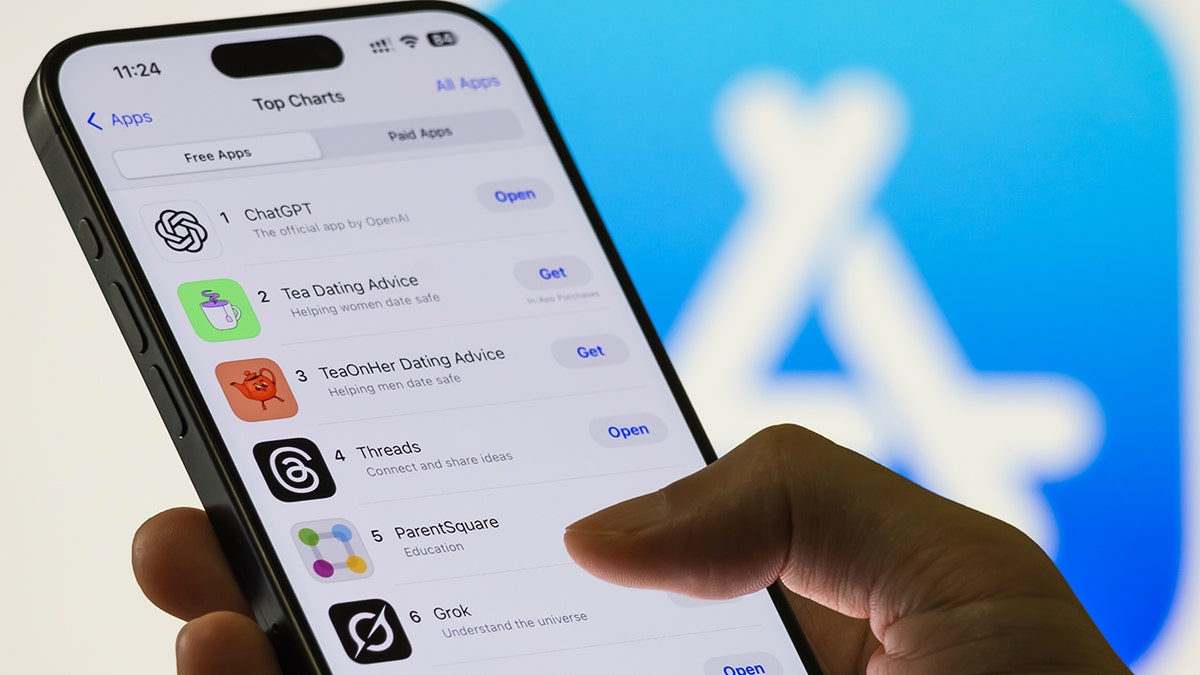
Experts predict that AI will eliminate 50% of entry-level white-collar jobs within one to five years. This statistic comes as job security concerns surrounding the technology are increasing. (Cheng Xin/Getty Images)
This has truly reached the media echo chamber, reverberating from Axios to the New York Times and the Wall Street Journal, among others.
The fact that Matt Shuman presents this in a measured tone, and not a shout-out, adds to his credibility.
Anthropicfor its part, published a study defending its Claude Opus model, “against any attempt to autonomously exploit, manipulate or tamper with a company’s activities in a way that increases the risk of future catastrophic consequences.”
The report added: “We do not believe it has dangerously coherent objectives that would increase the risk of sabotage, nor that its deception capabilities are so high as to invalidate our evidence.”
95% OF FACULTIES SAY AI MAKES STUDENTS DANGEROUSLY DEPENDENT ON TECHNOLOGY FOR LEARNING: SURVEY
Meanwhile, National Review offers a counterpoint to what’s called ‘doomerism.”
For starters, “most predictions expect AI to be a top-down disruption rather than a bottom-up phenomenon.”
On the other hand, writes Noah Rothman, “there is almost no room in the discourse for undesirable outcomes that are not catastrophic. After all, modesty and prudence do not go viral.’
And what about the positive impact?

Concerns around AI have led to the rise of ‘doomerism’. Though experts say “modesty and caution” in AI discourse “won’t go viral.” (iStock)
“Rather than wipe out entire industries, it is just as likely that the workers displaced by AI will be retained in the industries they already serve.
It defies logic to assume that an industry growing as fast as AI is expected to grow will not need human data scientists, research analysts, specialist engineers and, yes, even support and administrative staff. In addition, sectors such as healthcare, agriculture and emerging industries will require as much or even more human talent than they currently employ.”
The conservative magazine is also annoyed that “participants in this debate default to the assumption that the only solution to AI’s disaggregating potential, regardless of its scale, is big government.”
Just make a choice.
CLICK HERE TO DOWNLOAD THE FOX NEWS APP
If AI, which can now code well enough to reproduce itself, doesn’t wipe out countless jobs, or if society finds ways to adapt, we can all breathe a very human sigh of relief.
And if artificial intelligence is as destructive as Shuman’s alarming article says, we can’t say we weren’t warned. But maybe we can use it to do our work for us as we work three days a week with a three-hour lunch.
I’m agnostic at this point, other than it’s going to be a wild ride.
#control #single #article #sends #shockwaves #apocalyptic #warning