

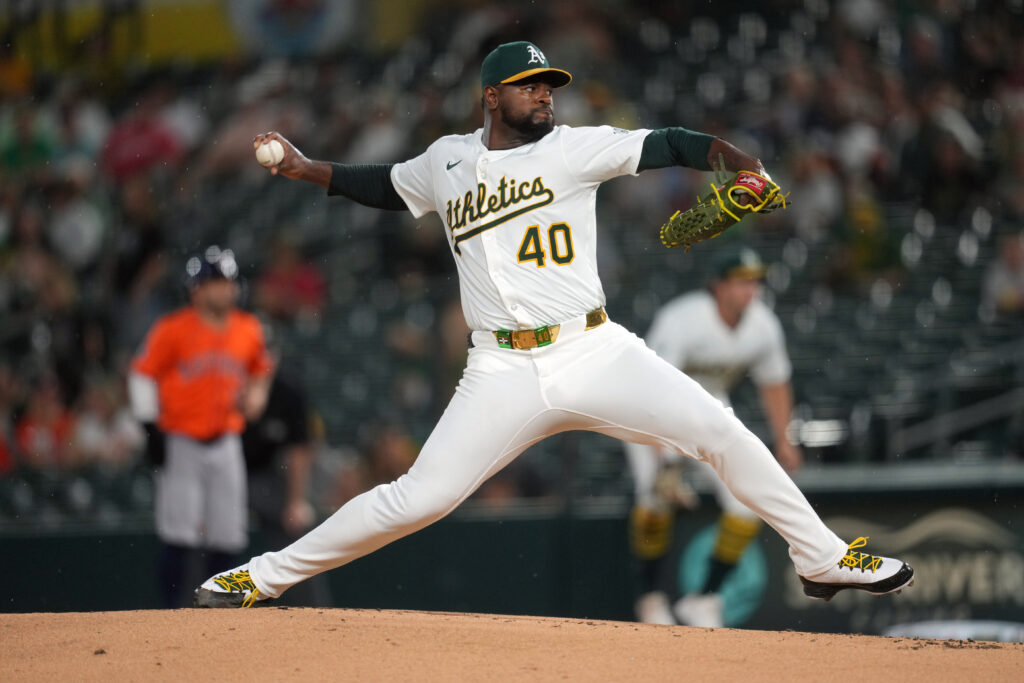
Those comments reportedly did not sit well with A’s brass. There was speculation that the team would try to move Severino before the deadline, but his contract and poor performance made that easier said than done. Severino rebuilt some value with a better performance after the All-Star Break. He finished the season with a 3.10 ERA over his final nine appearances. He struck out a whopping 21.8% of opponents while holding them to a .226/.289/.333 batting line over that stretch.
Barring a three-week injury layoff due to an oblique strain, the second-half performance was what the A’s front office had in mind when they signed Severino. As they enter another pitching-focused offseason, they seem less likely to move him than they were a few months ago. Will Sammon and Ken Rosenthal of The Athletic write that the A’s are not interested in trading Severino in a pure salary dump. While they don’t take him off the table in the talks, it appears they are demanding a legitimate return on top of another club taking his contract off the books.
Severino is still owed a $5 million signing bonus, which will be paid on January 15. (The A’s would be responsible for that even if they traded him within the next month.) He’ll make a $20 million salary next year and have a $22 million player option for the 2027 campaign. It’s a total two-year, $42 million commitment, with the possibility of Severino opting out after the first season. He received and rejected a qualifying offer from the Mets last winter, so the A’s wouldn’t be able to give him another QO if he retests the market.
It’s not a bad contract, but it’s also not one that offers much benefit to the team. Severino is coming off a 4.54 ERA with a below-average strikeout rate of 17.6% over 162 2/3 total innings. Much has been made of the three-point gap in his ERA (6.01 vs. 3.02) at home vs. on the road. However, Severino’s 17% strikeout rate and unsustainably low .249 average on balls in play during his away start suggest his road ERA is a bit of a mirage. There is a much smaller gap in his FIP (4.34 vs. 3.87) in his home/road splits. The overall appearance resembles that of a starter in the league.
The ideal outcome for the team is for Severino to pitch as a #3 starter next season and opt out. He would only exercise the player option if he pitched so poorly that he doesn’t think it’s smart to walk away from a $22 million salary. Unsurprisingly, it doesn’t appear teams are willing to offer the A’s a strong trade package. Sammon and Rosenthal write that interested clubs would only accept Severino’s contract if they do not have to give up significant talent.
That doesn’t do much for the A’s, assuming the front office and ownership don’t acquire him just because of his criticism of the temporary stadium arrangement. Severino and Jeffrey Springs are their only returning starters to top 100 innings. The rotation had an overall ERA of 4.85, the fourth highest mark in the MLB. Rookies Jacob Lopez And Luis Morales showed promise, but starting pitching remains the team’s biggest need. That’s especially true considering how hitter-friendly the park is in Sacramento, which takes a bigger toll on the A’s young arms. They could face similar challenges as they did last season in convincing free agent starters to sign there.
Severino, Springs, Brent Rooker And Laurens Butler are the only players with guaranteed deals. They have one of the lightest arbitration classes in MLB. Grid source estimates their luxury tax number is around $105 million, which was their reported goal last winter to avoid a revenue sharing complaint. Their actual salary estimate is about $75 million. That’s exactly where they opened the ’25 campaign. In addition to their rotation needs, they look to add a high-leverage reliever and could pursue help at second and/or third base.
#pursuing #salary #dump #Severino