

“We have made our comeback with MC20,” says Maserati at the media launch of the new MCPura. In the hearts of enthusiasts they are not wrong: the MC20 is a spectacular little supercar, one that came somewhat out of the blue and quickly won several high-profile awards. No wonder, perhaps, that the MCPura replacement is so closely aligned with the original script from five years ago.
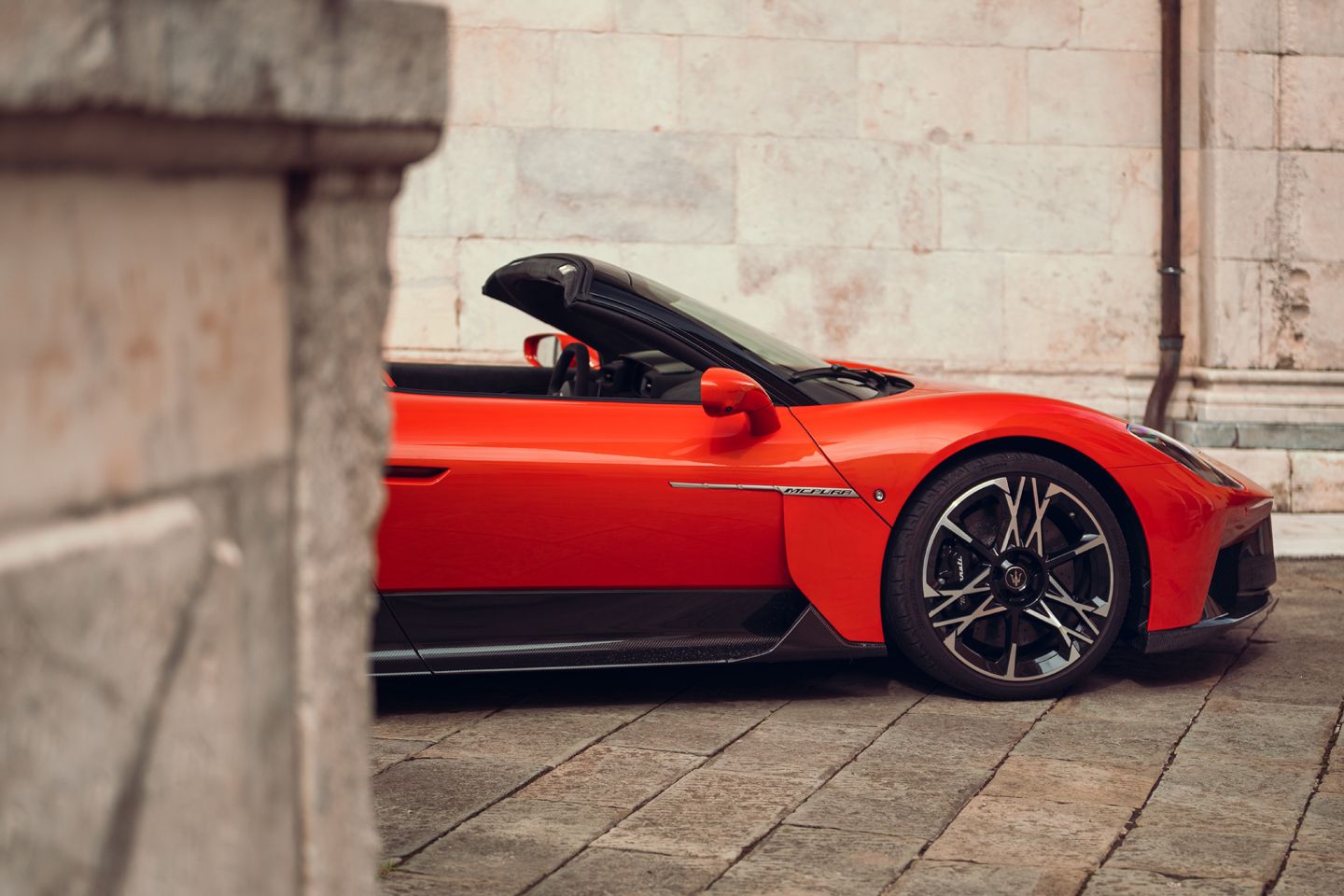
A full overview of the progress compared to an MC20 won’t take long. How they managed to squeeze the official press release into sixteen pages I’ll never know, and you have to be one of the designers (or mothers of designers) to be able to properly distinguish an MCPura from an MC20 at a glance. The front and rear bumper treatments are new and presumably more aggressive thanks to inspiration from the wild child GT2 Stradale, but this new car looks – to our eyes at least – a bit neater and less fussy. Actually still a blast.
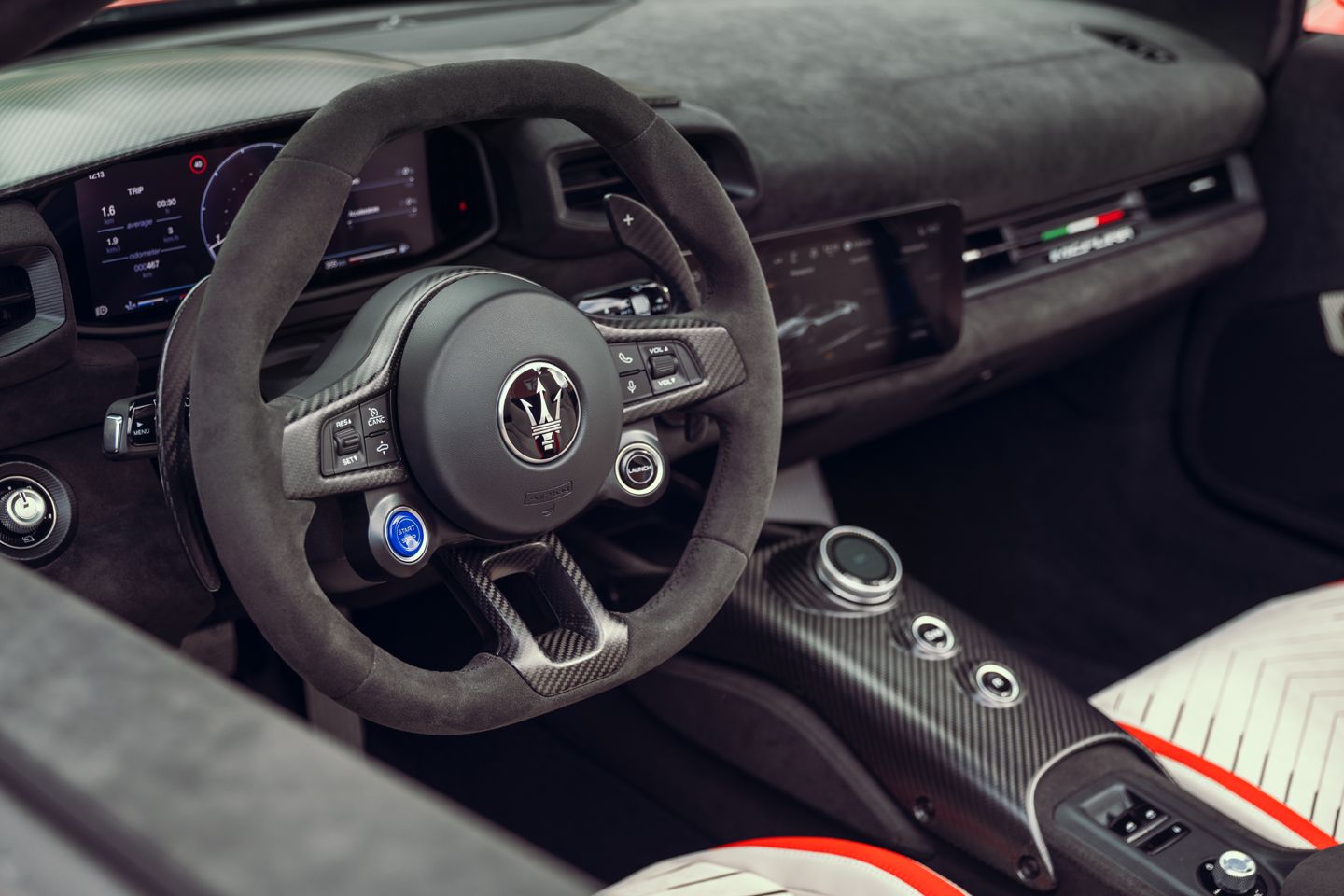
Inside, leather has made way for Alcantara (but you can still do that), the top and bottom of the steering wheel have been flattened and some new performance data can be found by swiping the still-clunky touchscreen. And that, my friends, it really is. Which, if you’ve experienced an MC20, can be a relief. The shrill 3.0-litre V6 ‘Nettuno’ turbo hasn’t received an ounce of electrical assistance (possibly a surprise, as everything else within House of Stellantis generally goes that way) and still delivers 630bhp at a minimum of 8,000rpm. Whether you choose the Coupé or the slightly heavier Cielo drop-top, you sprint to 100 km/h in just 2.9 seconds; Only the fully closed car officially reaches a speed of 320 km/h, although the version with a retractable hardtop is only just within that limit.

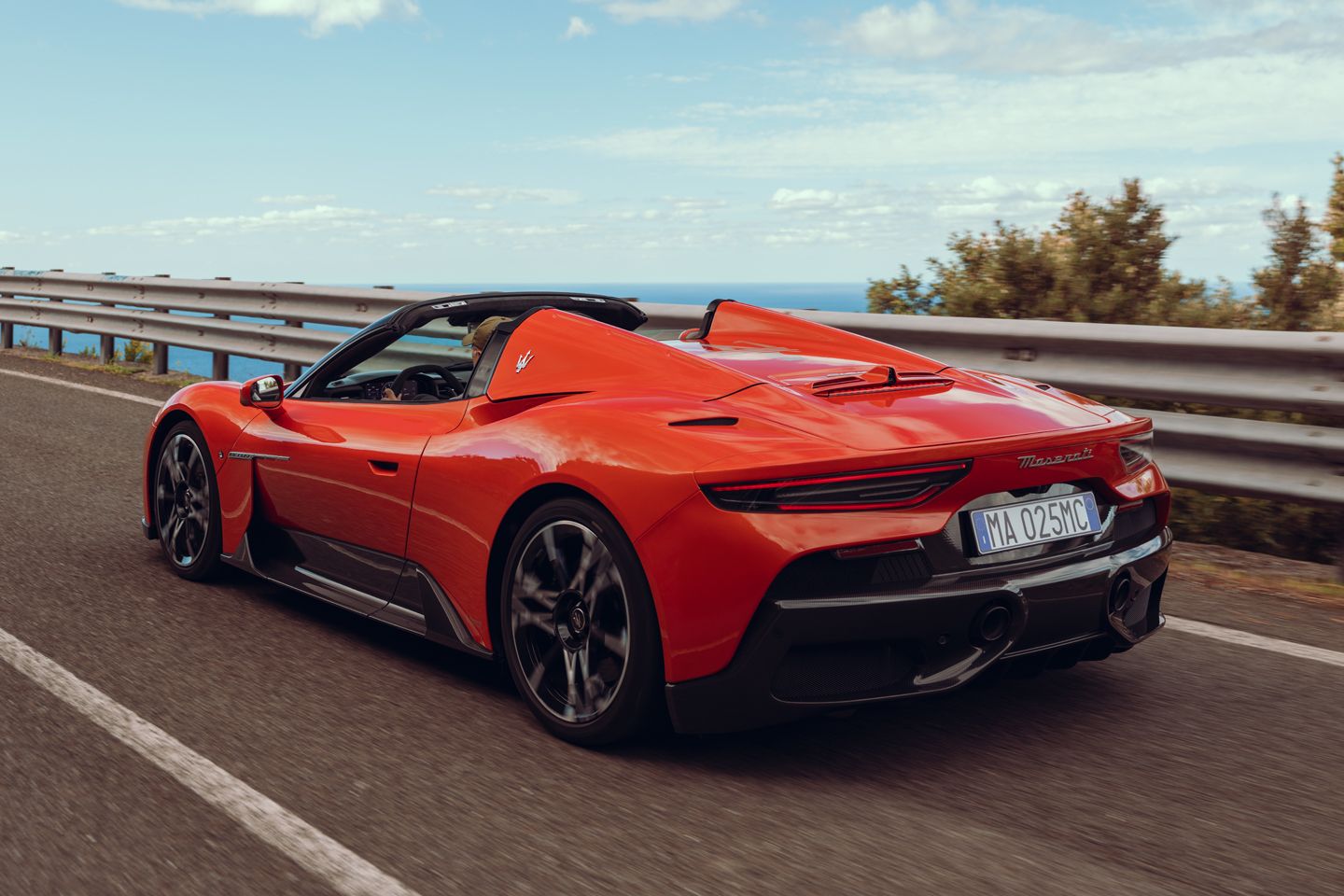
But forget the outright speed. The MC20’s neatest trick was how it made a raw and deep driving experience so refined and cohesive. The flaws and quirks of the performance felt ingrained and intentional, the whole thing utterly imperfect.
I have to admit that my only previous MC20 experiences were on damp, sandy roads in Britain, where the car felt wonderfully loose at full throttle and wonderfully legible and compliant as I diligently stringed together a few corners. It had that modern Ferrari sensation of immediately giving you complete confidence in what was happening beneath you, and making a tap of the Corsa’s strangely recalcitrant drive mode dial – to increase the damping and release the nannies – feel like the most natural thing in the world.
Experiencing the MCPura in warm, autumnal Italy is very different in terms of grip – there’s loads under the 305 section tyres, even with deliberate chatter – but the overall sensation is still wonderfully reminiscent. With such strong traction, Corsa mode should be your default setting, given how studiously it shows the control systems are in something else. There’s little need for them to stifle your style when the car is so well-balanced and legible, although in Britain I can see the appeal of the stricter Sport mode.
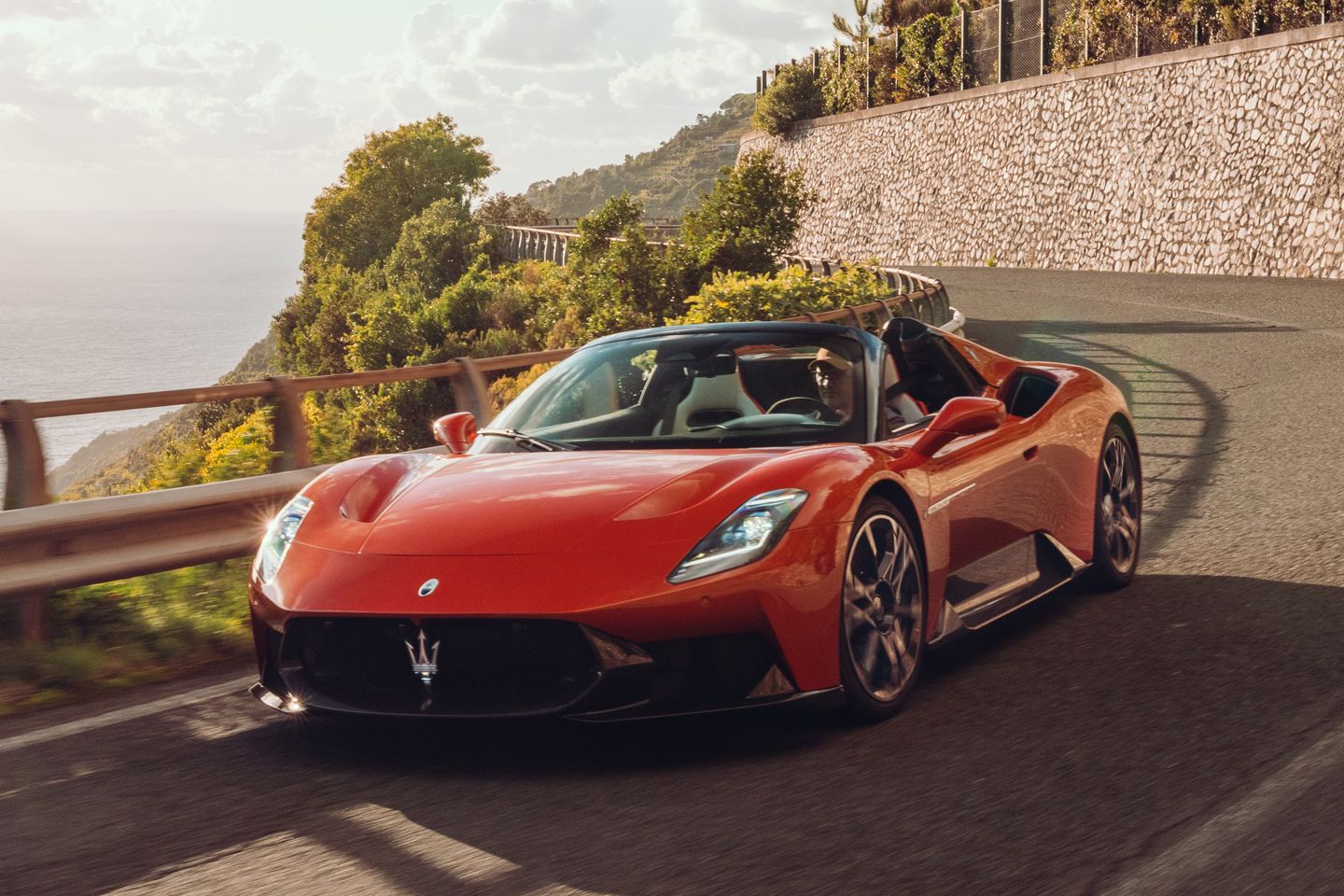
Any way you turn the dial, this is a hugely accelerating car and its EV-competitive performance is no less impressive than the spec sheet says. It’s still heavier than you’d hope an Italian carbon-tubed sports car would be, and it still doesn’t really behave like one on the road, darting forward out of Autostrada’s toll booths with just the slightest noise from its rear tires.
The metal paddle shifters are nice to operate and the eight-speed DCT at the end of it is just the right side of aggressive, although unfortunately this isn’t an engine you’ll desperately want to wring out in every ratio. It’s just as much fun to briefly shift gears through the torque, a cacophony of huffs, whistles and huffs all the way. The paddles play tunes here as much as they determine your progress, and it’s a drivetrain with real range and flexibility – it’s just not overflowing with soul. The car feels somewhere between an Alpine and a McLaren in terms of attitude, and the V6 soundtrack has a similar bassy, industrial feel to the more familiar four and eight.
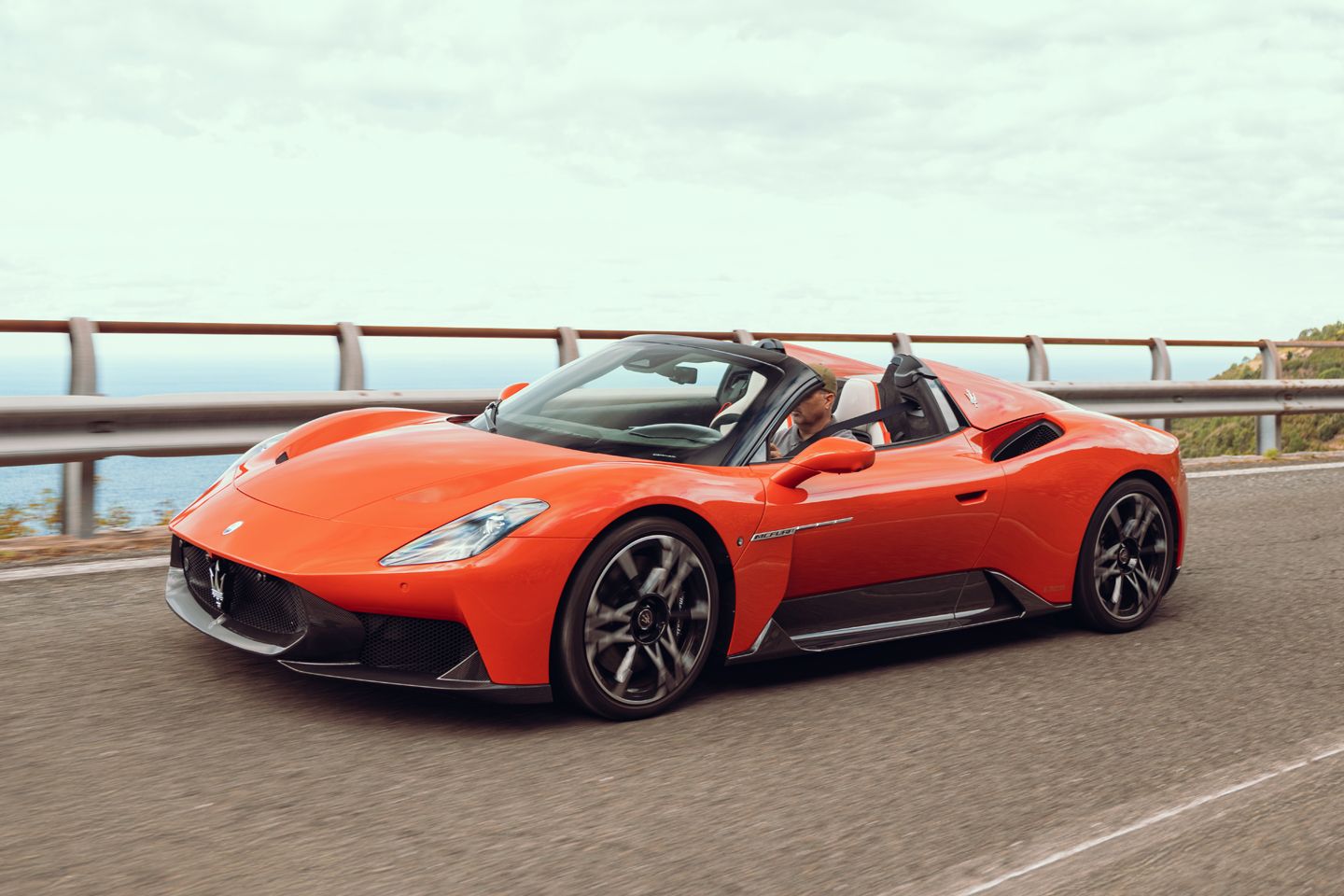
Buzzing open the Cielo’s roof will let in more noise, but on longer journeys it will also bring in far too much wind. The artful folding mechanism creates a slim targa opening and, like a 911 Targa or MX-5 RF, it’s all a bit too blustery at speed and best saved for low-speed loafing. The tricky glass roof – which switches between clear and opaque via a cluttered touchscreen submenu – helps alleviate some of the embarrassment.
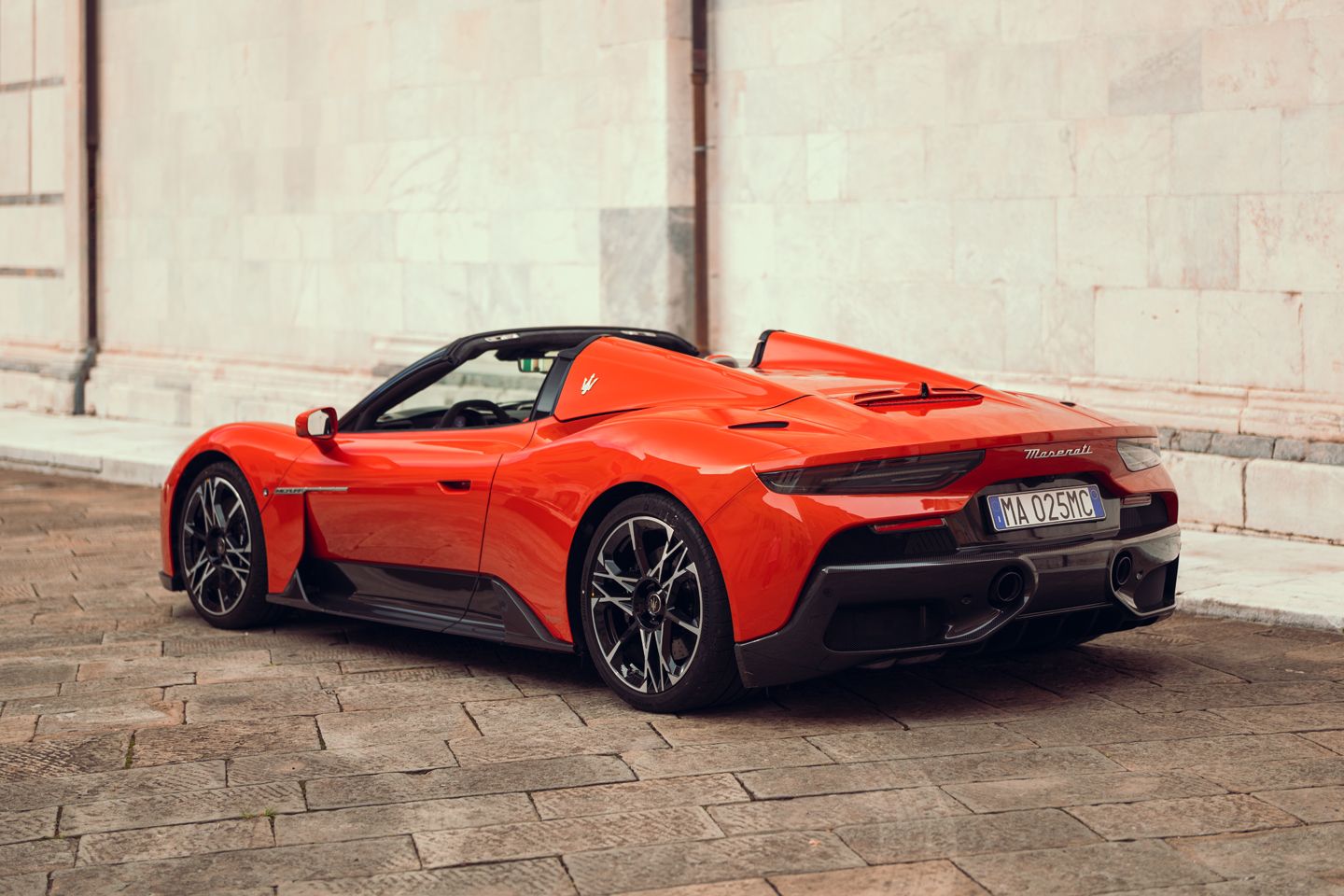
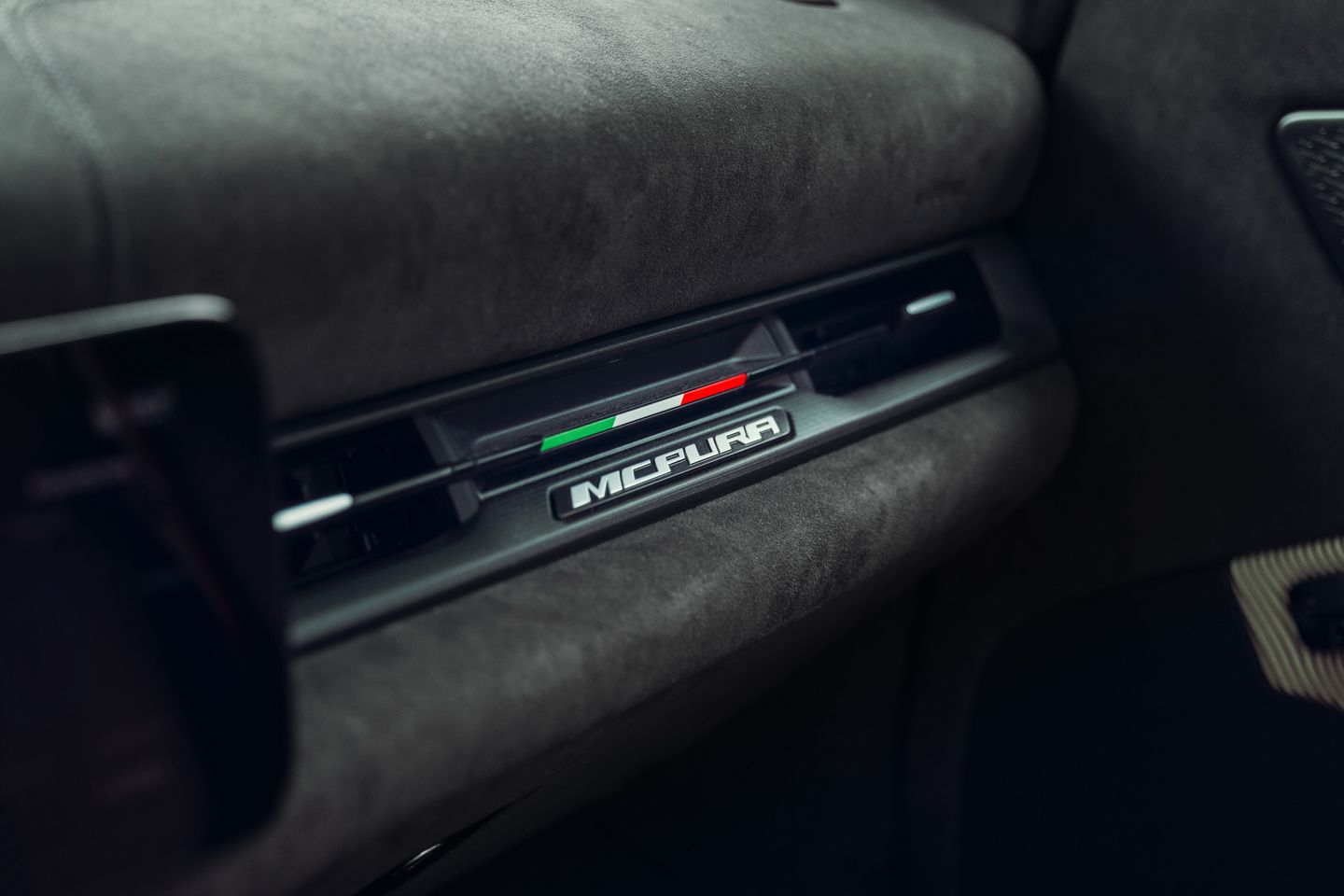
About two-thirds of MCPura buyers will be playing Cielo and not once have I longed for more chassis stiffness or focus, although I suspect I’d personally choose the Coupe for its glass hood and the extra fuse capabilities it offers when stationary. The convertible’s 85kg weight penalty is pleasingly slim and it’s clear the car’s carbon core has been designed with both bodies in mind.
The media launch also tells us that existing owners love their MC20 for its practicality, often indulging in long journeys (apparently). Admirable when the luggage and cabin space are both so limited and your suitcases are pre-prepared when they are behind the Nettuno in the back. Nowt has been changed for the Pura and what remains is a piece of glove box and only one cup holder; the feeling of an overly amplified A110 always lingers in the background. That is above all a noisy compliment.
If you’re buying an MCPura for everyday endeavors, I’d avoid the carbon-ceramic brakes, which feel like a return to their lack of feedback (yet obscene squeak) during calm use. However, I would specify the suspension lifter, whose appearance as a mere option feels stingy. The same applies to the electronic limited slip differential. We’ve never tried a media demonstrator without it, and it feels ridiculous to imagine anyone buying a 630-hp rear-drive supercar without it.
Options and customization are of course plentiful, and the MCPura plays even more into the hands of Modena’s Fuoriserie division than its predecessor. They’re no longer playing with 90s restomods – too bad – they’re now doing a great job with personalization and have a brand new paint shop to prove it.
Before you’ve even entered the world of paint to sample, there are more than 30 colors and ten wheel options. The latter are all 20 inches in size and favor a three-spoke feel (if not physical design). The vast majority of buyers will delve into the expensive world of Fuoriserie, while about a quarter will delve deep into the bespoke options. If the retained values don’t look great, buying one of these new ones is already a bit of a gamble – so perhaps you owe it to yourself to avoid silver resale and enjoy some Night Interaction or Nude Texturised. Yes, those are really MCPura colors. Wonder what was going through the minds of the design team that day…
The base price hasn’t changed much, starting at £209,930 for the Coupé and £234,890 for the Cielo. If you weren’t originally sold on an MC20, the MCPura does nothing to change your mind now. Instead, it gives existing customers the chance to go back to the dealer for an expensive upgrade and a new, provocatively named color, their fresh Nettuno V6 ready to drown out any scary noise about what’s happening with Maserati in a wider context. Nice balance between the engine, great steering and a smooth ride, but with a wild turbocharged ride lurking when you steer it. And good supercar doors. While the MCPura may not feel particularly new, we’re still very grateful that it’s here.
SPECIFICATION | 2026 MASERATI MCPURA CIELO
Engine: 2992cc V6, twin turbo
Transfer: 8 speed dual clutch, rear wheel drive
Power (hp): 630 at 7,500 rpm
Torque (lb⋅ft): 538 at 3,000 rpm
0-100 km/h: 2.9 sec
Top speed: 320 km/h
Weight: 1,560 kg
MPG: 24.5
CO2: 261g/km
Price (from): £234,890
#Maserati #MCPura #Cielo #assessment