

There’s a common misconception among athletes—whether they’re hardcore competitors, casual runners, or occasional gym-goers—that practicing yoga means sacrificing an hour of crucial training time for a studio class. But that couldn’t be further from reality. With yoga for athletes you will experience the benefits of yoga on your performance in just 10 minutes. And those benefits extend beyond what you might expect.
Even practicing yoga occasionally increases flexibility by loosening chronically tight muscles, thereby improving flexibility core strengthand addressing muscle imbalances that often result from training. Best of all is the physical and… mental benefits of adding even a little yoga to your workout routine are invaluable.
So no, you don’t need extensive yoga training to experience almost immediate improvements in your performance. You just need the right poses. Even if you only have 10 minutes once or twice a week, you will still experience the benefits of yoga for athletes. No sacrifice required.
10 minute yoga routine for athletes
The following series of 10-minute yoga poses for athletes is intended to end your workout when your muscles are already warm. You can also practice individual poses on days when you can’t spare the full 10 minutes.
Stay in each pose for 30 to 45 seconds before moving to the next. When you’re in each pose, don’t think so much about maintaining form. Instead, concentrate on simply breathing.
1. Mountain pose
If you don’t rush through it, this deceptively simple pose essentially trains your focus and body awareness.
How: Stand with your feet together or hip-distance apart in mountain pose. Focus on feeling the balance of your weight evenly distributed throughout your feet. Spread your toes and lift your arches to strengthen your foot muscles. Feel the symmetry and balance through your legs, with your ankles, knees and hips aligned.
Scan your body while standing here and check if you experience tension or pain anywhere. Engage your quads to lift your kneecaps and squeeze your glutes to work on supporting a flat pelvis. Check that your spine is straight and your gaze is straight ahead. Begin to draw your belly button toward your spine and focus on your breathing. Let your inhalations and exhalations be slow and steady. Take this ability to connect with your body into every training session, recovery and competition.
Other yoga poses that do the same: You can also explore your body awareness and focus on your breathing in the reclining version of this pose, Savasana. Same shape, different relationship to gravity.
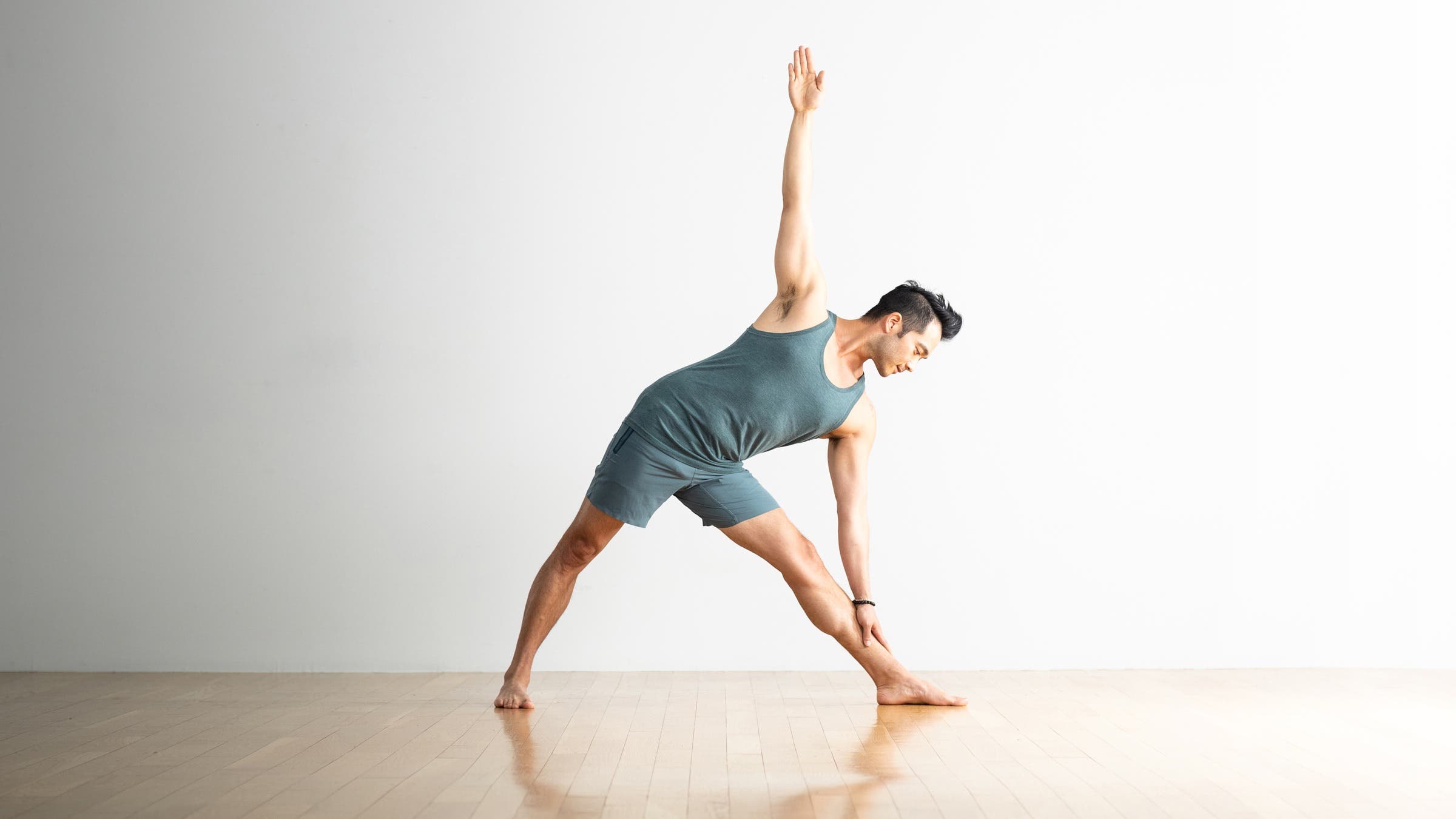
2. Extended Triangle Pose
This pose helps you move your body in a direction that is overlooked in many workouts by lengthening your side body. Focus on expanding across your chest and connecting with your breathing.
How: From mountain pose, step your left leg back about three feet and rotate your chest to the left, opening your hips and stretching your inner thighs. Lean to the right in Triangle Pose, reach your right hand toward your shin or rest it on a block and extend your left arm toward the ceiling, stacking your shoulders. Don’t forget to switch sides.
Other yoga poses that do the same: There are several forms that stretch your side body while strengthening your lower body, including Extended Side Angle and Reverse Warrior. You can also choose a seated version of this pose, the Revolved Head to Knee Pose.
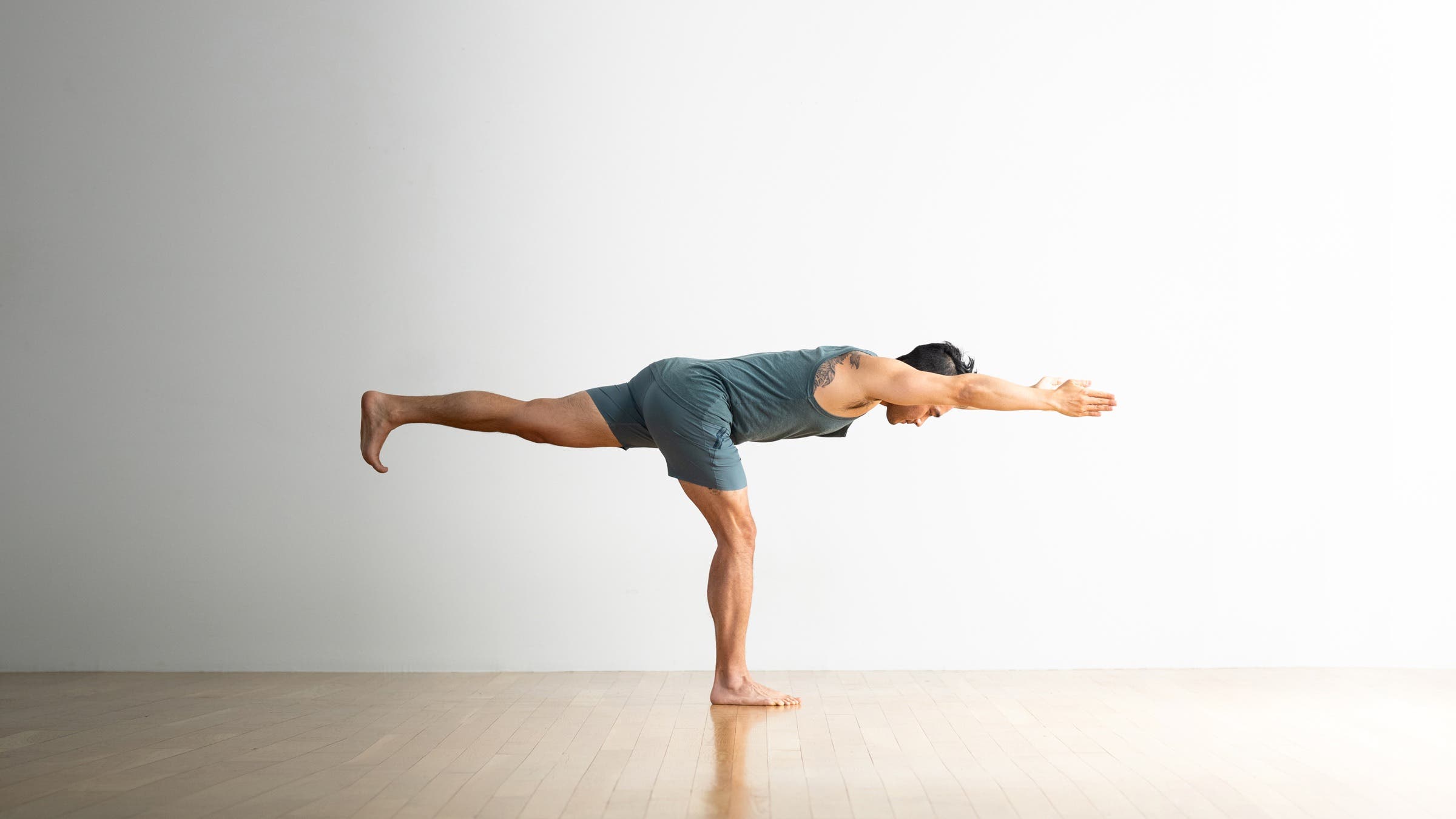
3. Warrior 3
The exercise most associated with strengthening the quad and glutes is the lunge. But Warrior 3 works the quads and glutes in a similar way. The single-leg balancing pose also strengthens the smaller, easily overlooked stabilizing muscles in the ankles and hips. And, as with all balancing poses, it improves mental focus.
How: Ground your feet. Shift your weight onto one foot, spread your toes and place your foot in your mat. Allow your standing leg to bend slightly and hinge forward so that your chest and hips are parallel to the floor. Touch your fingertips to the floor or reach your arms straight forward past your head as you draw your belly button toward your spine. Stay here for several breaths. Then switch sides.
Other yoga poses that do the same: Tree Pose allows you to practice balancing and strengthen your quads and glutes in a slightly less intensive way.
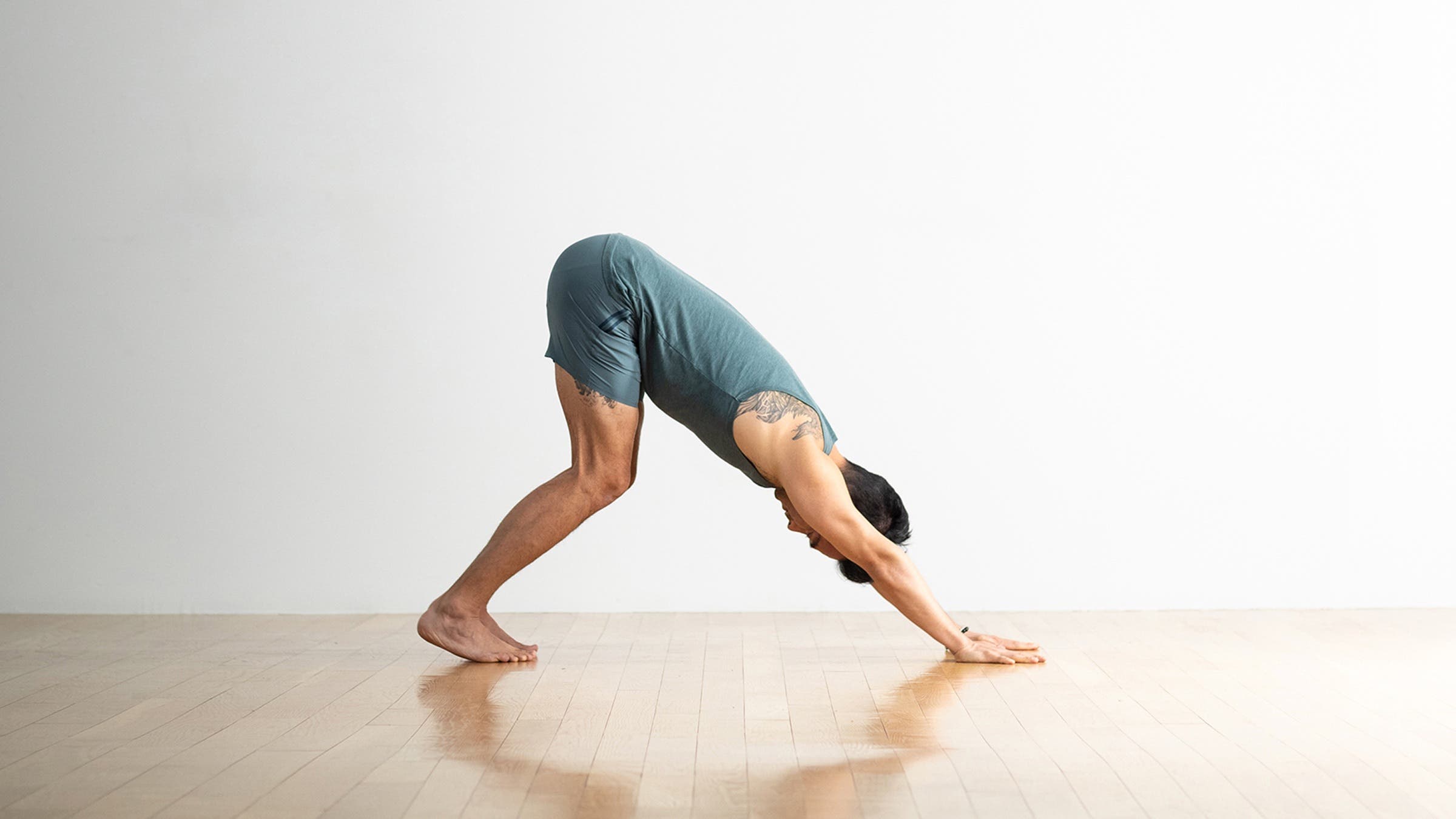
4. Downward Facing Dog
Most runners and endurance athletes suffer from chronically tight hamstrings. Downward Dog is one of the best yoga poses to stretch these overworked muscles. Bonus: It also stretches your entire posterior chain (back of the body).
How: Bring your hands to the mat and step your feet back as you lift your hips up into downward-facing dog. Think about making a triangle with the points on your hands, heels and tailbone. Press your heels toward the mat to stretch the muscles along the back of your legs and your lower back. If your hamstrings are so tight that your heels can’t touch the floor, keep your knees slightly bent or consider holding yoga blocks under your hands. Feel your muscles stretch along your back and side body.
Other yoga poses that do the same: If your shoulders are tight or your wrists are sore, you will experience the same stretch of your body with a standing forward bend or a seated forward bend.
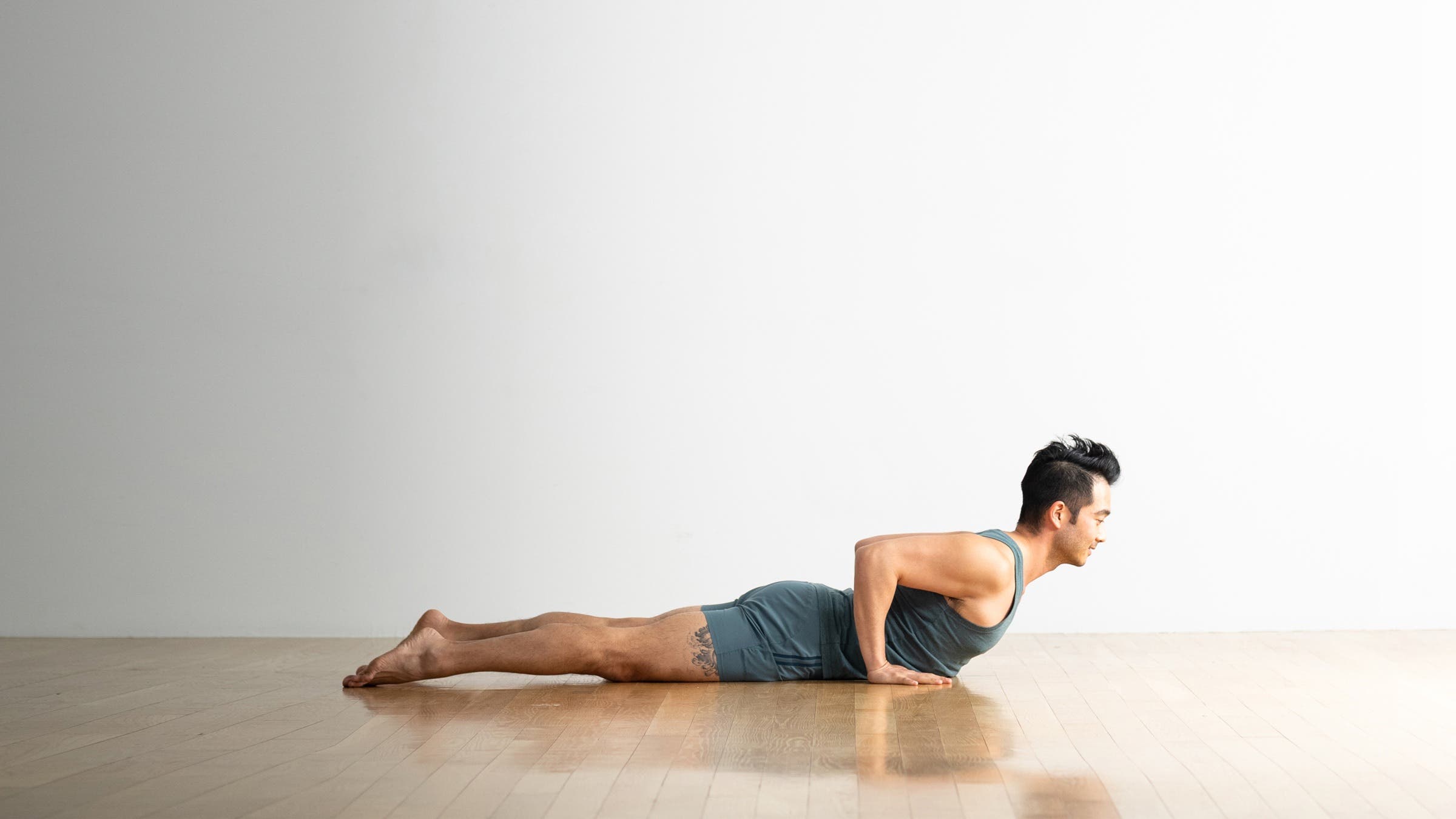
5. Cobra
If you do a lot of core-strengthening exercises or spend most of the day in a chronically slouched position, you probably notice that your abs, chest, and shoulders often feel pinched. Cobra Pose is an efficient way to stretch these muscles.
How: Lie on your stomach on the mat with your legs hip-distance apart or wider. Bring your hands under your shoulders and press your palms and tops of your feet into the floor and lift your chest as far as you can in Cobra Pose. Keep your gaze forward and slightly downward. Pull your shoulder blades together and breathe here. Slowly lower yourself to the mat. Repeat if desired.
Other yoga poses that do the same: Locust Pose is essentially the same pose minus the help of your hands, so it’s more effective at strengthening the back. Upward Facing Dog is essentially Cobra, but with more core strengthening, as your hips are lifted off the mat.
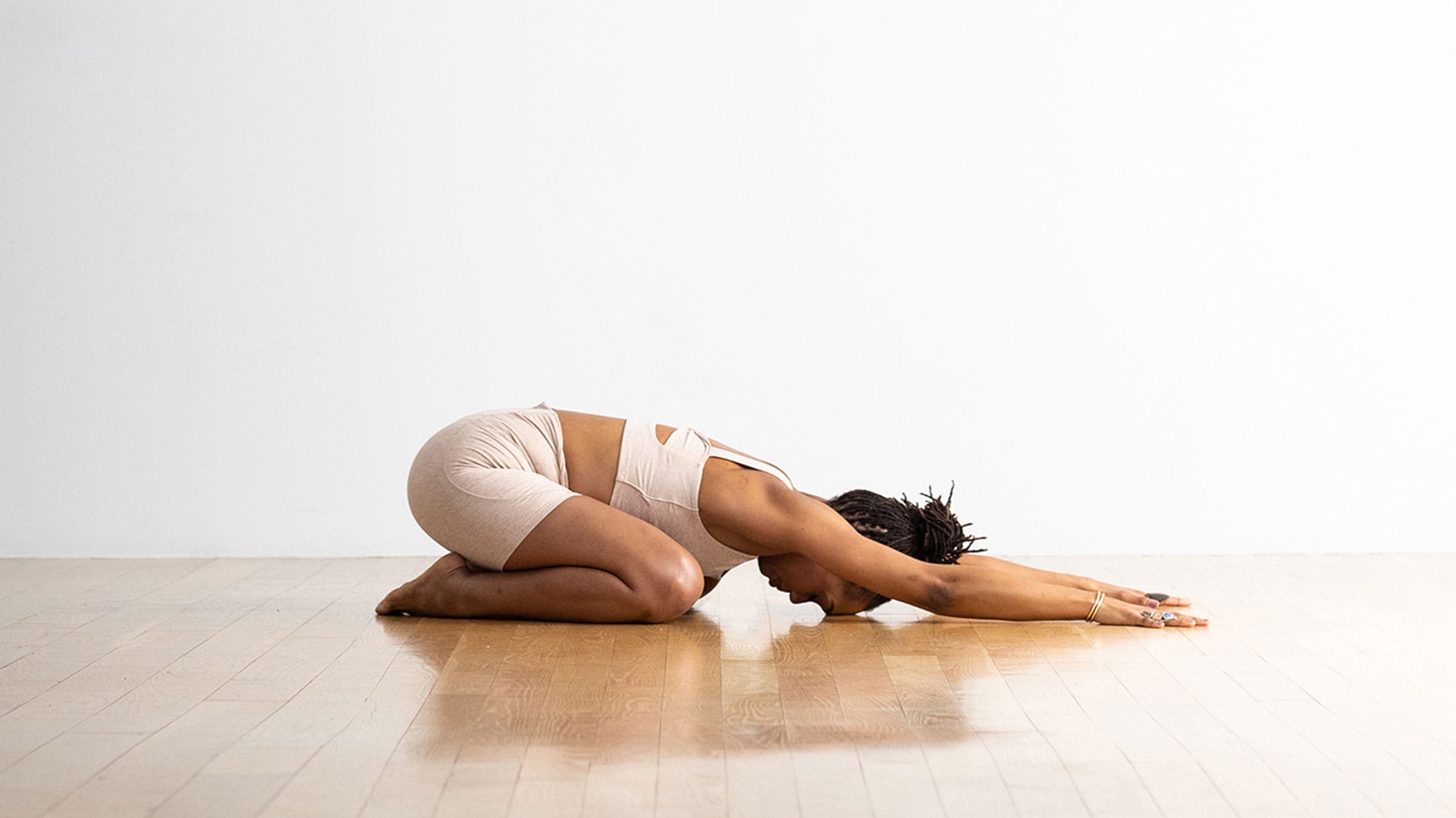
6. Child’s pose
The conclusion to your 10-minute yoga routine for athletes is a continuous stretch through your glutes, back, shoulders and quads. As you focus on your breathing and calm your thoughts, you may want to take a moment to visualize your body performing the way you want it to during your next training session.
How: Get on your hands and knees. Lower your hips to your heels and release your upper body to the mat in child’s pose. Stretch your arms forward and let them relax. Take a long, slow exhale from your mouth and rest for as long as possible.
Other yoga poses that do the same: To intensify the stretch along the quads and hip flexors, try the seated or lying version of this pose, Hero. You can practice it with both knees bent or with one leg straight in front of you.
#10minute #yoga #stretch #strengthen #body #ways #workouts #overlook