

There is a saying commonly attributed to Nelson Mandela that goes something like this: “Courage is not the absence of fear, but acting in the face of fear.” Every time I think of this phrase, I am reminded of the vulnerability inherent in this courage.
As a somatic therapist in training, I spend a lot of time exploring the seemingly opposing concepts of courage and vulnerability. We tend to think of courage as something determined and strong. Vulnerability, on the other hand, is usually associated with softness and sensitivity. But being vulnerable enough to explore our truth requires us to be brutally honest about how we show ourselves, others, and the world. And that can be discouraging.
It is much easier to put on our armor and close down than to remain open to our pain and that of others. But to integrate what we learn, we must call on our strength, especially when we are confronted with aspects of ourselves that we find uncomfortable or with certain truths about social injustice and the suffering of others.
Perhaps there is no better embodiment of the emotional journey from vulnerability to courage than the fierce Hindu goddess Durga, whom I learned about in Acharya Shunya’s book: Roar like a goddess. Durga is considered to be the divine primordial feminine energy, Shakti, incarnate. In Hindu mythology, she is often depicted riding a lion sent to protect the heavenly realm from a rogue king, Mahishasura.
Yet there are nine forms of Durga, and each form speaks to a different aspect of the divine feminine within us. Most of these forms depict Durga as a protector, defender of justice and an awakened warrior. However, there is also a peaceful form of Durga, known as Maa Mahagauri, which is associated with compassion and tranquility. In this form, Durga reminds us that gentleness and vulnerability are integral aspects of the courageous warrior.
Like Durga, we can hold these seemingly opposing but complementary truths within us. To step into personal power, we must accept our imperfect selves and respect the courage that comes with vulnerability. From this gentleness comes great strength.
6 Ways to Practice Yoga for Courage
I believe that you can explore difficult concepts more easily by first feeling them physically. The following yoga poses will help you discover what it feels like in the body to be vulnerable and courageous. As you explore intuitive movement in each form, you will learn to challenge any rigid movement patterns that keep you trapped in your personal armor.
1. Cat-cow
Cat-Cow (Marjaryasana-Bitilasana) is a full-body stretch that helps activate the Svadhisthana, or sacral chaka, which is believed to harbor creativity, emotionality and sensuality. It is also considered the seat of divine feminine power that resides within every human being.
If you wish, you can add Lion’s Breath (Simhasana Pranayama) as you move into Cow to bring awareness and stimulate the Vishuddha or throat chakra, the seat of vulnerable communication.
What to focus on: Pressing your hands and the tops of your feet into the earth can ground you, which in turn helps you feel your power even as you explore your softness. Allow yourself to move through both effort and relaxation as you transition between these two poses. You can also perform any other intuitive movement while moving between the two shapes, such as making circles with the hips or wrists.
Practice Cat-Cow
2. Sphinx Pose (Salamba Bhujangasana)
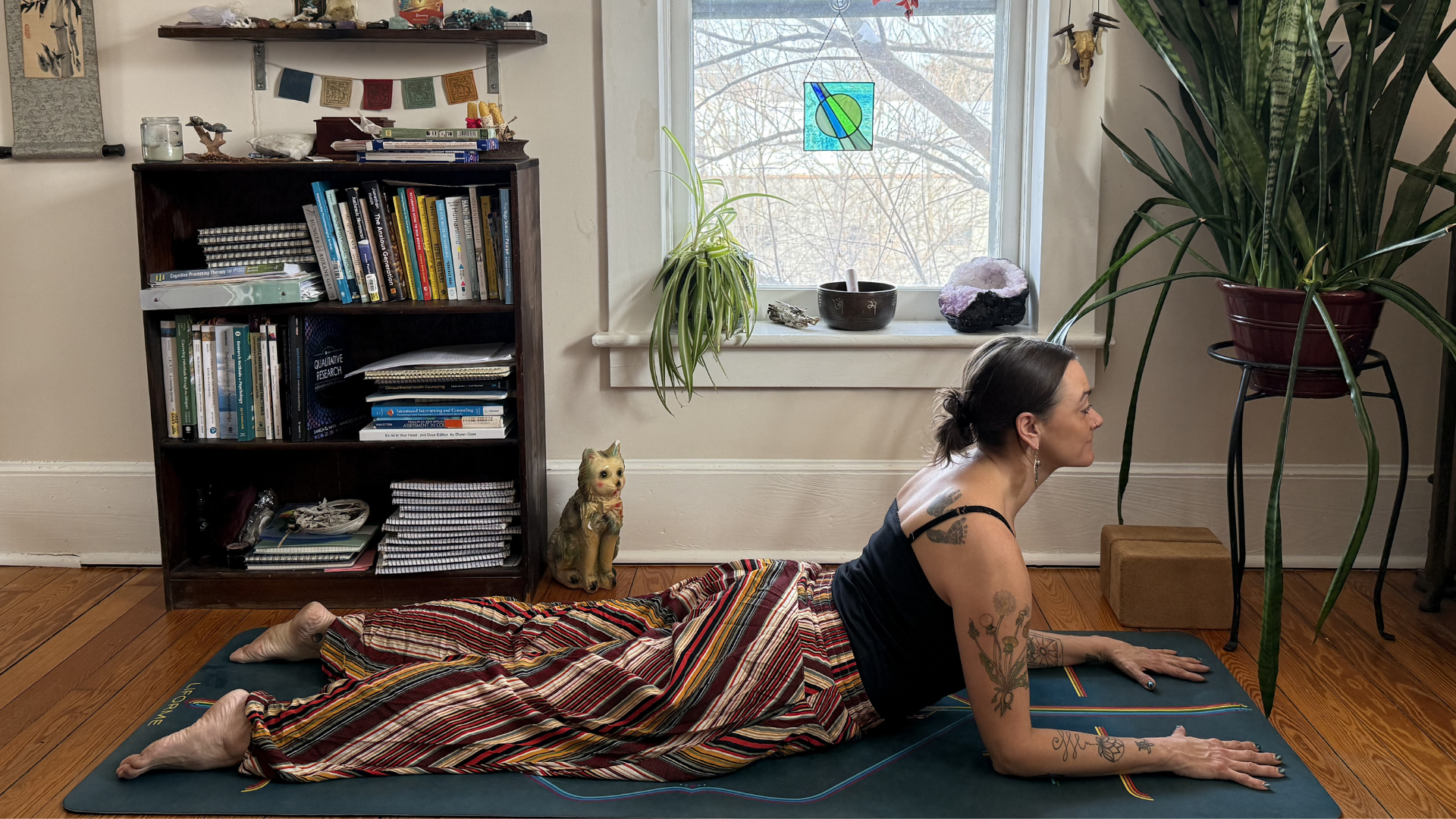
A shape that is both grounded and elevated, Sphinx promotes a sense of stability while encouraging heart-forward thinking. It’s another pose that stimulates the Svadhisthana or sacral chakra, but it also asks you to lift your chest and access your Anahata or heart chakra, which is believed to be the source of unconditional love, as well as courage and self-compassion.
What to focus on: This pose is an embodiment of the idea of rooting to get up. Your forearms, pressing firmly into the earth, consider it a solid support that you can provide for yourself on an emotional level as you bring forth your heart space.
Practice the Sphinx pose
3. Inverted or Peaceful Warrior (Viparita Virabhadrasana)
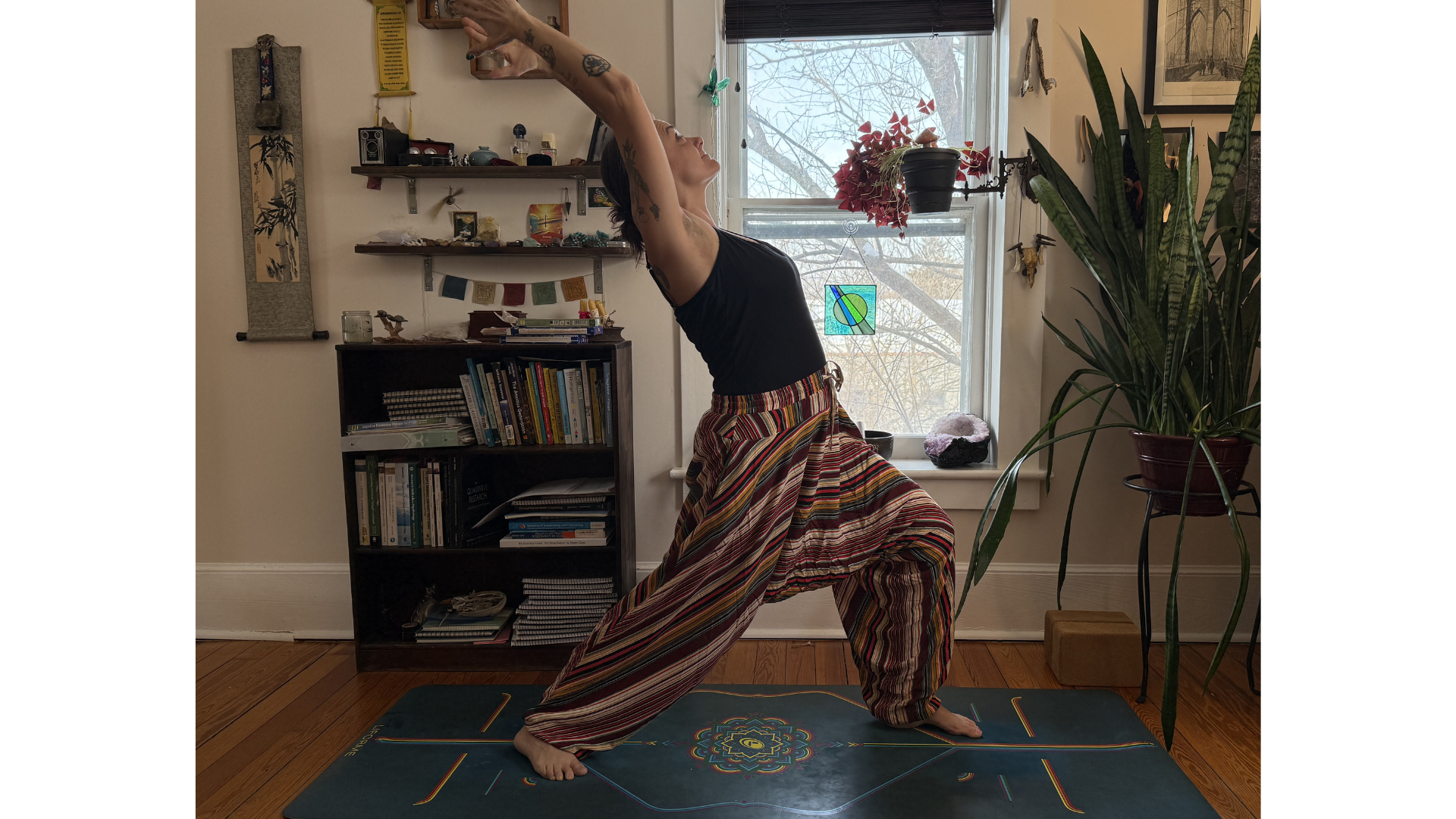
All Warrior poses (Virabhadrasana) require a stable base to stand on. Reverse of Peaceful Warrior is perhaps the most courageous of these poses. It asks you to lean back into the unknown. But only after you have found stability in the lower body to support your exploration of openness in the upper body.
What to focus on: This relatively unusual version of Reverse or Peaceful Warrior holds the feet in a Warrior 1 position instead of the more familiar Warrior 2 position. But unlike Warrior 1, where your gaze is straight ahead, this version directs your gaze slightly backwards. Feeling like you don’t know what to expect yet still lift your heart and remain ready to move forward.
Practice Reverse Warrior
4. Pyramid Pose (Parsvottanasana)
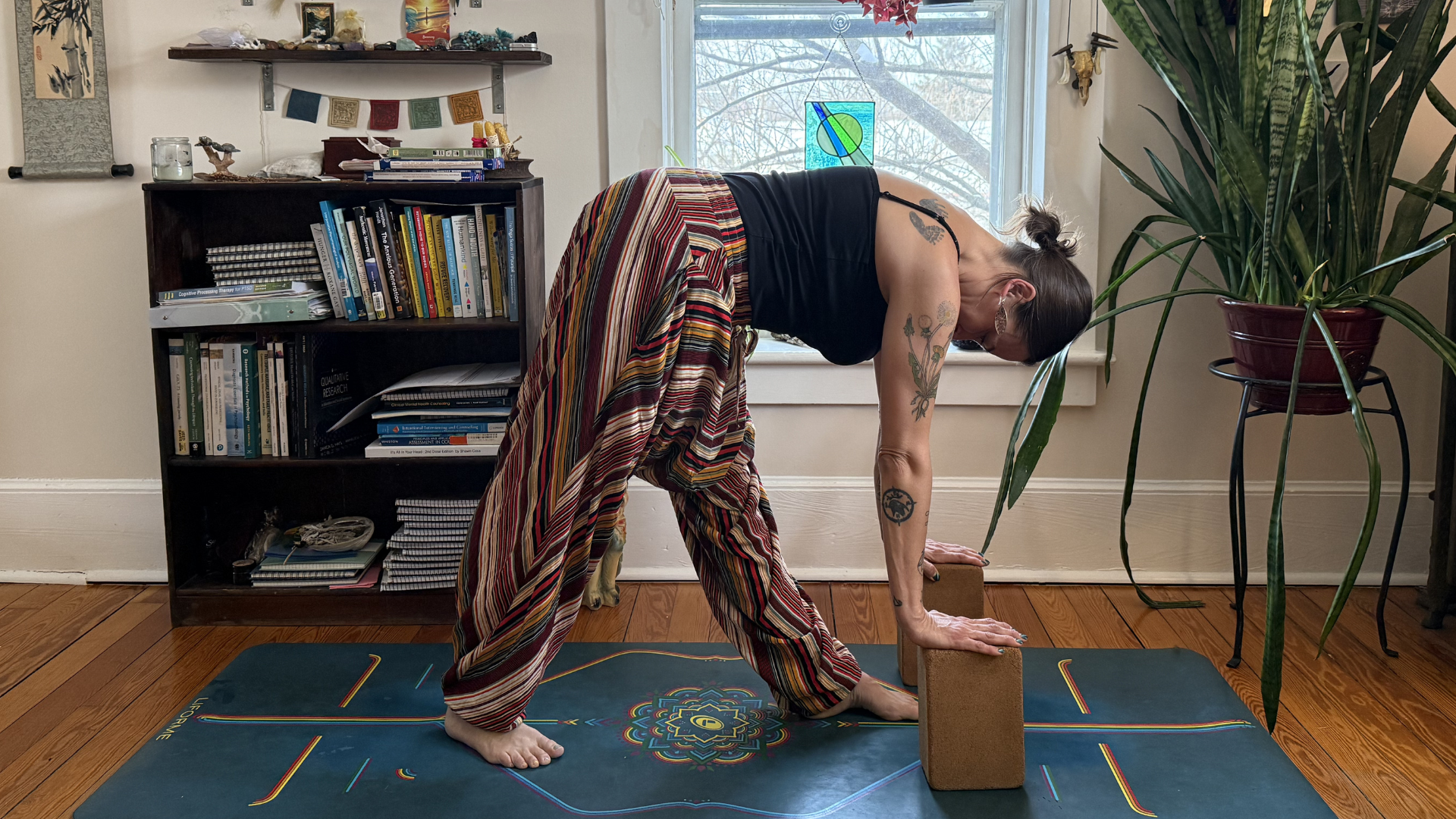
Like Warrior poses, Pyramid requires grounded stability to explore forward movement in the upper body. Unlike Reverse Warrior, which elevates the heart space with an outward focus, Pyramid cultivates the experience of bending and turning inward in the quest for consciousness.
What to focus on: Bringing your head below your heart, even as your feet remain firmly on the ground, is a physical reminder that the gentleness of self-compassion works from a foundation of strength.
Practice the pyramid pose
5. Bow Pose (Dhanurasana)
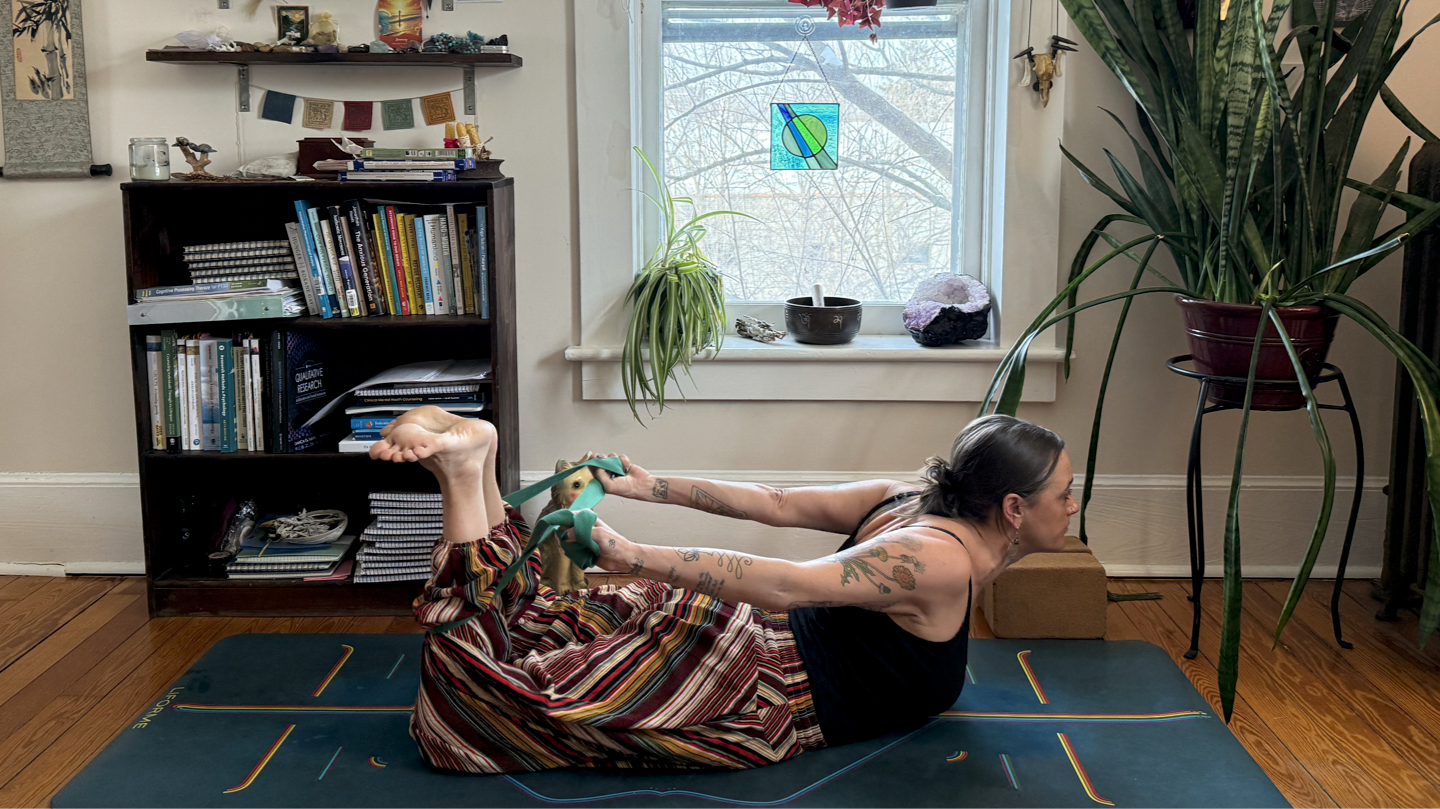
Similar to Sphinx Pose, Bow activates the courage and strength of both the sacral chakra and the heart chakra. This rather intense backbend promotes vulnerability by shifting the heart space forward. For many of us, it requires the use of props to reach down to the ankles. Surrendering to the body’s needs and asking for support are forms of self-compassion.
What to focus on: Bring your awareness to the front of your hips and press them into the earth. As with the Sphinx, consider how grounding yourself can help you rise, and not just in this position, but in many life situations.
Practice the bow pose
6. Supported Bridge (Salamba Setu Bandhasana)
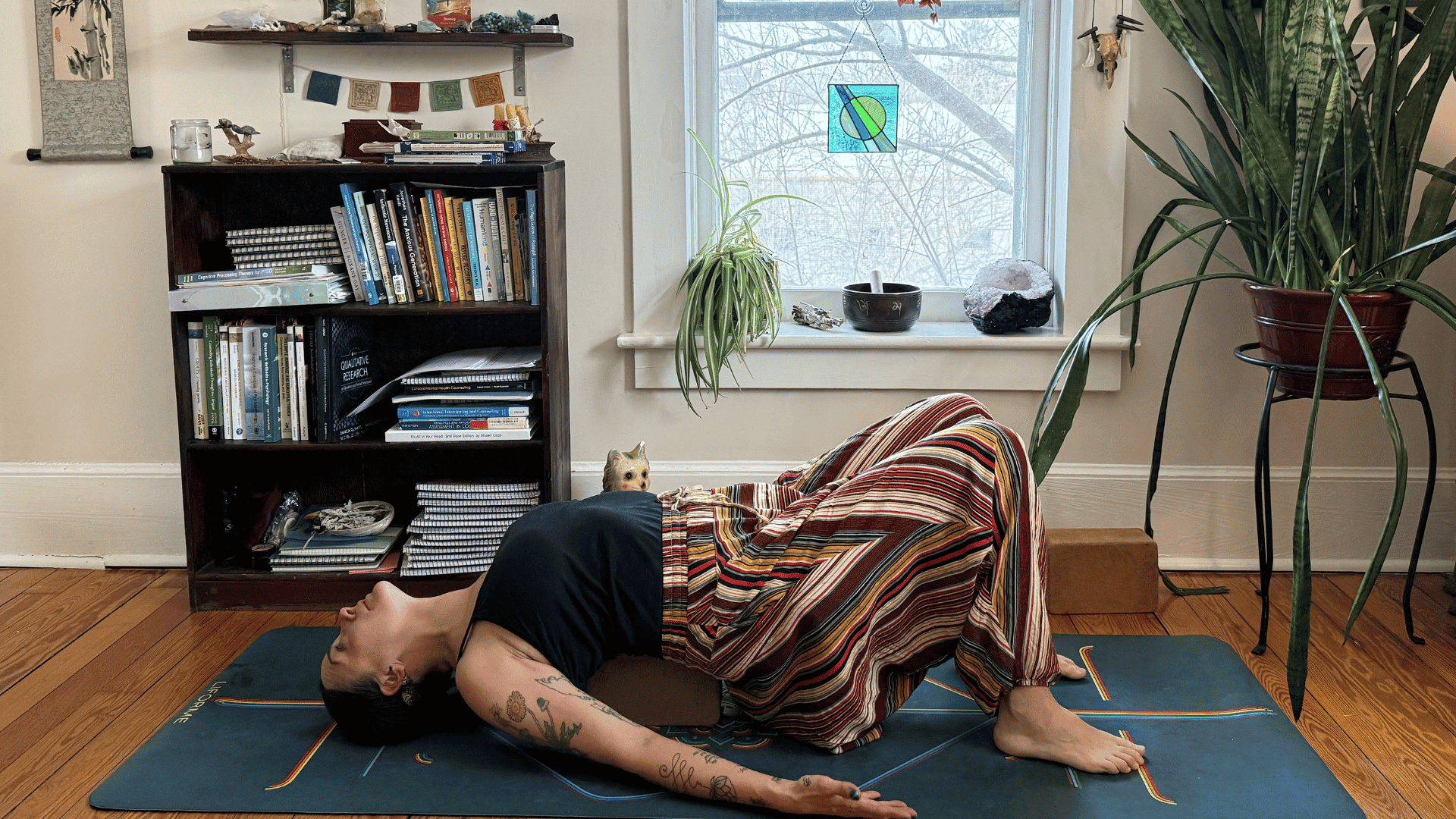
In our contemporary world, rest itself is a form of courage, a breaking with norms that allows us to cultivate the reserves to carry on. Supported bridge, with a block or stacked cushions under your sacrum, allows you to practice that. The supported back bend activates the openness of the heart chakra and allows the body to rest.
What to focus on: This is another pose that leans on the vulnerability of letting go of expectations of what the pose should look like. Instead, explore what it feels like to simply let yourself rest and accept support.
Practice supported bridge
#Yoga #remember #courage #Heres