

For example, if you want to print a book, you’ll probably type it in a word processor. Someone else takes your file and produces pages on a printer. Your words will instantly turn on a laser beam or something else to put words directly on paper. But for a long time, printing meant creating a physical representation of what you wanted to print, allowing a print to be pressed onto a piece of paper.
The process of cutting something out of wood or other material to stamp impressions is very old. But the revolution happened when the Chinese and later the Europeans realized that it would be more flexible to create symbols from which to compose texts. Movable type. The ability to mass-produce books and other written materials had a tremendous impact on society.
But there’s one problem. A book can have hundreds of pages, and each page contains hundreds of letters. Someone has to find the right letters, put them together in the right order, and bind them together in a printing press so that it can produce the page in question. Then you have to take it apart again to make more pages. If you have enough type you may not have to take it apart right away, but you will eventually.
Automation
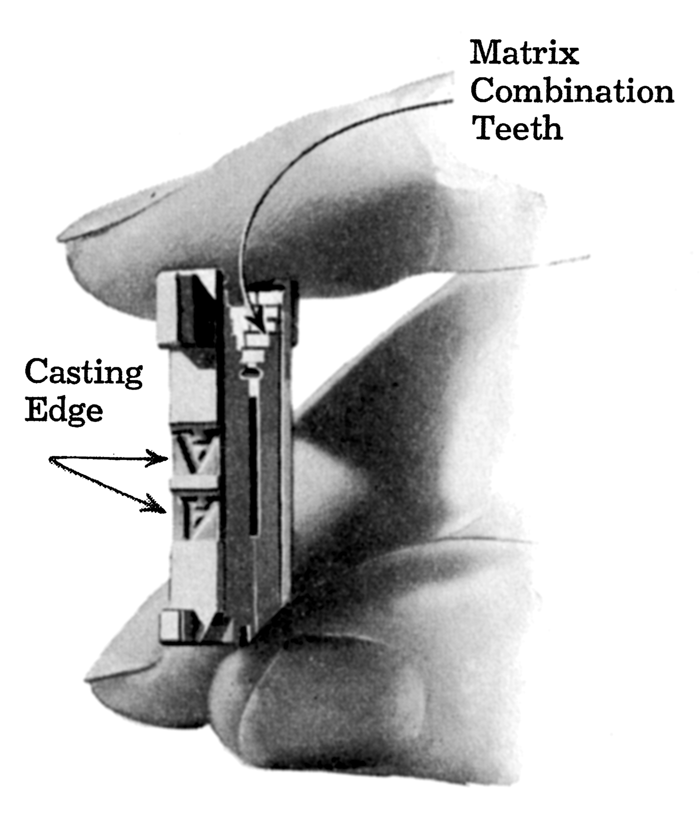
However, that’s how it went until about 1884. Then Ottmar Mergenthaler, a clockmaker from Germany living in the United States, had an idea. He had been asked for a faster method to publish legal documents. He envisioned a machine that would assemble molds for letters instead of actual letters. Then the machine poured molten metal to create a line of letters, ready to be locked into a printing press.
He called the molds matrices and built a promising prototype. He founded a company and in 1886 the New York Tribune received the first commercial Linotype machine.
These machines would see heavy use throughout the early 20th century, although sometime in the 1970s other methods began to supplant them. However, there are still some printers that use linotypes until 2022, as you can see in the video below. We’re not sure if The Crescent is still using the old machine, but we’re willing to bet.
Of course there were imitators and the inevitable patent wars. There was the Typographer, an early entry into the field. The Intertype company was producing machines in 1914. But just as Xerox became a generic word for photocopy, these types of machines were almost always called Linotypes and, to be fair, were statistically likely made by Mergenthaler’s company.
A kind of steampunk
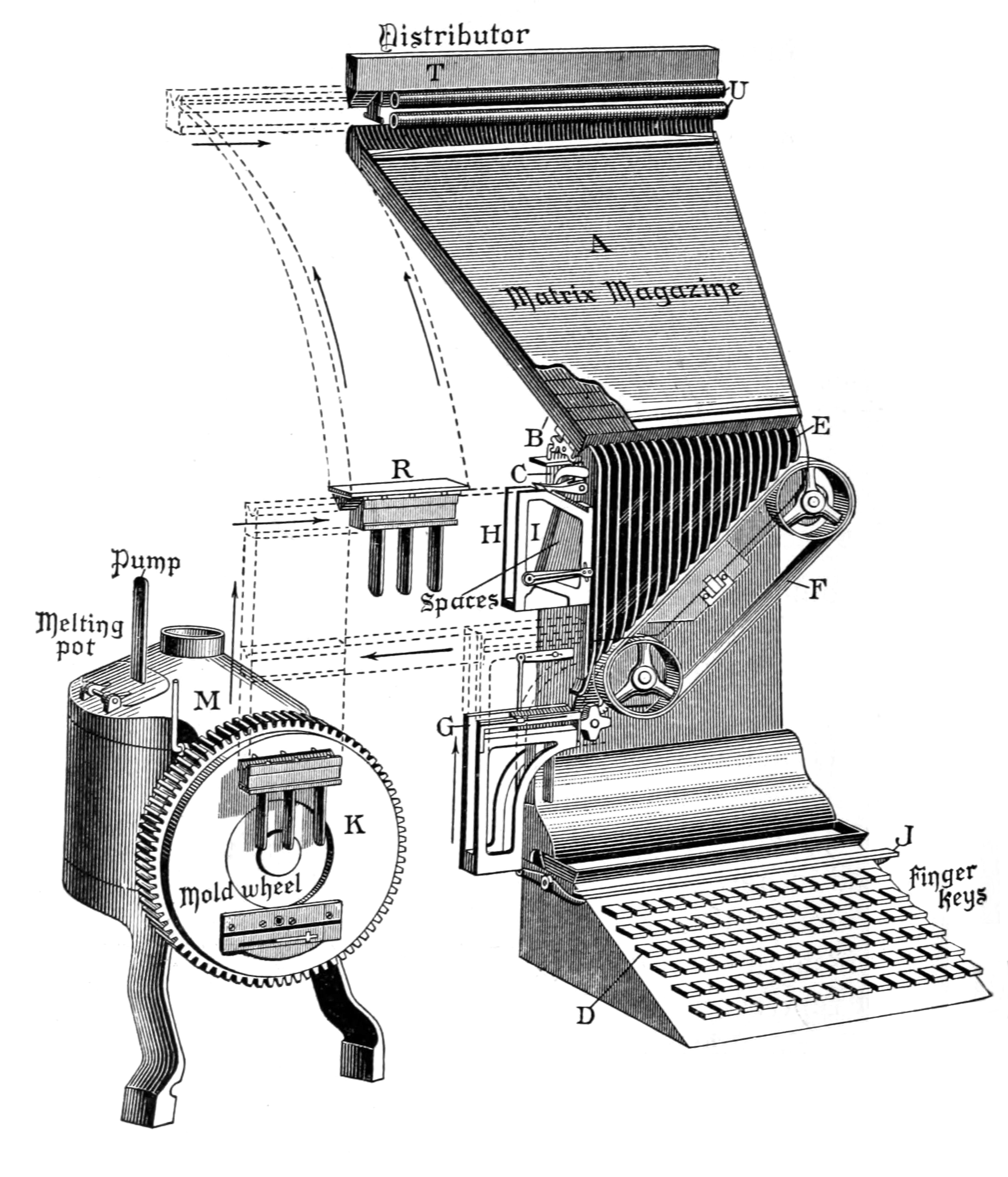
For a machine that appeared in the 19th century, the Linotype looks both modern and steampunk. For example, it had a 90-key keyboard. Some even had paper tape readers so that the type could be ‘set’ somewhere and sent to the press room via teletype.
The machine had a supply of matrices in a magazine. Of course you needed a lot of common characters and maybe less uncommon characters. Each matrix had a specific font and size, although for smaller fonts the matrix could contain two characters for the operator to choose from. One magazine would have one font of a certain size.
Unlike a type, a Linotype matrix is not a mirror image and is placed into the metal rather than coming out. That makes sense. It is a mold for the final type that is raised and mirrored. The machine had 90 keys. Want to guess how many channels a magazine had? Yes. There were 90, although larger fonts might use fewer.
Several later models had additional capabilities. For example, some machines can hold four magazines in a stack, allowing you to set multiple fonts or sizes at once, with some limitations depending on the machine. There were no spaces in the magazine. They were in a special space band box.
Each press of a key would drop a matrix from the magazine into the assembler at the bottom of the machine, at a position for the primary or auxiliary letter. This was all a mechanical process and an experienced operator could do about 30 words per minute, so the machines had to be cleaned and lubricated. There was also a special pi channel where you could place strange matrices that you didn’t use often.
Typecasting
When the line was ready, you pressed the casting level, which pushed the matrices out of the assembler into a delivery channel. Then it was on to the casting part, which took about nine seconds. A motor moved the matrices into position, and a gas burner or electric heater kept a pot of metal (usually a lead/antimony/tin mixture traditional for the type) molten.
A well-made slug of a Linotype was good for 300,000 impressions. However, it did require periodic removal of the foam from the top of the hot metal. Of course, when you didn’t need it anymore, you just dropped it back in the pot.
Justification

You might be wondering how type would be justified. The trick is in the space tires. They were larger than the other matrices and made so that the further they were pushed into the block, the more space they took up. A mechanism pushed them up to the letter line between the margins.
You can see why the space bands were in a special box. They are much longer than typical type matrices.
How else can you level the spaces with technology from around 1900? Pretty smart.
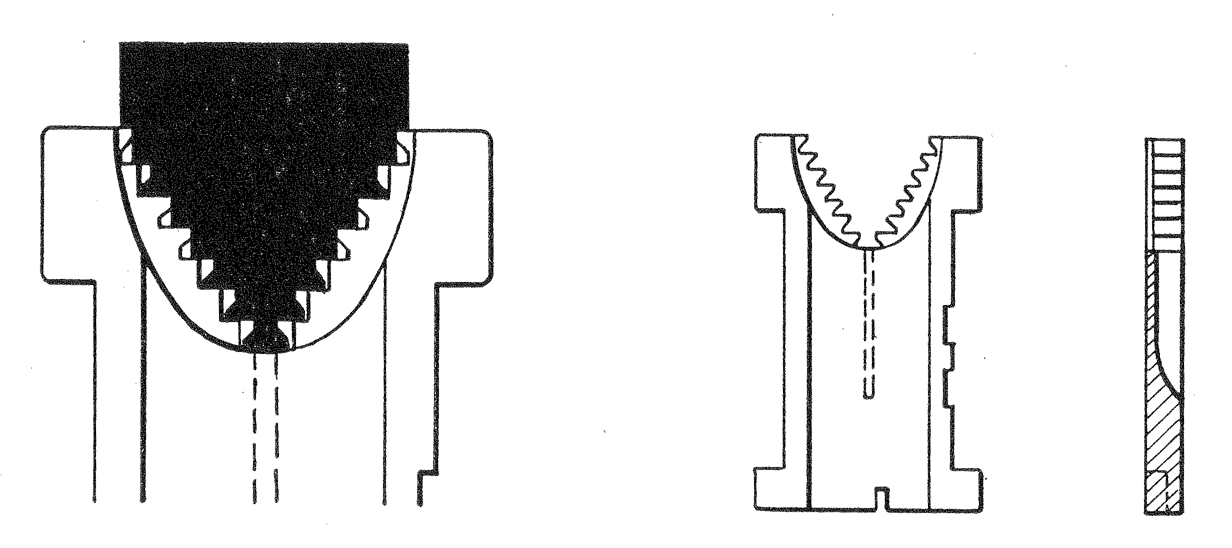
If you’ve been paying attention, there is one major drawback to this system. How do the matrix elements get back into the right place in the magazine? If you can’t automate that, you still have a lot of manual work to do. This was the distributor’s job. First the space bands were sorted out. Each matrix has teeth at the top so that it can hang from a toothed dividing rod. Each letter has its own tooth pattern that forms a 7-bit code.
As the distributor rod feeds them through the magazine channels, it will release the ones that are missing a certain set of teeth because some teeth are also missing. A diagram from a Linotype book makes it easier to understand than reading about it.
The Goldbergs
You have to wonder if Ottmar was related to Rube Goldberg. We don’t think we have the guts to propose a mechanical machine that does all this, on top of an automated way of handling molten lead. But we admire anyone who does. Thomas Edison called the machine the eighth wonder of the world, and we don’t disagree. It revolutionized printing, even though it is now only a historical footnote.
Can’t get enough information about the Linotype? There is a documentary of over an hour, which you can watch below. If you only have five minutes, try the short demo video at the very bottom.
Movable letters were to printing what 3D printing is to plastic production. That could explain this project. Or this one, for that matter.
#Word #Processing #Heavy #Metal #Style