

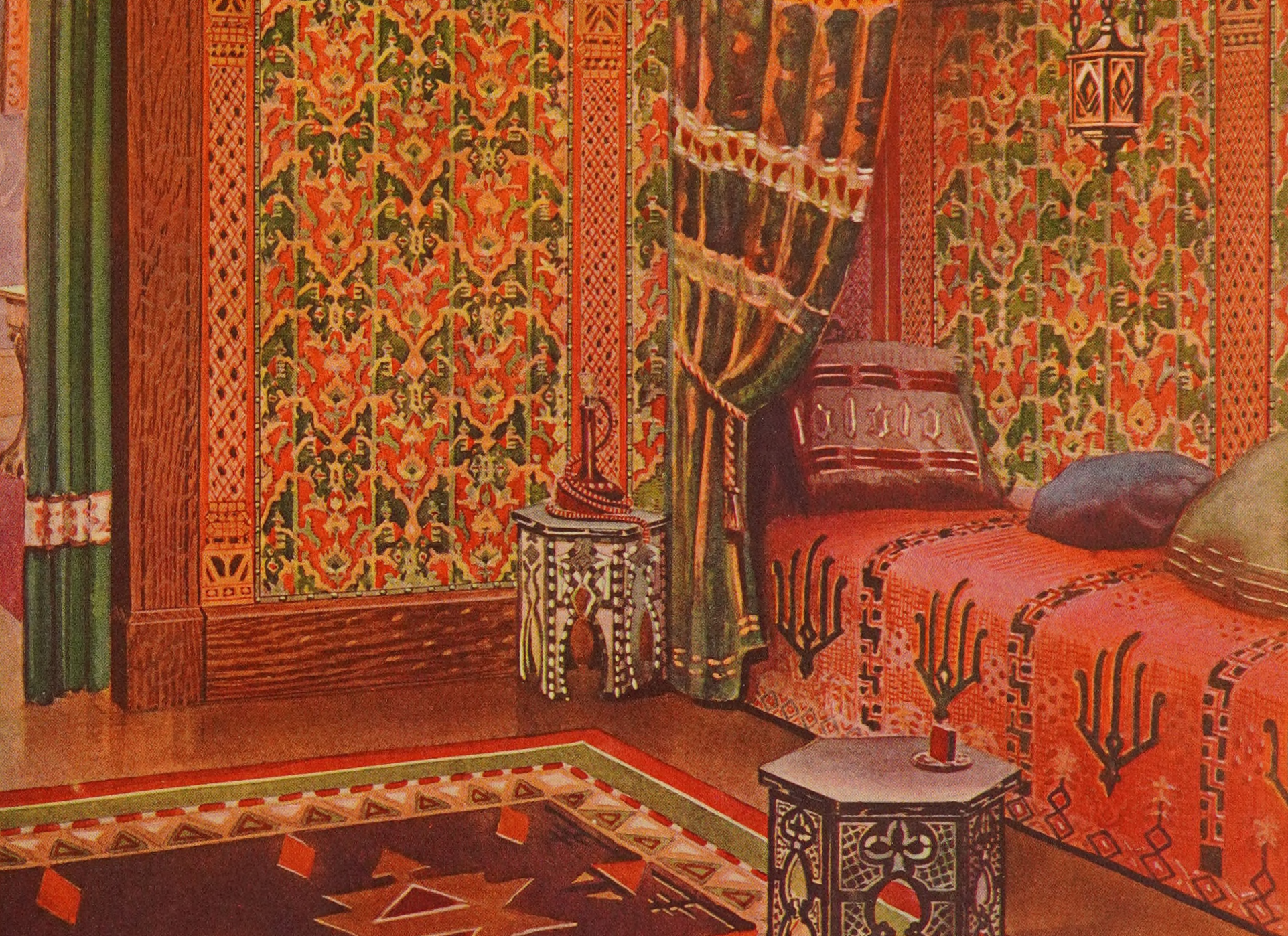
An illustration of a “corner of sturdy comfort” in a 1908 wallpaper catalogue. Image from Home Decoration by Alfred Peats Prize Wallpapers via HathiTrust
In the latter part of the 19th century, when ladies and gentlemen of the upper classes visited friends and social acquaintances, they could be introduced to a special parlor room or corner of a room that resplendent with a multitude of cushions, overlapping rugs, lanterns and other furniture and accessories from the then exotic-looking lands of the Near East. Today we might think of these spaces as ‘Bohemian style’, which is quite popular now, but the Victorians called these spaces ‘Turkish rooms’ and ‘Turkish corners’. Everyone who was aware of the latest interior fashion had one.
The fascination with all things Middle Eastern was part of a larger art and design philosophy known as the Aesthetic Movement. It started with the Pre-Raphaelite Brotherhood of the 1850s, grew to include William Morris and fellow designers and artists, evolved into the British Arts and Crafts movement, and ended with Art Nouveau in the early decades of the 20th century. The aesthetic movement began in Britain, but soon spread to other parts of Europe and, most importantly for our story, to the United States.
The Aesthetic Movement was partly a response to the rise of the Industrial Age, which dominated both Britain and the US. New developments in manufacturing technology and materials allowed factories to produce all kinds of consumer goods that were snapped up by a growing population of middle- and upper-middle-class people. The time-tested art of the craftsman was exchanged for products made by an underpaid city factory worker. It was the beginning of the ‘more is more’ era.
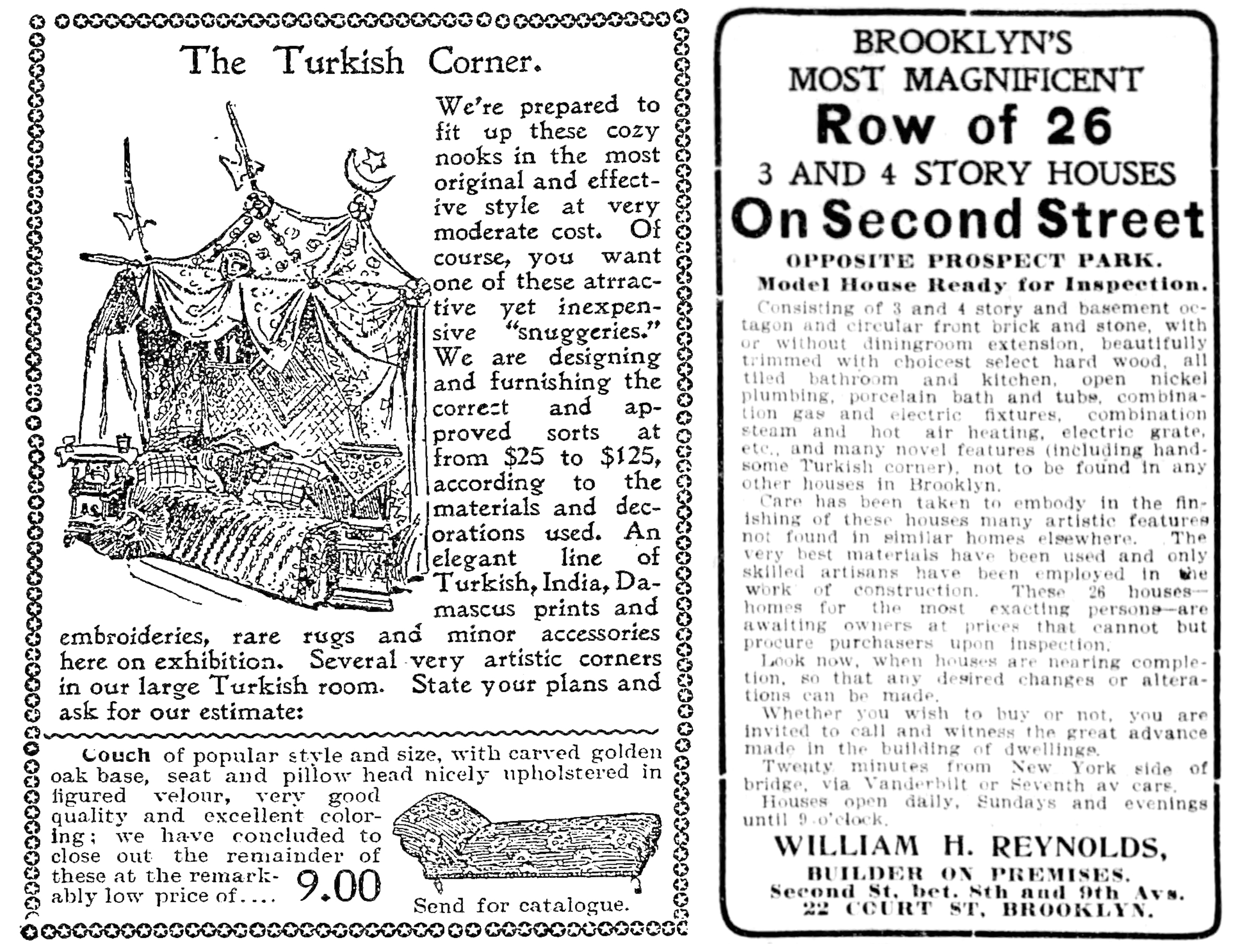
Meanwhile, the world became smaller thanks to European imperialism. England was conquering and establishing colonial rule in Africa, India and the Far East, while France, Germany and other countries were making colonies of countries in the Middle East, North Africa and the rest of the African continent. It wasn’t long before the arts and cultural traits of these regions found their way into Western society as imported goods and new ideas.
Japanese art and design; Indian textiles and handicrafts; Chinese silk and porcelain; patterns, colors and furniture from Middle Eastern countries and more became highly fashionable items for those who could afford them, creating design trends that have stayed with us ever since. For example, because industrialization allowed for the use of the designs and themes of different cultures in domestic production, a fascination with Japanese art and themes could be reproduced in consumer goods such as wallpaper, fabrics, porcelain, furniture, and other household items.
The painters and architects of the Aesthetic Movement played an important role in the creation and popularity of the Turkish Corner. British architect Owen Jones was one of the most influential figures in bringing the patterns and designs of the Middle East to the West. After embarking on his grand tour at the age of 23, which visited Egypt and Turkey, among other places, he became fascinated by the art and architecture of the region. Victoria & Albert Museum has documented. He ended his tour in Granada, Spain, where, together with the French architect Jules Goury, he spent six months studying the Alhambra, the beautiful palace left behind by the Moors. Jones made hundreds of watercolors and drawings of the decorations, architectural forms and colors of this masterpiece.
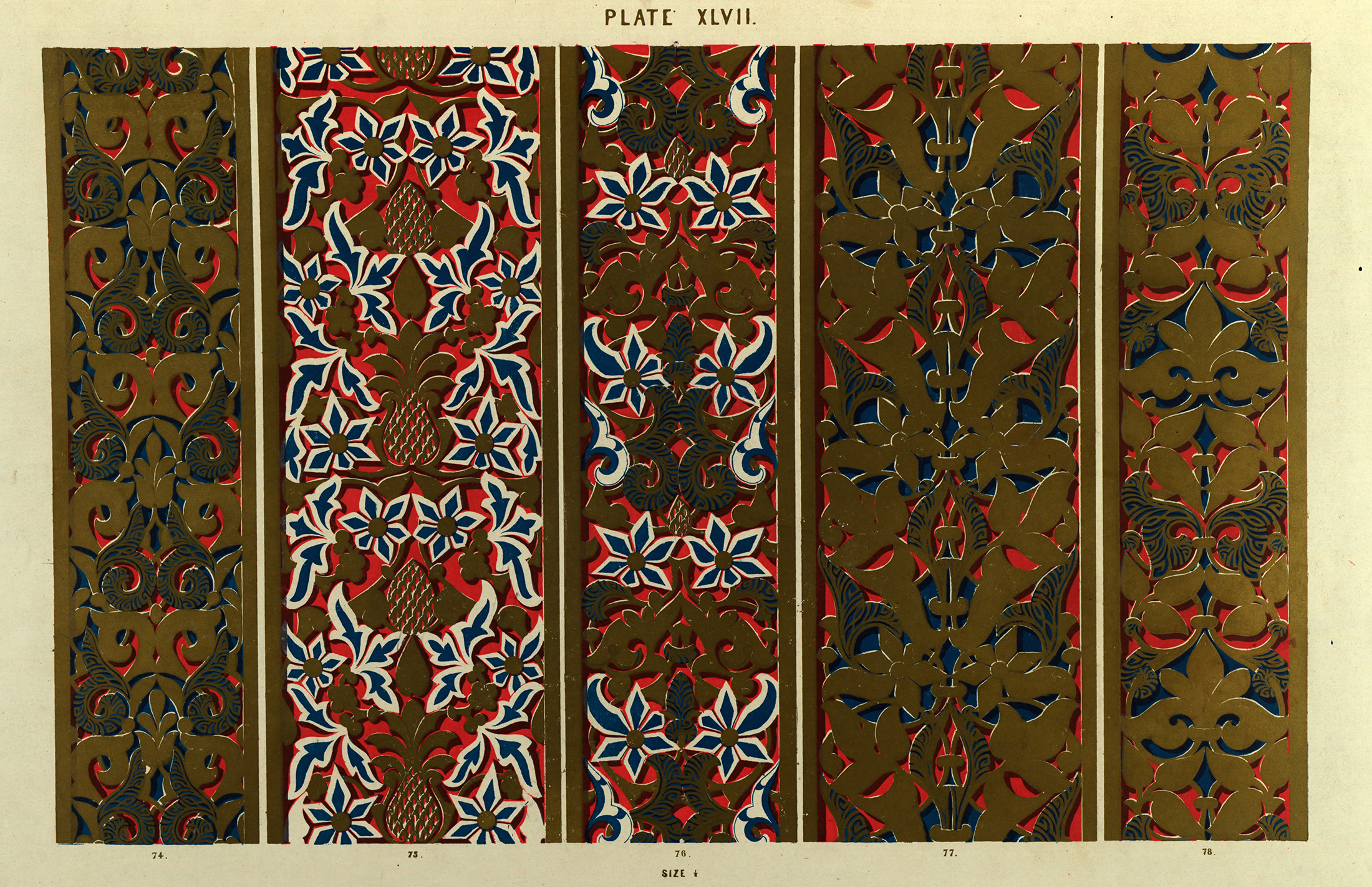
When he returned home, he felt that the publishing methods of the time could not reproduce the colors he was painting, so he pioneered new methods of coloring in printing called chromolithography. The resulting work “Plans, elevations, sections and details of the Alhambra” is still considered one of the best publications on Islamic architecture ever produced. The success of the work led to his being commissioned to design the interior of the famous Crystal Palace, where the Great Exhibition of 1851 was held. Here he used color and pattern to great effect in a huge building of cast iron and glass.
After the exhibition was over, the building was recreated in south-east London, and here Jones was able to create the Alhambra Court, a space whose decor incorporated Turkish design motifs. More than two million visitors per year visited the Crystal Palace, cementing the beauty of Islamic design in the public mind. And Jones wasn’t the only one who popularized the patterns and designs of the Middle East in the West.
Painters held on to the allure and beauty of the region. The theme of this art was called ‘Orientalism’, a Western representation of the East. Sir Frederick Leighton, William Holman Hunt and Lawrence Alma-Tadema were among a large group of painters who turned to the Middle East for inspiration. Some of them had never been to an Islamic country, but painted harem scenes with sultans with turbans and beards and a bevy of beautiful, underdressed women in the secluded harem, served and guarded by slaves. They lay on cushions or bathed in sunken pools and were pampered and cared for until called by their masters. For the edgy Victorians, these scenes were colourful, sensual, daring and exotic.
The opening of the Suez Canal in 1869 focused America’s attention on the region. In 1876, a large collection of artifacts from the Ottoman Empire was displayed during the Centennial celebration in Philadelphia. A love for the new and unknown captured the American imagination, and a fascination with all things Middle Eastern grew. Style masters recommended the creation of a Turkish corner, or, if you had the space and money, a Turkish room.
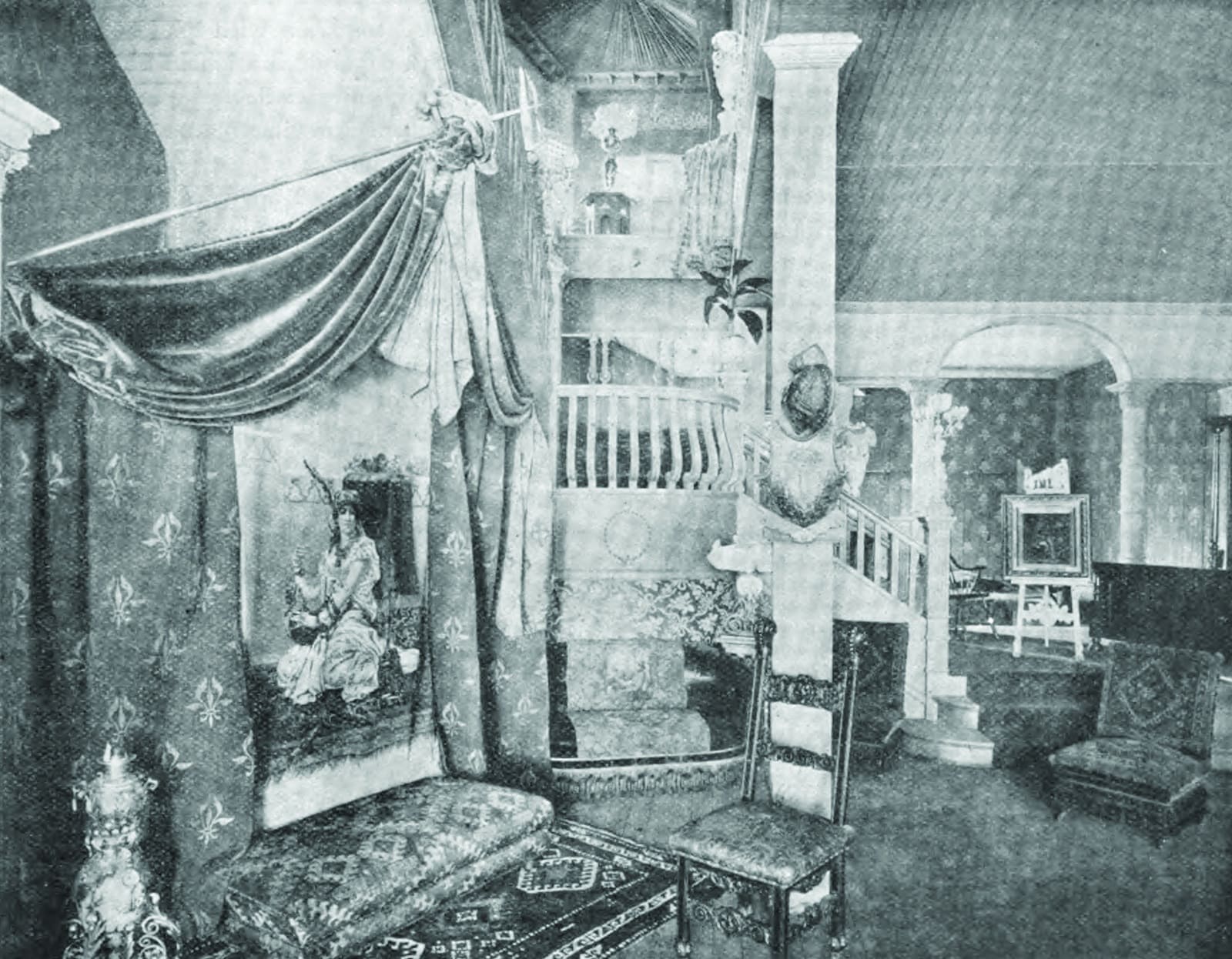
Usually the centerpiece was a low sofa with dozens of embroidered and kilim cushions of every size and fabric, where one could kick back and lounge. Added to this were layers of fine carpets, bright multi-colored Moroccan lanterns with stained glass, copper vessels, maybe even a hookah! Key elements of the look included mashrabiya, the intricately carved wooden lattice screens that were popular throughout the Middle East. These screens provided privacy while allowing fresh air to cool a room and filter sunlight. Mashrabiya were common themes in harem paintings, so naturally they had to appear in a good Turkish corner or room, usually in the form of portable screens that acted as backgrounds. Side tables with bone inlays, rich fabrics, geometric tiles and oriental tea sets completed the look.
The Turkish Corner was the closest to the mysterious-looking East for most people, so as the style’s popularity grew, importers, manufacturers, and merchants came up with all kinds of unusual elements for people to add to their rooms, including things that had nothing to do with the cultures or products of the area. ‘More is more’ after all.
American artists such as Frederic Church made their own grand tours and also fell in love with the area. They brought with them paintings and sketches, design ideas, artifacts, and the talent to bring the Middle East to their own work in America. Frederic and his wife Isabel were world travelers who brought home all kinds of things and ideas.
One of the finest examples of this beauty can be found at Olana, the home of Frederic Church near Hudson, New York. The mansion, with sweeping views of the Catskill Mountains and the Hudson River, is a treasure trove of interior and exterior Islamic themes, colors and patterns, reflecting the churches’ love for the Middle East. Frederic Church was one of the greatest artists in what is known as the Hudson River School of landscape painting. Today, the house and grounds are a state museum, considered one of the finest in the country.
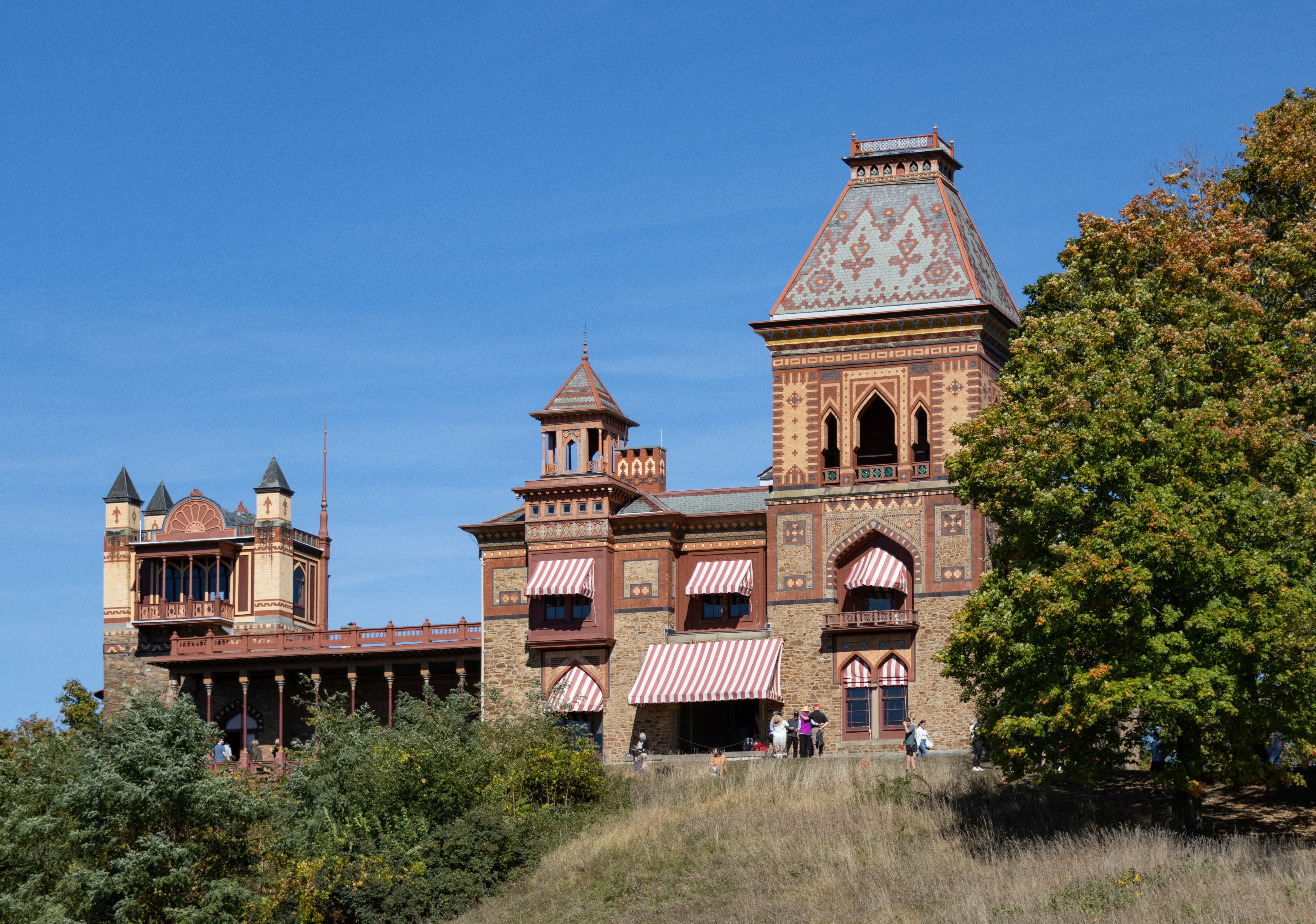
Frederic and Isabel created a house full of Moorish arches and windows and other additional details inside and out. He created original stencils with which he decorated the interior in beautiful colors and patterns. The bright colors and patterns he used on porch columns and other architectural elements of the house add to the visual treasure that is Olana. They created the ultimate Turkish room.
As with the church family, if you were rich, it was possible to have not just a Turkish corner, but a whole room. In Troy, New York, John Paine, a very wealthy banker and industrialist, had his architect create a Turkish room in the large mansion he had built in 1896. The room was used as his study. It probably never had the total harem look; the entire house is very masculine, but features lavish Islamic architectural details on the mantel, moldings, ceiling and chandelier, and in the choice of Moorish arched window treatments. No doubt the floors were once covered with beautiful oriental carpets and it may also have had Moroccan furniture.
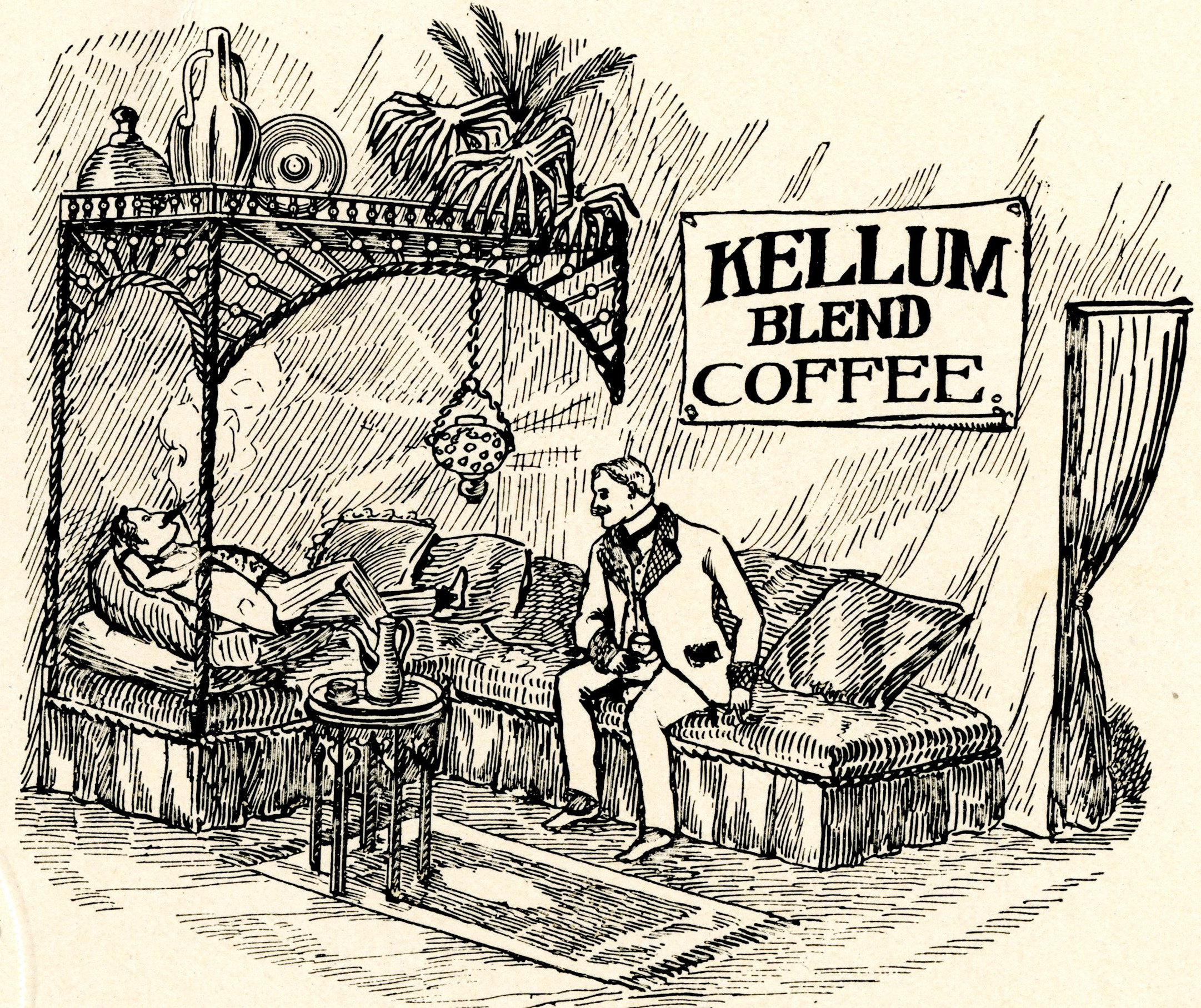
Rooms and Turkish nooks were often seen as a place where a man could enjoy a cigar in peace, or where a woman could sit back and read or take a nap, but since most nooks were in a busy part of the house, they were more than likely more decorative than practical. The corner became a new decor piece in the overall staging of a prosperous house. They were simply a trend, which is why they fell out of favor around the turn of the century, as decorating styles shifted from cluttered Victorian excess to simpler and lighter decor.
Today, truly original Turkish corners are rare and usually found only in house museums, but everything in the world of design and decor always returns to fashion. The popular ‘Boho style’ contains many of the same elements. So the Turkish angle has not completely disappeared.
Related stories
Email tips@brownstoner.com with further comments, questions or tips. Follow Brownstoner further X And Instagramand like us further Facebook.
#Turkish #corner