

The simplest is the Cyclically adjusted PE ratio (CAPE ratio). It is the price-to-earnings ratio for the S&P 500 and right now it is over 40. The average ratio is just over 17 and the highest it has ever been, December 1999, was 44.19.
The CAPE is a useful measure for determining whether the market is overvalued, but the market can remain overvalued for a long time. It has been above average since 2009, when it tanked during the Great Recession.
Also remember that there is always a reason to sell and the media needs attention-grabbing headlines to get people reading. So you will constantly read a lot about ‘AI is a bubble’ and ‘a recession is just around the corner’. That’s not to say it isn’t true this time, but a broken clock is right twice a day.
But if you are concerned that the stock market is overvalued, and you would like to do so somethingwhat can you do that is both responsible and rational?
Table of contents
Take a deep breath
If you’re concerned about the market, I’d like to share a few statistics with you that may help you:
- As I mentioned earlier, the S&P 500 CAPE ratio has been high for sixteen years. It has been ‘overvalued’ for sixteen years, despite all the gains and declines.
- Corrections are common. Every three to five years there is a bear market in the S&P 500. (20% decrease)
- Some of the best days in the stock market are during bear markets.
The point is this: don’t try to time the market. You cannot predict the top.
Yes, it will go down, but then it will go up again.
As long as you don’t need the money in the meantime, everything is fine.
Check your financial plan
If you haven’t reviewed and updated your financial plan recently, now is a good time.
If you don’t have a financial plan, now is a great time to create one and you don’t even need a financial planner. Here is a guide to creating a financial plan without a financial planner.
It’s important to update your plan as you experience major life events, such as getting married, having children, buying a house, and so on. But there will be periods in your life when no major events occur. Then you will want to review your plan every year.
And don’t forget to review the time horizon of all your accounts. Anything you won’t need in the next decade is unlikely to be affected by current market valuations. All the cash you need over the next three years should not be in the stock market, but in safe investments like CDs, like these:
If you are concerned about the state of the markets, use this time to update your financial plan. It can inform what you do next.
Reassess your emergency fund
The stock market may be buzzing, but your personal financial situation may be different. It may be a good time to reassess your emergency fund and see if you want to expand it.
If so, it would be wise to consider increasing it at a time when the market is improving so that your fund will meet your needs in the future.
In normal times, you might be comfortable with a 3-6 month emergency fund. If you are in a weaker work situation, you may want to get one that costs six to twelve months of expenses. Only you know your situation and the likely future scenarios, so adjust accordingly.
If you sell assets for a profit, set aside some money for taxes. In an ideal world you could try to find assets with losses to offset the gains so that it is a tax neutral event.
Rebalance your portfolio
In your financial plan you have recorded an asset allocation for your investments. At a basic level, this allocation is a percentage of stocks and bonds that will help you achieve your goals.
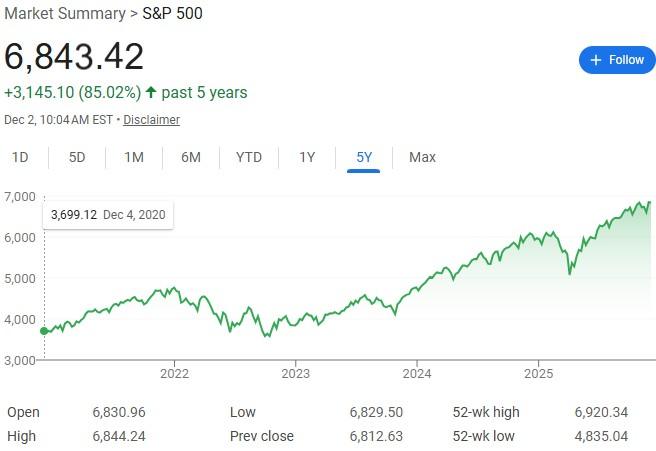
The S&P 500 is up more than 16% this year and Vanguard’s Total Bond Market Index (BND) has only increased 3%, chances are your allocation is no longer in line with your goals.
You should rebalance your portfolio once a year, or whenever your allocations are more than 5% outside your targets. If you started the year with a portfolio of 90% stocks and 10% bonds, your portfolio now consists of 91% stocks and 9% bonds (assuming a return of 1% and 3%). You won’t activate the percentage threshold, but you can still adjust it.
There are two ways you can do this.
- You can sell what is above your target (stocks) and buy what is below your target (bonds).
- Allocate future contributions to the item under the objectives until it is back in line.
The first way will likely have tax implications, so if you have the option, the second way is preferable.
Either way, if you’re concerned about the stock market being overvalued, investing in bonds will realign your allocation to your goals and ease your fears about investing in an overvalued market.
Make charitable donations
You can donate appreciated stock and it is a great tax benefit.
When you donate appreciated stock, you can claim the market value as a tax deduction if you itemize your deductions. It’s much better than selling the stock and donating the proceeds, because you’ll have to pay capital gains taxes on the appreciated amount.
If you don’t want to donate appreciated stock to a specific charity at this time, you can always donate it to a donor-advised fund. You can then have the fund make donations on your behalf for a certain period of time. You receive the deduction immediately, you do not pay any added value and you can pay out the donations over several years.
Finally, if you have any losses in your portfolio, now is a good time to take advantage of tax loss harvesting.
Do less, not more
The best investment portfolios are the ones that don’t get tampered with. Our brains operate in a fight or flight mentality, both of which require action.
When investing, doing nothing can often be the best approach. Review your plan, adjust your assets if necessary, and make sure you’re protected with a funded emergency fund. Any cash you need for the next three years should be in cash or other safe investments and turn off the news. 🫠
#market #overvalued