

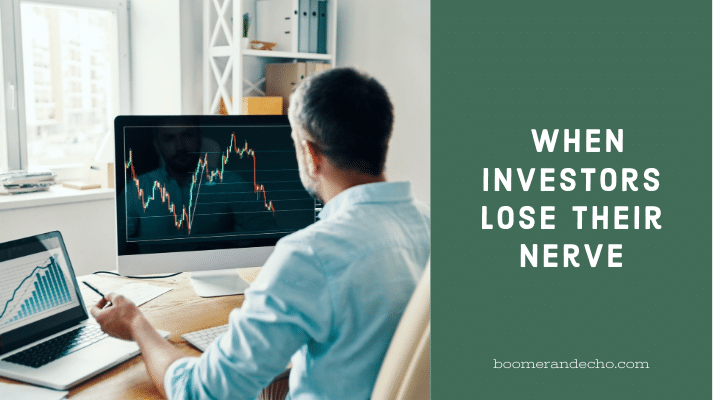
It was a tough end to the week for markets, with a sharp sell-off on Friday reminding investors how quickly sentiment can change. For anyone who sold in late summer in anticipation of a correction and bought back in in early October, that one-day drop may have been confirmation that they can’t win.
This is the real-time market timer’s dilemma: trying to outsmart short-term moves rather than sticking to a long-term plan that is appropriate for the risks.
This week’s post delves into that same topic. Several reader comments landed in my inbox recently, and they all highlight the same challenge: the temptation to jump in and out of the market completely, or to change strategies based on short-term noise.
This is why that approach is so dangerous, and why it’s almost always smarter to stay invested through the ups and downs.
To be honest, I get concerned when I receive a bunch of emails from nervous investors. Worried that investors will abandon their sensible index funds at the slightest threat or whisper of trouble.
Here’s what a few of them said:
“We sold 70% of our (global equity) holdings in early September, as September is typically a negative month for the markets. We put the money into a short-term GIC and now that it has matured, we are wondering whether we should reintroduce dollar-cost averaging or go for a lump sum. FOMO is starting to set in since the market has soared.”
And they are not the only ones. Another reader recently shared:
“With the unknowns surrounding Trump and the tariffs, I converted our savings into cash around the end of May and am currently earning 2.75%.”
Then came an email that struck a similar chord:
“I’m wondering if you should add some gold ETFs to your portfolio to hedge against a possible downturn in the market? I read an article by Ray Dalio about having some gold – like 15% – in your portfolio.”
These are all versions of the same concern: maybe diversification isn’t enough. Maybe this time it’s different. Maybe a few adjustments can protect me from the next recession.
Look, investing is hard. When the markets are buzzing, it’s tempting to chase the most popular stocks or indexes. Technology stocks, the Nasdaq and even the S&P 500 all look shiny when they’re ahead. Meanwhile, holding a global index portfolio feels boring and banal, even though the returns are strong and the diversification quietly spreads the risk across thousands of companies and dozens of countries.
I’m worried too. I worry that investors are chasing returns in rising markets. But I’m even more concerned that they will abandon their risk-oriented portfolio when the markets fall.
And markets shall fall. That’s not a mistake, it’s a hallmark of investing. It’s precisely why stocks offer higher long-term returns than cash, GICs, or bonds. The ‘risk premium’ exists because investors have to deal with temporary declines along the way.
That’s also why I recommend asset allocation ETFs. In good times you get globally diversified growth, and that same diversification dampens (not eliminates) losses during recessions. Index funds are not magic. When the markets fall, your portfolio will fall. That’s how it works.
The key is to stay the course. It’s painful to watch your portfolio drop, but history shows that trying to time the market, sell and then figure out when to buy back in almost always leads to worse results than just holding your risky mix and riding it out.
We saw this in 2022, as investors fled to 5% GICs, only to miss the sharp recovery from 2023 through 2025. Markets can recover faster than most people expect, and missing just a handful of strong days can derail long-term returns.
So yeah, we’ve been doing well lately. The ‘Liberation Day’ tariff scare from the spring now feels like ancient history. But eventually the markets will drop 10, 20, maybe even 30%. Long-term investors in global index funds know this will happen and should not be surprised. Those drops are temporary. Over time the line continues to move up and to the right.
For retirees or near-retirees who have been flying a little too close to the sun with their equity exposure, this is a good time to take your 10% cash wedge to facilitate future withdrawal needs. You can do that in a few ways:
- Sell a small portion of your ETF holdings while the markets are high.
- Turn off dividend reinvestment and send those distributions to a HISA ETF.
- Put new contributions into that HISA ETF until you reach about 10% of your portfolio in cash by the time you retire.
That little cushion will give you peace of mind when the next correction hits, so you won’t be tempted to give up on your plan.
Stay diversified. Stay invested. And most importantly, stay the course.
This week’s summary:
Don’t forget to grab your free ticket to the Canadian Financial Summit and attend sessions with David Chilton, Preet Banerjee, Shannon Lee Simmons, Rob Carrick, along with yours truly and many more.
Earlier this week I explained the nuances that went unreported or exaggerated in that CTV article about an unfortunate $660,000 tax bill.
I was finally able to switch our business investment account to Wealthsimple this week. The transfer, which was initiated ‘in kind’ on Tuesday, arrived at Wealthsimple on Friday. This is similar to how long it took to transfer my in-kind LIRA from TD Direct Investing to Wealthsimple.
The account transfer of ~$560,000 gives us $5,600 in cashback paid over 12 months thanks to the current 1% match offer (still open until October 15).
Hey, as someone who only regularly contributes to a single ETF, Questrade didn’t do anything special to keep our company. I’ll take the $5,600, thank you very much. Plus, it’s nice to finally have all our accounts in one place after years of using 2-3 different platforms.
Weekend reading:
Are we in a new normal? concentration on the stock market? Don’t be surprised if it does, says Ben Carlson.
US stocks suffered a lost decade in the 2000s. They’ve crushed everything else since then. But now we are about to enter another era when investors don’t want US stocks?
If AI is a bubble, and bubbles eventually burst, then how should we invest during a bubble??
“Life would obviously be easier if you could let the AI wave rise higher and get off immediately when the crest is almost reached, but that is not a realistic strategy.
Experience has taught me that no one has the ability to consistently predict the turns in these cycles.
So I’m not going to try.”
Here’s Jason Heath on why savers are at the end of their careers Be careful with RRSPs.
Investors have long been enamored with investments that produce monthly cash flow. Dan Hallett elaborates on this unhealthy aspect obsession with covered call ETFs.
Ben Felix also believes that these products are likely to harm long-term investors, including those who need income. He said: “I didn’t realize how widespread this financial nonsense had become.”
Everything costs $1,000. Heather Boneparth is here big birthdays, parenthood and the power of expectations.
Finally, Adam Chapman tells a heartwarming story about a 75-year-old mother who made her three adult sons cry in a restaurantT.
Happy Thanksgiving weekend everyone!

#Weekend #reading #investors #lose #nerve #issue