
It’s been two years since Australians went to the polls for the country’s first referendum in decades.
The results were decisive, in more ways than one.
The proposal to recognize Aboriginal and Torres Strait Islander peoples in the constitution and establish a permanent First Nations advisory body, a Voice to Parliament, was rejected by every state and territory.
But a closer look at the data revealed that Indigenous communities had voted overwhelmingly in favor of the Voice.
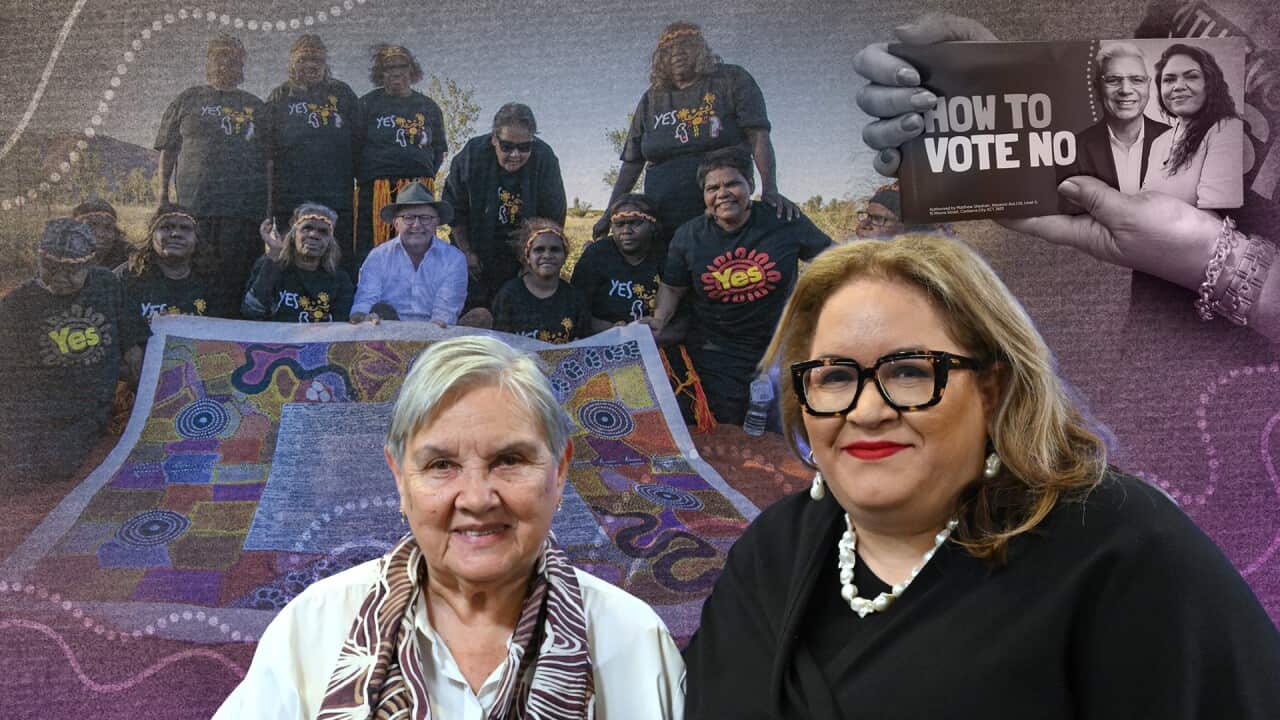
Professor Megan Davis AC and Pat Anderson AO, architects of the Uluru Statement from the Heart, the document that formally introduced the Voice, say they remain committed to the call to action.
“The Voice is still needed. Nothing has changed,” said Professor Davis, a Cobble Cobble woman and constitutional lawyer.
“This conversation obviously needs to continue,” agreed Ms. Anderson, a leading member of the human rights movement.
“The disadvantage facing our communities across the continent is at crisis levels.”
In rejecting the idea that the referendum result meant the end of the Voice, Professor Davis referred to other referendum campaigns.
“Four-year terms are on the agenda, the republic is still on the agenda,” she said.
“[The Voice] is not off the table because that is what our people want.”
The government’s silence is condemned
But since the referendum, the government has been virtually silent on its plans for the Voice, or indeed on the other pillars of the Uluru Declaration, Truth and Treaty.
While Professor Davis praised Anthony Albanese as the only prime minister in history who had “opened the door” to the referendum, there was criticism of the government’s apparent retreat from its commitment.
Wiradjuri man Geoff Scott, who appeared in a webinar with Professor Bronwyn Fredericks to mark the anniversary, said the 6.2 million ‘yes’ votes should be celebrated.
‘The great silence is [that] the Labor government has gone further,” he said.
“It’s a challenge for all of us to get them to watch it again.”
“Two years after the referendum, the silence feels heavy,” agreed Professor Davis.
‘We don’t need a new committee’
Mr Albanese has appeared twice since the failed referendum at the Garma Festival, the annual Yolngu political summit.
Mr Albanese’s keynote speeches are seen as an opportunity to set out the government’s agenda for indigenous affairs and are focused on ‘economic empowerment’.
But Ms Anderson criticized the government’s focus.
“All these committees have been set up by the government: it’s like people are tinkering while Rome is burning,” she said.
‘We don’t need a new committee. We need action.
“Our federalism makes it difficult to hold the states accountable, but the Voice would have done that.”
Who still benefits?
Professor Davis has recently written about the inevitable failures of the government’s ‘economic empowerment’ agenda.
“Increased supply — whether it be housing or indigenous businesses or taxpayer money for capital investments — will change little if the underlying power remains untouched,” she wrote in an article titled “Garma Chameleon” for The Monthly.
Those underlying power structures would continue to benefit, Professor Davis argued, from calls to abandon the push for voice.
“This is how structural injustice exists: telling people to stop imagining alternative futures,” she said on Tuesday.
“Uluru was about imagination… asking people to suspend their belief that the country cannot change or listen.”
“We didn’t go to places where people had nice cars and houses,” Professor Davis said of the Uluru Dialogues, the community consultation process that resulted in the Uluru Statement.
“We went to communities that don’t have a voice… places with terrible statistics about disadvantage.
“[The Uluru Statement’s] power came from refusing to accept the limitations of elites.”
To conclude Tuesday’s webinar, Aunt Pat Anderson offered a simple statement of resilience.
‘We’ve been here for 65,000 years. We’re not going anywhere. You have to deal with us.”
#years #Voice #referendum #architects #remain #committed