

All truck and bus drivers in the United States will now be required to take their commercial driver’s license tests in English, as the government expands its rigorous campaign to increase safety in the industry and remove unqualified drivers from the road.
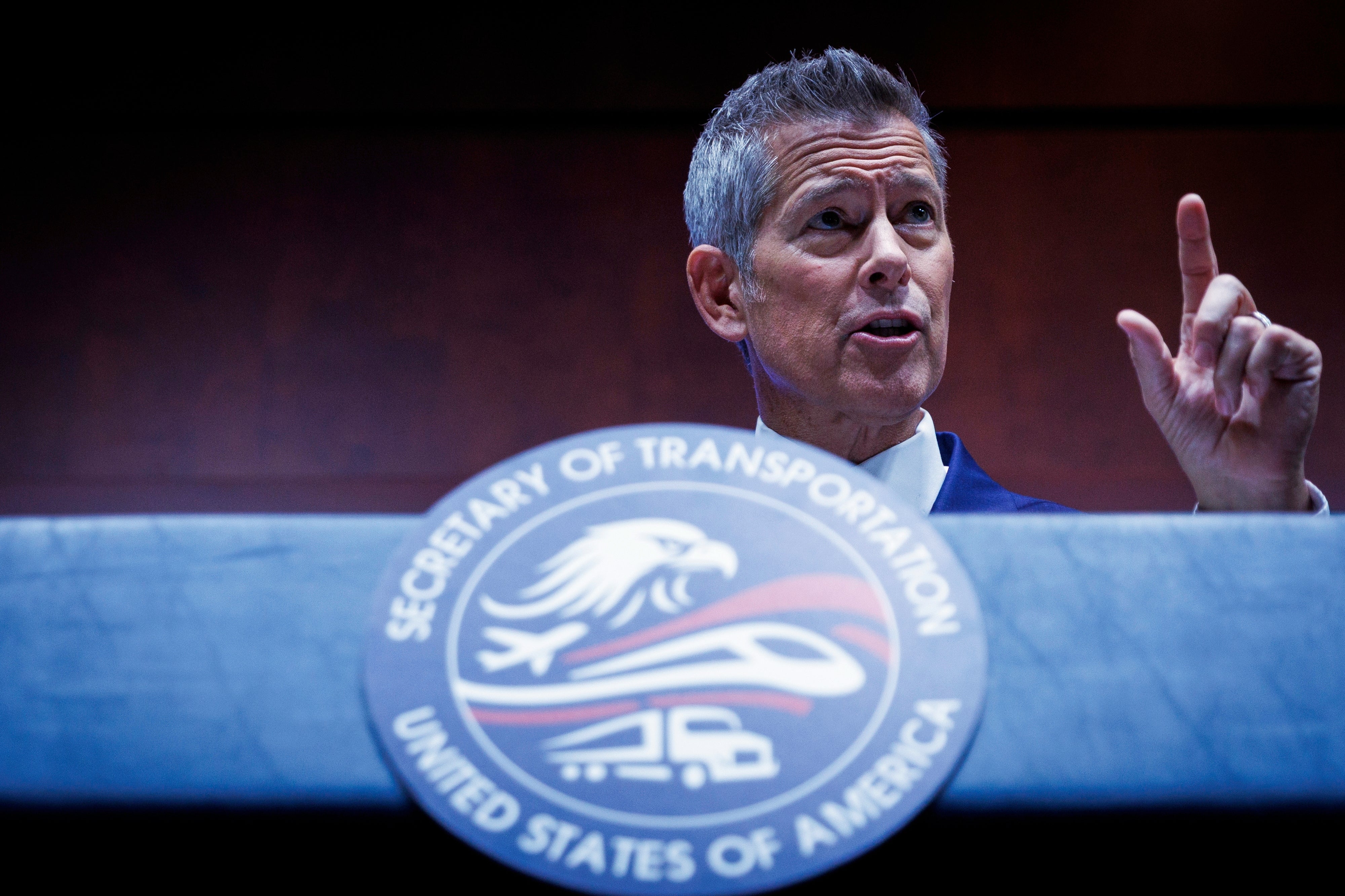
Transport Minister Sean Duffy announced the latest initiative on Friday, aimed at ensuring drivers have sufficient English language skills to understand road signs and communicate effectively with law enforcement. Florida has already started administering its tests exclusively in English.
Currently, numerous states allow drivers to take their driver’s license tests in other languages, despite a federal English proficiency requirement. California, for example, previously offered tests in 20 different languages. Duffy highlighted that several states have outsourced the administration of commercial driver’s license tests to private companies, which he said are failing to enforce the necessary standards for demonstrating driving and English skills.
These stepped-up enforcement efforts closely follow the Department of Transport’s directive that 557 driving schools had to close for failing to meet basic safety standards. The department has aggressively targeted states that issued commercial driver’s licenses to people who should not have qualified, a crackdown that began after a fatal crash in August.
That incident involved a truck driver, who Duffy stated was not authorized to be in the U.S., who made an illegal U-turn in Florida, resulting in the deaths of three people. Subsequent deadly collisions, including one in Indiana earlier this month that killed four members of an Amish community, have further exacerbated safety concerns.
States are mandated to ensure drivers can speak English before issuing a commercial license, with law enforcement expected to verify language proficiency during traffic stops or inspections. Drivers who cannot communicate effectively should be removed from service. A recent federal inspection program, which included 8,215 checks, led to nearly 500 drivers being disqualified because of their English proficiency. California initially resisted enforcing these English rules, but has since removed more than 600 motorists from its highways.
Duffy asserted that every American expects drivers of large commercial vehicles to be thoroughly qualified. He regretted that the problems within the trucking sector “were allowed to lie around for too long and no one paid attention to them for decades.”
“Once you pay attention, you see that all these bad things happened. And the consequence of that is that Americans are getting hurt,” Duffy said. “When we go out on the road, we can expect that we will be safe. And that those operating those 80,000-pound big rigs will be well trained, well qualified and will be safe.”
The campaign will also broaden its scope to prevent fraudulent trucking companies from entering the industry, while continuing to target questionable driving schools and ensure states adhere to all regulations for issuing commercial licenses. Duffy indicated that the registration system and requirements for trucking companies would be tightened, with Federal Motor Carrier Safety Administration (FMCSA) inspectors conducting more spot checks on trucking and commercial driver’s license schools. Officials are also working to ensure the accuracy of the electronic recording devices used by drivers, and that states follow all regulations to qualify drivers for commercial licensing.
Currently, companies can register to operate by paying as little as $300 and providing proof of insurance, often without an audit for a year or more. Even then, audits can be conducted virtually, making it more difficult to identify fraudulent entities. This lax system has facilitated the operation of “chameleon carriers”: fraudulent companies that register multiple times under different names and switch identities and registration numbers to avoid consequences after crashes or other violations.
Dan Horvath, chief operating officer of the trade group American Trucking Associations, noted that this long-standing issue has made it extremely easy for companies ordered to cease operations to simply change their names and registration numbers and continue normal operations. “What we think has happened at ATA over the years is that we have a lack of actual enforcement and intervention among the motor carriers that are in operation,” Horvath said, adding that only a small portion of trucking companies ever undergo a full compliance review with an in-person inspection.
After the Indiana crash, the FMCSA immediately suspended the driver’s employer from service and revoked the DOT numbers of two other companies associated with AJ Partners. Tutash Express and Sam Express in the Chicago area were also disqualified, and the Aydana driving school, where the driver involved attended, lost its certification. Immigration authorities arrested the 30-year-old driver from Kyrgyzstan, claiming he had entered the country illegally. Authorities said he stopped and tried to pass a slower-moving truck, colliding with an oncoming van.
In December, the FMCSA moved to decertify up to 7,500 of its 16,000 schools nationwide, although this included many defunct operations. Duffy revealed that the companies involved in the Indiana crash were all registered in the same apartment, and in other cases hundreds of these “chameleon” companies could have been registered in one address.
#Truck #bus #drivers #commercial #drivers #license #test #English