

You know the hips. You know the quadriceps. But do you know the muscles that connect the two?
Do you need some tips? They help lift your legs so you can walk. They’re also the exact spot in your back leg where you’re likely to feel the most stretch during a lunge.
If you guessed the hip flexors, you’re right! This muscle team is located in the front of the hips and helps your leg and pelvis move as one unit. And if this area has ever felt tight, tight, tense, or even a little pinching at the end of the day, you’re not imagining it.
This is common in people who sit for long hours, travel frequently, run, cycle or train hard in the gym. People who regularly experience their hip flexors in a contracted or shortened position may not be using them in a way that keeps these muscles resilient and adaptable. In other words, if your hip flexors aren’t happy, sometimes you’ll feel it in your hips, sometimes in your lower back, and sometimes in your stride.
Tightness of the hip flexors does not always require a more intense stretch; it usually requires a smarter balance between stretching, strengthening surrounding muscles, and even breathing. That’s exactly what yoga for the hip flexors helps with.
What hip flexors actually do – and why they matter
Hip flexors—particularly the psoas, iliacus, and rectus femoris—are part movers, part stabilizers, and they play a role in almost everything you do. They keep your posture upright and your spine comfortable. They also help transfer your weight smoothly when you walk or run, so the movement feels fluid rather than “jerky” in the low back. And they’re involved when your leg moves behind you (also called hip extension), which happens every time you take a step but is a big problem especially for runners and cyclists.
Many of us do not regularly train hip extension in a controlled manner, limiting the body’s range of motion. Stress also plays a role. As you rush through life and breathe shallowly, your body braces itself – the psoas in particular can become even tighter. That’s why relieving tight hip flexors isn’t just a physical issue; it also involves calming your nervous system. That’s how yoga can improve the flexibility of the hip flexors.
But the magic does not lie in forcing deeper shapes. When you practice yoga with intentional alignment, you lengthen the area in front of your hips without sinking into your lower back. Breathing is just as important: slower breathing and longer exhalations calm the nervous system, which reduces muscle tension and softens the tissues without force.
Yoga for Hip Flexors: 7 Poses to Relieve Tension
Over time, practicing these poses with constant control teaches your hips to move (and trust) in their full range of motion when you walk, run, climb stairs, or simply stand after sitting at your desk. And because many of these poses also strengthen the glutes and core, the hip flexors don’t have to engage to keep your body stable.
Return to these poses on desk-heavy days, after a trip, or after a run, and notice what changes off the mat: a longer stride, less pulling on the low back, and a feeling of the front of the hip that is more responsive, supported, and freer.
For more support, use props such as blocks, blankets, or even a chair to support your hands. If you feel a pinching sensation in the front of your hips, reduce the intensity of the stretch or skip it – don’t push through the pain. And if you experience persistent hip pain or have recently had surgery, check with a doctor before exercising.
1. Mountain Pose (Hip Flexor Check at Home)
This is a quick exercise you can practice to help you notice if your body is overcompensating for tight hip flexors.
How:
- Stand tall and bring your attention to the front of your hips.
- If you notice that your lower back is arched, your ribs protrude forward, or your pelvis tilts forward, your body may be compensating for limited hip extension. When the limit feels the same every timeit is more likely stiffness; If it changes a lot as you slow your breathing and stabilize your pelvis, it may be more of a nervous system response than a true breathlessness.
2. Low Lunge (Anjaneyasana)
With Low Lunge you feel the stretch along the front of your hind leg. Continue lifting yourself to lengthen the spine and avoid compressing the lumbar region of your back.
How:
- Come to your hands and knees or downward-facing dog. Place your right foot between your hands. If you haven’t already done so, lower your left knee to the mat (place a folded blanket or pillow underneath it if necessary).
- Inhale to lengthen your spine. Exhale and imagine pointing your tailbone toward the mat, then shift your hips forward slightly. Stay in Low Lunge for 5-8 breaths and then switch sides.
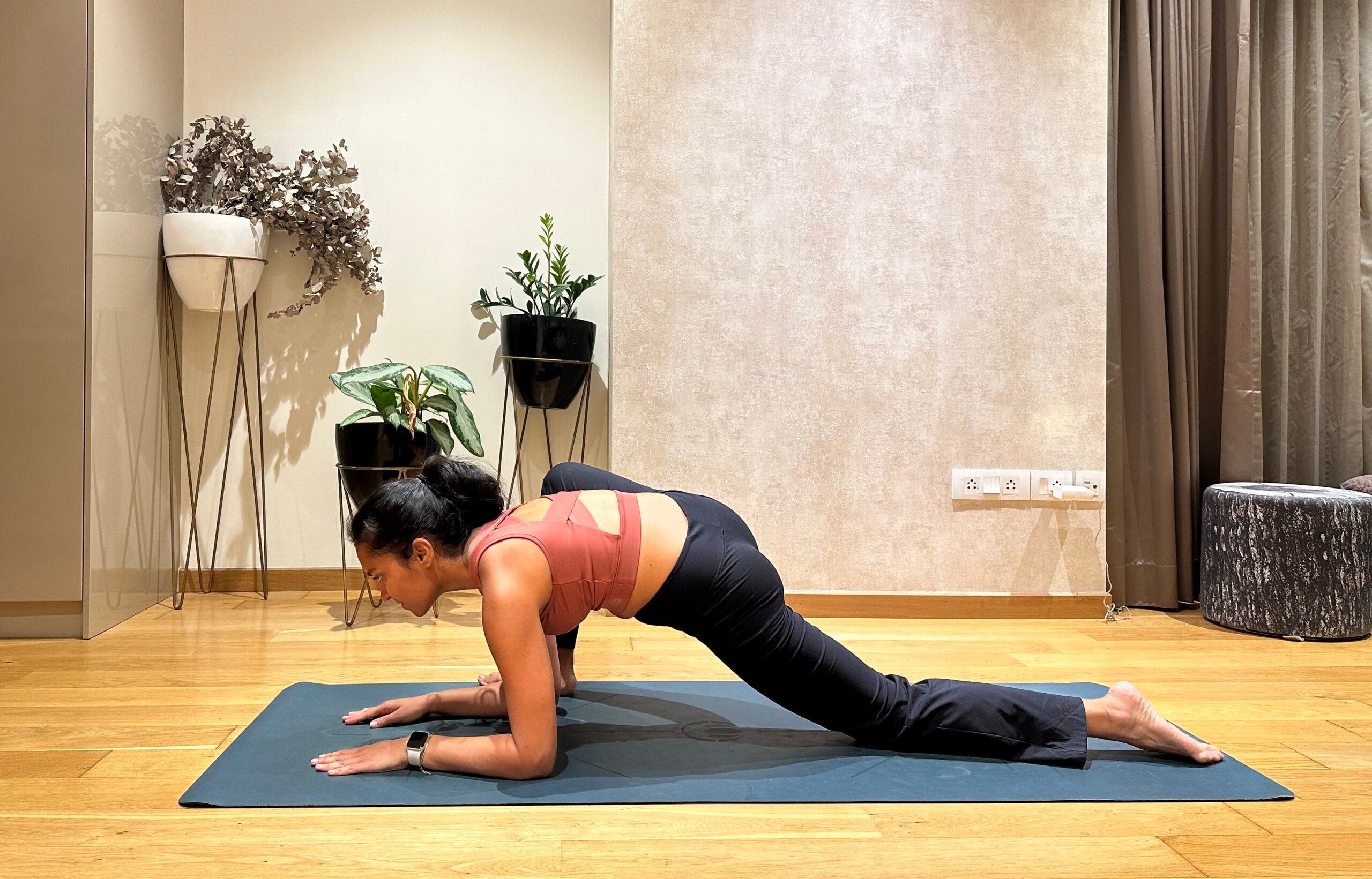
3. Lizard Pose (Utthan Pristhasana)
Great for desk sitting-related stiffness, Lizard Pose stretches the hip flexors in your back leg and the inside of your front leg. It is especially effective for runners and cyclists.
How:
- Start in Low Lunge with your right foot forward.
- Lower your hands to the inside of your right foot.
- Keep your back leg straight or lower your back knee to the mat for more support.
- Stay on your hands or lower your forearms to the mat or blocks. Stay in Lizard Pose for 5-8 breaths and then switch sides.
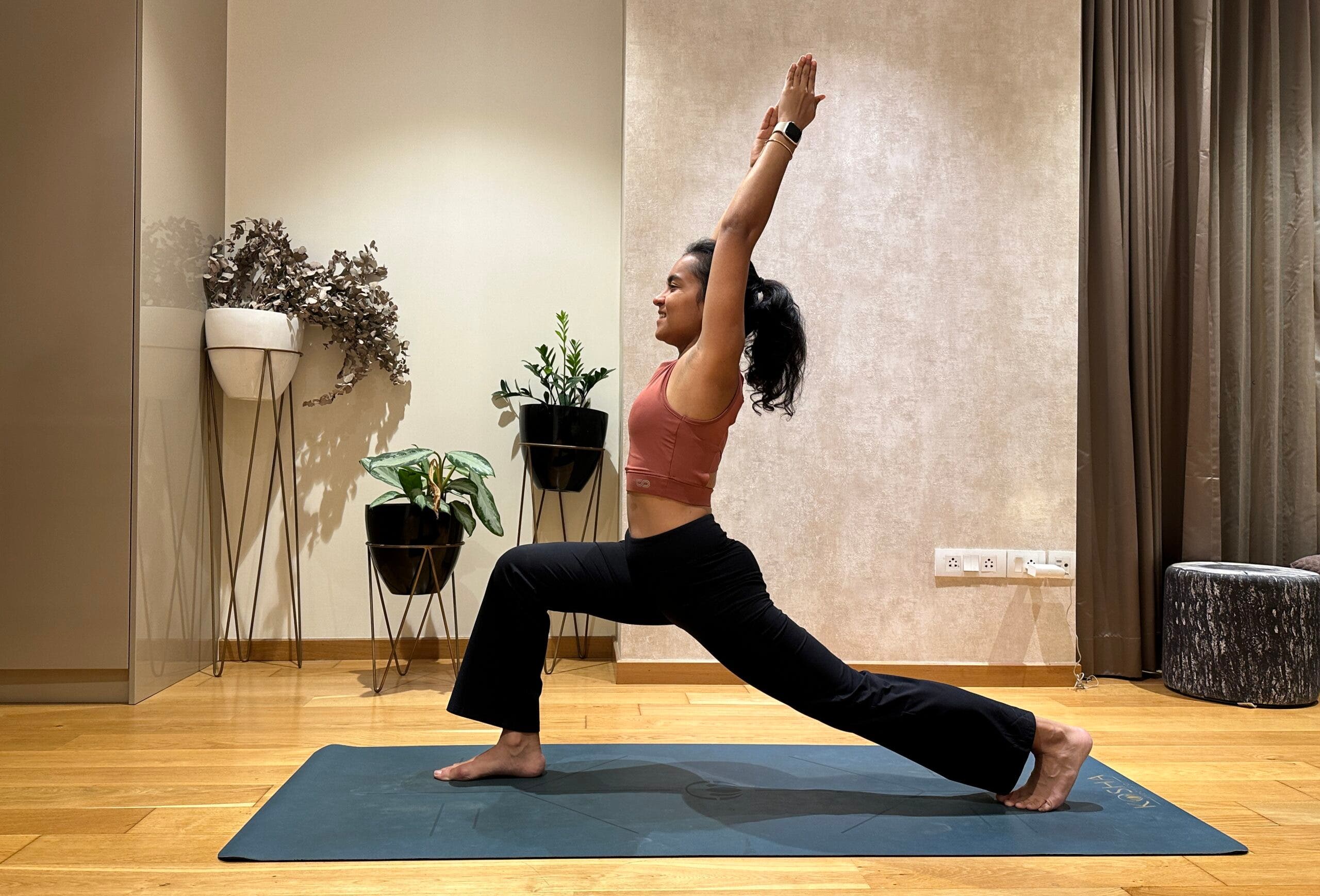
3. High Lunge (Alanasana)
This pose is a strong hip flexor opener by combining stretching with stabilization, training your hips to lengthen even as your core and glutes contract.
How:
- From Low Lunge, press the ball of your back foot into the mat and reach your heel toward the wall behind you. Lift your back knee off the mat. You may need to shorten your position. Reach your arms above your head.
- Exhale and imagine that you are pointing your tailbone toward the mat so that your lower back does not arch. Stay in High Lunge for 5-8 breaths and then switch sides.
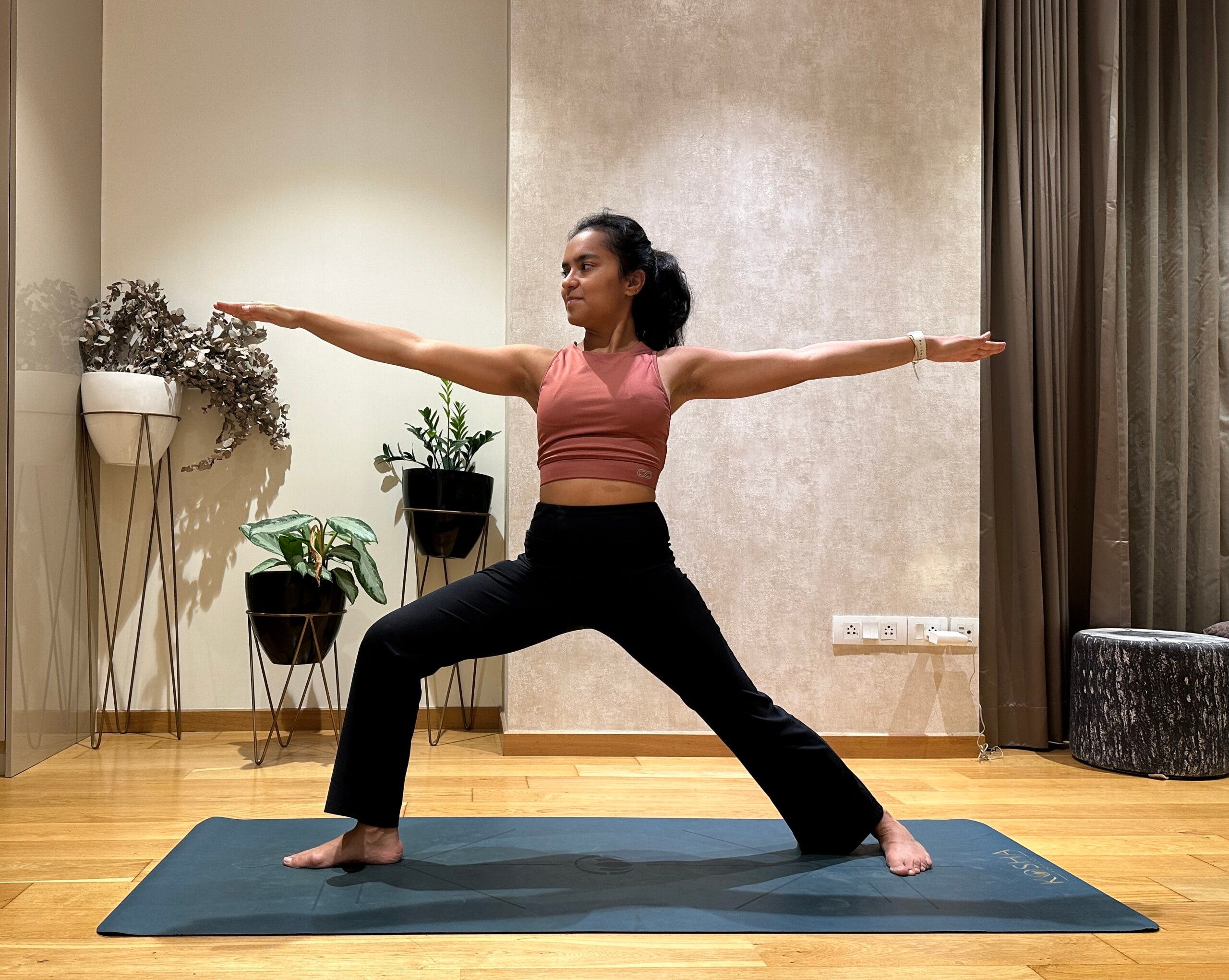
4. Warrior 2 (Virabhadrasana II)
Often the missing ingredient for hip flexors that feel chronically ‘on’ is hip stability and pelvic control – exactly what Warrior 2 helps build.
How:
- Stand with your feet wide on the mat. Turn your right toes toward the short edge of the mat and turn your left toes slightly inward.
- Bend your right knee into a comfortable position. Make sure your right knee passes over your right toes.
- Extend your arms to shoulder height and soften your shoulders. Keep your torso stacked over your pelvis; Look over your front fingertips. Stay in Warrior 2 for 5-8 breaths and then switch sides.
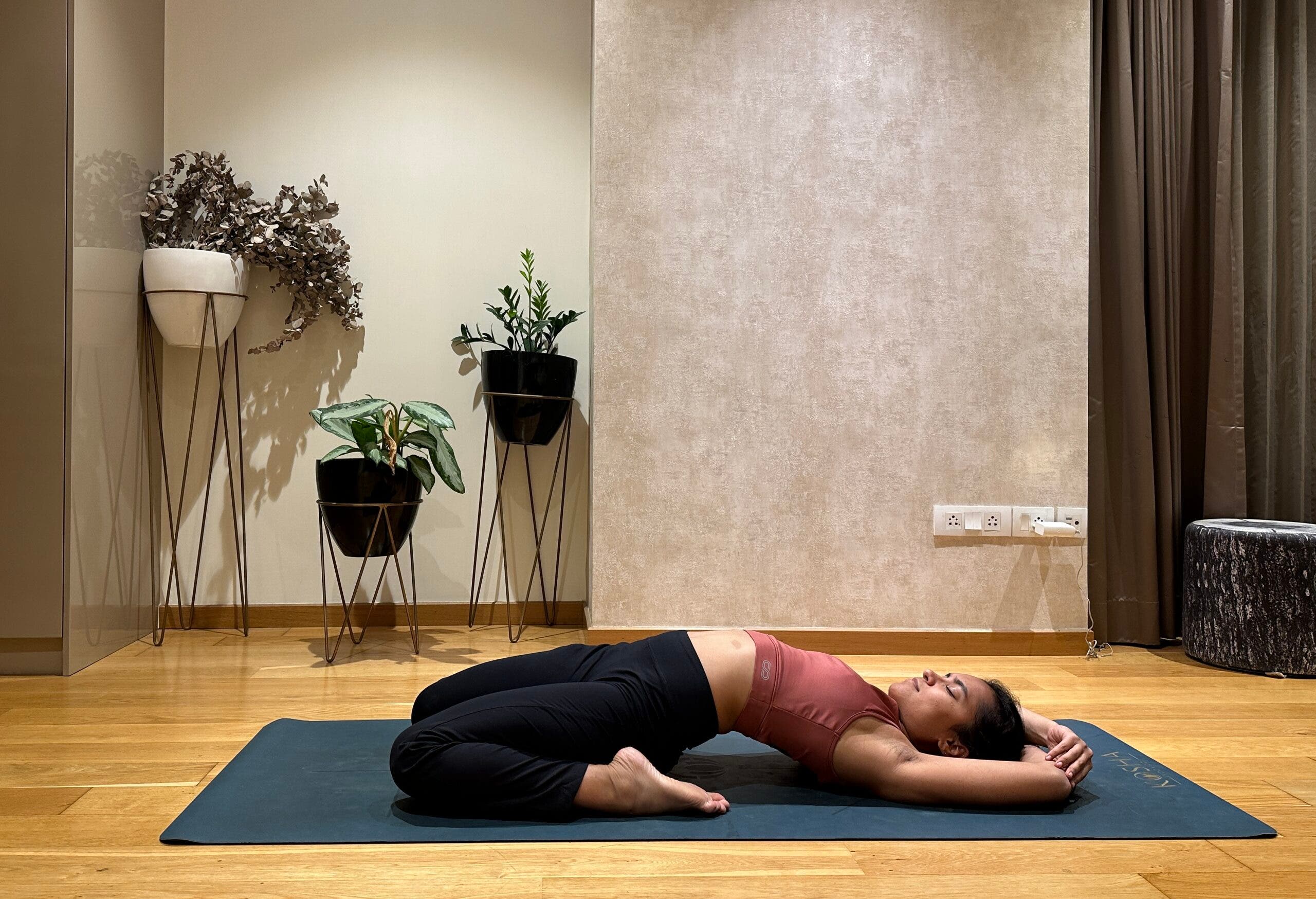
5. Reclining Hero Pose (Supta Virasana)
The rectus femoris, a hip flexor that crosses the knee, can feel especially tight after sitting, cycling or quad-heavy exercise. Reclined Hero helps it lengthen along with your quads. If your knees feel uncomfortable, add some support under your back or skip the pose.
How:
- Kneel with your knees together or slightly apart if that is more comfortable. Sit between your feet (place a block or cushion under your seat if necessary).
- Walk with your hands behind you and lean back. Stay here or lower on your forearms.
- Lean back on a pillow or stacked pillows (start higher than you think you need). Stay in the lying hero pose for 5-8 breaths and then slowly come up.
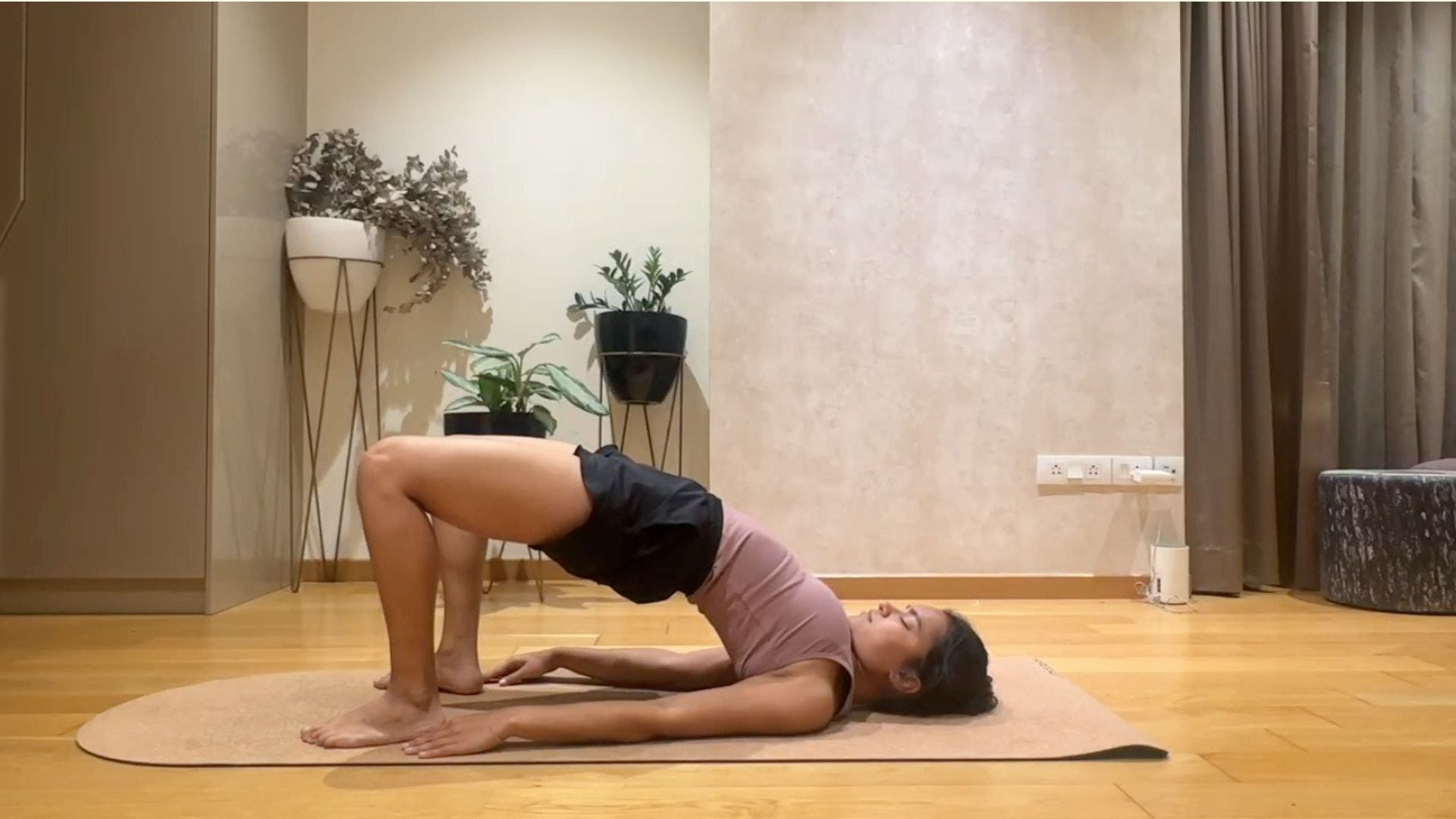
6. Bridge Pose (Century)
Strengthening your glutes and hamstrings ensures that the hip flexors don’t overcompensate for them to maintain stability. Bridge Pose helps achieve that while stretching your hip flexors.
How:
- Lie on your back with your knees bent and your feet hip-width apart on the mat.
- Inhale as you press your feet into the mat. Exhale as you lift your hips. Keep your thighs parallel to each other. Stay in bridge pose for 5-8 breaths and then lower your hips back to the mat.
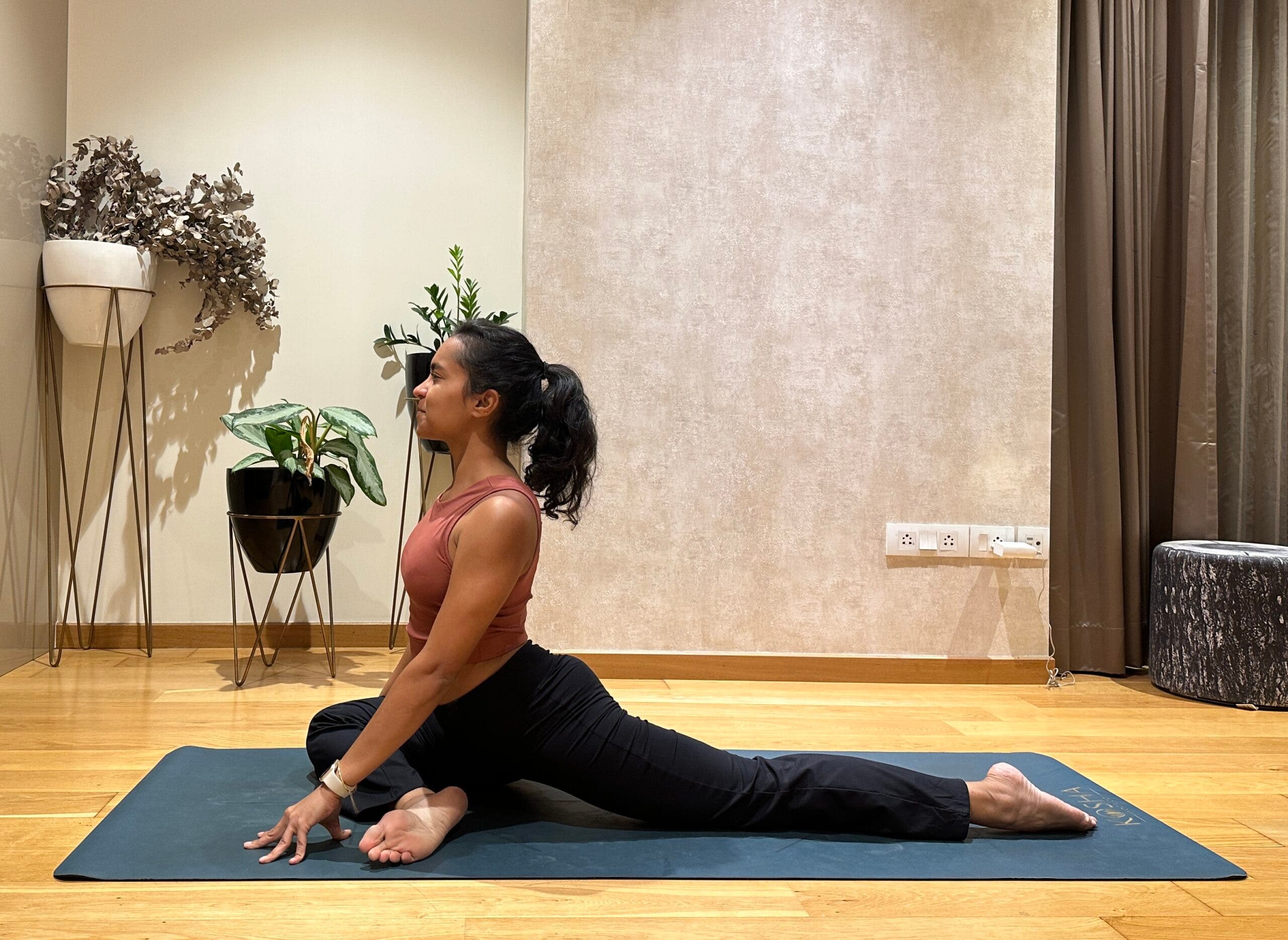
7. Pigeon Pose (Ekay
You’ll relieve hip tension and improve hip rotation in Pigeon Pose—not to mention offset the stiffness from sitting. The pose should feel spacious, never sharp.
How:
- From your hands and knees, bring your right knee toward your right wrist and slide your left leg straight back. If your hips feel tight, keep your right foot closer to your pelvis. If your right hip is not touching the mat, place a block or blanket under your right hip if it is not touching the mat.
- Maintain an upright position or lean your chest forward over your front leg if your front hip is not pinched. Stay in Pigeon Pose for 5-8 breaths and then switch sides.
#Tight #hip #flexors #stretches #relieve #discomfort