

Like fingernails, human hair is something that is considered normal and fine when attached to the body, but dirty in any other context. Hair clogs our drains. Seeing a single strand on our plate is a reason to return food to a restaurant. And after it is cut off in salons and barbershops, it is immediately swept up and thrown away.
Hair is usually destined for the trash, but what if it could be reused as a raw material for design? One designer is exploring some new uses for hair, including making biotextiles that feel like wool.
Designer Laura Oliveira collected clippings from two Portuguese hair salons for her master’s thesis in product and industrial design at the University of Porto in Portugal. (The hair was donated anonymously after the two salons signed informed consent forms.)
Oliveira received several large bags of hair which she cleaned and sorted by color, texture and length. Over the course of the project, she developed what she calls a ‘hairbraium’, an archive of categorized human hair samples that she used as her material library.
[Photo: Laura Oliveira and Mayra Deberg]Hair as material
Fashion designers have previously used human hair (see that of the Turkish designer Dilara Findikoglu Spring collection 2023). In fact, hair has deep roots as a material. Textiles made from human hair dating back to the Middle Ages have been found in Peru. Nowadays Dutch company Human material loop turns hair into yarn and textiles.
 [Photos: Laura Oliveira and Mayra Deberg]
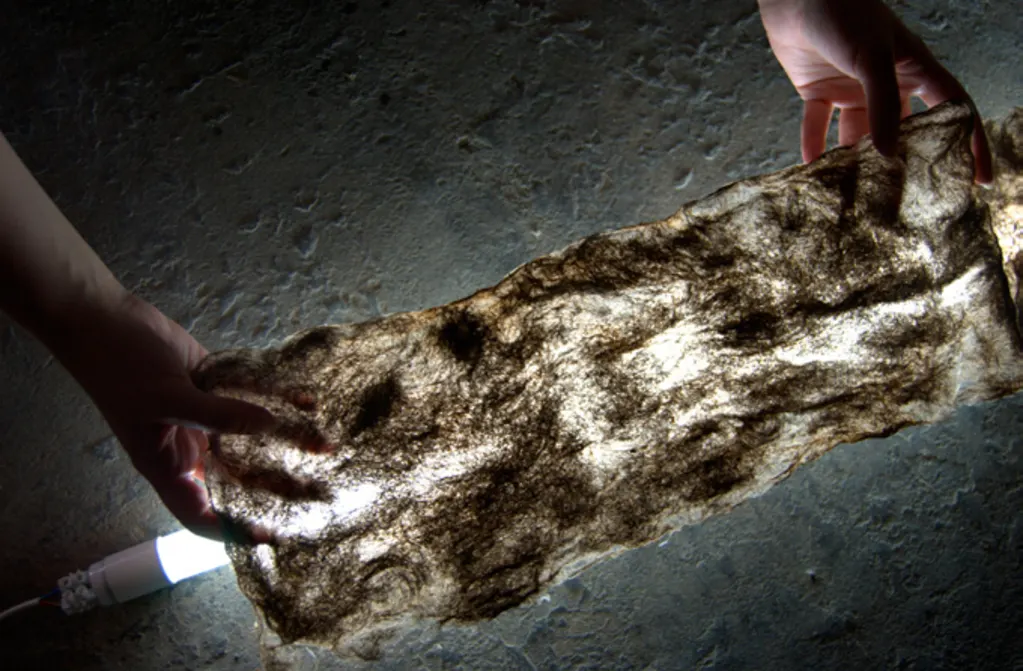
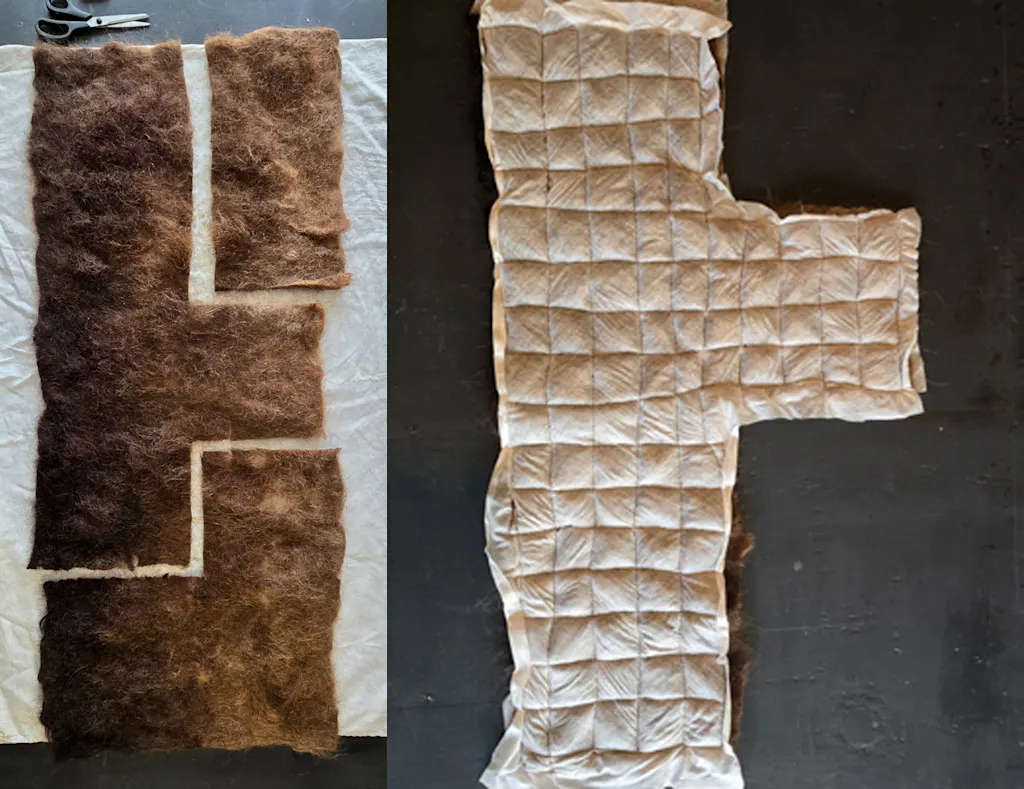
Oliveira made her biotextiles by applying different textile techniques to the hair, such as carding, wet felting and needle felting. The felted biotextiles were slightly scratchy, but structured and dense, “similar to coarse wool,” she says. She also experimented with other, more unconventional methods, such as combining hair with glycerin, agar-agar and pine resin. When combined with pine resin, which is usually brittle when solid, the hair absorbed it and improved its resistance and structural stability.
 [Photos: Laura Oliveira and Mayra Deberg]
“This project has taught me a lot, both technically and conceptually,” Oliveira tells Fast Company. “Through the research and experiments, I realized that hair has impressive properties and could potentially be applied in multiple areas, from agriculture and textiles to art and product design.”
 [Photo: Mayra Deberg]
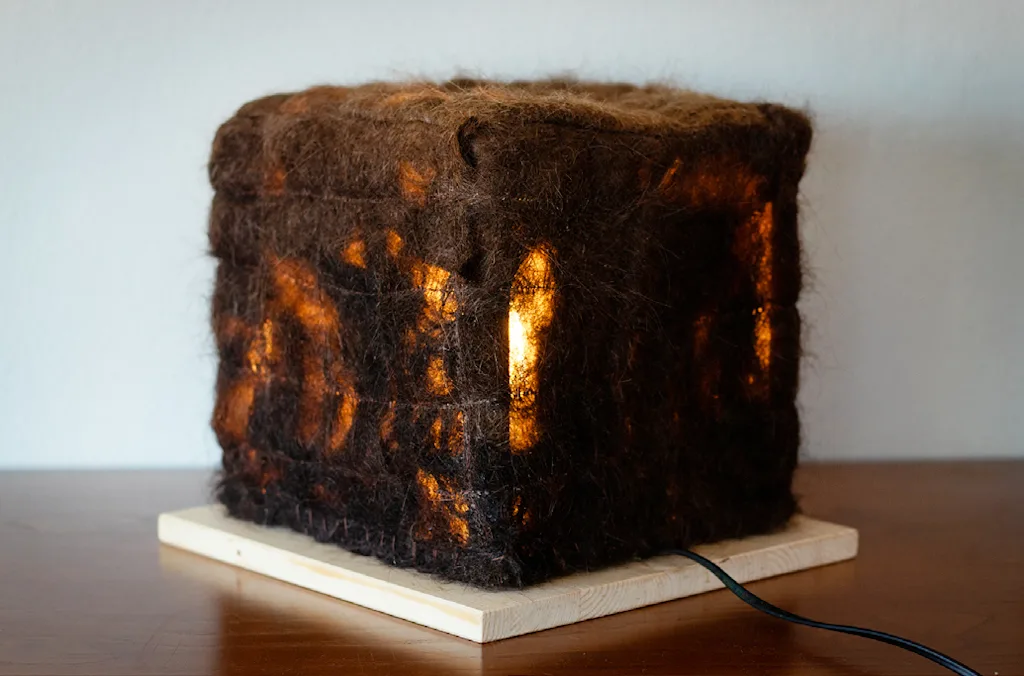
In addition to the fabrics, Oliveira processed hair into needle-felted balls, tchotchkes and filling material that could be used in pillows and puffer coats. With resin, she says its potential as a raw material lies mainly for artistic and design objects, where the aim is to create stronger bio-based composites that explore new aesthetic and tactile possibilities.
“In general, these materials are still in an experimental phase,” she says. “Although they show interesting potential, they would require further research and testing to improve their mechanical performance, durability and consistency before they can be considered for larger-scale or real-world applications.”
#beautiful #fabrics #human #hair