


This post is about what to do with your personal finances in the event of war. And to be even more specific, this article is about a war taking place on the borders of your country. There is not one event far away from you that involves your country.
Wait, isn’t this topic ridiculous? Wars don’t happen that often these days.
No.
While it is true that wars, industrial accidents, and crime have become increasingly rare over the past hundred years, even rare events such as war can occur frequently.
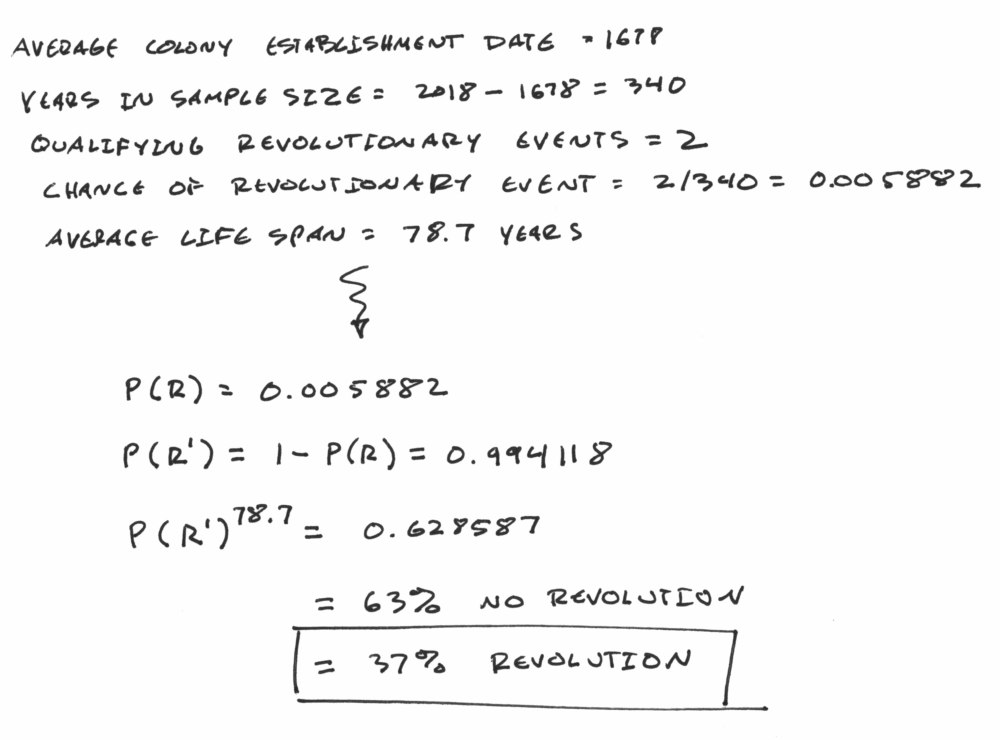
The chance of a revolutionary event: 37 percent
In a little-noticed analysis from 2018, hydrologist BJ Campbell gave a very tight summary of the chances of a violent revolution in the United States in his article:The surprisingly solid mathematical case of the Tin Foil Hat Gun PrepperNoting that two major revolutionary events have occurred in the United States since the country’s founding, he calculated a 37 percent chance that every American with an average life expectancy will experience at least one nationwide violent revolution. Here is his calculation:
Destruction of wealth is an enduring part of the human condition
In the 1980s, historians Will and Ariel Durrant summarized some of the most important findings from recorded history in their book The lessons of history. They noted that of the past 3,421 years where reliable historical records exist, only 268 have had no wars. So even though conflicts have been absent from the postwar financial literature, they have been an enduring part of the human experience for virtually all of recorded history.
So, what to do with your money in case of war?
With notable exceptions, this topic has been largely ignored by the investment community. This may be because professional investors typically do not have military experience or have spent significant time in countries with a history of political instability.
The only truly thorough work on this subject is Barton Biggs’ seminal book Wealth, war and wisdom. Biggsnow deceased, was a Yale graduate, US Marine Corps veteran, director of Morgan Stanley and hedge fund manager. Wealth, war and wisdom is one of the few thorough books on the impact of large-scale military conflict on personal finances. Biggs looked at the impact of World War II on stock markets and discussed how prosperity was maintained in Europe in the 1940s.
To answer the question of what to do with your money in the event of war, let’s look at each of the asset classes below in light of Biggs’ discussion. We will include some relevant historical and contemporary examples.
The final conclusions are diversify And get out of the way. War is very destructive to wealth building, and it is noticeably worse if your country is on the losing side.
By asset class:
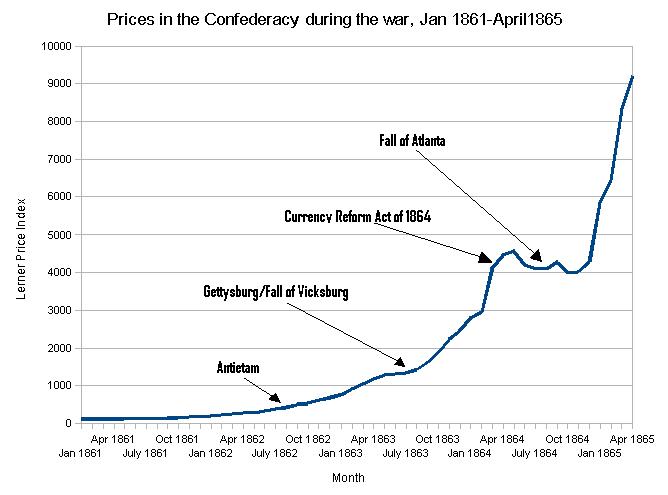
1) Cash: Wartime inflation and taxation usually significantly undermine the value of cash. For example, cash turned out to be a bad asset class during World War II. Inflation rose as high as 30 percent in France, 40 percent in Italy and 50 percent in Japan, wiping out the value of these currencies. In the United States, income taxes were raised to their highest historical level – 94 percent on incomes above $200,000 – and inflation jumped even at 14 percent. Inflation rates are historically consistent with what is known about the American Civil War. Here is a graph of the Lerner Price Index in the Confederate States of America between January 1861 and April 1865. Essentially, Confederate money became worthless during the conflict period.
2) Precious metals: Gold and silver work well as a means of protecting small amounts of wealth. However, it is almost certain that large quantities will be seized or stolen. As they were during the German and Russian occupation of Europe during World War II.
3) Bonds: Depending on where you live, bond performance can suffer greatly during wartime. Between 1900 and 1949, bonds issued by Axis governments yielded negative returns of -96 to -98 percent. In contrast, bonds issued by allied and neutral powers had an average yield of 1.8 percent.
4) Real estate: If you were on the losing side during World War II, physical real estate (houses and buildings) was generally not a good asset to own. Real estate in Poland, France, Belgium, Denmark and Eastern Europe was often confiscated or destroyed during the fighting. By the end of 1944, virtually no rent was being paid for land or buildings in continental Europe. During the American Civil War, almost 20 percent of all large plantations were destroyed. On the other hand, small, remote farms generally avoided destruction, at least during World War II, and were a good way to both preserve wealth and provide for yourself.
5) Shares: Even during World War II, stocks outperformed all other asset classes in countries directly affected by the war. This was the case for both the Axis and Allied powers in World War II. However, its performance largely depended on whether or not the country won or lost the war. Among countries that won World War II, stocks showed a real return of 4.2 percent between 1900 and 1949. Among countries that lost or occupied the Second World War, real returns of up to -26 percent were evident.
6) Personal property: In general, looting is common in conflict areas, so personal belongings such as art, valuable collectibles, etc. are likely to be stolen by the occupying forces. But as Biggs warns, even when valuable personal property can be sold, it often costs a fraction of the item’s actual value.
7) Cryptocurrency: Cryptocurrencies are vulnerable in wartime in two respects. First, they rely on places having enough electricity to access cryptocurrency exchanges. Recent experiences in Venezuela suggest that this is not always the case. according to the BBC. Second, cryptocurrencies under the control of large corporations or national governments are vulnerable to seizure. More than 29 percent of global cryptocurrency trading takes place in the United States, and know-your-customer regulations have increased significantly in the United States, increasing the potential risk of seizure.
Practical advice on what to do with your money in the event of war
Biggs offers some practical advice for safeguarding your wealth in the event of war:
- Diversify your assets by moving at least 5 percent of them out of the country. Be careful with Swiss banks, they require strict documentation that is often unavailable after a conflict
- Buy a small farm with 5 percent of your equity. This must be in a remote location
- Put 5 percent of your assets in TIPS (Treasury Inflation-Protected Securities), inflation is common in countries experiencing war
- Make sure your stock holdings are diversified. Don’t put them all in automated databases at the big banks; turn to paper instead. Make sure the shares are in your name, and not in the “street name” or the name of the brokerage. Focus on global equities. If you hold domestic stocks, you will be wiped out. Plain vanilla index funds are fine.
- Watch the stock markets. The markets have generally done a good job signaling when wars are turning
- Store gold and silver outside the country. Only keep a small amount at home
- Diversify your currency holdings. Carefully consider which currency you want to hold and where you want to hold it
To wrap this up briefly: both Wealth, war and wisdom and the math behind the long-term human experience suggests that war is more common and destructive than we would like to admit. The best thing you can do is diversify your assets and move them out of the way of conflict by moving them out of the country.
Source: Barton Biggs, Wealth, war and wisdom. Wiley. 2008.
#chance #civil #war #lifetime #assets #save #destroy #wealth #overnight #Dinks #Finance