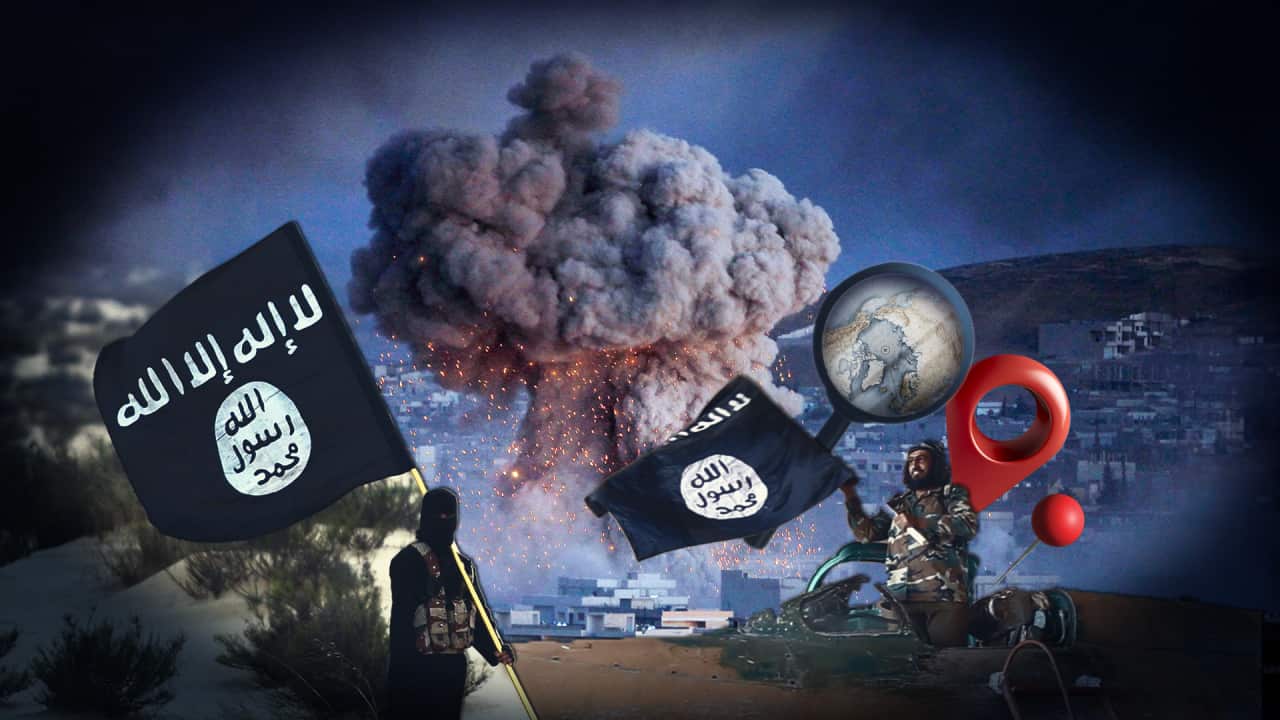

While at the height of their power in 2014, the ANS website says, extreme groups such as IS can still recruit and influence members through “compelling stories” online.
What we know about IS and the Philippines
The Philippines has a “long history” of separatist terrorist violence, according to Levi West, an ANU researcher who studies radicalization.
He explained that the southern islands of the Philippines are “overwhelmingly” Muslim compared to the rest of the country, which is predominantly Catholic.
Jemaah Islamiyah was first listed as a terrorist organization by the Australian government in 2002 and is described as a “Sunni Islamist religiously motivated violent extremist group”.
The Annual Threat Assessment (ATA), a report prepared by US intelligence agencies, lists the Philippines as terrorist organizations linked to the IS group, but distinct from the regions where the country claims authority.
Where is Islamic State located?
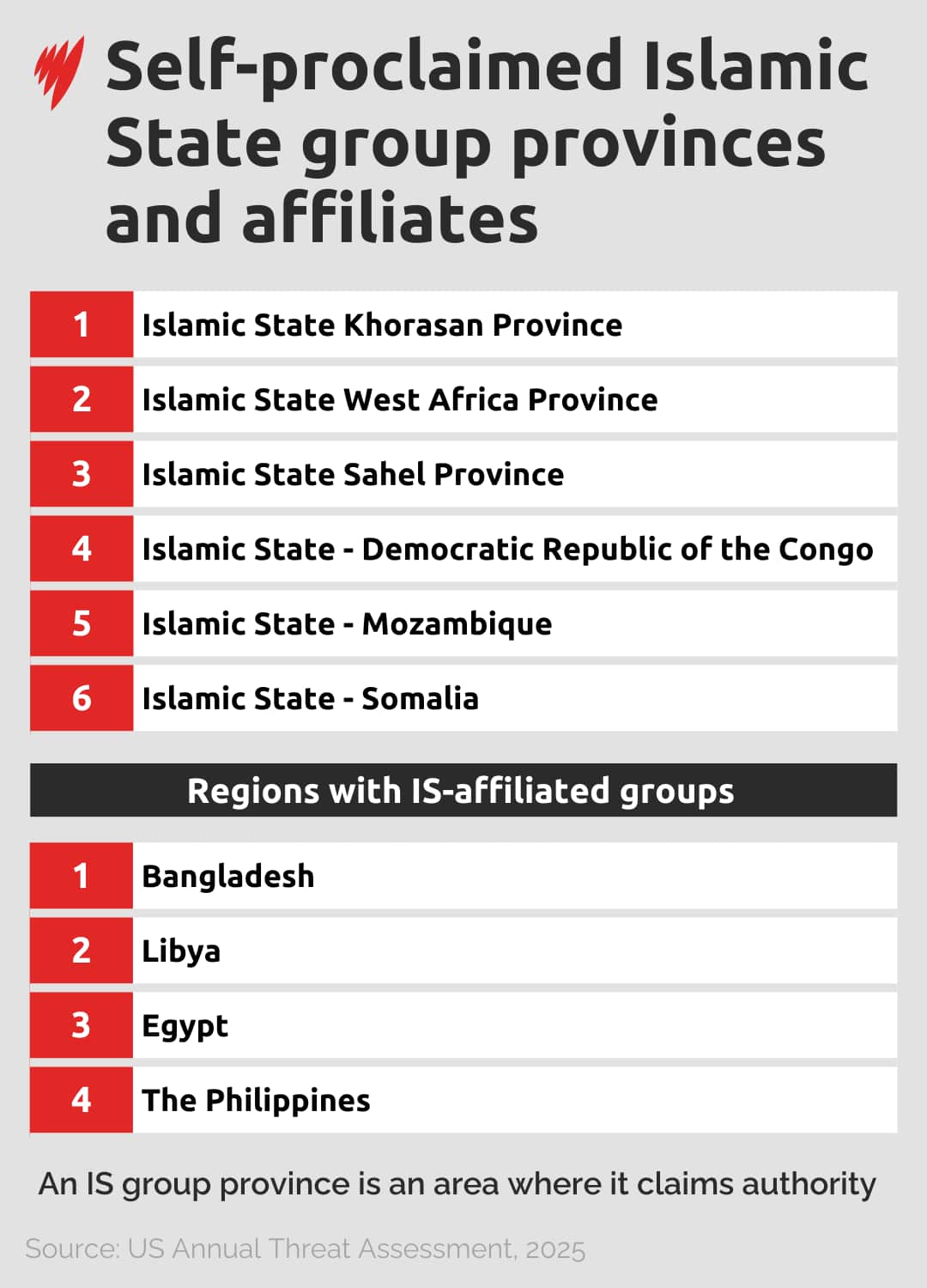
Khorasan province, which the ATA described as the “branch most capable of carrying out external terrorist attacks,” is named after the historical region of Khorasan, which was in Iran. This branch of IS is located in Afghanistan and parts of Pakistan and Central Asia.
Source: SBS news
The IS group has five other provinces across Africa.
These affiliated terrorist groups are located in Bangladesh, Libya, Egypt and the Philippines.
Radicalization across borders
“Videos, images, online magazines, and even video games are used to create compelling narratives that portray violence as justified, socially rewarding, or spiritually satisfying, while simultaneously portraying governments or communities as immoral or oppressive.”
#selfproclaimed #Islamic #State #group #active #worldwide