
The reason why Aussie matcha fanatics could be in for a  million shock

The reason why Aussie matcha fanatics could be in for a $27 million shock

4 minutes, 44 seconds Read

Lines form early in the morning in the cafes of bustling Australian cities as customers wait for their daily dose of matcha.
Global demand for the carefully sourced powdered green tea synonymous with Japan has soared in recent years, fueled by millennials and Gen Z consumers looking for healthier beverage options.
Hip cafes around the world now offer matcha lattes, smoothies and desserts as main courses. According to market research firm Grand View Research, Australia’s matcha market generated more than $54 million in revenue by 2024.

This figure is expected to grow by 7.1 percent per year over the next five years. By 2030, sales are expected to exceed $81 million – an increase of $27 million.

But this rising popularity faces challenges. Extreme heat and labor shortages in Japan have hit tea plantations hard, leading to a drop in matcha production and rising prices.
According to the Japanese Tea Export Promotion Council, Japan’s green tea exports to Australia between January and August 2025 amounted to 195,319 kg.
That’s an increase of 131 percent year-on-year, making Australia the eighth largest export destination.

The supply is not kept up to date. The price of tencha, the raw leaf used for matcha, reached a record 8,235 yen/kg ($82/kg) at an auction in May in Kyoto, up 170 percent from a year earlier, according to the Global Japanese Tea Association.

These challenges have led some cafes in Australia to consider turning to another country to meet their matcha needs: China.
One cafe in Melbourne added Chinese matcha lattes to its menu alongside the traditional Japanese version when it opened in April.
“Chinese matcha has a stronger, more bitter tea base, making it great for iced drinks or pairing with plant-based milks,” the store posted on social media in July.

“Japanese matcha, on the other hand, is sweeter and more delicate, ideal for hot drinks or in combination with dairy milk.”
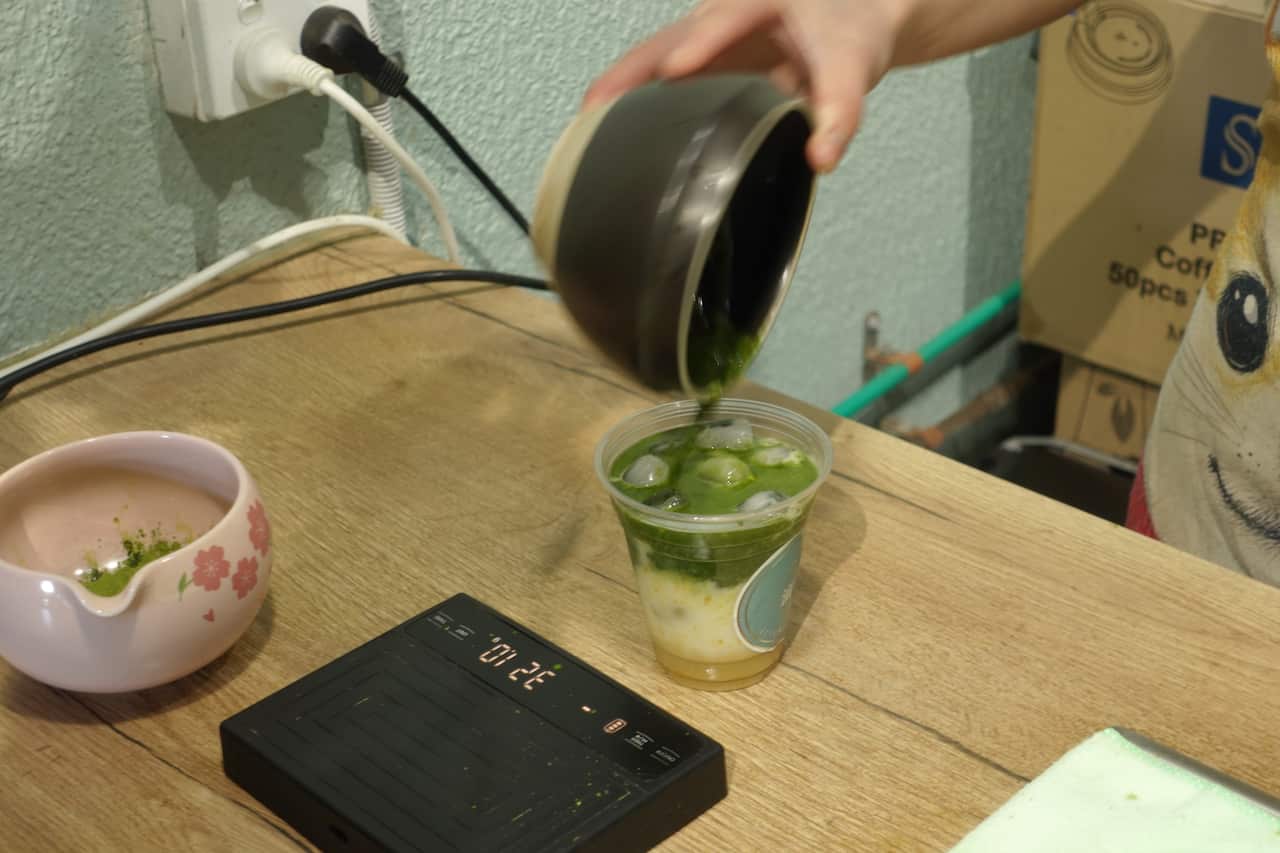
Person's hand pours green powder into a plastic cup to make a matcha drink.

Matcha’s popularity is rising around the world, an opportunity for Chinese suppliers amid price increases in the Japanese industry. Source: SBS news / Nicole Gong

The cafe said it was the first in the city to offer the alternative, but it is unlikely to be the last.

Umesh Kumar, who runs a cafe in Melbourne’s South Yarra, is also considering a switch to serving Chinese matcha.
“Many suppliers from China have approached me. I received 48 samples from China last month from different regions,” the 29-year-old told SBS Chinese.

Kumar said the price of premium Japanese matcha has risen from $390/kg to $500/kg in the past 12 months.
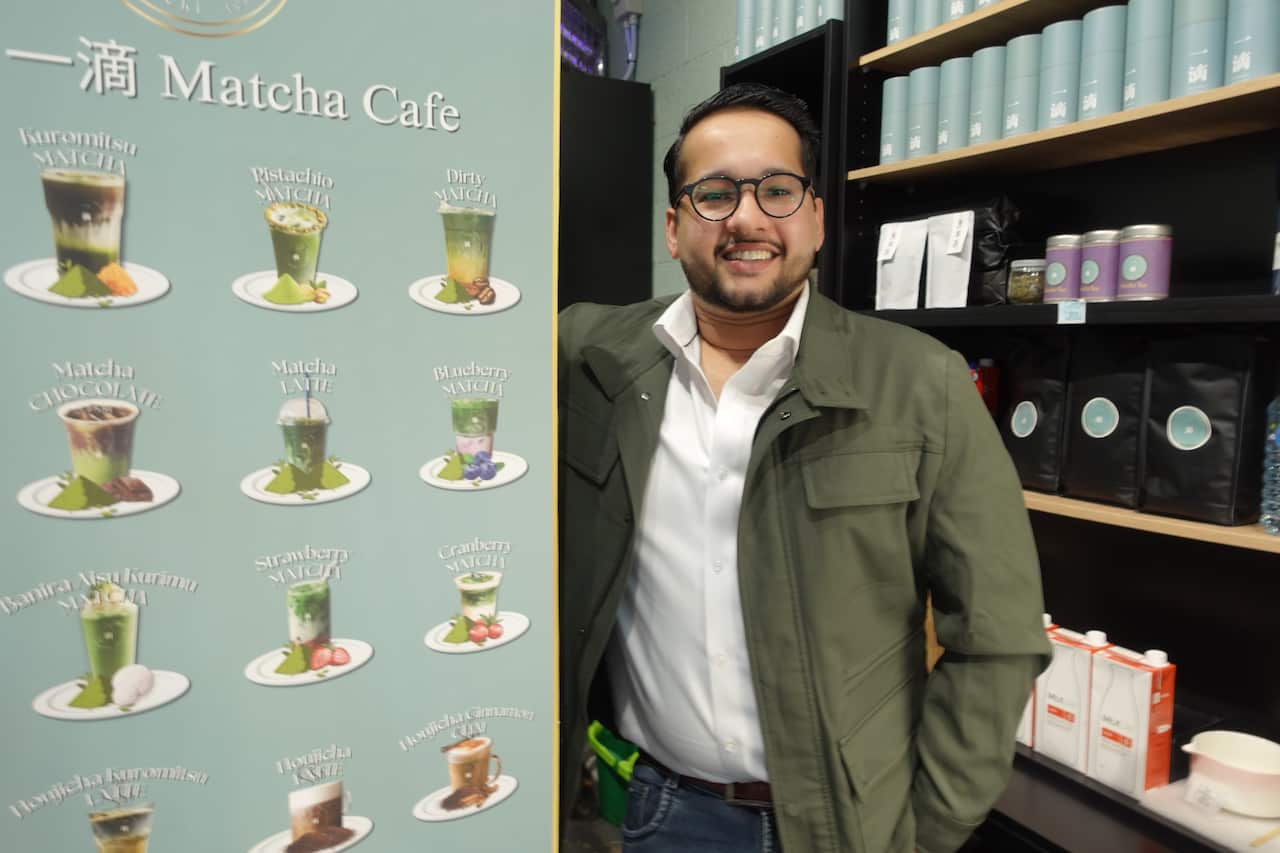
A man poses next to a menu of matcha drinks printed on a wall. He wears a green jacket and a white shirt

Melbourne matcha cafe owner Umesh Kumar said his profit margins are shrinking as Japanese matcha prices rise. Source: SBS news / Nicole Gong

His cafe uses about 120 kg per month. Although he has kept prices stable, his profit margins are shrinking.

“If the [Japanese matcha] the price goes above $600/kg, which means the price of one cup will be $5.80. It’s not worth running on $9,” he said. “If nothing changes, Australians could soon be paying more than $12 per cup.”

China’s matcha comeback

Zihan He, a social media influencer and Chinese tea culture insider, said the shortage of Japanese matcha provides “a perfect alignment of timing, opportunity and momentum” for Chinese matcha to go global.
“There is a gap in the cheap tea market because of Japanese supply,” she said.

“In 2023, China may not have been ready yet, but in 2025 things are different: many factories are now receiving strong subsidies to expand their matcha production lines.”
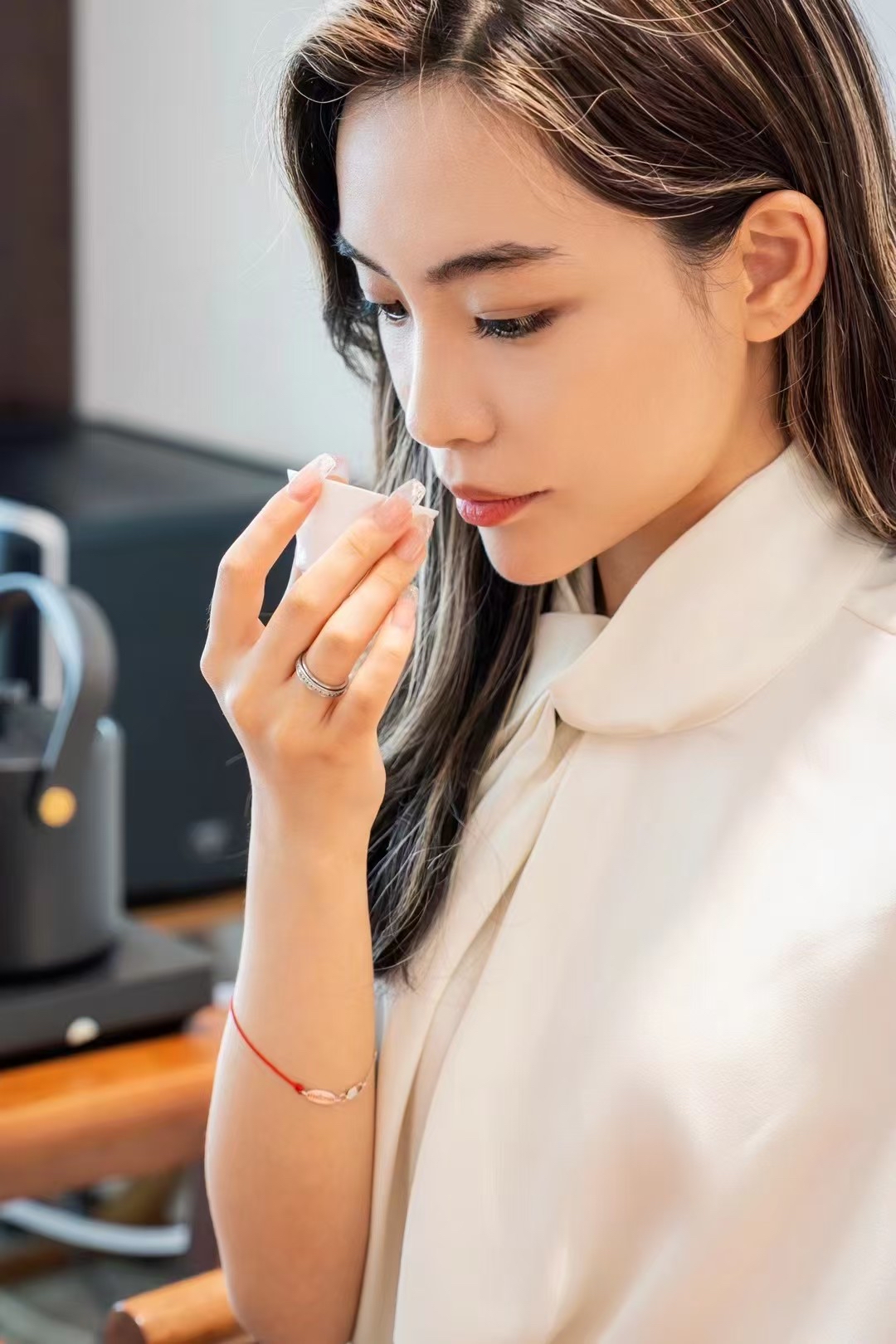
A woman wearing a white blouse sniffs a product with her right hand that she holds in front of her nose.

Zihan He travels to various tea regions in China and worldwide to promote Chinese tea. Credit: Delivered

Although Japanese matcha enjoys international prestige, he pointed out that matcha actually originated in China.

It flourished during the Tang and Song Dynasties diancha (whipped tea) tradition and was known as “mocha” before it faded in popularity after the Ming Dynasty, when tea drinking habits changed.
When Zen Buddhism spread to Japan, matcha-making techniques accompanied it, eventually developing into the famous Japanese tea ceremony culture.

Now matcha is experiencing a revival in China, with major production centers in Zhejiang and Guizhou provinces.

What are the main differences between Chinese and Japanese matcha?

He acknowledged that a quality gap still exists. Japanese matcha has a bright, vibrant green color and a smooth, sweet taste, while Chinese matcha is still darker and more bitter, she said.
One key difference, she added, lies in the shade: an essential process that boosts chlorophyll and amino acids, creating the signature green hue and mild flavor. Shade involves artificially reducing the amount of sun the tea bush is exposed to, usually through a canopy.
“Japan has centuries of experience and detailed data on how long the shadow should last in each region,” she said. “In China we are still experimenting. For example, if farmers follow Japan’s 20-day shadow, the tea may become too astringent at higher altitudes.”

Still, he remains optimistic: “China may go slowly from zero to one, but once it learns, it will quickly go from one to a hundred.”

Change is coming, but there is a sticking point

For cafe owners like Kumar, the biggest appeal of Chinese matcha is its price and scalability.
He said Chinese grade 3 matcha sells for around $80/kg, compared to $299/kg for Japanese matcha of a similar quality – almost four times the price.
However, the taste remains a sticking point.
“Japanese matcha is thicker and creamier… on the other hand, Chinese matcha still tastes grainy and bitter at this stage,” Kumar said.
He has not yet switched suppliers, but is open to it.
“Chinese matcha will play a bigger role [in Australia] as long as they offer good quality and price,” he said.
“I’m telling you, companies are ready to make the switch.”

#reason #Aussie #matcha #fanatics #million #shock

Similar Posts

Leave a Reply

Your email address will not be published. Required fields are marked *