

Red Bull Racing’s Max Verstappen has proudly worn the number 1 on the front of his car for the past three seasons, after dominating Formula 1 in recent years. However, the Dutch racer will have to take on a new number for the 2026 F1 season following McLaren driver Lando Norris’ championship victory, which Norris secured after beating Verstappen by two points on the final lap.
As reigning champion, Verstappen is the only driver allowed to drive number 1. However, the champion can also choose not to use the number 1 and instead continue to use the permanent number he selected when he came to F1. For example, seven-time F1 champion Lewis Hamilton only used the number 1 for one season – in 2009, when the rules still required the winner to use it. He chose to use number 44 for his six other title wins, as the use of number 1 became optional. The number on an F1 driver’s car has no bearing on his starting position and is purely symbolic, with the number 1 being a mark of pride for the reigning world champion.
Other drivers on the grid, meanwhile, must stick to the number they originally used – a rule that came into effect in 2014. With Norris’ victory in the Abu Dhabi GP, which gave him his first drivers’ title, he now has the opportunity to use the number 1. Verstappen, meanwhile, must return to the number he raced with when he made his F1 debut, number 33.
How do F1 drivers get their numbers?
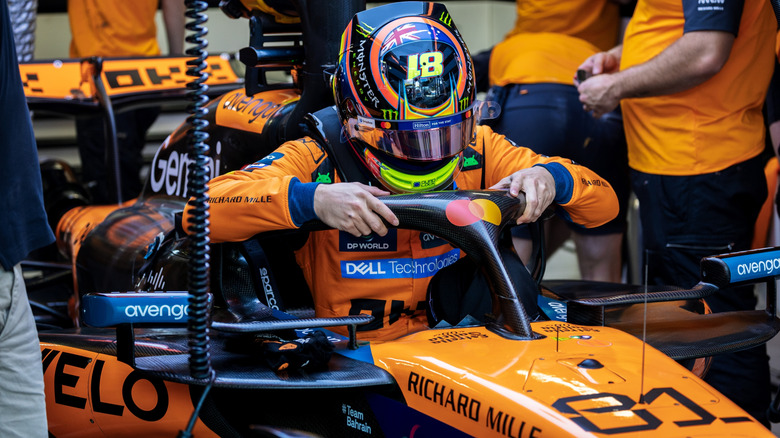
Although a driver’s number is kept exclusively for them throughout their F1 career, they can keep it for up to two years after leaving the sport to prevent a new driver from taking over the number. However, the rule introduced in 2014 could soon be changed, as the possibility of allowing drivers to change numbers during their careers was recently discussed in a Formula 1 Committee meeting. If approved, the change could be implemented as early as the 2026 F1 season.
Former world champion Max Verstappen already has his eye on a different number as he plans to switch to number 3 instead of 33, which he couldn’t use on his F1 debut in 2015 because Daniel Ricciardo already had it. One number, 17, was retired by F1 following the tragic death of Jules Bianchi in 2015, and has been permanently retired.
How did drivers get numbers before?
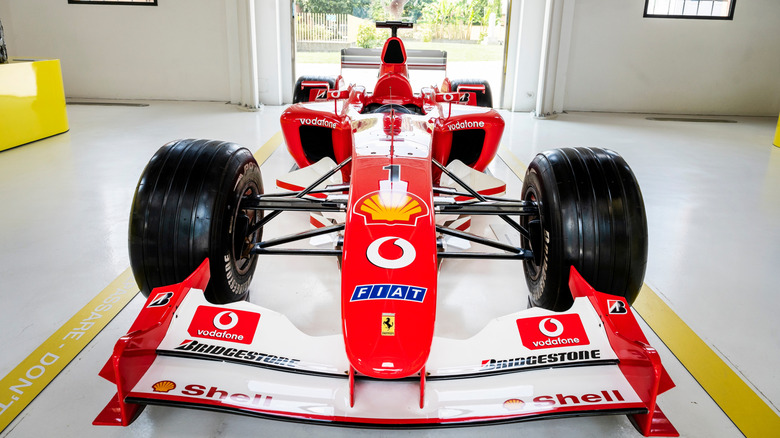
Another change to F1’s numbering system occurred in 1996, when driver numbers were assigned based on the previous year’s Constructors’ Championship. However, the reigning Drivers’ Champion and his teammate were still allowed to use No. 1 and No. 2 even if their team had not won the Constructors’ title the previous season. This happened in the 2000 season when Ferrari – the previous year’s constructors’ winners – used No. 3 and No. 4, as the Drivers’ title was won by McLaren’s Mika Hakkinen, meaning he and his teammate David Coulthard used No. 1 and No. 2.
Why some F1 drivers choose unique numbers

Williams’ Alex Albon also paid tribute to his hero, MotoGP legend Valentino Rossi, but instead of using the Italian’s iconic number 46, he chose half that number: 23. Pierre Gasly, on the other hand, chose number 10 because of his love for French football great Zinedine Zidane.
Others, like Charles Leclerc and Fernando Alonso, have superstitious reasons for their numbers. Leclerc chose number 16 because it is his date of birth, while Alonso chose number 14 because he won his karting world title at the age of 14 in a kart with the same number, and because he was also born on the 14th.
#reason #Max #Verstappen #number #drivers #numbers #Jalopnik