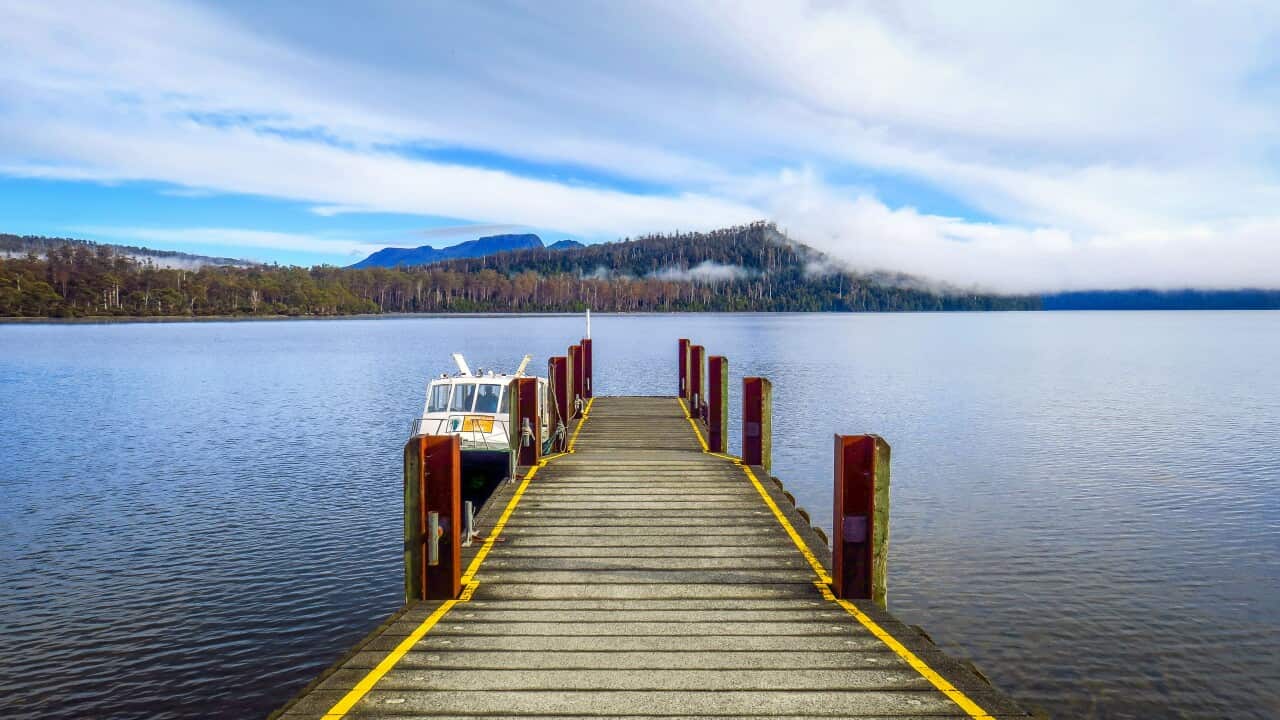

Now he has an answer: the deepest point of the lake is just over 163 meters deep.
CSIRO maps reveal a stunning new view of the lake and its true depths. Source: Delivered / CSIRO
“It’s on the south west side, basically just in the corner,” he said.
“We can almost see that the glacier would have actually been cut through that angle.”
Underwater landscape revealed
A multi-beam was fitted to the CSIRO vessel RV South Cape as it sailed up and down the lake. This used sound pulses to measure the water depth, creating a never-before-seen view of the lake.
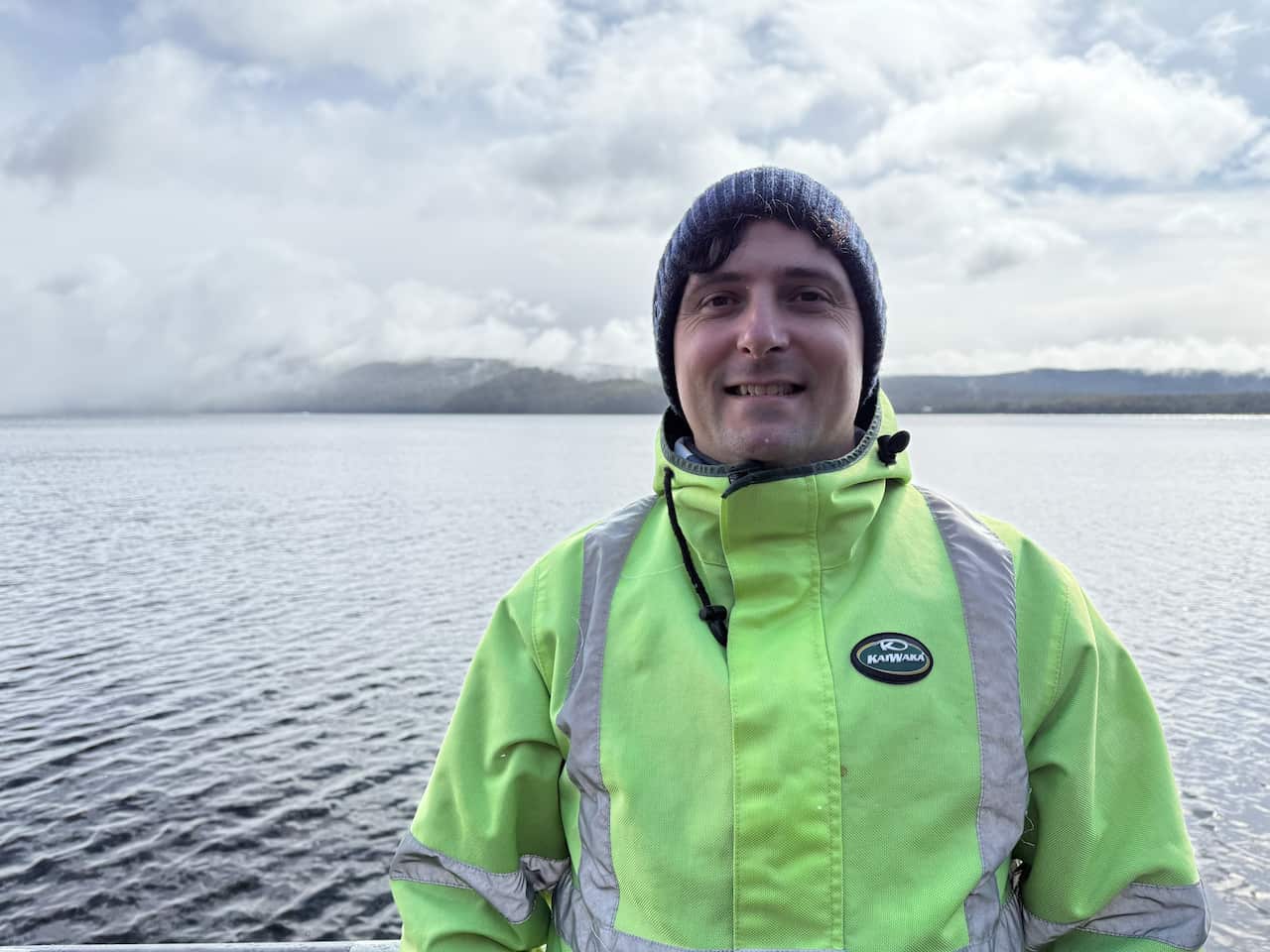
CSIRO hydrographic surveyor Augustin Déplante was part of the nine-day expedition. Source: SBS news / Kerrin Thomas
“When we see the sharp cliffs at the edges of the lake, we can clearly see some areas that have been carved by the glacier,” Déplante said.
“It can go very shallow in areas of less than two metres, even less than one metre, as long as there are no hidden rocks or anything below the surface,” said CSIRO research engineer Dr Hui Sheng Lim.
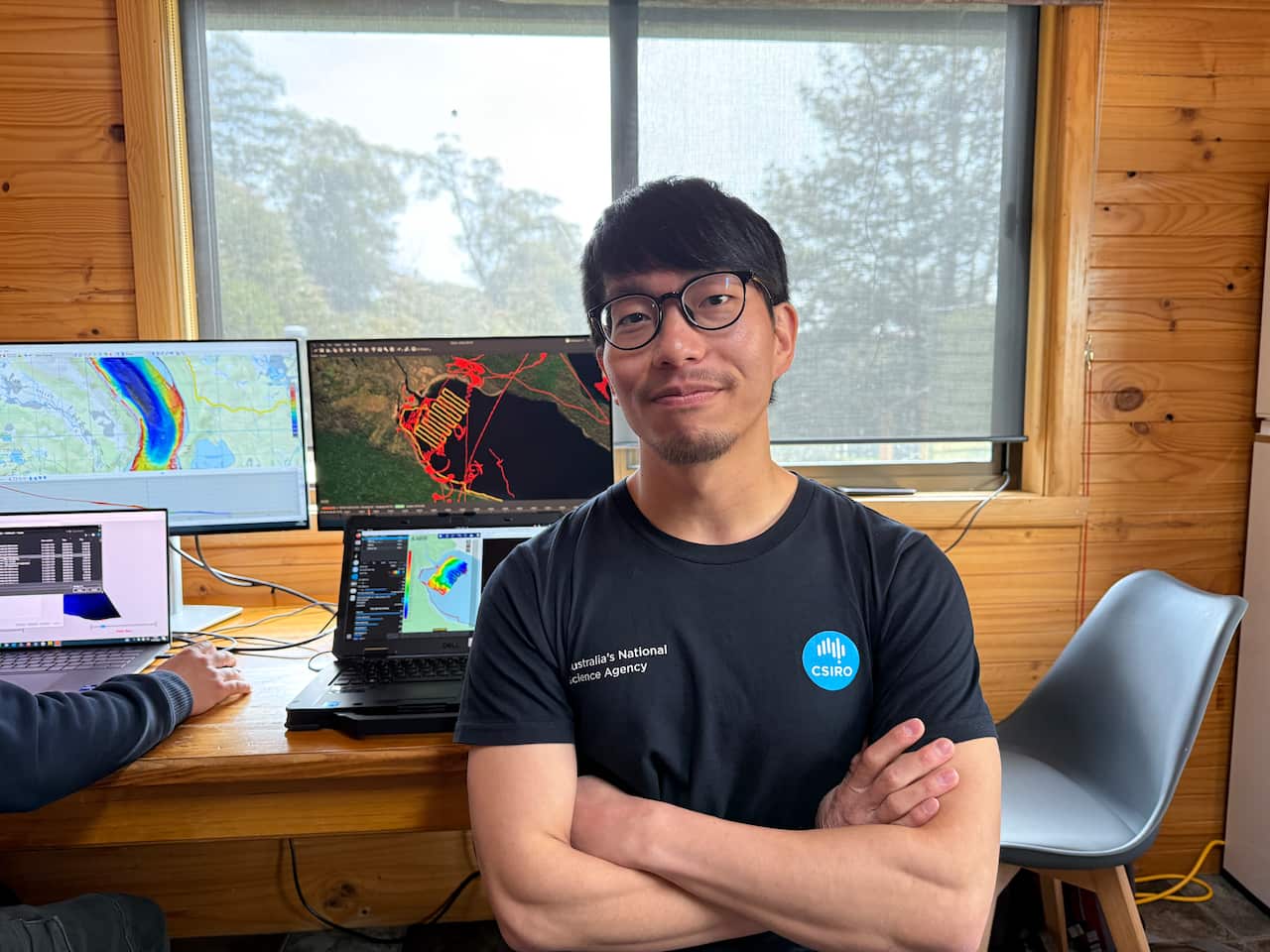
Dr. Hui Sheng Lim was one of the CSIRO researchers who mapped the lake. Source: SBS news / Kerrin Thomas
“So those are the areas where the big ship can’t go.”
“You see a meter here, and the next moment you’re in a 10 meter zone, and the next moment you’re already at 30 meters, 50 meters deep.”
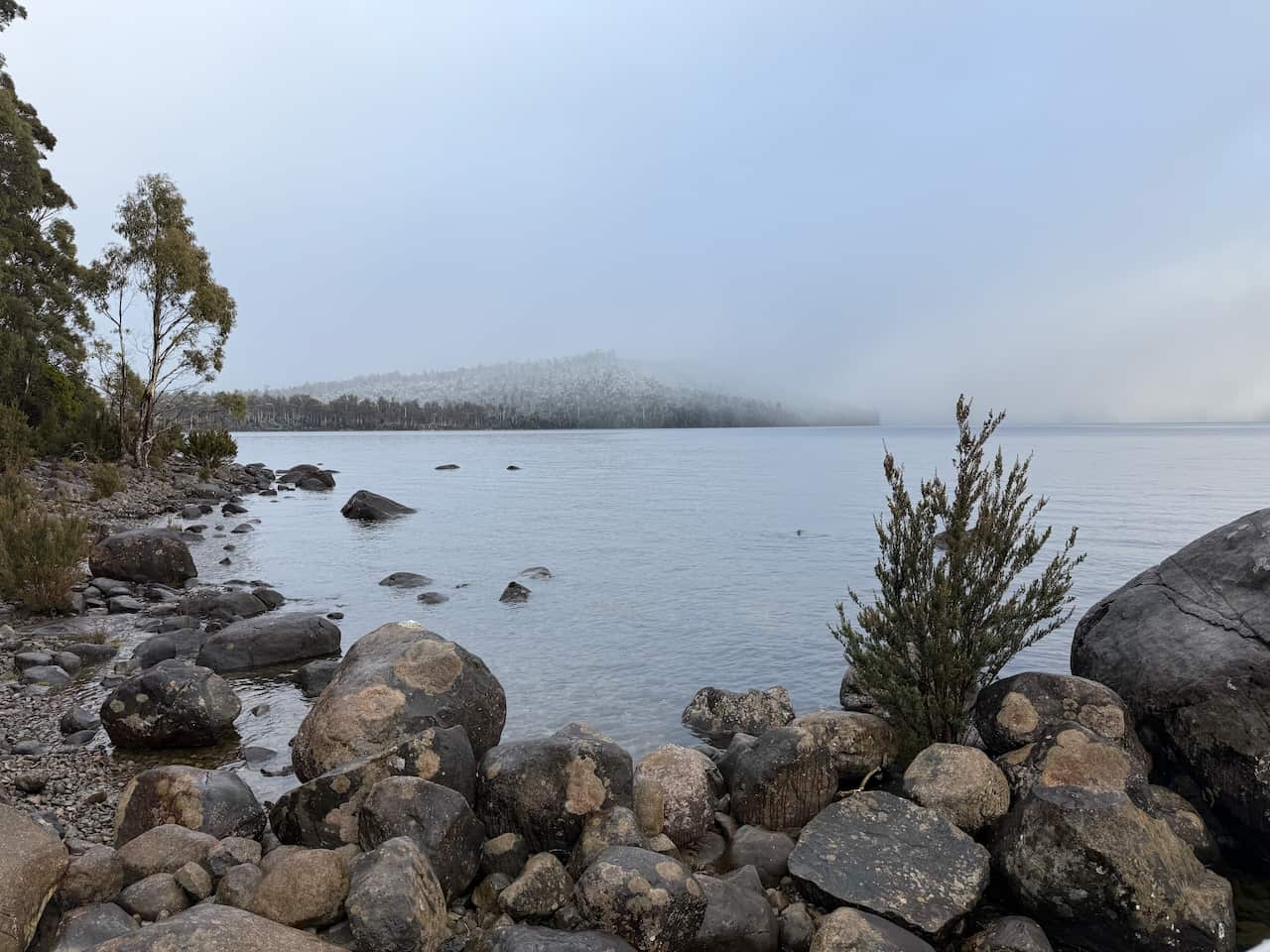
The area is known for its strong winds and unpredictable weather. Source: SBS news / Kerrin Thomas
Otter can also operate autonomously and follow a precise, pre-planned path.
“One of the most useful features is that we can autonomously find gaps and find the best way to close those missing gaps in our data sets,” he said.
‘Most peaceful place on this planet’
“It’s the most phenomenal place to swim because it has the cleanest air and water in the world.”
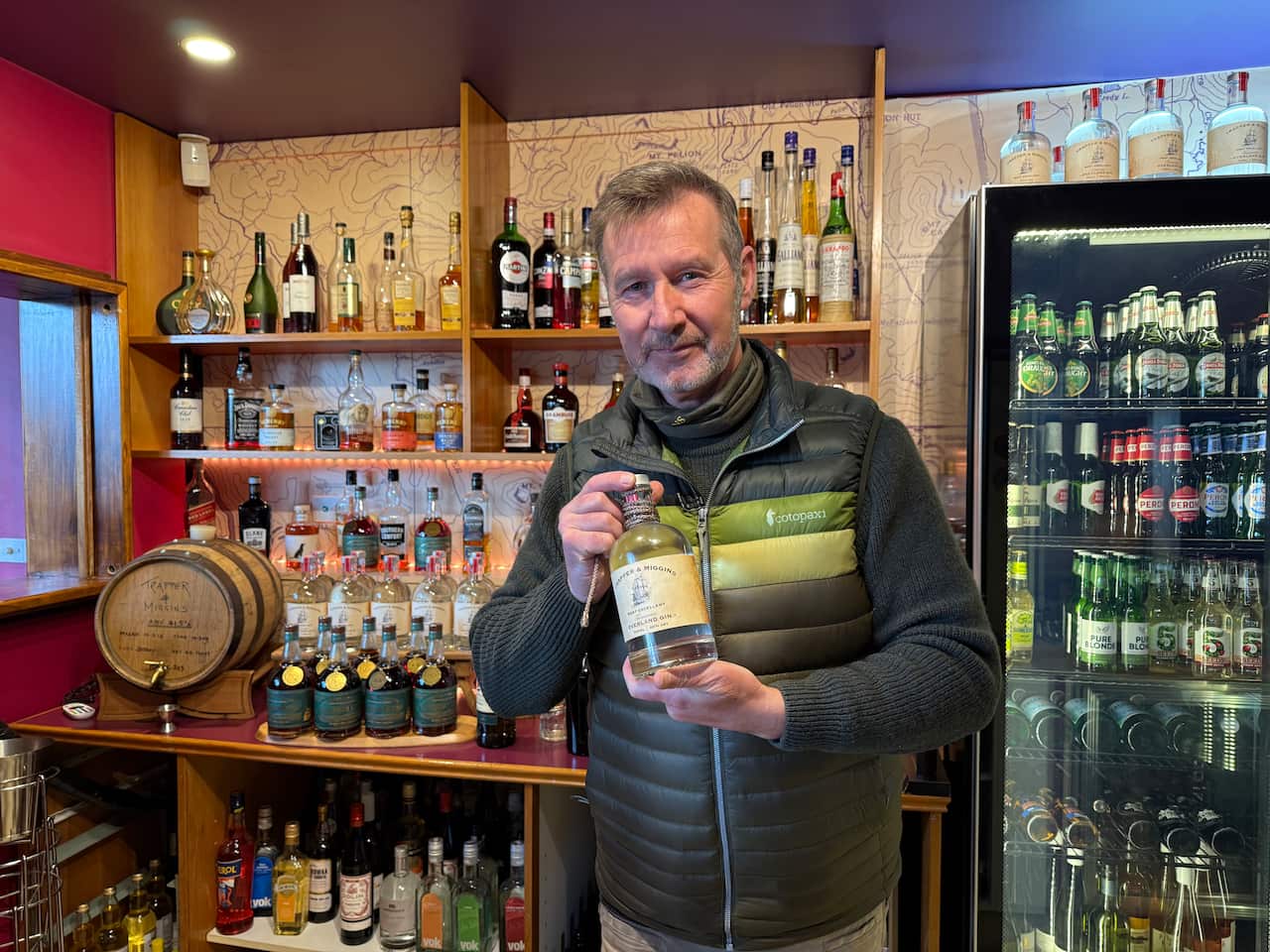
One of Michael Croghan’s most prized possessions is a bottle of gin lowered to the bottom of the lake. Source: SBS news / Kerrin Thomas
One of his most prized possessions is a bottle of gin that a team of researchers lowered to the bottom of the lake a few years ago.
“It has now been tested to depth, I think that was to about 400 feet,” he said.
Snow, wind and swell
“When I was on a small boat like the South Cape, I sometimes felt like I was in the Southern Ocean.”
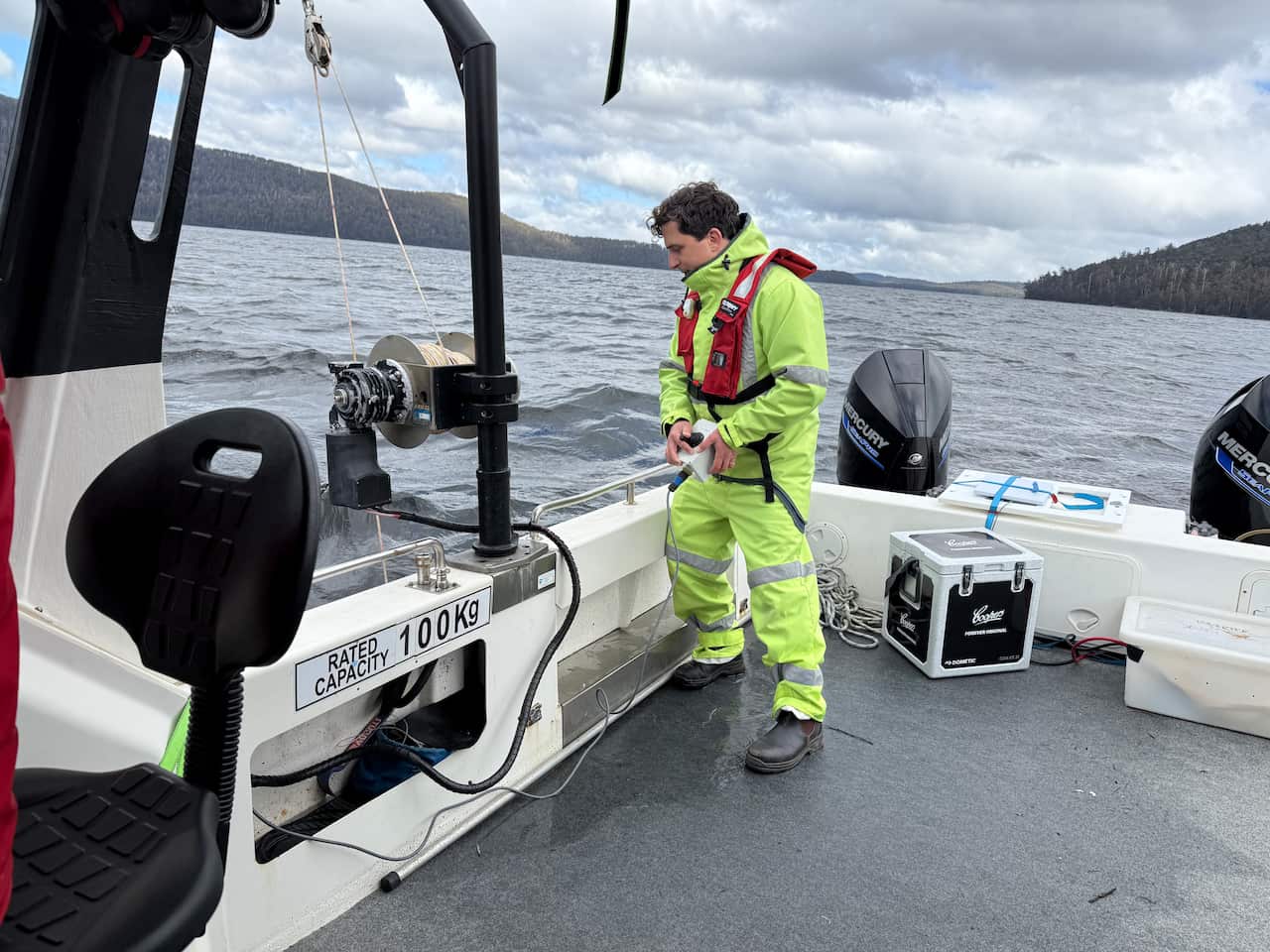
The team was confronted with snow, large waves and gale force winds during their research. Source: SBS news / Kerrin Thomas
The detailed data collected will be made public and will provide an important resource, which it is hoped will stimulate further study of Lake St Clair.
#mystery #Australias #deepest #lake #finally #solved