

This is a non-negotiable audit of the equipment that protects the most important tool in your studio: your body.
The philosophy: proactive protection, not reactive treatment
You can’t design your best work when you’re in pain. Investing in ergonomics is an investment in your focus, your output quality, and the longevity of your career. It’s about designing your environment to suit you, and not contorting yourself to fit into a poor environment.
The essential equipment audit
1. The basics: a real ergonomic chair
The $200 “executive” chair is a career-ending injury wrapped in faux leather. A true ergonomic chair is a dynamic support system that moves with you.
What to pay attention to:
- Lumbar support: Adjustable in both height and depth to fit perfectly into the inward curvature of your spine.
- Seat adjustment: This allows you to adjust the depth so that there is a 2-3 finger gap between the edge of the seat and the back of your knees.
- Armrests: Adjustable in height, width and pivot point. They should allow your shoulders to relax and your elbows to rest at a 90-110 degree angle.
- Lean tension: A mechanism that allows you to lean back for support and change your position throughout the day.
The benchmark: Herman Miller Sayl Chair
While the Aeron is the icon, the Count offers Herman Miller’s groundbreaking ergonomic science in a more accessible, design-focused package. Based on a bridge suspension design, the intelligent back support provides exceptional lumbar and shoulder support that promotes healthy posture without stiffness. It’s the investment that yields returns for over twelve years, right? invest in it?
Discover: Herman Miller Sayl chair
2. The input revolution: a vertical ergonomic mouse
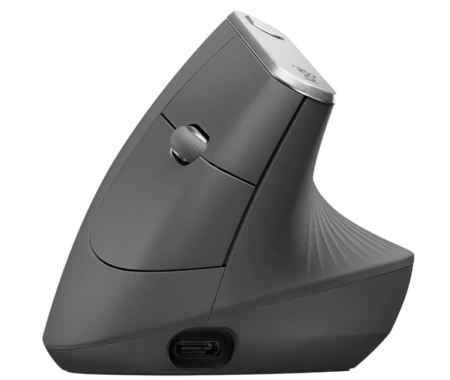
The traditional mouse forces your forearm into a “handshake” position (pronation), twisting nerves and tendons in the carpal tunnel. A vertical mouse keeps your hand in a neutral ‘handshake’ position.
Why it’s crucial: It can immediately relieve pressure on the median nerve, reducing the risk of carpal tunnel syndrome and forearm fatigue. The learning curve takes about an hour, after which it feels completely natural.
Top performer: Logitech MX Vertical
The Logitech MX vertical is the gold standard. It is designed at a natural angle of 57 degrees to reduce wrist strain by up to 10%. It features Logitech’s premium tracking, multi-device flow capability, and customizable buttons. This is not a medical device; it’s a powerful tool that also happens to spare your tendons and is available for sale on Amazon.
3. The liberation device: a monitor arm
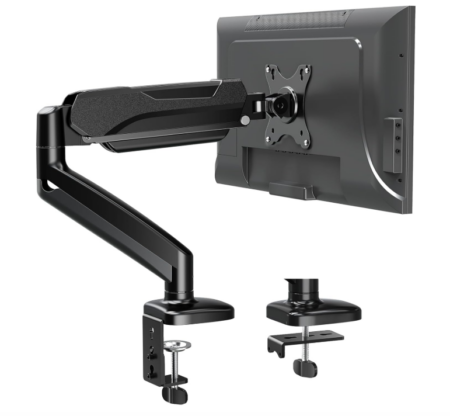
Your neck and shoulders are not designed to stretch downwards for 8 hours a day. A monitor arm frees your screen from the desk, allowing you infinite adjustment.
What it solves:
- Positioning at eye level: The top of your screen should be at or slightly below eye level. With a stock standard this is virtually impossible.
- Dynamic movement: You can easily pull the screen closer for detail work or push it back for a full layout view, and switch effortlessly between sitting and standing.
- Desk space: It clears up a huge amount of valuable real estate on your desk.
The workhorse: Amazon Basics monitor arm
You don’t have to spend a fortune. The Amazon Basics Premium Single Monitor Stand offers smooth gas spring adjustment, full articulation (tilt, swivel, rotate) and a clean cable management system at a fraction of the cost of branded alternatives. It is robust, reliable and performs its single task perfectly. Get it here!
4. The unsung hero: a split, tent-shaped keyboard
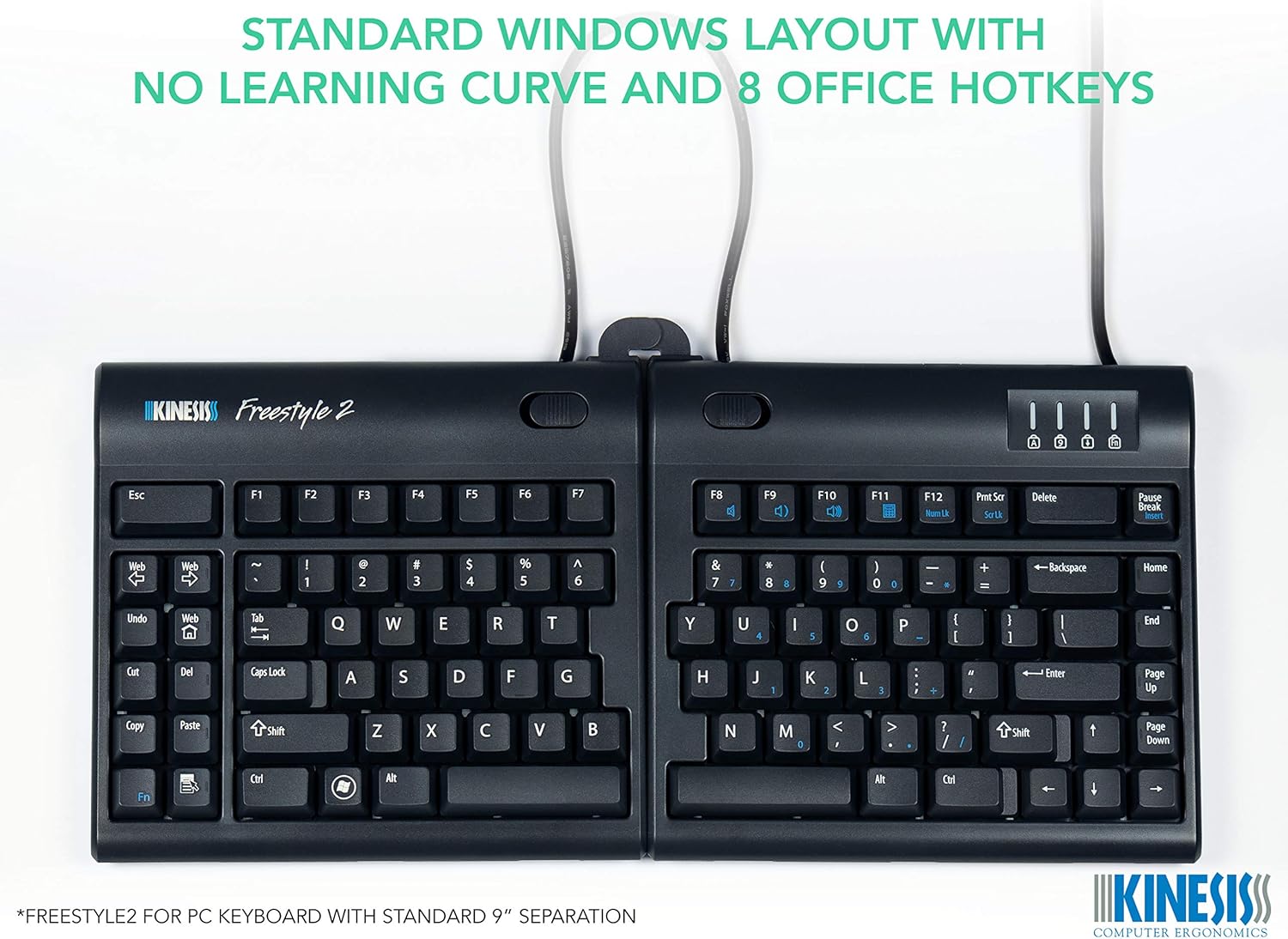
Like the mouse, a traditional keyboard forces an ulnar deviation (bending hands outward). A split tented keyboard allows your hands to align with your forearms.
The advantage: It dramatically reduces the strain on the wrists, forearms and shoulders. The tent angle (raising the middle) further promotes a neutral hand position.
Recommendation: Kinesis Freestyle2
For those willing to commit, the Kinesis Freestyle2 is an excellent entry into ergonomic keyboards. The two halves can be split apart at shoulder width and pitched up to 30 degrees. The learning curve is minimal and the relief for your shoulders is great. Find it here.
5. The final touches: stable footrest
If your feet are dangling or improperly positioned, your entire postural chain is compromised.
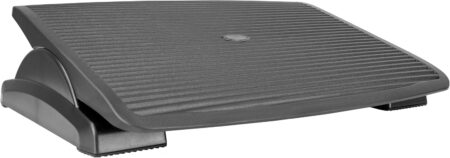
The solution: a footrest
A simple, angled footrest promotes good pelvic tilt and improves circulation. It is especially crucial if the height of your chair is adjusted correctly and your feet do not reach the floor flat. This is good.
The 5-point posture checklist
Once your gear is in place, use this daily checklist:
- Feet: Flat on the floor or footrest.
- Knees: At or slightly below hip height, with room behind the knee.
- Back: Fully supported by the chair’s lumbar mechanism.
- Elbows: At 90-110 degrees, resting lightly on the armrests.
- Eyes: At the top third of your monitor, approximately arm’s length away.
The return on investment
This equipment represents a significant upfront investment, but the ROI is calculable:
- Retained income: Avoiding even one week of work loss due to severe RSI covers a large part of the costs.
- Improved focus: Discomfort is a constant cognitive drain. Removing these will increase deep working capacity.
- Career longevity: You protect your ability to do this work for decades, not just years.
Your talent is in your body. This equipment is the maintenance plan. Perform your ergonomic audit today, your future self will compose a thank you note in a perfectly formatted form, pain-free.
About the author

#ergonomic #audit #essential #equipment #protect #body #career