

Sharing is caring!
Today’s goal is to give you a better understanding of tannins and the gut.
And I was intrigued to write in depth about tannins after publishing the grape article.
Green grapes contain a particularly high amount of tannins (similar to green tea), therefore they are more likely to cause stomach upset than red or black grapes.
Anyway, tannins.
Click HERE to save this article for later.
You take a sip of black tea… and suddenly your stomach tightens.
Or you enjoy a glass of red wine… and the next morning it feels like you’ve been hit by a truck.
You eat grapes, pomegranate, pecans or dark chocolate… and hello bloating, nausea or the urge to go to the bathroom.
If you’ve ever thought, “Why do I react to foods that are supposed to be good for me?” you’re not imagining things.
There’s a silent little substance hidden in many everyday foods – and if your gut is even a little irritated, your symptoms can turn ON.
Meet: tannins.
So let’s take a look at what exactly tannins are, how they behave in your gut, who is most sensitive to them, and how you can strategically lower your tannin load without taking all the fun out of your life.
[Because remember: This is never forever. It’s simply a lever.]
What are tannins? (plain language)
Tannins are naturally occurring polyphenols found in many plants.
They are astringent and responsible for that dry, wrinkly feeling you get from black tea, red wine, cocoa and grape skins.
There are two primary types:
Their defining characteristic?
Tannins bind tightly to proteins, including digestive enzymes and the mucous membrane of your intestines.
When ingested, tannins form complexes with proteins, which cause the inactivation of many digestive enzymes (pepsin, trypsin, chymotrypsin and elastase), causing a protein deficiency.
source
That one behavior explains why some people benefit from tannins… and why others feel terrible after consuming them.
Foods with the highest tannin content
If you’re trying to determine your own “tannin threshold,” start with the biggest hitters in a modern diet.
I’ve put together this table to help you easily identify tannin thresholds.
| Food | Category | Tannin level | Comments |
|---|---|---|---|
| Persimmon (unripe) | Fruit | Very high | Notoriously astringent |
| Cocoa powder | Cocoa | Very high | One of the richest sources |
| Red wine | Drink | High | Grape skins + seeds |
| Black tea | Drink | High | Camellia sinensis; strong astringency |
| Cranberries | Fruit/Berries | High | Naturally astringent |
| Pecans | Nut | High | Higher among notes |
| Pomegranate | Fruit | High | Seeds + pith contain tannins |
| Green tea | Drink | High | Unfermented tea leaves |
| Clove | Herb | High | Very polyphenol rich |
| Sorghum | Grain | High | Certain varieties very high |
| Dark chocolate | Cocoa | High | Higher percentage of cocoa = more tannins |
| Grapes (red, with skin) | Fruit | High | Seeds and peels are the richest |
| Dried Beans | Legume | Moderate-high | Colored seed coats higher |
| Pears (red skin) | Fruit | Moderate | The skin contributes tannins |
| Coffee | Drink | Moderate | Varies per roast |
| Apples (with peel) | Fruit | Moderate | Higher in red varieties |
| Walnuts | Nut | Moderate | Polyphenol-rich |
| Almonds (with skin) | Nut | Moderate | Skin is the main source |
| Blueberries | Fruit/Berries | Moderate | Varies per cultivar |
| Plums | Fruit | Moderate | Higher if they are underripe |
| Blackberries | Fruit/Berries | Moderate | Polyphenol-rich |
| Hazelnuts | Nut | Moderate | Contains condensed tannins |
| Pumpkin seeds | Seed | Moderate | Varies by roast |
| Peanuts (with skin) | Legume | Moderate | Skins rich in tannins |
| Cinnamon | Herb | Moderate | Contains tannin polyphenols |
| Soy products | Legume | Moderate | Found in bean coat |
| Sensible | Herb | Moderate | Spicy tannins present |
| Sunflower seeds | Seed | Low-moderate | Lower than nuts |
| Barley | Grain | Low-moderate | Depending on the processing |
| Millet | Grain | Low-moderate | Varies |
| Rye | Grain | Low-moderate | Lower tannin grain |
| Chia seeds | Seed | Low-moderate | Contains some polyphenols |
| Rosemary | Herb | Low-moderate | Contains tannins |
Remember: it’s not just what you eat, but how much and how often.
How Tannins Behave in the Gut (aka: Why You Feel Awful)
Let’s go through the physiology in simple AGG style terms.
1]Tannins strengthen the intestinal tissue → nausea + heaviness in the stomach
When tannins bind to mucosal proteins, they create an astringent, drying effect.
Is your intestinal wall already irritated?
You will quickly feel it as a tight upper abdomen, nausea“food just sitting there” sensations and general discomfort.
2]Tannins inhibit digestive enzymes
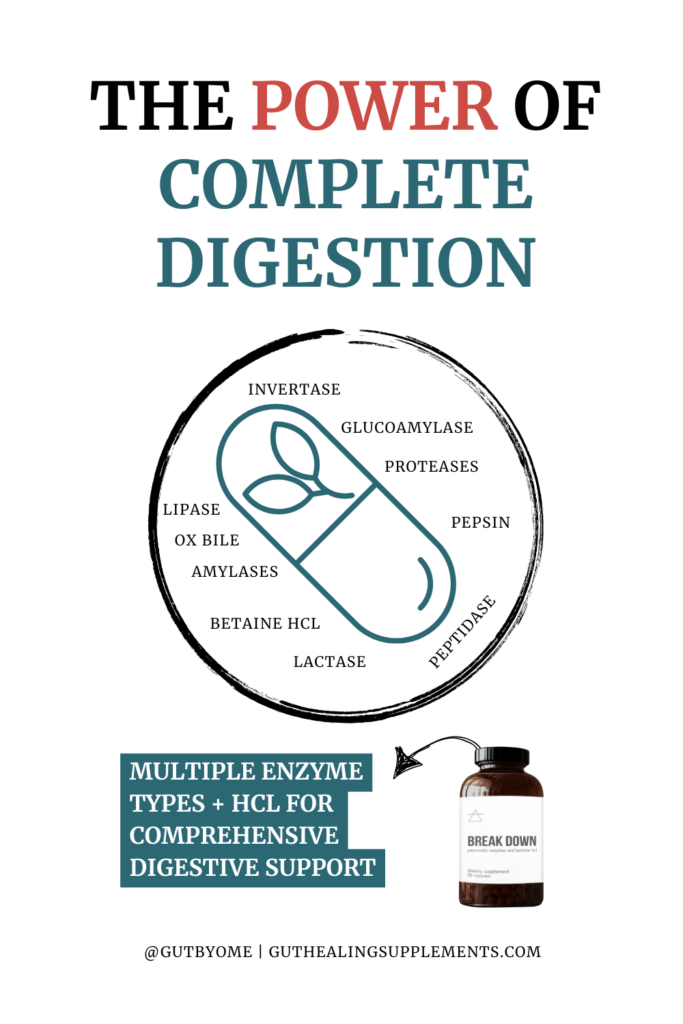
Tannins can reduce the activity of amylase (carbs feel harder to digest), lipase (fats feel heavier) and proteases (proteins feel like a brick).
If you already have low stomach acid or enzyme production, the tannins build up and worsen bloating, slowed digestion, upper GI pressure, and burping that lingers for hours.
During digestion in the small intestine, high molecular weight proanthocyanidins can form complexes with proteins, starch or enzymes, reducing digestibility. Specifically, one mole of proanthocyanidins can bind to twelve moles of protein. [source]
3]Tannins change the microbiome
Tannins are natural antimicrobial.
This can be useful for balanced intestinal function… but if your microbiome is fragile, dysbiotic, or easily disrupted? Tannins can make symptoms louder, not better. (source)
4]Tannins block iron absorption
Do you ever drink tea for breakfast and feel exhausted during lunch?
Tannins bind to non-heme iron, reducing absorption.
Huge considerations for menstruating women, women with chronic fatigue, and anyone with persistently low ferritin levels.
5]Tannins often coexist with histamine
Chocolate, wine, berries, fermented tea = tannins + histamine + (sometimes) sugar or alcohol.
For one histamine-sensitive womanthat combination equals headache, flushing, fatigue, anxiety and digestive reactivity.
6]Tannins slow down gastric motility
Some women feel this after just a small amount of tea or chocolate as a feeling of heaviness, mild nausea or bloating as the day progresses.
When you are already dealing with IBS patterns [and/or Functional Dyspepsia] or slow mobility, tannins could be the tipping point.

Why some women are more sensitive to tannins
We consistently see certain patterns in your community.
If any of these describe you, your tannin threshold may be lower than others.
Underlying factors that increase tannin reactivity:
- Irritation of the intestinal wall (tendency to leaky gut, gastritis)
- Low stomach acid or low digestive enzymes
- IBS-D or motility problems
- Dysbiosis
- Histamine intolerance
- Low iron or chronically low ferritin
This ties in with what the AGG audience experiences on a daily basis:
- “Why Do I Feel Worse After Healthy Foods?”
- “Why does wine hit me so hard right now?”
- “I used to tolerate tea – what has changed?”

Symptoms of Tannin Intolerance
If you’re nodding to three or more, tannins may play a role:
- Nausea after tea, wine or chocolate
- Sharp or tight discomfort in the upper GI
- Heavy stomach or slow digestion
- Bloating that worsens throughout the day
- Loose stools after berries, wine or chocolate
- Headache after wine or tea
- Flushing or anxiety after tannin-rich foods
- Low iron content that does not move
Sources: HEREAnd HERE
Know your tannin load: the foods that sneak up on women the most
Think of this as a personal dashboard – not a list of foods to fear.
Top Daily Contributors: Black tea, green tea, red wine, coffee (moderate tannins + caffeine + acid = powerful combo), dark chocolate, grape skins, berries, walnuts + pecans, lentils + beans, pomegranate.
Sometimes it’s not about the amount…the timing, the combination and the state of your gut when you eat them. [Remember: How we eat is oftentimes more important than what we eat.]
Who should consider temporarily lowering tannins?
This is not a recipe.
Instead, it’s pattern recognition.
Consider experimenting if you experience:
- Bloating that escalates during the day
- Nausea from tea or wine
- Headache after tannin-rich foods
- Inexplicably low iron levels
- Loose stools after chocolate, berries, wine
- Histamine-like symptoms
And again: this isn’t forever. Just like with FODMAPs or fiber modulation, this is a lever you can move while your gut heals.
I make pattern recognition extremely easy with the gut healing journal. Buy yours here >>>
Practical solutions (because deleting everything is not the goal)
Let’s keep life joyful, okay?
Swaps with lower tannins:
Try these during a symptomatic attack:
- White tea → instead of black or green
- Light/medium roast coffee → instead of dark roasts
- Cold brew → less irritating for some
- White wine → instead of red
- Peeled apples or grapes → less tannins in the skin
- Cashew nuts or macadamias → instead of walnuts/pecans
- Ripe bananas → instead of underripe (less astringency)
- Milk chocolate → instead of dark during flare-ups
In other words: if you Love that food and drink, and you can’t imagine a day without it, you could start there.
That’s possible always remove completely if necessary.
Tannin Reduction Strategies:
You don’t always have to avoid eating. Sometimes you adjust the context:
- Shorten the tea steeping time
- Avoid drinking tea/coffee with meals (promotes iron absorption)
- Combine tannin foods with protein or fat
- If possible, remove the skins from fruits and nuts
Small changes = big symptom relief.
So…are tannins “bad”?
No.
Tannins are not villains. They are simply powerful, and your feelings determine how that power ends up.
For many women, tannins are excellently tolerated once the intestinal lining is healed, enzyme production is restored, histamine load is reduced, the microbiome is supported and iron levels are stabilized.
And in fact, foods that contain tannins usually do fantastic for the gut microbiome and overall health.
So your job is not to reduce the tannins forever.
Your job is to notice patterns, support your feelings, and slowly expand your tolerance as you heal.
And you absolutely can do this.
Your intestines are not broken.
It communicates.
If you liked this article, you might also like:
- Natural Antihistamines (Podcast Episode 24 with Dr. Becky Campbell)
- High Histamine Food List
- Best Digestive Enzymes for Bloating
XXX,
S.K.H

💃ʜᴇᴀʟ ʏᴏᴜʀ ɢᴜᴛ. ʜᴇᴀʟ ʏᴏᴜʀ ʟɪfe.
🫶🏻 Founder gutbyome.com
#Tannins #gut #tea #wine #chocolate #healthy #foods #miserable