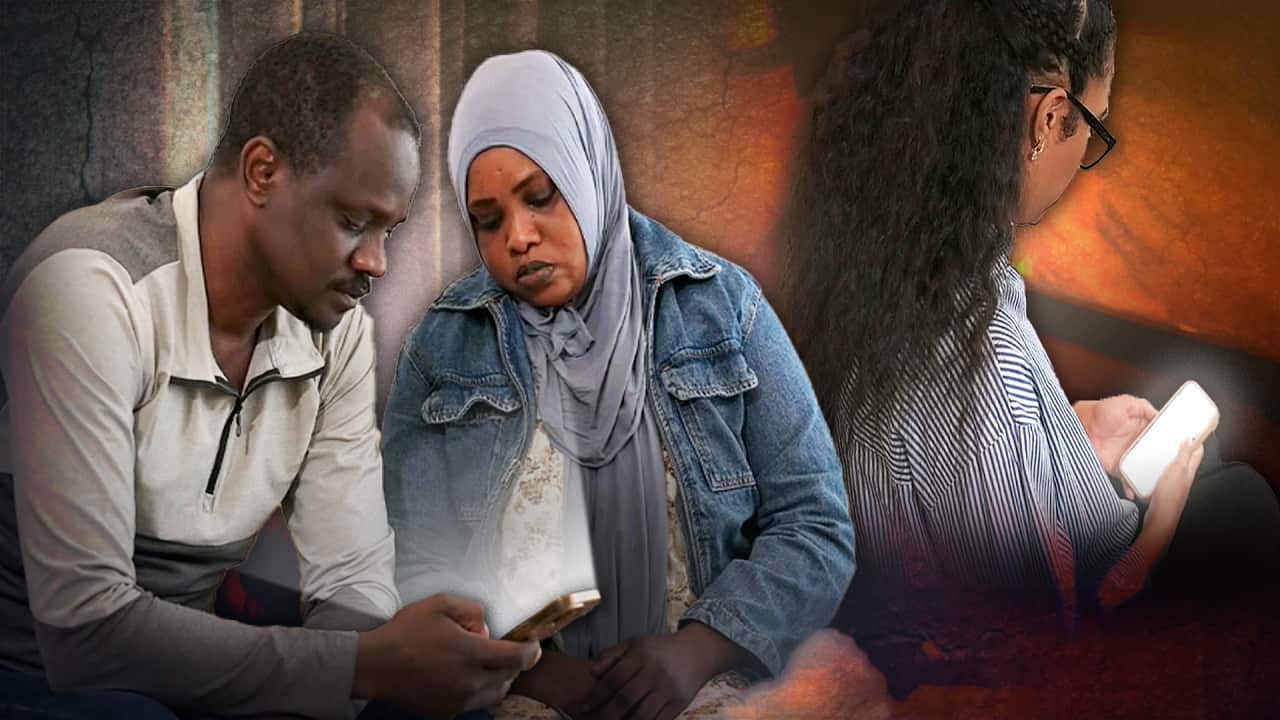
Sudanese-Australians are facing a terrifying ordeal after ransom demands were made for cousins

Sudanese-Australians are facing a terrifying ordeal after ransom demands were made for cousins

5 minutes, 14 seconds Read

This article contains details that some readers may find disturbing.
Sudanese Australian Abdullah Gaka has said he has been unable to tear himself away from his phone.
Just three days ago, he received a call from his cousin’s social media account The fallen city of Al-Fasher. But the voices on the other end of the line were unknown; they were armed men.
“We are the ones who have your cousins,” Gaka remembers one of the men saying.
“If you don’t pay the ransom tomorrow, Tuesday, you will never see them again,” he said, demanding a ransom worth $127,000 within a 24-hour period.

Gaka, who lives in Canberra, said he begged his kidnappers to let him talk to his cousins. When they finally did, he heard fear in their voices.

Abdullah Gaka said he is not waiting for international condemnation – only news about his cousins. Source: SBS news

“They couldn’t even speak clearly,” Gaka told SBS Arabic.

“Their voices were extremely frightening and deeply disturbing.”

The conversation ended abruptly. It has been quiet since then.

Now Gaka and his wife spend sleepless nights staring at their phones – their only possible link to family imprisoned in Al-Fasher.
“We can’t eat the food from the refrigerator,” said his wife Aziza Mohammed.

“We even keep checking their phones in the middle of the night to see if they are online on Messenger or WhatsApp.”

‘Suffering in silence’

Like Gaka, Duha Mohammed opens her phone every morning, preparing for the worst.
With communications from her hometown of Al-Fasher almost completely cut off, the only way she can find out the fate of her family is by scouring lists of the dead and watching “horrifying videos” on social media.
Some were planted by the paramilitary Rapid Support Forces (RSF), showing fighters boasting of killings.
“I’m trying to see if, as I look through the men, the women, the children, I will recognize a familiar face, if I will see one of my neighbors, one of my cousins, one of my uncles, one of my aunts,” she told SBS Arabic.

“All the people in Al-Fasher are suffering right now, and they are suffering in silence.”
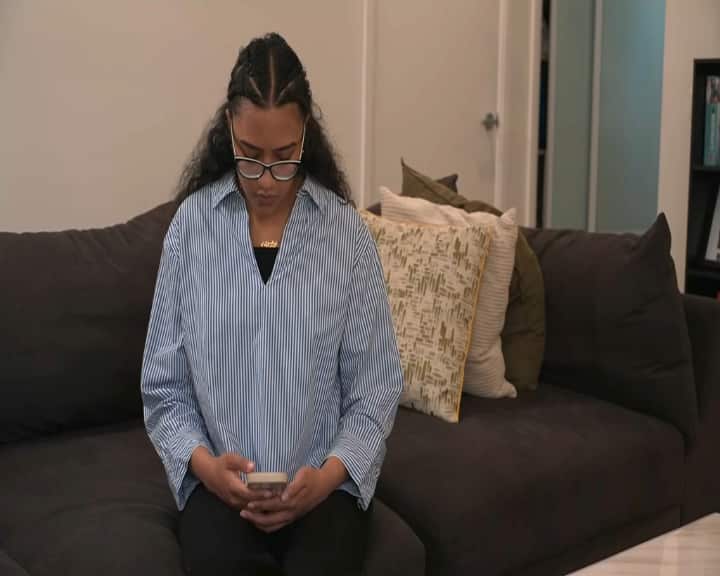
A woman in a striped shirt looks at the screen of her phone.

Duha Mohammed fears she will learn the fate of her family in Al-Fasher by searching the lists of the dead. Source: SBS news

Two years ago she arrived in Australia as a refugee, looking for a new life. But she said the war has followed her through her phone screen.

“It is something we saw before in 2003,” she said, speaking about the conflict in Darfur between the Sudan Liberation Movement and the Justice and Equality Movement rebel groups.

“We all expected what would happen this time, but it still wasn’t enough to prepare us for what happened.”

The fall of Al Fasher

Al-Fasher, the last major city in Sudan’s western Darfur region to fall to the RSF, has become what the United Nations has described as an “epicenter of suffering.”

The UN Security Council on Thursday condemned the RSF’s attack on Al-Fasher after an emergency session on the situation, expressing serious concerns in a statement “about the increased risk of large-scale atrocities, including ethnically motivated atrocities”.

UN humanitarian chief Tom Fletcher said the besieged city – which had already suffered “catastrophic levels of human suffering” – has now “descended into an even darker hell”.
He said there were “credible reports of widespread executions after RSF fighters entered the city”.
“We can’t hear the screaming,” Fletcher said Thursday.

“But the horrors continue. Women and girls are raped, people are mutilated and murdered without any impunity.”

The last functioning hospital in Al-Fasher has been overrun and doctors are inaccessible. Sudanese officials, as well as doctors and activists, have blamed the RSF.
The RSF dismissed the reports as disinformation, saying in a statement that all Al-Fasher hospitals had been abandoned instead.

More than 36,000 people have fled Al-Fasher since Sunday, according to the International Organization for Migration, but little is known about the fate of the more than 200,000 others believed to have remained there during an 18-month RSF attack and siege of the city.

Sudan’s civil war broke out in April 2023 after a violent power struggle between the Sudanese Armed Forces, led by General Abdel Fattah al-Burhan, and the RSF, commanded by General Mohamed Hamdan Dagalo.
Human rights groups have accused both the Sudanese army and the RSF of war crimes – accusations that both sides deny.

More than 150,000 people have been killed in the conflict across the country, and some 12 million people have fled their homes in what the UN has declared the world’s worst humanitarian crisis.

‘We urge the government to help us’

Gaka said he is not waiting for international condemnation – only in the slim hope that news of his cousins’ safety will emerge.
“We urge the Australian government to help us find solutions so that we can evacuate them from Sudan so that they can remain in a safe place,” he said.
Duha Mohammed also urges the Australian government to ensure that citizens are not forgotten.
“The siege in Al-Fasher has lasted more than 550 days,” she said.

‘They are starving. “No food, no medical aid, no medical supplies of any kind are going into the city, and no citizen is allowed to leave.”

Rights groups have warned that the scale of destruction in Al-Fasher – once home to more than half a million people – is catastrophic.
Satellite analysis from Yale University’s Humanitarian Research Lab shows house-to-house killings, mass graves and bodies strewn along the city’s outskirts.

Reddish spots in the sand represent what analysts believe could be blood stains.

‘They need their voices to be heard’

Speaking from her home in Canberra, Duha Mohammed said she will not stop talking about the suffering of her people.
“They need help. They need help. They need support,” Mohammed said.
“They need someone to talk about them. They need someone to listen. They need to know that we are not silent about what they are going through.”
As for Gaka, he said he checks his phone every few minutes – just in case the line rings again.
— This story was produced in collaboration with SBS Arabic and includes additional reporting by Reuters news agency.

#SudaneseAustralians #facing #terrifying #ordeal #ransom #demands #cousins

Similar Posts

Leave a Reply

Your email address will not be published. Required fields are marked *