

The latter stages of Kyle Edmund’s career may have been hampered by injuries, but the former No. 14 in the PIF ATP Rankings is not ready to let the tough moments dominate as he looks back on his 13-year professional career.
The 30-year-old Briton announced his retirement in August after a series of physical problems, including one operation a year in 2020, 2021 and 2022. Although his retirement decision is only three months old, Edmund is already feeling happy to be able to focus on his experiences as a top performer on the world stage.
“You definitely look back with more positivity [with time]” he told ATPTour.com in Turin, where he and seven other recently retired ATP Tour stars were honored at a special ceremony on Friday evening at the Nitto ATP Finals. “For me, when I finished [my career]it was a bit negative because something that you are so passionate about and invested in is coming to an end. But you can look back and enjoy those things.
Edmund turned pro in 2012, the year Andy Murray ended Britain’s 76-year wait for a major men’s singles champion at the US Open. Within three years, Edmund was writing more British tennis history alongside Murray in the Davis Cup: the 20-year-old made his debut for his country in the 2015 final against Belgium, just three months after breaking the Top 100 for the first time, as Britain won its first title in 79 years.
Known for his huge forehand, which combined raw power with vicious topspin, Edmund went on to win two ATP 250 titles – in Antwerp in 2018 and New York in 2020 – while his highlight at the majors came at the 2018 Australian Open. He defeated then world number 12 Kevin Anderson and number 3 Grigor Dimitrov on his way to the semi-finals in Melbourne, where he fell to Marin Cilic.
“In terms of performance, definitely the Davis Cup,” said Edmund, when asked what he considers to be the highlights of his career. “Also my first Tour title, at the end I was very emotional because that was a goal I had: to win a Tour event. Then the run in Australia. Those are the ones that stand out for me.”
“Then there are the little ones, like playing at Wimbledon as a British kid, playing for my country, and obviously the Olympics. Those are things that, when you look back, are really special moments that you will always have. They don’t go away. So it was nice to reflect in that way.”
Edmund in action against Gael Monfils on his way to the 2018 Antwerp title. Photo credit: Kristof Van Accom/AFP via Getty Images
Despite his injury problems, Edmund remained competitive until his retirement. In his last professional tournament, an ATP Challenger Tour event on grass in Nottingham in July, he reached the final. Yet the groundwork had already been laid for the Yorkshireman’s decision to end a career that saw him rack up 119 tour-level singles victories, according to the Infosys ATP Win/Loss Index.
“There was nothing specific, but there were certainly several things that added up,” Edmund explained, when asked about the main reason he retired when he did. “As a player you’re always fighting to get through it and you just have that fighting mentality. That’s what I felt, I was doing a lot with my injury and obviously there’s a toll on your body physically with all the surgeries.”
“Mentally too, you’re always trying to get through the rehab, and once you get through the rehab you try to play again and win. I came back in terms of I’d been playing for a while, but every now and then I’d have something else come up that would hold me back for two or three months.”
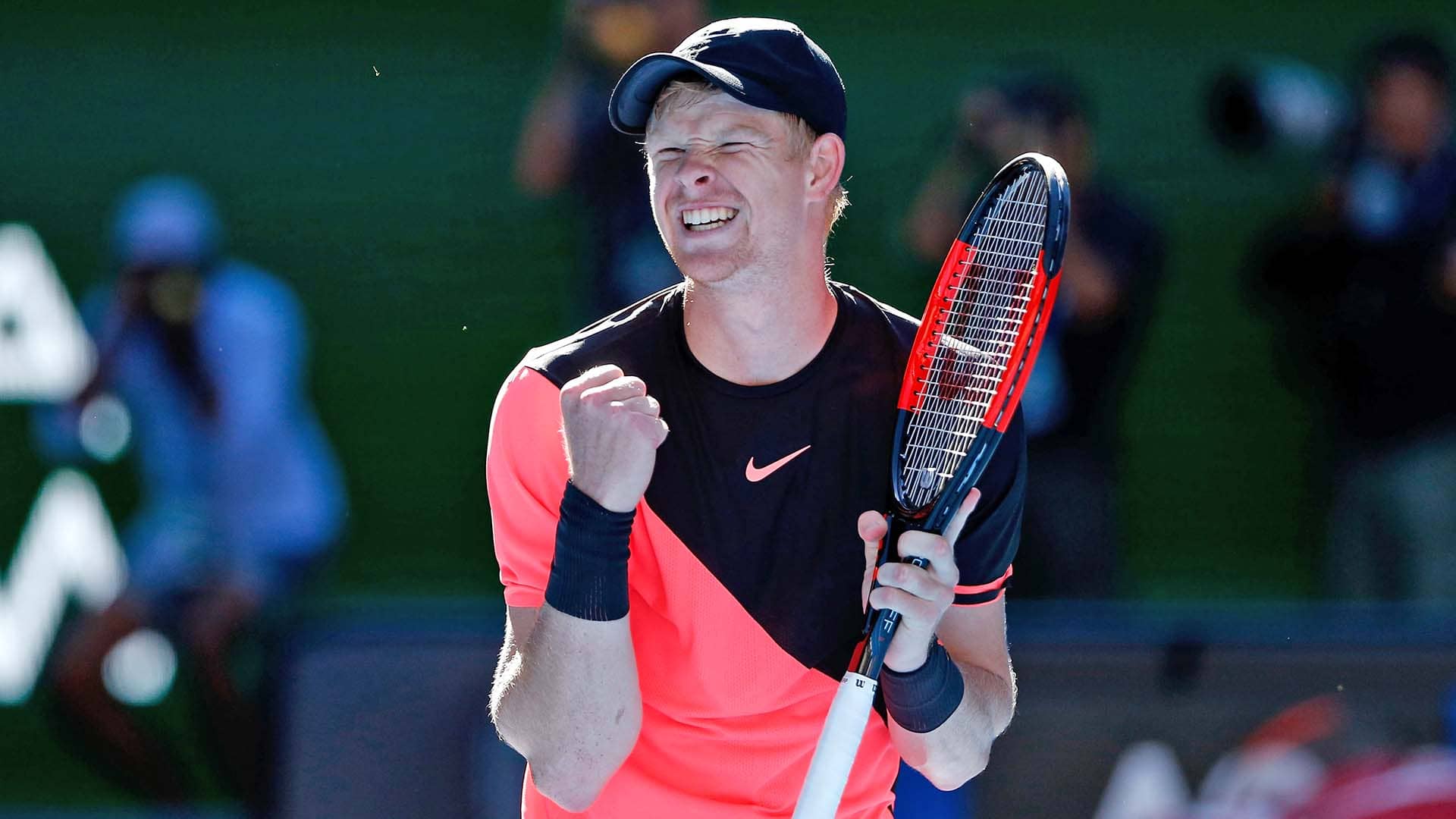
Edmund celebrates after beating Grigor Dimitrov in the quarter-finals of the 2018 Australian Open. Photo credits: Paul Rovere/Getty Images
Deciding to retire is a difficult moment in any athlete’s career, regardless of their achievements or status, but Edmund is willing to use his experiences on the tennis circuit to define the chapter of his life.
“You realize and learn that it is a privilege to be a professional athlete at the highest level when you don’t have one,” says Edmund, who has had some time off and is now considering his next steps, with a preference to continue working in the sport. “Looking back, I have always said that you may not realize it subconsciously, but when you are on the field at a professional level and not in a team, you are a kind of leader of yourself.
“You make decisions for yourself all the time, those are qualities that help you in life, that take you to the next thing. Now that I’m done, I realize that what I went through will help me. You have to earn your way there, but when you’re on Tour and playing these types of events, it’s very rewarding. You can see that in the occasions you play.”
[NEWSLETTER FORM]
#Special #moments #dont #disappear #Edmund #career #Turin #tribute