

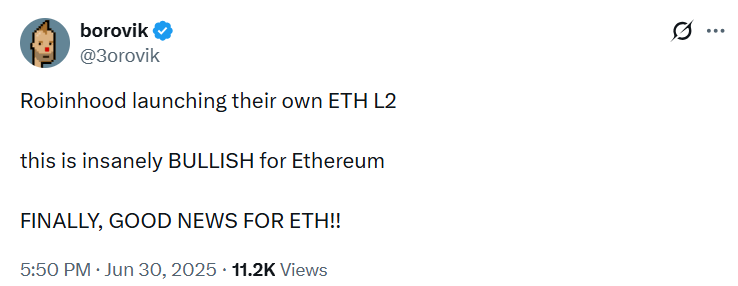
In a recent interview, Johann Kerbrat, Head of Cryptocurrency at Robinhood, explained how why the company decided to build its own blockchain infrastructure on top of Ethereum’s scalable ecosystem instead of launching a standalone tier-one network. The decision was mainly about focus, Kerbrat said. Robinhood’s crypto division has further deepened its commitment to blockchain infrastructure over the past year, expanding its products into tokenized stocks, staking services and for a soon-to-be-launched second-layer networkthat is based on Arbitrum.
Robinhood is a big proponent of tokenization
When Robinhood made the decision to build a Tier 1 or Tier 2 network, then they mainly chose the latter option because they wanted to focus on what they are very good at: creating new features. And instead of building the first layer, they simply wanted to gain the security of Ethereumthe level of decentralization and the liquidity available in the EVM ecosystem – overall, they wanted to take most of the technical issues off their shoulders. Robinhood’s own second-line chain is still a secret project, not much is known about it. The chain is currently running on a private testnet and there is no estimate when it will be available.
For now, Robinhood’s tokenized shares are now available on Arbitrum One, Ethereum’s largest aggregation by activity volume. As you probably know by now, rollups are scaling networks that bundle a large number of transactions and process them outside of Ethereum’s main network, making them faster and cheaper to operate while still operating within Ethereum.
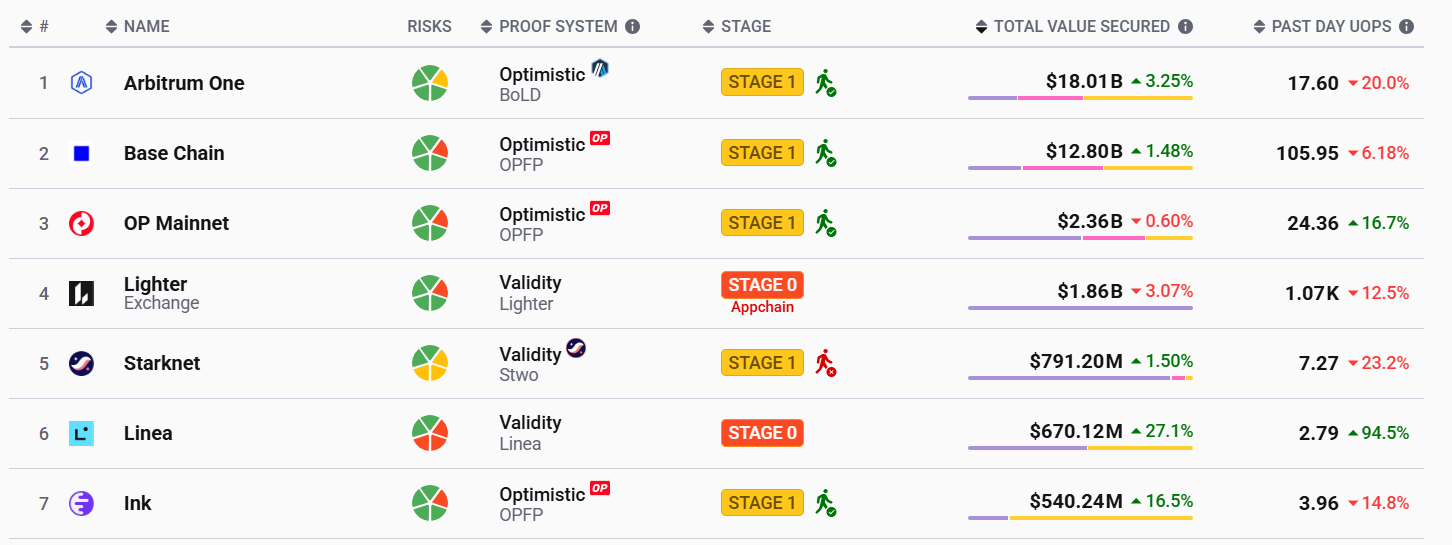
Kerbrat also emphasized that once Robinhood’s chain goes live on Arbitrum One, liquidity can be moved quickly without any migration. And there is growth, so the company must develop. Robinhood launched its tokenized equity program last July with a relatively small offering, but demand quickly led the company to expand its program. On Robinhood, a tokenized stock is a digital token created on a blockchain that tracks the value and price of a traditional stock. So users can trade shares in a crypto-like form. When the program was launched last summer, there were only about 200 share tokens available, currently this number is more than 2,000.
The expansion is part of a much broader vision of tokenization. According to the manager, Robinhood, which wants to expand in all areas, wants to tokenize everything from real estate to works of art. But besides tokenization, the company is moving on to other features, especially one of the most sought-after features, staking. The company first introduced staking in Europe and then expanded it to the United States when the U.S. Securities and Exchange Commission updated its guidelines. Looking ahead, Kerbrat sees tokenized assets transforming the way returns are generated in both crypto and traditional finance. They are confident that with the arrival of even more shares, private capital and real estate, new lending programs will emerge.
#Robinhood #tokenize