Possible ‘serious’ consequences: why you shouldn’t use it on some flights

Possible ‘serious’ consequences: why you shouldn’t use it on some flights

Virgin Australia and Qantas are the latest airlines to restrict the use of power banks on planes after a spate of in-flight battery fires worldwide.
Virgin Australia’s new policy comes into effect on December 1. Passengers will no longer be allowed to use power banks to charge other devices on board.
Portable battery packs must also be kept within sight and easily accessible during flight, which means they should not be stored in overhead bins.
There will be a limit of two power banks per person, with devices over 100 watt hours requiring airline approval. Power banks with a capacity of more than 160 watt hours are banned.

Qantas and subsidiary Jetstar will introduce similar restrictions from December 15.

Currently, many airlines allow power banks in the cabin, but not in checked bags, due to the risk that they could catch fire while unattended in the cargo hold.
This year, several airlines, including Emirates, Cathay Pacific and Singapore Airlines, have also taken steps to restrict the use of power banks in flight due to the risk of lithium batteries overheating and igniting.

It comes as passengers are increasingly traveling with power banks and other lithium-based devices. A survey by the International Air Transport Association shows that 44 percent of passengers travel with a power bank, 83 percent with a telephone and 60 percent with a laptop.

Phones and laptops also use lithium batteries. Why are power banks the big concern?

Lithium-ion batteries can be highly flammable if improperly manufactured, improperly stored, or damaged.
According to Neeraj Sharma, a professor at the University of New South Wales’ chemistry school, there is less quality control on power banks than on phones and laptops, which tend to come from more established brands.

Extensive testing has been conducted on the batteries found in products from major tech companies like Apple and Samsung, he noted, but this may not be the case for products from some other brands.

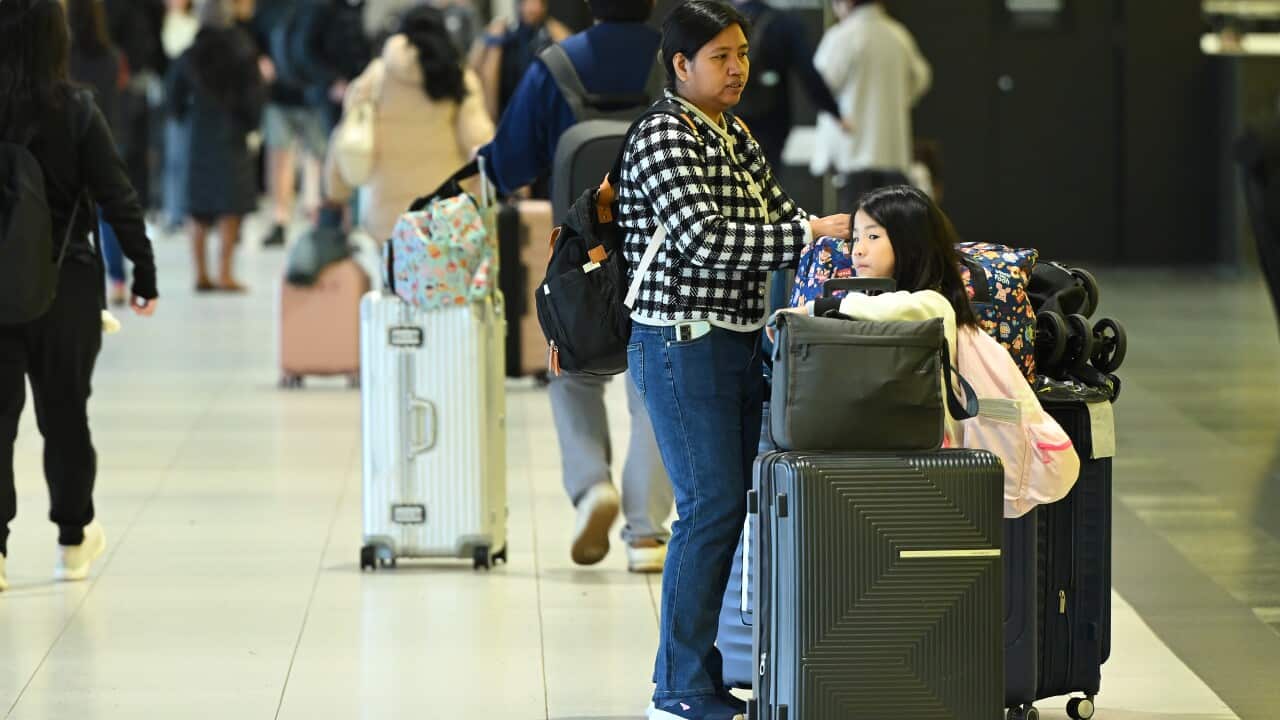
Qantas and Virgin Australia join a host of other airlines blocking the use of power banks on board. Source: MONKEY / Paul Molenaar

Wesley Dose, battery researcher and senior lecturer at the University of Sydney’s School of Chemistry, said: “Some lower-quality, cheaper devices have fewer safeguards, which poses an increased risk of an incident involving these products.”

“Another reason behind some battery incidents is improper handling and use, such as using the wrong charger or damaging the device.”

The Australian Competition and Consumer Commission warned consumers in July that there was a growing list of defective power banks that were at risk of overheating and catching fire.

Virgin promised to review its on-board battery policy after a fire, believed to be caused by a power bank, broke out on a flight from Sydney to Hobart in July. The plane landed safely and no injuries were reported.
A faulty power bank was also the likely culprit of a fire in the luggage compartment of an Air Busan plane in South Korea earlier this year, which severely damaged the plane and injured seven people.

The plane was preparing to take off from Busan International Airport for a flight to Hong Kong when the fire broke out.

Is a power bank likely to catch fire on an airplane?

The concern about power banks on flights largely stems from the fact that an airplane is a much more dangerous environment for a potential fire.
Although battery fires are rare, the consequences can be quite serious, Dose explains, because they are difficult to extinguish and can release toxic gases.

“…the biggest challenge is that the potential consequences of an incident on an aircraft, especially in flight, are more serious than in other situations.”

Why do lithium batteries catch fire?

Lithium-ion batteries have a high energy density; they store a lot of energy in a small space. If something goes wrong inside, that energy can suddenly be released in the form of heat – in some cases in the form of fire or explosion.
“Batteries can sometimes catch fire because they enter a ‘thermal runaway’, where the temperature of the battery rises uncontrollably,” Dose explains.
“This can happen for a variety of reasons, including physical damage, heat exposure, overcharging and manufacturing defects.”

According to the experts, the vast majority of lithium batteries, when properly manufactured, are safe.

The risk increases with manufacturing defects, damage from falling or crushing, cheap or poorly made batteries, overcharging or improper storage.

How do I use power banks safely?

Cheaper power banks often do not contain protections that prevent overcharging and overheating. Sharma recommends sticking with reputable suppliers.
It is also important to be aware that damage to a battery can significantly increase the risks.
Even if you have a properly manufactured power bank, consider throwing it away if you drop it and notice a dent, Sharma said.
“Taking responsibility for and caring for your batteries is important.”
They should also be kept in a cool place and you should unplug them once they are charged.
It is not recommended to charge a power bank overnight.

#consequences #shouldnt #flights

Similar Posts

Leave a Reply

Your email address will not be published. Required fields are marked *