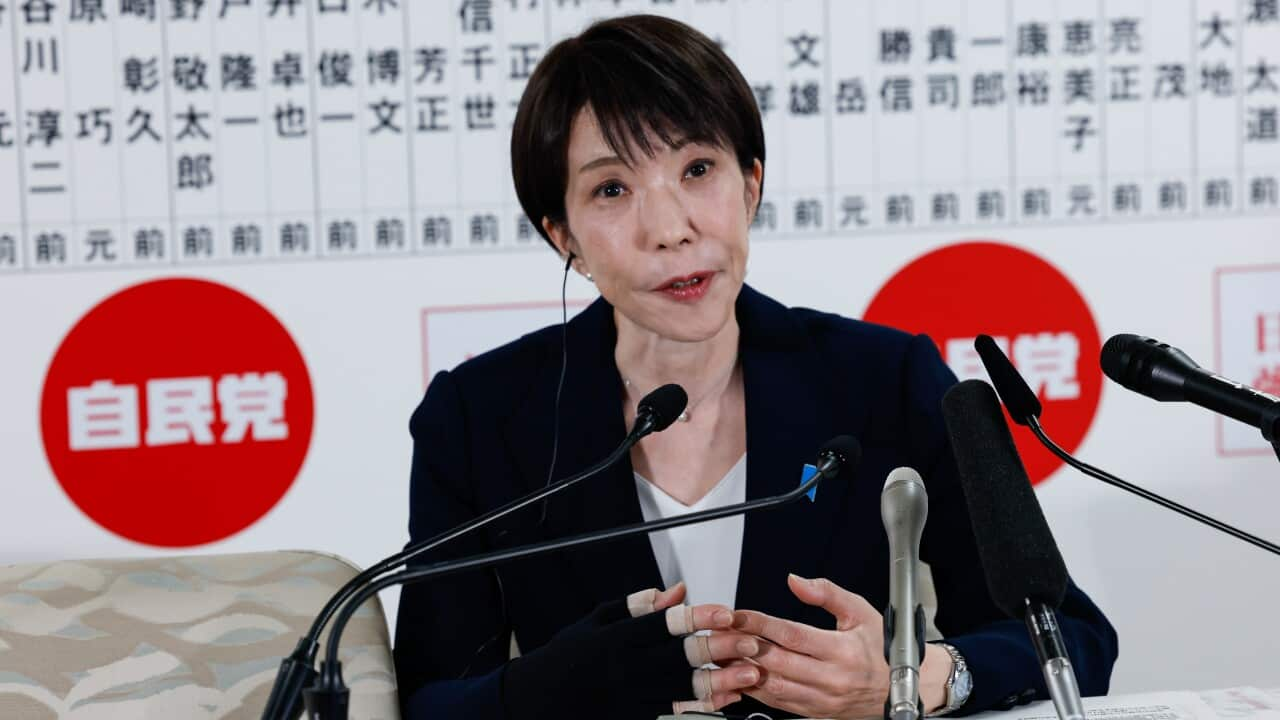

Japanese Prime Minister Sanae Takaichi is enjoying a likely election victory, with her ruling coalition expected to have won a two-thirds majority in the powerful lower house.
If confirmed by the official results, the outcome gives Japan’s first female prime minister a strong mandate to implement her conservative agenda and make her mark on the country of 123 million over the next four years.
However, the Asia-Pacific region will be closely watching whether 64-year-old Takaichi ups the ante or lowers the temperature with China after angering Beijing with comments about Taiwan in November.
Financial markets may also be nervous about Japan’s public finances and massive debt pile if Takaichi decides to cut taxes and boost spending in Asia’s second-largest economy.
“We have consistently emphasized the importance of responsible and proactive fiscal policy,” Takaichi stressed late on Sunday.
“We will prioritize the sustainability of fiscal policy. We will ensure the necessary investments. The public and private sectors must invest. We will build a strong and resilient economy,” she said.
Hit with young voters
Building on her honeymoon after becoming Japan’s fifth prime minister in as many years in October, Takaichi called early elections last month.
The gamble paid off, with local media projecting late on Sunday that her Liberal Democratic Party (LDP) would win around 300 seats of the 465 contested.
The ruling bloc, together with its junior coalition partner, was expected to have won at least the 310 seats needed for a two-thirds majority.
Takaichi has breathed new life into the LDP, which ruled Japan almost non-stop for decades but lost support in recent elections amid discontent over rising prices and corruption.
A heavy metal drummer in her youth, Takaichi was an admirer of Britain’s “Iron Lady” Margaret Thatcher, and was on the ultra-conservative fringe of the LDP when she became party chief.
She’s a hit with voters, especially the young, with fans lapping up everything from her handbag to her jam sessions to a K-pop song with the president of South Korea.
But she will have to stimulate the economy to remain popular.
“With prices rising so much, the most important thing for me is what policies they will implement to tackle inflation,” 50-year-old voter Chika Sakamoto told AFP at a polling station in snowy Tokyo on Sunday.
Relationship with China
Before Takaichi became prime minister, he was seen as a China hawk.
She was a regular visitor to the Yasukuni Shrine, which honors convicted war criminals and 2.5 million war victims and is seen as a symbol of Japan’s militaristic past.
Barely two weeks into office, Takaichi suggested that Japan could intervene militarily if Beijing tried to take self-ruled Taiwan by force.
China considers the democratic island part of its territory and has not ruled out using force to annex it.
With Takaichi having gone all out days earlier to welcome US President Donald Trump, Beijing was furious over her unscripted comments. It summoned Tokyo’s ambassador, warned its citizens against visiting Japan and conducted joint air exercises with Russia.
Margarita Estevez-Abe, an associate professor of political science at Syracuse University, said Takaichi can afford to reduce tensions now.
“Now she no longer has to worry about any elections until 2028, when the next upper house elections will take place,” Estevez-Abe told AFP before the vote.
“So the best-case scenario for Japan is for Takaichi to take a deep breath and focus on improving relations with China.”
For the latest news from SBS News, download our app And subscribe to our newsletter.
#Japans #Sanae #Takaichi #youthled #frenzy #supermajority #election #victory