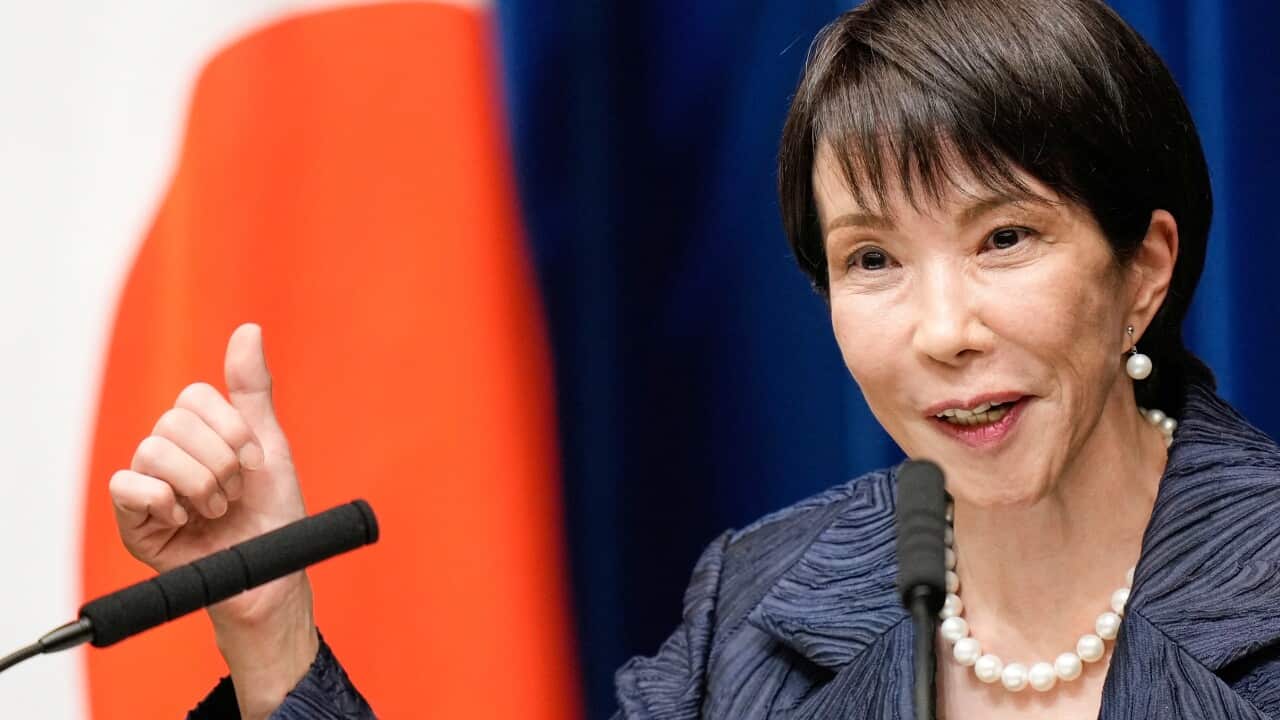
Japan’s Sanae Takaichi is making history, but will this change things for Japanese women?

Japan’s Sanae Takaichi is making history, but will this change things for Japanese women?

4 minutes, 8 seconds Read

Sanae Takaichi, a staunch conservative who admires Margaret Thatcher, became Japan’s first female prime minister on Tuesday, but analysts say her rise does not necessarily mark a feminist victory.
Instead, the 64-year-old, who won the leadership of the ruling Liberal Democratic Party (LDP) this month, has positioned himself as a hardliner focused on defense and economic security.

After striking a last-minute coalition deal, Takaichi was appointed by parliament on Tuesday as the country’s first female head of government and Japan’s fifth leader in as many years.

What is Takaichi’s position on gender equality?

While her election represents “a step forward for women’s participation in politics,” she has shown little inclination to challenge patriarchal norms, Sadafumi Kawato, professor emeritus at the University of Tokyo, told Agence France-Presse.

Takaichi’s views on gender place her on the right of an already conservative LDP, and she opposes the revision of a 19th-century law requiring married couples to share the same surname, a rule that overwhelmingly leads to women taking their husband’s name.

Takaichi has been married twice to the same man: a former member of parliament. She took his name during her first marriage. In the second he took hers.

The issue “is unlikely to be resolved during her term,” Kawato said.

Conservative record, Ishin confluence

Like Italy’s first female prime minister, Giorgia Meloni, Takaichi is not seen as a pioneer of women’s rights in Japan because she has aligned closely with the LDP’s socially conservative platform. Recent public opinion polls show that she is more popular among men than women.
“She is a woman who supports the LDP’s patriarchal model, in which men are expected to overwork at the center of society and women are expected to support them with unpaid care work,” said Yayo Okano, a professor at Doshisha University who specializes in feminist political theory.
A good example is Takaichi’s defense of legal restrictions requiring married couples to share one surname, Okano added.

The current rule means that women take their husband’s name in more than 90 percent of the cases. Critics, including business lobbies and even some liberal-leaning LDP members, say this disproportionately affects women’s careers, while the small group of opponents within the conservative circle call it essential for family unity.

To secure Takaichi’s premiership, the LDP on Monday formed a partnership with the right-wing, small-government-oriented Japan Innovation Party known as Ishin.
Their welfare policies, such as a stricter ability-to-pay principle, could increase support for vulnerable groups, including single parents and low-income earners, many of whom are women, said Yoko Otsuka, a professor of welfare policy and gender studies at Ritsumeikan University.

The sides also agreed to promote male-only succession to Japan’s imperial family, which would be “just sexist” without a rational explanation, Otsuka said.

Nordic levels

When she took office on Tuesday, her surprisingly male-dominated Cabinet and socially conservative record have left some women ambivalent in a country lagging behind in gender equality.
Takaichi appointed just two female ministers to a 19-member cabinet on Tuesday, matching her predecessor and falling short of her previously announced plan to ensure women’s representation in top posts “not particularly lower than in the Nordic countries”.
Japan ranks 118th out of 148 countries in the World Economic Forum’s latest Global Gender Gap Report, the lowest in the Group of Seven (G7) industrial countries and lower than most of its Asian neighbors including China, South Korea and the Philippines.
The status reflects women’s limited presence in the legislature, along with a huge pay gap. The Scandinavian states, on the other hand, are leading the way in political gender equality.
“The lineup she announced betrayed that promise from the start,” said Tohko Tanaka, a professor of media and gender studies at the University of Tokyo.

“This is extremely disappointing and offers no hope for women’s empowerment.”
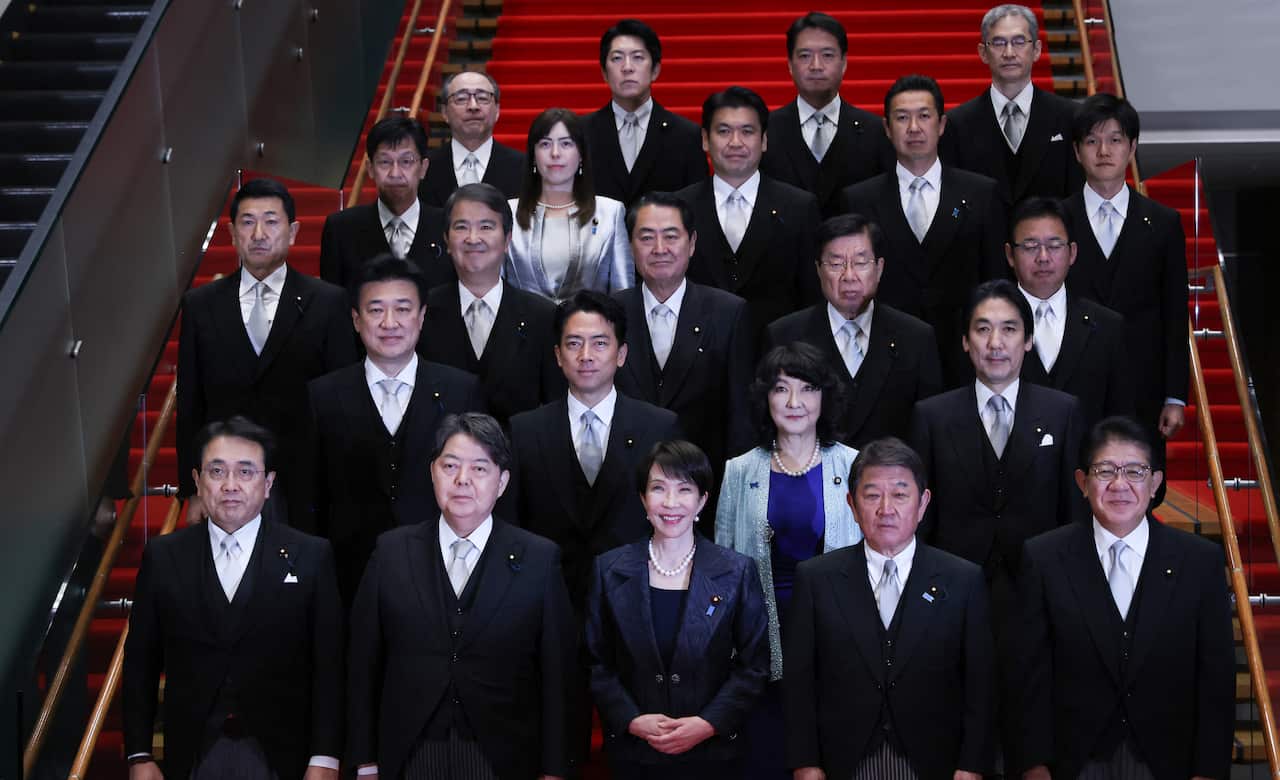
A group of people pose for a photo on a staircase

Sanae Takaichi’s new cabinet has only two female members. Source: AFP / Kaname Yoneyama

When asked about the gender imbalance in her Cabinet, Takaichi told a news conference on Tuesday that she was “prioritizing equal opportunities” and “assigning the right people to the right positions.”

Its options were limited as only 13 percent of its Liberal Democratic Party (LDP) politicians are women. The party aims to bring this percentage to 30 percent by 2033.
Women’s representation in Japanese cabinets has never exceeded 30 percent, while women make up a much larger share of Scandinavian cabinets, ranging from 36 percent in Denmark to 61 percent in Finland.
Although Takaichi’s “Nordic” reference was little more than campaign rhetoric, breaking the glass ceiling – together with her finance minister Satsuki Katayama – was a symbolic step, says Tiina Airaksinen, senior lecturer in Asian studies at the University of Helsinki.
“It took us more than 120 years to get to this situation,” Airaksinen said, referring to Finland achieving women’s suffrage in the early 20th century. Japan reached the milestone after World War II.
“She can’t immediately change everything in Japanese society, but she can initiate change.”

#Japans #Sanae #Takaichi #making #history #change #Japanese #women

Similar Posts

Leave a Reply

Your email address will not be published. Required fields are marked *