

For specific applications, such as motorsports, spur gears offer some advantages. However, for everyday passenger cars they would provide a terrible experience, which is why most vehicles use helical gears. As the name suggests, straight cut gears have teeth that extend in straight lines from the center. Conversely, helical gears contain teeth that are angled, giving them the appearance of a spiral as they rotate. This is not the only difference between a racing transmission and a normal transmission. Motorsport teams must ensure fast shifting speed and minimum weight to remain competitive.
The priorities of the motorsport world are very different from those of car manufacturers who produce an average car. Often one of the defining characteristics of a consumer car is the quality of the ride or driving experience, which becomes a powerful selling feature. Straight cut gears produce significant amounts of noise during use, similar to an aggressive, high-pitched whine. In addition, a straight-cut dog box (a type of transmission used in racing) does not work with a delicate touch. Instead, a certain amount of force is required to shift gears, and the driver must match the vehicle speed to the appropriate engine speed to synchronize the gear. If a dog box is not used properly, it can quickly break. Does this sound like a good idea for the average commuter? Heck, some of us here just realized we’ve been using our turn signals all wrong.
Street cars need forgiving gears that provide smooth performance
The amount of contact area between helical gears is also greater than that of straight cut. This means that the load on the motor is distributed over a larger area, reducing stress on the components. Conversely, in a straight cut, the mesh between the gears rests on a few teeth, concentrating the load on a much smaller contact area. Essentially, this translates into helical gears exhibiting less wear during use and in turn offering a longer service life. Of course, its longevity depends on whether you avoid these driving habits, which can cause more transmission damage than you think.
Straight gears transfer power more efficiently and weigh less, which is not a priority for street cars
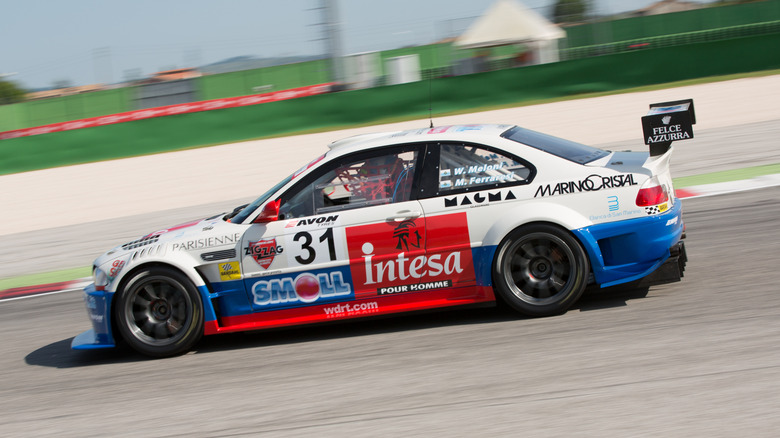
In addition, motorsports are very concerned about weight, because more pounds force the engine to work harder, which affects performance. The weight-to-power ratio is therefore a crucial means of improving lap times on the track. The helical configuration adds a lot more to the scale, as the lateral force mentioned earlier requires a bearing to be installed to counteract this movement. Not only is this heavier than the straight gear system, which requires no additional parts, but it is also not ideal for extremely high torque setups. When you apply enormous amounts of torque to helical gears, they generate even more lateral axial force, causing the system to literally tear itself apart.
#straight #gears #great #dont #street #cars #Jalopnik