

Starting a fitness journey can be overwhelming, especially if you have a busy schedule, but having a plan makes all the difference. From setting SMART goals to building a weekly routine, the key is to start small, stay consistent and progress gradually. Knowing your current fitness level and scheduling workouts into your calendar can help you turn exercise into a sustainable habit. Whether you want to lose weight, get stronger, or just feel better, finding workouts you enjoy is the secret to long-term success.
This article will guide you through the essential steps to starting your fitness journey, including setting goals, assessing your current cardio and strength levels, creating a personalized routine, and knowing when and how to increase intensity. It also provides guidance on avoiding plateaus and how VASA Fitness can help with expert support and motivating group classes.
Key points:
- Start with clear SMART goals that give your workouts purpose and structure.
- Assess your fitness level with simple cardio and strength tests to create a safe, effective plan.
- Schedule workouts into your calendar: Consistency is the key to creating a lasting habit.
- Alternate strength and cardio days to balance your routine and improve overall fitness.
- Short on time? Even 20-minute workouts can be effective if done intentionally.
- Progress by increasing the weight, reps, or exercise difficulty every few weeks.
- Alternate movements to stay challenged and avoid plateaus.
- VASA offers certified Personal Trainers who will help you build and adjust your plan over time.
- Group options like STUDIO RED HIIT classes offer a fun, energetic way to stay engaged.
Who is it for:
Anyone ready to take the first step towards a healthier lifestyle, whether you’re just starting to exercise, returning after a break, or looking for structure, accountability and motivation to stay on track.
Let’s face it: we’re all busy, so making time to get healthier and improve our fitness isn’t always a priority. But if you’re serious about getting fitter, follow these simple steps to get started with an exercise routine. Improving your workouts over time will help you move from beginner workouts to more advanced routines and make it easy to maintain an active lifestyle in the long term. Whether you want to lose weight, develop an exercise habit, or reap the health benefits that come with regular exercise, establishing a fitness routine that you enjoy can make all the difference.
How to set your personal fitness program
START SMALL: SET GOALS
Setting fitness goals, setting a deadline, and creating a process make achieving goals relatively easy. Whether you’re running a 5k in your neighborhood or building strength and losing fat, setting an intention for your workout will help you make progress when motivation starts to wane and getting to the gym is a challenge. Use the SMART acronym and set goals that are specific, measurable, achievable, relative and time-based. For example: “I want to run a half marathon in less than two hours on May 22.” This goal is specific (complete a half marathon), measurable (less than two hours), achievable (this is a popular achievement), relative (this person loves running), and time-based (the race is on May 22).
DETERMINE YOUR FITNESS LEVEL: CARDIO
That’s more Americans more sedentary then active during the day. When starting your fitness journey, it’s important that you start slow, rather than starting too fast and with too much intensity. This can lead to burnout or injury. Please do not start vigorous aerobic activity right away unless your body is ready. To understand your starting point for cardiovascular training, there are a few simple tests you can perform yourself to determine your current fitness level.
The 12-minute walk-run test is a 12-minute assessment of how much distance you can cover in 12 minutes by walking, running, or a combination of the two. Those who run less than a mile in that time should focus on building an aerobic base over the next few months using sustained cardio work such as walking and jogging at an intensity of seven out of 10, building up to 30 minutes of continuous exercise at that pace. For those who run more than one mile in 12 minutes, you can improve your aerobic base by completing an interval workout, which combines periods of challenging effort with periods of recovery.
DETERMINE YOUR FITNESS LEVEL: STRENGTH
To measure force. To measure strength, you need to learn about the strength of your major muscle groups. Start by trying the bodyweight versions of squats, lunges, push-ups and body rows. This will help determine which loaded variations of these exercises you can start with. Say 5-10 reps of each bodyweight movement can be completed with good form (thighs parallel to the ground in the squat, knee lightly touching the ground in the lunge, tight core at each angle in the push-ups and rows). In that case, you can start loading these movements with fitness equipment such as dumbbells and barbells.
If you have trouble getting low enough in the squat, place a box right behind you and practice gently touching it at the bottom of the squat to improve mobility. Balance can be a challenge during a Lunge, so use a TRX Suspension trainer so the movement can be completed gracefully. Using push and row machines can also be helpful if body weight push-ups and body rows are challenging. For those just starting out, controlling your own body weight will help create a strong foundation to build on so you can continue to progress and use different equipment in the gym more effectively.
CREATE A ROUTINE
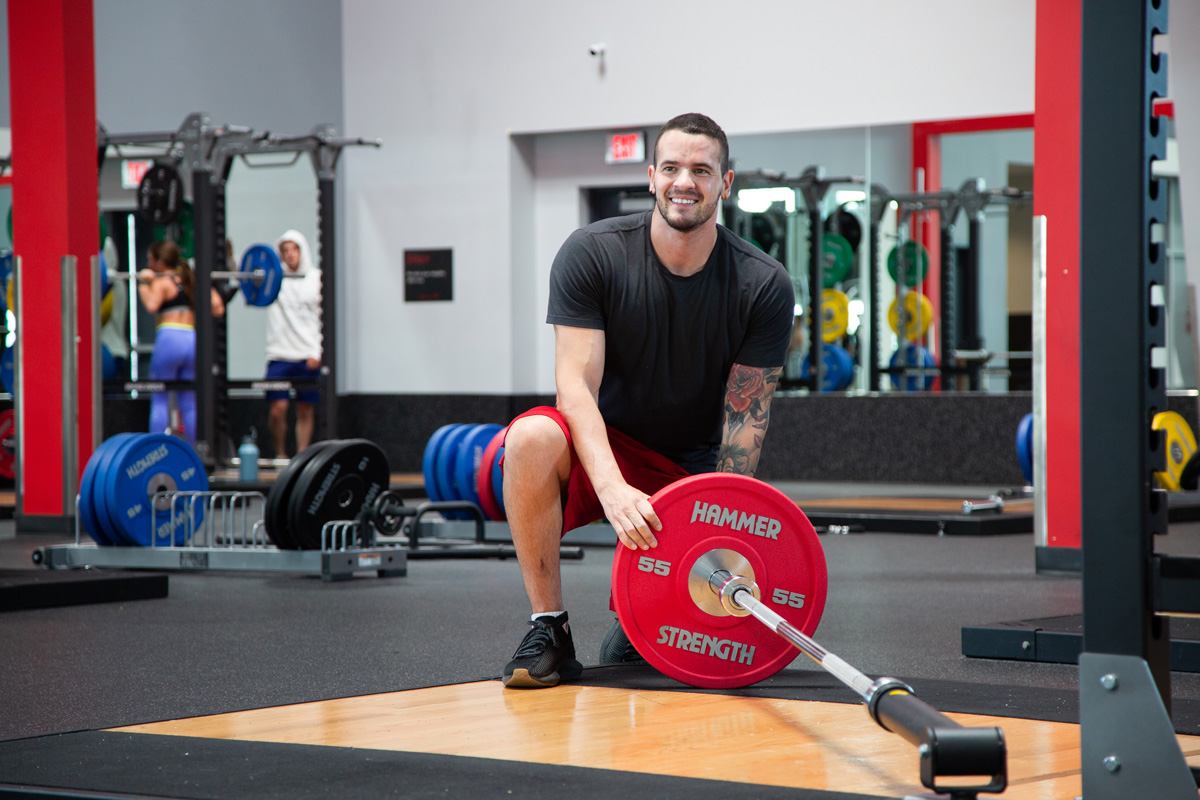
Things that are planned get done. Making time for the gym can be a challenge, but luckily gyms are open for long periods of time during the day, often from early morning to late at night. Workouts don’t have to last several hours, even 20 minutes can be effective. Look at your calendar, schedule time to go to the gym and decide the type of workout you want to do each day. Alternating between cardio and strength training provides variety and helps you increase your full-body strength. You don’t have to go to the gym every day, but if you can only do short workouts, working out more often will help you see results. If you can exercise for more than 45 minutes, start going to the gym three to four times a week and slowly increase your time or frequency over three to four weeks.
Fitness professionals often recommend trying different workouts and machines to find what you like best. Do you prefer to do cardio on an exercise bike or do you prefer shorter cardio sessions? HIIT workouts (where you combine short bursts of vigorous activity with periods of rest) more your thing? If you’re starting strength training, try free weights, strength machines, and cable machines to find what works for you. This makes it easier to stick to your fitness plan.
PROGRESSION
It is important not to do the same exercises with the same weight repeatedly. Your body will become efficient at the movement and you will reach a plateau. Once an exercise can be completed with a certain weight for two additional reps during the last two sets for two workouts in a row, it’s time to increase the weight. The body will adapt to what you ask of it, so asking it to do a little more every few workouts can help you avoid the dreaded plateau and continue to make improvements. This applies regardless of whether your goal is weight loss, muscle building or overall fitness improvement.
The other way to make progress with your workouts is to slightly change the exercises you do. Once bodyweight squats become easy or you get bored with them, move on to a kettlebell goblet squat, which is the same movement pattern but now done with a weight, activating your core and challenging the legs. Below are some examples of improving the basics:
- Hinge: KB Romanian Deadlift > Elevated Kettlebell Deadlift > Standard Kettlebell Romanian Deadlift > Trap Bar Deadlift
- Pull: Band Face Pull > TRX Row > Single Arm Band Row > 3pt Dumbbell/Kettlebell Row
- Lunge: Narrow Stagger Stance Hold > TRX Split Squat > TRX Reverse Lunge > Dumbbell Split Squat > Dumbbell Reverse Lunge > Walking Lunge
- Push: Incline Push Up > TRX Push Up > Dumbbell Bench Press > Incline Dumbbell Bench Press
- Squat: Squat to a Box > TRX Squat > Sit to Stand > Goblet Sit to Stand > Goblet Squat > Barbell Front Squat
The key to starting your fitness journey is making a plan and acting on it. Your plan should include your goals, current fitness levels for both cardio and strength, and scheduling workouts into your calendar. Decide how many times a week you’re going to exercise and on what days, and make that a non-negotiable. Once you’ve established a routine, improving your workouts to better meet your needs will also help you stay motivated. If planning or creating an exercise routine isn’t something you feel comfortable with, VASA has a certification Personal Trainers which will help you come up with a plan to achieve your goals, create your workouts and encourage you along the way. Our Personal Trainers will also give you the best exercises to start with and teach you how to improve your workouts over time so you never reach a plateau. And if you have little time and enjoy exercising in groups: VASAs STUDIO RED HIIT Classes are led by certified coaches who are there to motivate you and keep you safe during a workout that includes both strength and cardio. However, you choose to exercise, find something you enjoy and continue to challenge yourself!
#Start #Fitness #Journey #VASA #Fitness