

Understanding Histamine Intolerance: What It Is, What to Avoid, and How to Support Your Body Naturally
If you’ve ever had random headaches, flushing, digestive problems, or hives after eating certain foods, you may have dismissed it as an allergy or just “something you ate.” But there’s another possible culprit behind these symptoms: histamine intolerance.
What is histamine intolerance?
Histamine is a natural compound found in your body and in certain foods. It plays an important role in immune function, digestion, and even your sleep-wake cycle. Normally, your body breaks down histamine efficiently using enzymes such as DAO (diamine oxidase) And HNMT (histamine N-methyltransferase).
However, when your body produces or consumes more histamine than it can break down, the levels can build up, leading to what is known as histamine intolerance. It is not a true allergy, but the symptoms certainly can be feeling like one.
Common symptoms of histamine intolerance
Headache or migraine
Skin flushing or hives
Stuffy nose or sneezing
Digestive problems (bloating, diarrhea or cramps)
Irregular heartbeat or low blood pressure
Anxiety or dizziness after meals
- Depression
Because these symptoms overlap with other problems, histamine intolerance is often underdiagnosed. But identifying trigger foods and supporting your body’s ability to process histamine can make a world of difference.
High histamine foods (to limit or avoid)
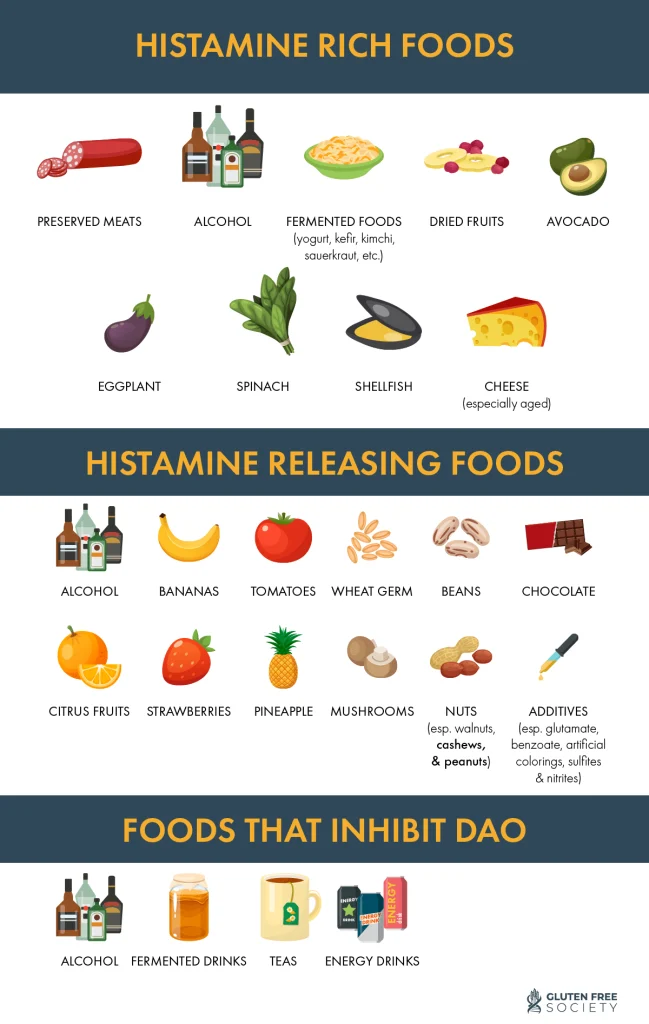
Certain foods naturally contain high amounts of histamine, while others may trigger your body to release more of it. Here are some of the most common offenders:
Foods high in histamine:
Aged cheeses (such as Parmesan, Gouda, Cheddar)
Fermented foods (sauerkraut, kimchi, kombucha, soy sauce, vinegar)
Processed or cured meats (salami, bacon, pepperoni)
Alcoholic drinks (especially red wine and beer)
Smoked fish and shellfish
Dried fruit (apricots, raisins, dates)
Spinach, tomatoes and eggplant
Histamine-Releasing Foods:
Citrus fruits (especially oranges, lemons and limes)
Strawberries
Nuts (especially walnuts, cashews and peanuts)
Chocolate
Food additives and artificial colors
- LEFTOVERS! Don’t eat leftovers that have been in the refrigerator
Not everyone responds to all these factors; sensitivity to histamine can vary from person to person. The best approach is to experiment with reducing these foods and paying attention to how your body responds.
Naturally supports your body’s histamine breakdown
 In addition to avoiding high-histamine and histamine-releasing foods, adding certain supplements can help your body metabolize histamine more efficiently or calm the immune response.
💊 Histamine supplements
DAO enzyme supplements: Help your body break down histamine from food before it causes symptoms.
Vitamin C: A natural antihistamine that helps break down histamine in the body.
Quercetin: A powerful plant-based flavonoid that stabilizes mast cells and reduces histamine release.
Magnesium: Supports enzyme activity and helps calm the nervous system.
Probiotics (chosen carefully): Some species like Lactobacillus rhamnosus GG may help, while others may worsen symptoms – choose wisely!
Lifestyle tips for dealing with histamine intolerance
Eat fresh food — the histamine content in leftovers and old products increases.
Manage stress, because cortisol and histamine are closely linked.
Sleep wellwhich helps regulate immune and inflammatory responses.
Follow the symptoms in a food diary to discover hidden triggers.
The bottom line
Histamine intolerance doesn’t mean you have to give up your favorite foods forever; it’s about understanding your body’s limits and supporting its ability to maintain balance. By making conscious nutritional choices and adding the right support, you can calm your system, reduce symptoms, and feel like yourself again.
#Histamine #intolerance #Maria #Mind #Body #Health