From the White House to the Vatican: a year of global turning points

From the White House to the Vatican: a year of global turning points

7 minutes, 34 seconds Read

From the Vatican to the streets of Los Angeles, 2025 was shaped by moments when power shifted, institutions were tested, and global fault lines were redrawn.
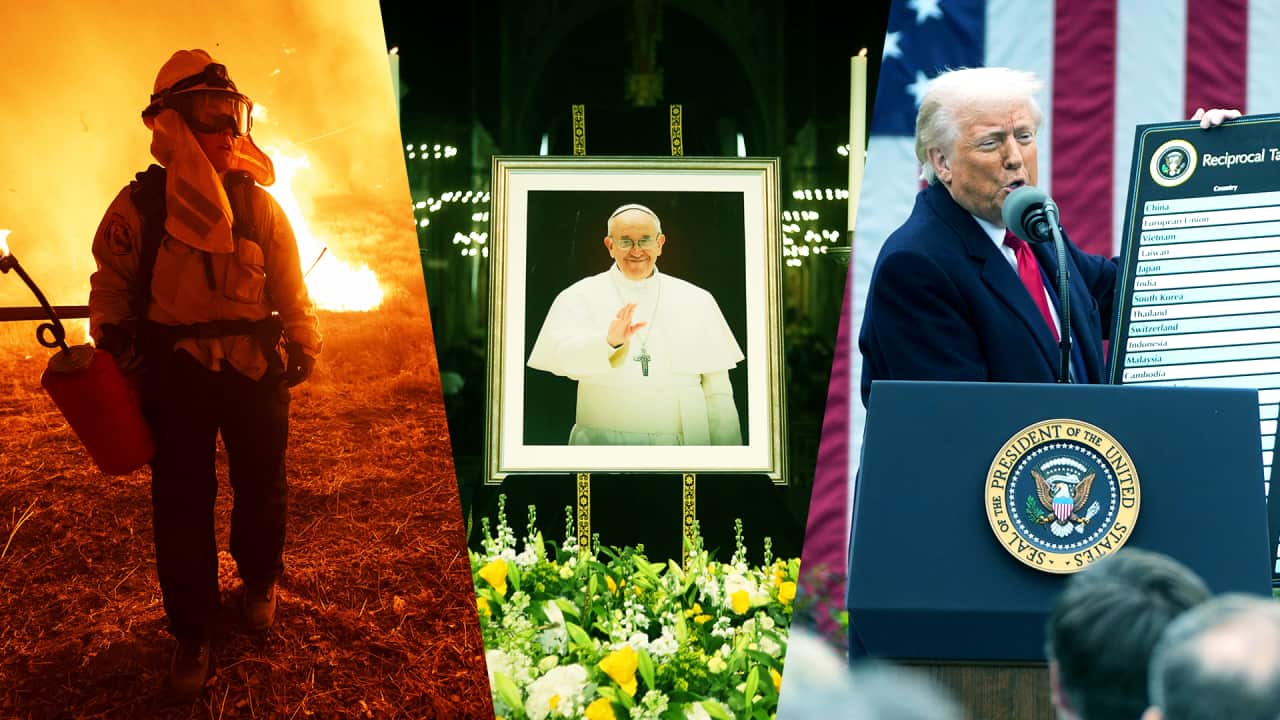
A ceasefire in Gaza, the return of tariffs to the center of American politics, a devastating forest fire and the loss of a pope combined to define a year of turmoil – with Donald Trump’s influence casting a long shadow over much of it.

Here’s a quick look at global moments that shaped 2025:

‘America’s Golden Age Begins’

The year opened with a historic speech by US President Donald Trump, who returned to power after a wave of voter dissatisfaction with the status quo.
After taking the oath of office, Trump delivered his second inaugural address. He told the nation, “America’s golden age begins now.”

It marked the moment when the always quotable and often controversial Trump returned to the presidency and quickly set the global agenda.

Days later, on April 2, Trump announced what he called Rates “Liberation Day”.sending tremors through global financial markets.
He said this will make America rich again, but economists warned at the time that prices could rise for Americans, and fears of a global trade war have grown.
“I always say that to me, tariffs are the most beautiful word in the dictionary because tariffs will make us incredibly rich and bring back our country’s businesses that left us,” Trump said in his speech.
The sweeping tariffs fueled fears of trade wars with both allies and geopolitical rivals, but it was the A tit-for-tat trade war with China that threatened to destabilize the global economy.
The US imposed 145 percent tariffs on Chinese goods, prompting China to retaliate with its own 125 percent tariffs, plunging the two countries into an economic war.
An uneasy truce was reached between the world’s two largest economies in June, but Trump reignited the conflict in October by announcing additional 100 percent tariffs on Chinese imports.
At the end of October, Trump had signed a trade deal with Chinese President Xi Jinping, reducing proposed tariffs on Chinese exports to 47 percent and ensuring U.S. access to Chinese rare earths.

A long-awaited ceasefire

In 2025, it wasn’t just trade wars that were intensifying.
The world also became less peaceful for the thirteenth time in the past seventeen years, with the average level of peace in a country worsening by 0.36 percent compared to the previous year, according to the Institute for Economics and Peace’s Global Peace Index (GPI) 2025.
Global militarization continued to deepen during the year. Average military spending as a percentage of gross domestic product reached the highest level since 2010, at 2.5 percent. The GPI recorded a sharp increase in the number of violent conflicts, with 59 state conflicts documented in 2023 – the highest number since the end of World War II and three more than in 2024.
The most notable deterioration in peace came from the war between Israel and Hamas, which also destabilized the wider region and affected Syria, Iran, Lebanon and Yemen to varying degrees.
After two years of destruction in the Gaza Strip, the first phase of a… Trump’s proposed ceasefire agreement came into effect on October 10, bringing the two-year war to a halt. In the days that followed, however, both the Israeli government and Hamas accused each other of violating the agreement.
“We ended the war in Gaza and actually, on a much larger scale, created peace,” Trump said at the time.
“I think it will be a lasting peace, hopefully an eternal peace. Peace in the Middle East. We have secured the release of all remaining hostages.”
Negotiations are now focused on entering the second phase of the deal, which includes a permanent ceasefire, a full Israeli withdrawal and the establishment of a governing authority for Gaza. Progress remains slow, slowed by unresolved disputes over Hamas’ disarmament and the region’s future governance.

Israel’s subsequent military campaign in Gaza has killed more than 70,000 Palestinians, according to Palestinian health officials, leaving much of the enclave in ruins and creating a serious humanitarian crisis marked by acute shortages of food, clean water and safe shelter.

‘Extreme violence’ in Sudan

Sudan’s civil war has become one of the most serious conflict-driven humanitarian crises in recent history, with grim scenes continuing into 2025.
In October, Reena Ghelani, CEO of Plan International, told SBS News from Sudan: “There is extreme violence against children and girls in particular. There is so much sexual violence that people say it is a weapon of war.”
“People are fleeing for safety, so they are displaced within the country.”
Earlier this month, Sudanese Prime Minister Kamil Idris presented a plan to end the country’s nearly three-year war before the United Nations Security Council (UN Security Council), calling on members to be “on the right side of history” by supporting the initiative as fighting continues in Kordofan and North Kordofan states.
But US Ambassador to the UN Jeffrey Bartos presented a different proposal at the UN Security Council, urging the Sudanese military and the RSF to accept an alternative plan for a humanitarian ceasefire, urged by the US and key mediators Saudi Arabia, Egypt and the United Arab Emirates – known as the Quad – as the way forward.
The war broke out in April 2023 after a violent power struggle between the Sudanese Armed Forces, led by Abdel Fattah al-Burhan, and the RSF, commanded by Mohamed Hamdan ‘Hemedti’ Dagalo.
Human rights groups have accused both sides of committing war crimes, charges that both deny.

Across the country, more than 150,000 people have been killed and about 12 million people have been driven from their homes. This has prompted the United Nations to declare Sudan the site of the world’s largest humanitarian crisis.

Trump and Zelenskyy Oval Office moment

Ukraine endured another deadly year of war, with fighting continuing on both sides as Russian and Ukrainian forces traded attacks and sought territorial and strategic gains.

The UN Monitoring Mission in Ukraine reported 12,062 civilian casualties in the first ten months of 2025, an increase of 27 percent compared to 2024.

When the two leaders met in the Oval Office in late February, tensions quickly surfaced as Trump and US Vice President JD Vance repeatedly criticized Zelenskyy during the talks – a meeting that was widely watched. as a turning point in global diplomacy by 2025.

Of protests, power and political unrest

In countries such as Mongolia, Morocco, Madagascar, Peru, Mexico, Indonesia, the Philippines and East Timor, youth, often organized under the banner of ‘gen Z protests’, are being mobilized to demand political reforms, with some movements challenging governments and calling for systemic change.
Among these, Nepalese September Movement attracted particular international attention. Sparked by a ban on social media and widespread allegations of government corruption, protests quickly escalated in the capital Kathmandu.

Large groups of mostly young demonstrators took to the streets. During the unrest, government buildings were targeted and the homes of some high-profile officials were attacked.

At least 72 people were killed, 34 of them from gunshot wounds, according to a UN-backed autopsy report.
The protests had significant political consequences: the ban on social media was lifted, Prime Minister KP Oli resignedand the House of Representatives was dissolved within days.
Nishchhal Kharal, a Nepali international student in Australia who founded a grassroots organization involved in the movement, told SBS News:
“I fear that the country will end up in this spiral of instability again, but on the other hand, the people have spoken.”

Nepal’s next chapter is expected to unfold with snap general elections in March 2026.

A historic transition in the Vatican

In April 2025, the world once again turned its eyes to the Vatican.

His death sent shockwaves through the global Catholic community of 1.4 billion people, prompting hundreds of thousands of mourners from around the world to pay their respects in St. Peter’s Basilica.
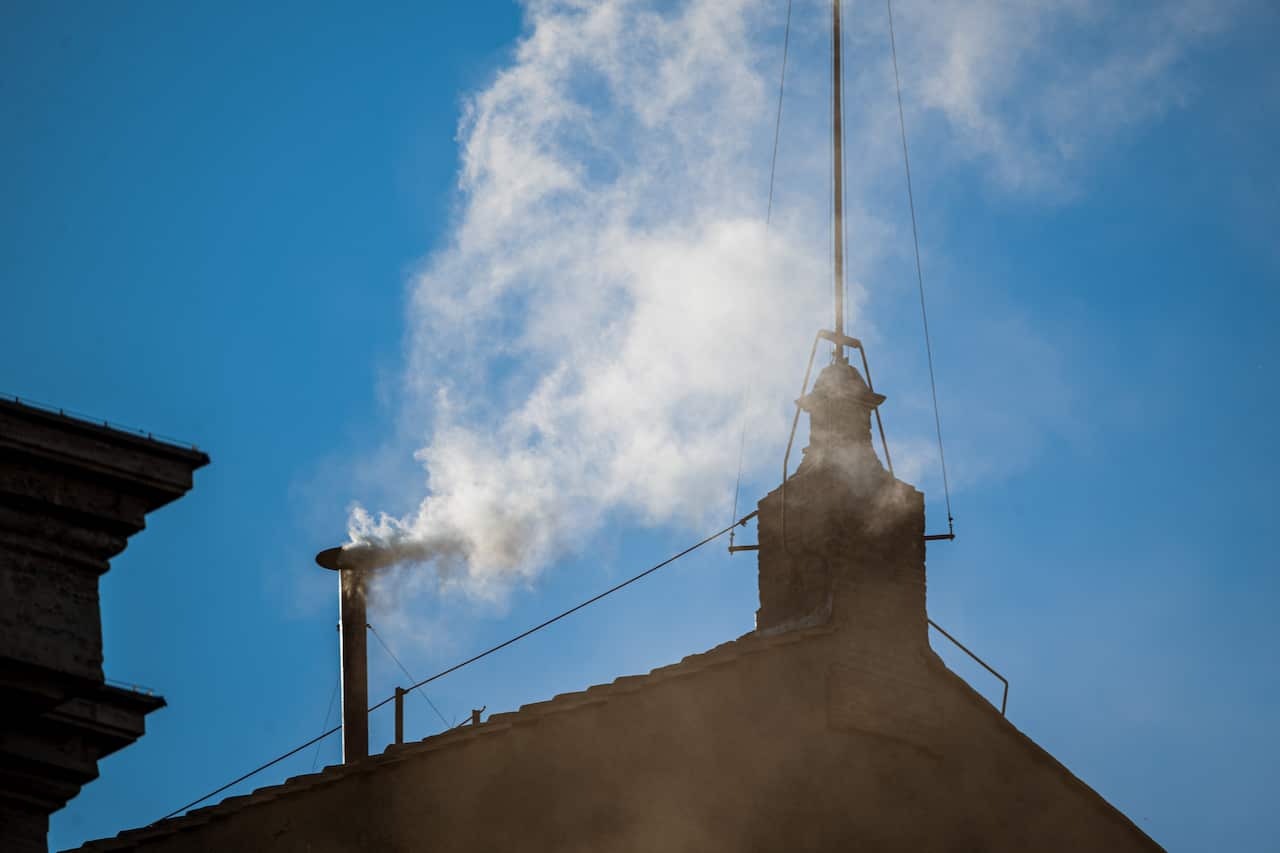
White smoke comes out of the Sistine Chapel.

After two days of deliberation in the papal conclave, white smoke rose from the Sistine Chapel, signaling the election of Cardinal Robert Prevost as the new pope. Source: MONKEY / Valeria Ferraro / SOPA ISA/SIPA VS

After two days of deliberation in the papal conclave, white smoke rose from the Sistine Chapel, which was the signal election of Cardinal Robert Prevost as the new Pope, now known as Pope Leo XIV.

A year of disasters and climate warnings

2025 started with a devastating natural disaster and ended with urgent warnings about the worsening climate crisis.
More than 7,500 firefighters and prisoners, aided by helicopters, tried to control the deadly fires. The fires burned more than 23,000 hectares, destroyed or damaged more than 16,000 structures, claimed 31 lives and led to an estimated 440 additional indirect deaths, according to a study published in the medical journal JAMA.
The fires were not the only disasters of the year.
It swept through the Caribbean, killing at least 96 people and displacing tens of thousands in Jamaica, Cuba and Haiti.
The year ended with the COP30 climate summit in Brazil. UN Secretary-General António Guterres warned of more “heat and hunger, more disasters and displacement, and a greater risk of exceeding climate tipping points.”
“Communities on the front lines are also watching and wondering how much more we have to suffer. They’ve heard enough excuses; they’re demanding results.”

#White #House #Vatican #year #global #turning #points

Similar Posts

Leave a Reply

Your email address will not be published. Required fields are marked *