

Palau’s biodiversity is threatened by rising sea levels.
Climate change, a personal issue
For Techitong, these climate-related dangers are deeply personal.
“I fear that the places where I grew up will be underwater in the coming decades,” he said. “I don’t want future generations to only hear stories about what Palau used to be like. That’s what drives me.”
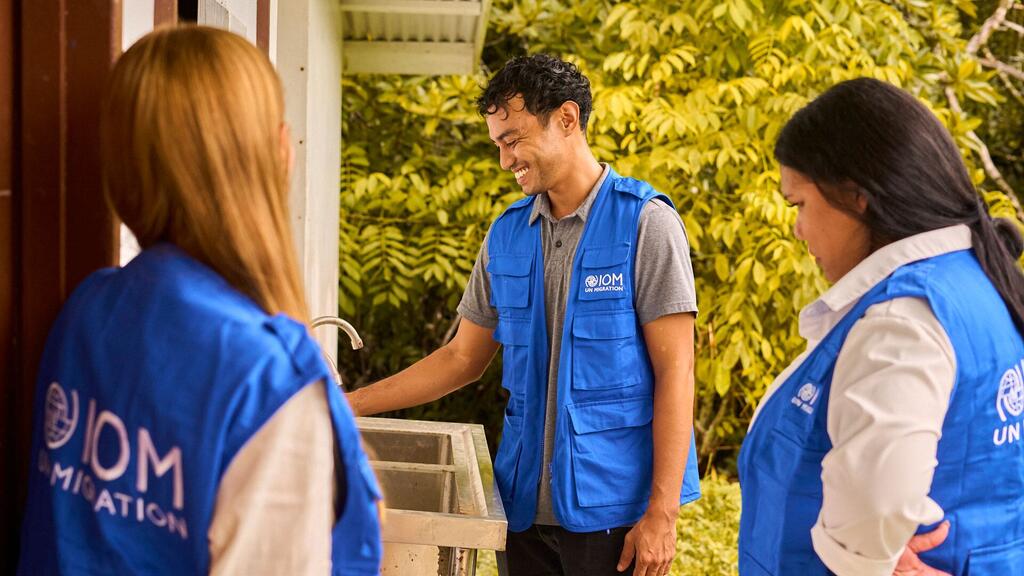
Today he works with the International Organization for Migration (IOM) in Palau together with the National Emergency Management Office (NEMO), which oversees the strengthening of climate-resilient disaster shelters across the country.
UN Micronesia/Borja Moya
Techitong visits one of the IOM-supported disaster shelters.
Strengthening national resilience
Techitong’s work is part of a broader United Nations effort to support Palau’s resilience to the adverse impacts of extreme weather events through an integrated, long-term approach.
The UN works with the government of Palau and civil society on four interconnected pillars: people, planet, prosperity and peace.
Building community resilience to extreme weather events and strengthening disaster risk reduction extends across all four of these pillars, as resilience is not only environmental, but also social, economic and institutional.
The shelters that Techitong oversees put this vision into practice.
UN Micronesia/Borja Moya
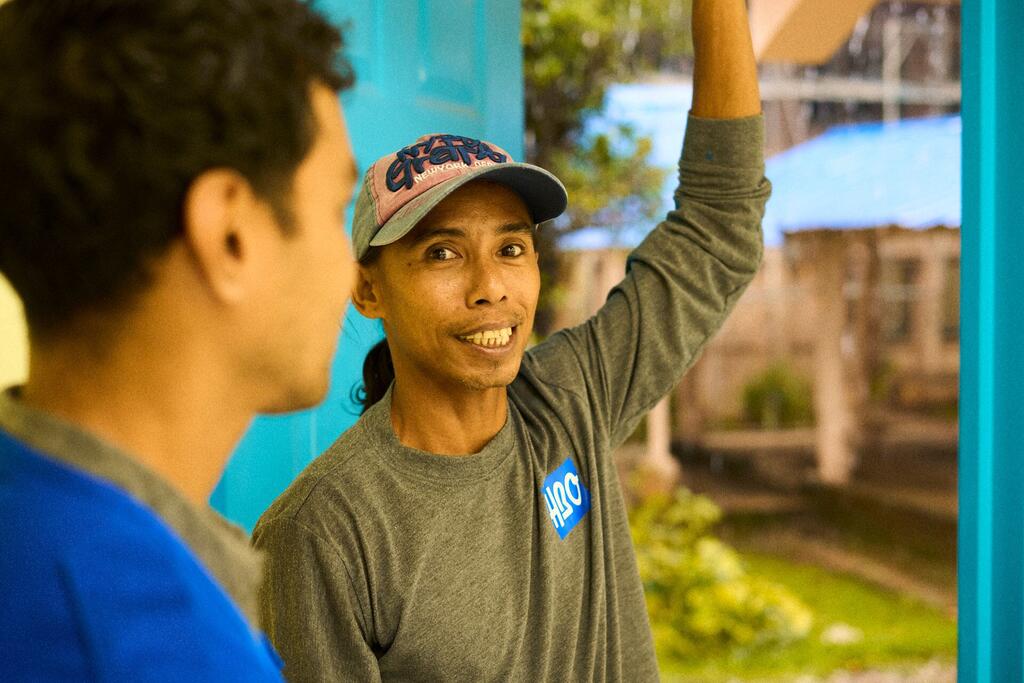
Techitong speaks with one of the construction workers building shelters.
The shelters are designed to function as a connected national network of safe spaces accessible to all people during emergencies.
Built to withstand high winds, heavy rainfall and flooding, they will be equipped with typhoon shutters, rainwater collection systems, solar-powered lighting, generators and water filtration systems.
Four of the eight shelters have already been strengthened and handed over to the community in Palau.
“The reinforced shelters take into account the needs of persons with disabilities and other vulnerable people so that no one is left behind during emergencies,” said Alex Iyar, a community member involved in the consultation that led to the development of this project.
In addition to the infrastructure, the project also strengthens local capacity. Community-based Red Cross disaster response teams are trained to manage shelters before, during and after emergencies, strengthening local leadership and ownership.
Addressing the risk of displacement and protecting social cohesion
Climate change is becoming increasingly common in the Pacific Ocean. According to IOM Data on global displacement trends show that weather-related disasters have led to hundreds of millions of internal displacements over the past decade.
Disaster events fundamentally change mobility patterns worldwide and disproportionately affect small island states like Palau.
While disaster shelters cannot stop sea rises, they can buy time, protect lives and help communities stay rooted for as long as possible.
For Di Maech, a local conservationist from Palau, this is of great importance. “In Palau, our communities are learning, growing and finding ways to be resilient to disasters through UN-supported projects.
“It gives me hope that my children can still enjoy the best parts of Palau where I grew up.”
UN Micronesia/Carlota Nunez
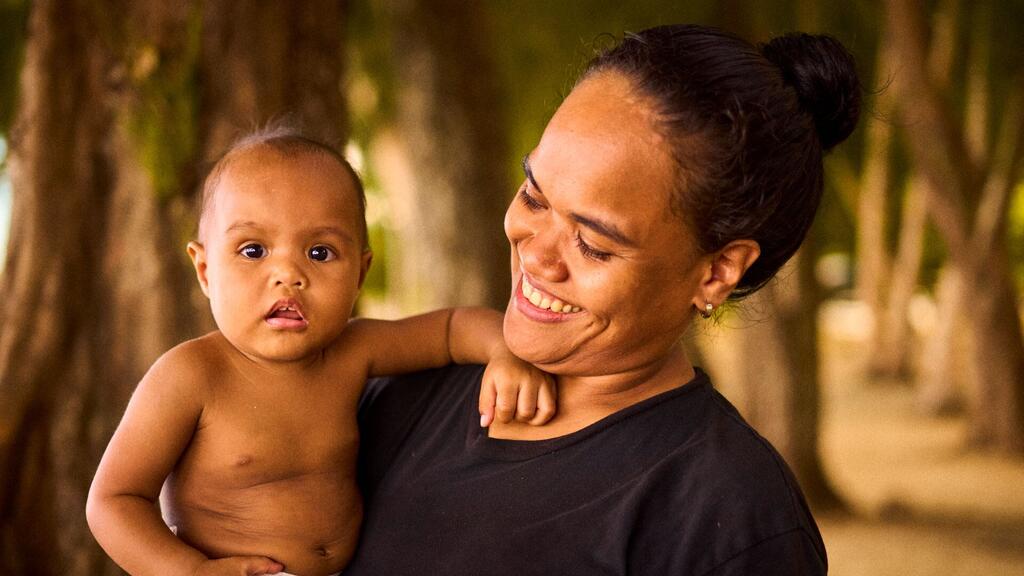
Di Maech is a Palauan conservationist.
Investing in youth leadership
IOM’s Techitong believes the shelters are crucial to national resilience. “These shelters are not just emergency shelters, they are community hubs that support preparedness, connection and adaptation,” he said.
Techitong still swims in the ocean when he can. The water remains beautiful, powerful and deeply familiar, even though it brings new uncertainty.
“I grew up learning to ride the waves,” he says. “Now it’s about my work ensuring that our communities can do the same. Adapt, protect each other and keep Palau afloat.”
UN Micronesia/Carlota Nunez
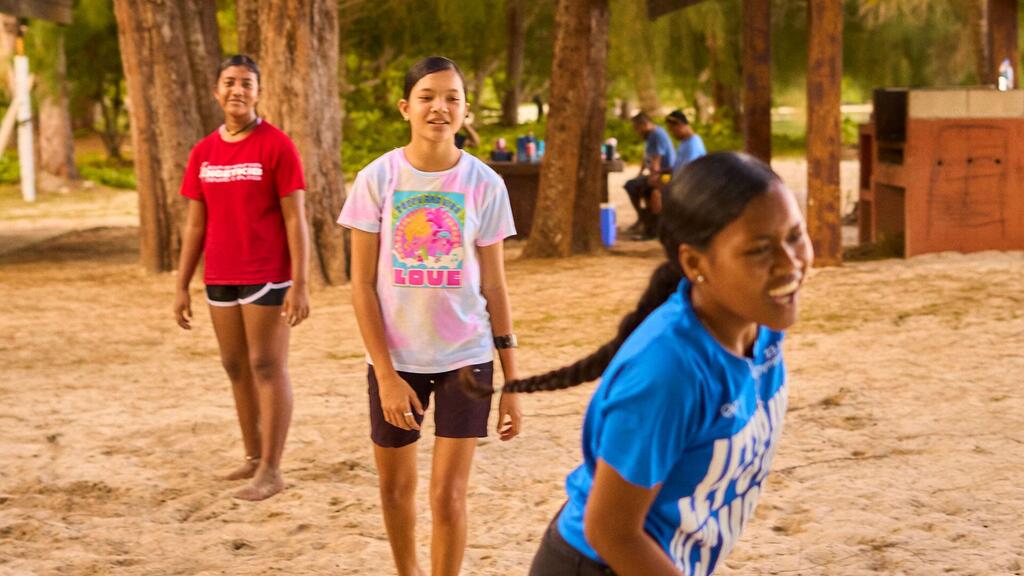
Young Palauans play volleyball in Kuabes Park, an area that could be flooded within 30 years.
#Shelter #Strength #Disaster #Shelters #Protect #Lives #Palau