

“Mr Perfect” Ernesto High enters SENSHI 30, the man generations still use as a benchmark, but he admits one rivalry still bothers him: Bob Sapp. We spoke with Hoost prior to February 28 fight event.
In the early 2000s, fighters like Sapp and Francisco Filho raised their own profiles by being the few to manage to defeat Hoost while he was considered the most complete heavyweight kickboxer in the sport. Ahead of SENSHI’s anniversary gala in Varna, the four-time K-1 World Grand Prix winner opens up about how those Sapp battles are still in the back of his mind.
Ernesto Hoost talks about Bob Sapp competitions
“In 2002 I became champion again, but to be honest the feeling was not one hundred percent. Because I lost to Bob Sapp before that, something was left unfinished for me,” he says. saidadding his fourth Grand Prix title to the shock that came earlier. Their first fight at the K-1 World Grand Prix 2002 Final Elimination ended with a doctor’s stoppage after Sapp charged forward with tremendous size and power, a result that stunned fans and media as they saw Hoost tear apart giants. Hoost still struggles with how it happened in the ring.
“I still don’t really see that fight as a normal fight, you know? Sapp was such a big guy, almost 300 pounds of muscle, and he hit hard. What I heard later was that the referee was told to get away with a lot. He grabbed me with one hand and hit me with the other, almost like a street fight. I looked at the referee like, ‘What is this?’ But the referee just said: ‘Go on, go on.’
The rematch came quickly in the final of the 2002 K-1 World Grand Prix in Saitama, where Sapp’s pressure led to another TKO and sealed one of the strangest two-fight series of that era. “Later I heard stories that they programmed him to fight like that, to just go crazy. They gave me a rematch because the ratings were very high from the first fight,” Hoost said.
When Sapp withdrew from the tournament injured, Hoost returned as a late replacement and won the entire Grand Prix, beating Ray Sefo and holding off Jérôme Le Banner to become the first four-time K-1 champion. Still, he says that victory always felt complicated. “But then I started making mistakes. Losing affected me mentally. I lost again, and even today that remains the biggest frustration of my career. Especially because I really believed I could beat him.”
Hoost compares that frustration to his series against Francisco Filho, where he took a 2-1 lead over three fights and feels the rivalry has reached a natural end. “You know, I beat Filho the first time, lost the second and won the third, that’s fine. But with Bob Sapp I lost twice, and that sticks with me. It’s part of my story, part of my frustration, but also part of what has made my career what it is.”
He makes it clear that he harbors no anger towards Sapp himself.
“I don’t have any bad feelings towards him. I don’t blame him for what happened. Maybe a little bit myself, maybe my trainer, there are always things you look back on and think you could have done differently. My trainer said, ‘Just fight him, he’s a big bum.’ Yes, it’s easy to say what you should have done when you were standing in the corner and you were outside. But inside the ring it’s different. Still, I’m at peace with it. I understand what happened and why. It was a difficult situation for everyone, including financially, but that’s how it goes sometimes in this sport.”
SENSHI 30
Today, Hoost is one of the most important faces of SENSHI. He works as a chief instructor at the SENSHI International Martial Arts Camps in Bulgaria, is a member of the board of KWU SENSHI and is involved as a coach, referee, judge and commentator during the events. He has said that what he enjoys most is passing on his timing, combinations and sense of sound to fighters who return camp after camp, and that SENSHI’s format reminds him of the K-1 nights he built his name on.
“I think the fighters and participants really appreciate what I and my colleagues, legends in the fighting world, are doing for the SENSHI organization,” he explained in a recent interview, calling his work in Bulgaria an important turning point in his post-retirement life.
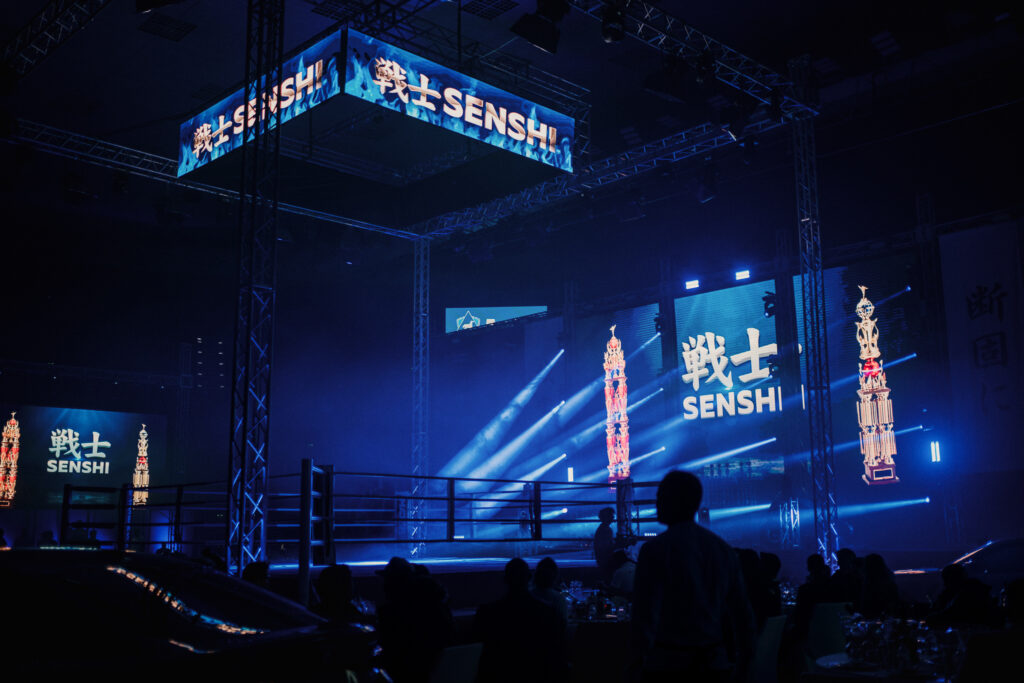
Taking place on February 28 at the Palace of Culture and Sports in Varna, SENSHI 30 is billed as an anniversary gala built around a first 75kg Grand Prix. Twelve fighters from thirteen countries will meet under KWU FULL CONTACT rules in a direct-elimination format, with the winner facing three fights in one night to become the first SENSHI Grand Prix Champion in this division.
The card features quarterfinal pairings including Gasham Mammadov vs. Zhulien Rikov, Konstantin Rusu vs. Florin Lambagiu, Jordi Requejo vs. Konstantin Stoykov and Máximo Suárez vs. Christian Baya, plus reserve fights Aibek Amanov vs. Victor Krashevski (Bulgaria) and Fernando “Tigre” (Portugal) vs. Dávid Kinkhefner.
Three super fights complete the line-up: Hirokatsu Miyagi (Japan) vs. Samo Petje (Slovenia) weighing under 70kg, Charalampos Digkas (Greece) vs. Diyan Dimitrov (Bulgaria) weighing under 70kg.
For Hoost, who calls SENSHI’s Grand Prix format a way to revive the old tournament feeling, SENSHI 30 is a new opportunity to get close to the ring, pass on hard-earned lessons from nights like Sapp-Hoost and watch a new group try to write their own shocking result in kickboxing history.
#Exclusive #frustrates #Ernesto #Hoost #talks #Bob #Sapps #losses #SENSHI