

Step 1: Think like a child.
(Photo: Imgorthand | Getty)
Published on October 13, 2025 8:08 am
Handstand is one of those yoga postures (asana) that is surrounded by myths, that is, myths created by ourselves. Some see it as the Everest of asana – something only the most experienced practitioners can achieve. Others see it as a party trick: flashy, impressive, maybe even a little self-indulgent.
But think back to what you were like as a child: throwing yourself upside down in the grass, tumbling through the air, and not caring whether you hung on the landing or rolled out laughing. That spirit is the embodiment of Handstand.
Adho Mukha Vrksasana (Downward Facing Tree) is a practice that explores lightness, rhythm and play. Patanjali describes the same principle in the Yoga Sutras when he explains it abhyasa And vairagyaor practice and let go. We continue to show up, do the work, and build the actions in our bodies day by day. And at the same time, we continue to loosen our grip on the outcome.
The handstand teaches us this balance. You can practice for years and still fall out of the pose more often than you hold it. That doesn’t mean you failed. The key is in the attempt, not in the stick. Just like when you were a kid, the fun wasn’t in the nailing, but in the fearless, playful ride of turning yourself upside down.
What the yoga tradition teaches us about the handstand
The Sanskrit name for Handstand says a lot. “Adho mukha” (“pointing downwards”) points you towards the earth. “Vrksa” (“tree”) roots you in stability. In Handstand, that tree turns upside down and asks you to grow your roots through the palms, stabilize the midline of the body, and extend the branches (i.e. the legs) toward the sky.
In Iyengar yoga, the pose is often called full arm balance instead of handstand. That distinction is also significant. While in other inversions, such as the supported headstand (Sirsasana) and the shoulder stand (Sarvangasana), the body is supported by a broad base: the head, arms or shoulders. They are reversals of stability, and they allow you to stay there longer, delving into their effects on circulation, breathing, and the mind.
Handstand is different. The entire body balances on just the two palms, which makes it more precarious. The teaching here is not about duration, but about clarity of action, precision of attunement, steadfastness of mind and lightness of body. Think of it this way: you don’t “kick into a handstand.” You grow a tree from the ground and let yourself float through space.
How to do a handstand: the mind
Handstand isn’t just about strength, it’s about rhythm, clarity and, perhaps most importantly, play. If you try to kick your way up hard, you have the potential to fly past your destination. But when you let your breathing set the pace and align your body’s actions, suddenly there’s lift. Think about being a kid again and throwing yourself upside down without hesitation. That willingness to fall, to laugh, to get back up – bring that with you.
Dropping out doesn’t have to be dramatic. Practice doing a graceful side cartwheel, or simply step down with control. A smooth exit prevents fear from creeping in and gives you the courage to try again. And don’t be shy about using the wall: it’s not a stool, it’s a teacher, giving you real-time feedback on the linear line you’re looking for.
Try weaving handstand attempts into the flow of a vinyasa class, when your body is warm and your breath has a natural groove. Over time you will find that progress comes from repetition. You show up, you fall, you float, you laugh, you repeat.
How to do a handstand: the body
Here’s a short sequence that can help you build up the handstand.
1. Mountain pose
Simply start by standing upright in mountain pose (Tadasana).
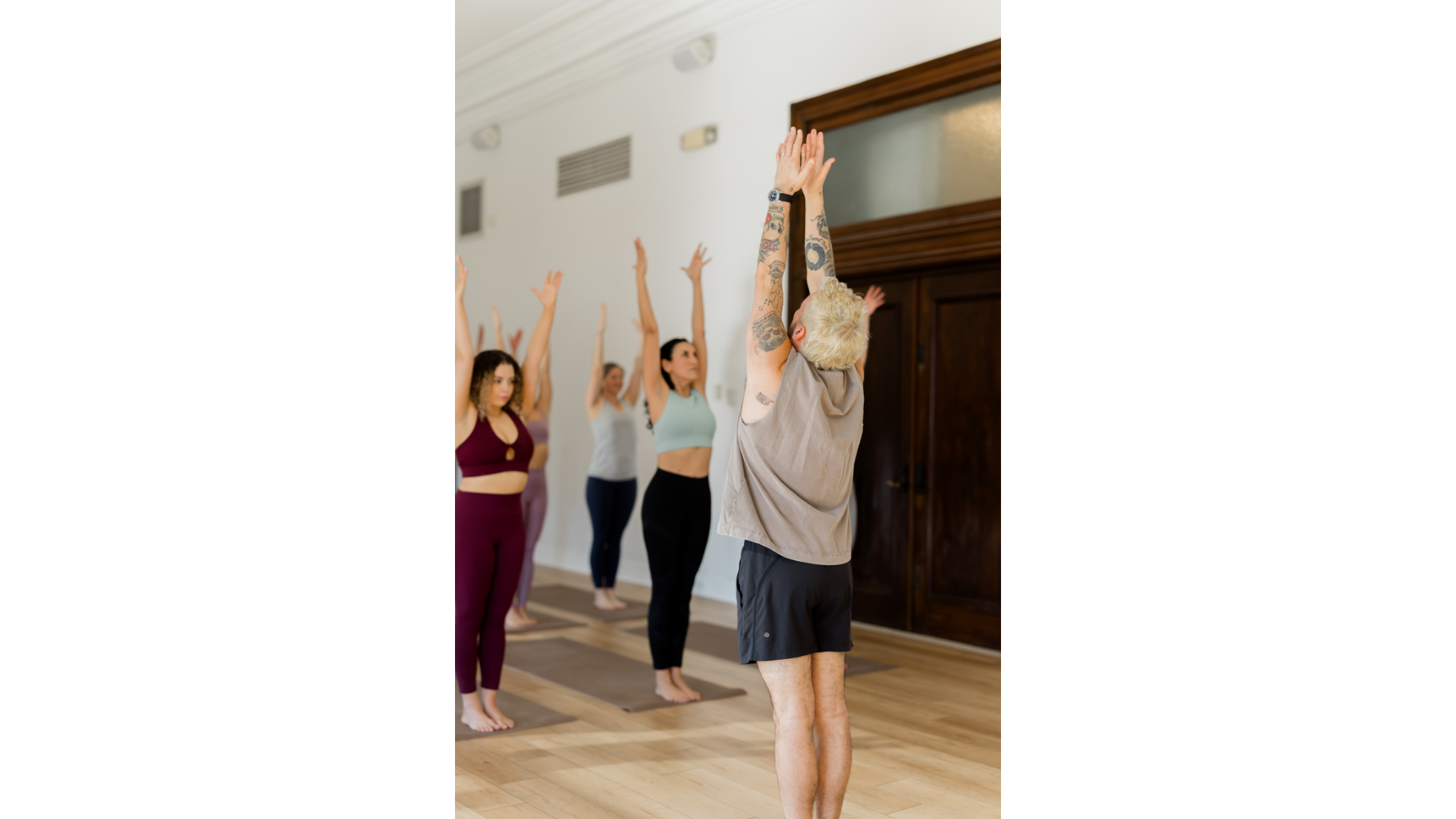
2. Upward salute
Sweep your arms above your head in the upward salute (Urdhva Hastasana), extending upward through your fingertips as your heels descend. Feel that upward pull. It is exactly the same energy that you let flow through your palms when you are upside down.
3. Tree pose
From there you move into Tree Pose (Vrksasana). Press your standing leg firmly into the mat while your raised foot presses against your thigh. Suddenly you are balancing. This is a handstand in disguise: root down while lengthening upward, holding the centerline and allowing yourself to feel stable and strong even as you feel light and free.
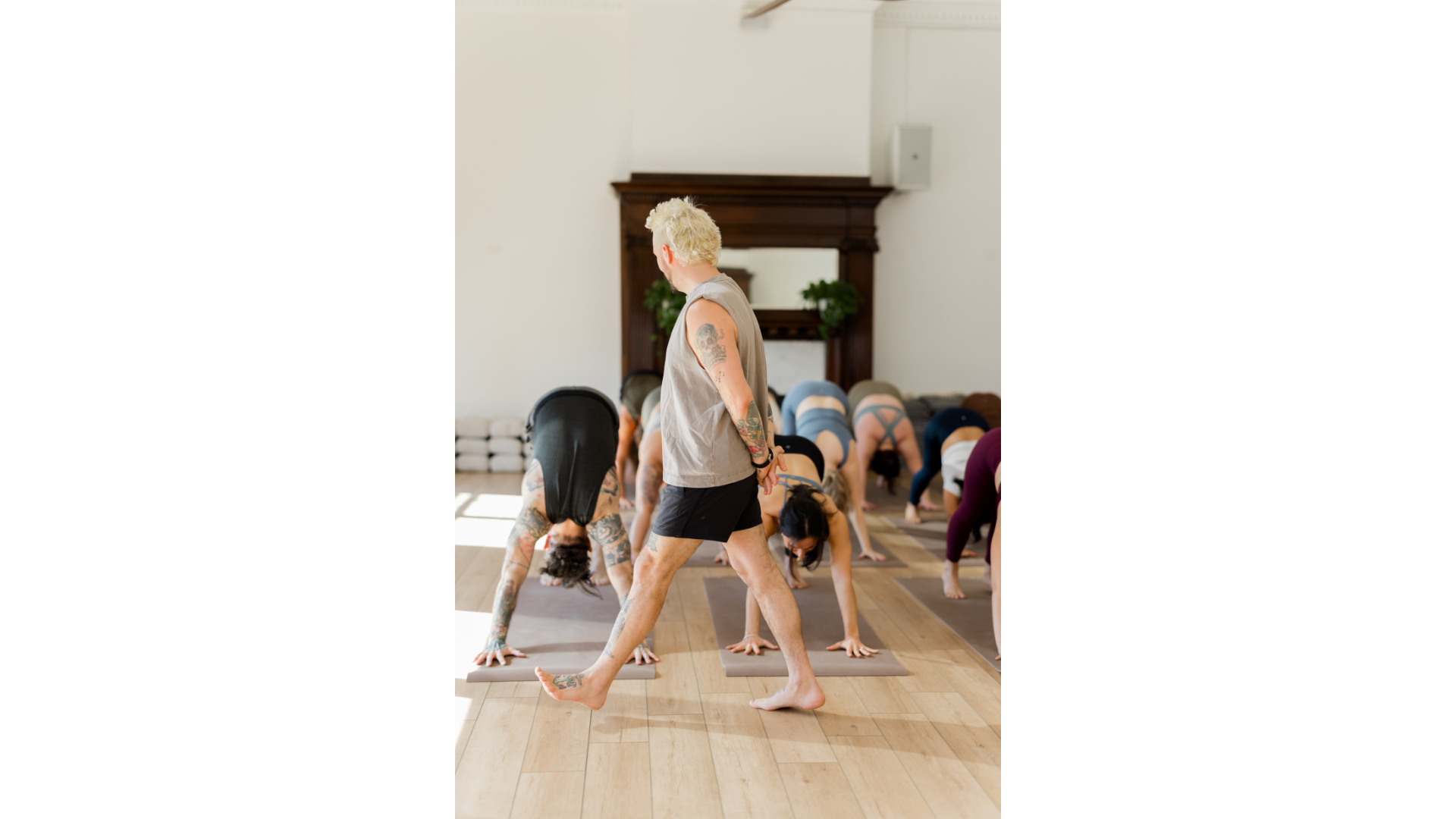
4. Downward Facing Dog
Then fold forward and step back into Downward Dog. Press your hands into the mat, lift your sit bones high and let your breath create space between your ribs and pelvis. This is your launching pad. It is also an opportunity to feel into the palms as they make contact with the mat.
5. Jump into forward bend and back stand
Start playing now. Jump forward from Down Dog to Standing Forward Bend (Uttanasana) and then jump back again. No pressure to stick the landing, just let it be buoyant and fun. These transitions teach you what it feels like to glide through space while being both light and stable. Be resilient, be resilient and land with your knees bent.
6. Handstand hop
Once you’ve found your groove, try some handstand hops. From Down Dog, lift one leg high, push the floor away through your palms and jump with the other foot. Don’t think about taking off – think about pushing up. Even if you only hover for a moment, you have hit the essence of the pose.
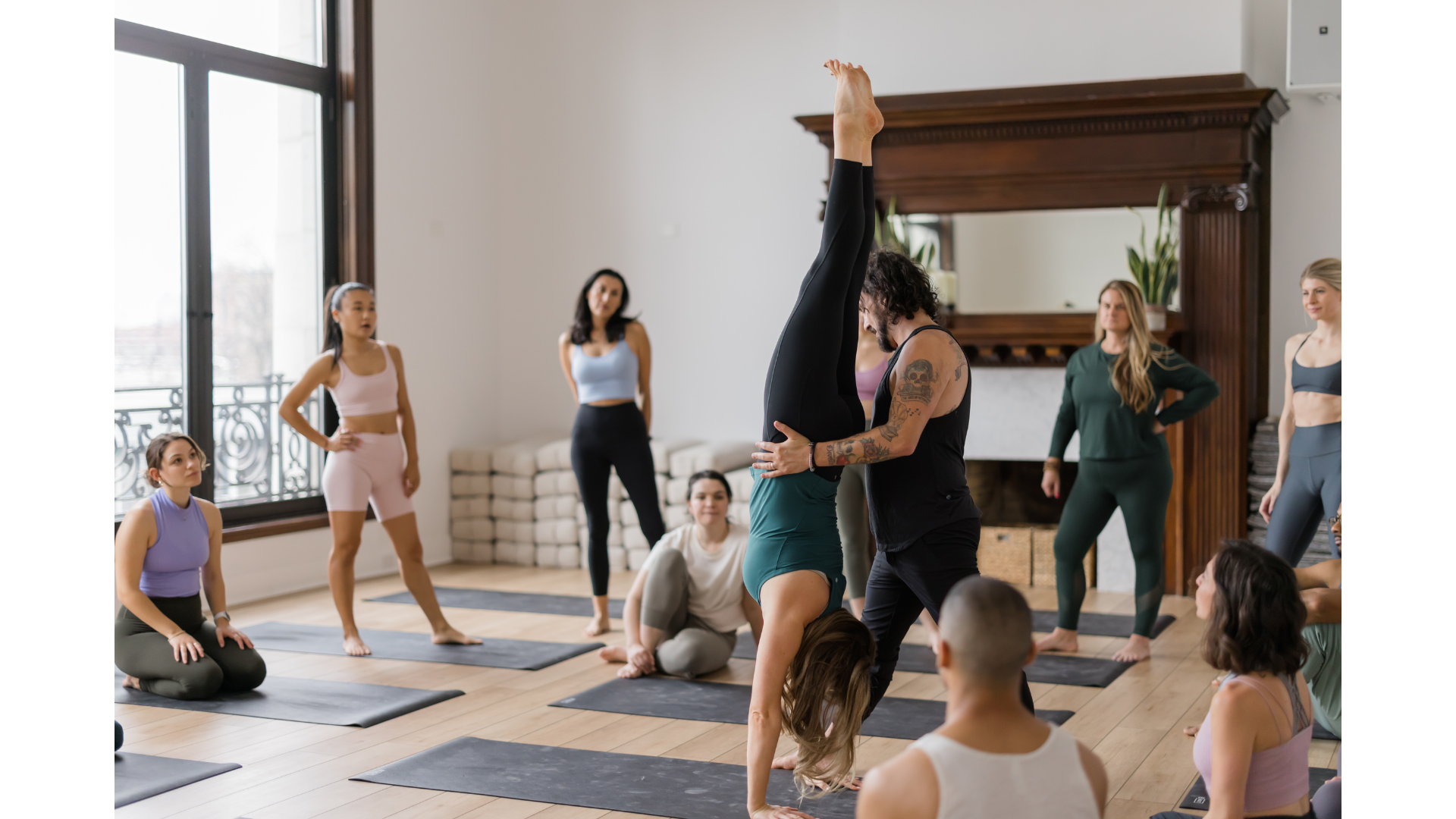
7. Handstand
And when you’re ready, go for the full thing. Standing a little closer to your hands, sweep one leg up and as you exhale, let the other leg come up to meet it. Suddenly you’re in Handstand. Press the hands down, stretch the legs long and breathe. Maybe you can hold on for a while. Maybe you’re doing a cartwheel. Either way, you did it: it’s about the exercise, not the duration.
How to keep your perspective
Handstand isn’t really about balance, it’s about presence. When you’re upside down, there’s no room for distraction, no room for overthinking. There is only breath, body and gravity talking to each other. Some days you’ll find the float, other days you’ll fall right back down. Both are practical.
The real lightness comes from not hanging on to the outcome and instead showing up repeatedly with curiosity, rhythm and a bit of that fearless play we knew as children. It is the practice of abhyasa and vairagya – practice and release – that keeps you steady, whether you balance a breath or immediately fall back to earth.
Float steady, fall often, always play. That’s yoga.
#falling #handstand #solution #simpler