

A low-effort approach for maximum relaxation.
(Photo: Derdeman | Pexels)
Published on October 28, 2025 5:02 am
Dull pain. Sharp pinch. Warm, tingling sensations. If you’re someone who suffers from lower back pain, you know how overwhelming it can be, and you’re not alone. In fact, it’s one of the most common reasons people practice lower back yoga exercises.
As a yoga teacher, I have learned that many students think that back bends can reduce lower back discomfort. While backbends in yoga can help counteract the effects of sitting for long periods of time or poor posture (both a leading cause of lower back injuries), these poses aren’t always ideal when you need relief. Pushing your body into Cobra or Wheel Pose can place unnecessary pressure and intensify rather than relieve pressure on the lower back.
Yet there is a wide range of yoga postures that gently release and strengthen the lower back without force. Combining these less intense movements with deep breathing will relieve tension and protect a sensitive lower back.
When should you avoid backbends?
The lower back (lumbar spine) already has a natural curvature, known as lordosis. When you practice a backbend, you exaggerate the curve, which compresses the vertebrae and can strain the surrounding muscles. This can make pain worse instead of soothing, especially in people who suffer from sciatica, hernias or muscle tension due to sitting for long periods of time.
While backbends can be therapeutic in other contexts, you can care for a tight lower back in a safer, more sustainable way. Instead of forcing yourself to do intense stretches, try gentler poses that help decompress the vertebrae and relieve muscle tension. These poses also engage the core, glutes and hamstrings to stabilize the lumbar spine and relieve stress on the lower back.
10 yoga stretches for the lower back
These are poses you can return to when your lower back feels tight. Grab a pillow or blanket and a block or stack of books to make some stretches more doable. Practice slow, deep breathing to calm tension in your body and guide your lower back into relaxation.
If a pose is uncomfortable, reduce the intensity or skip it. And if you experience persistent or worsening pain, consult your doctor before exercising.
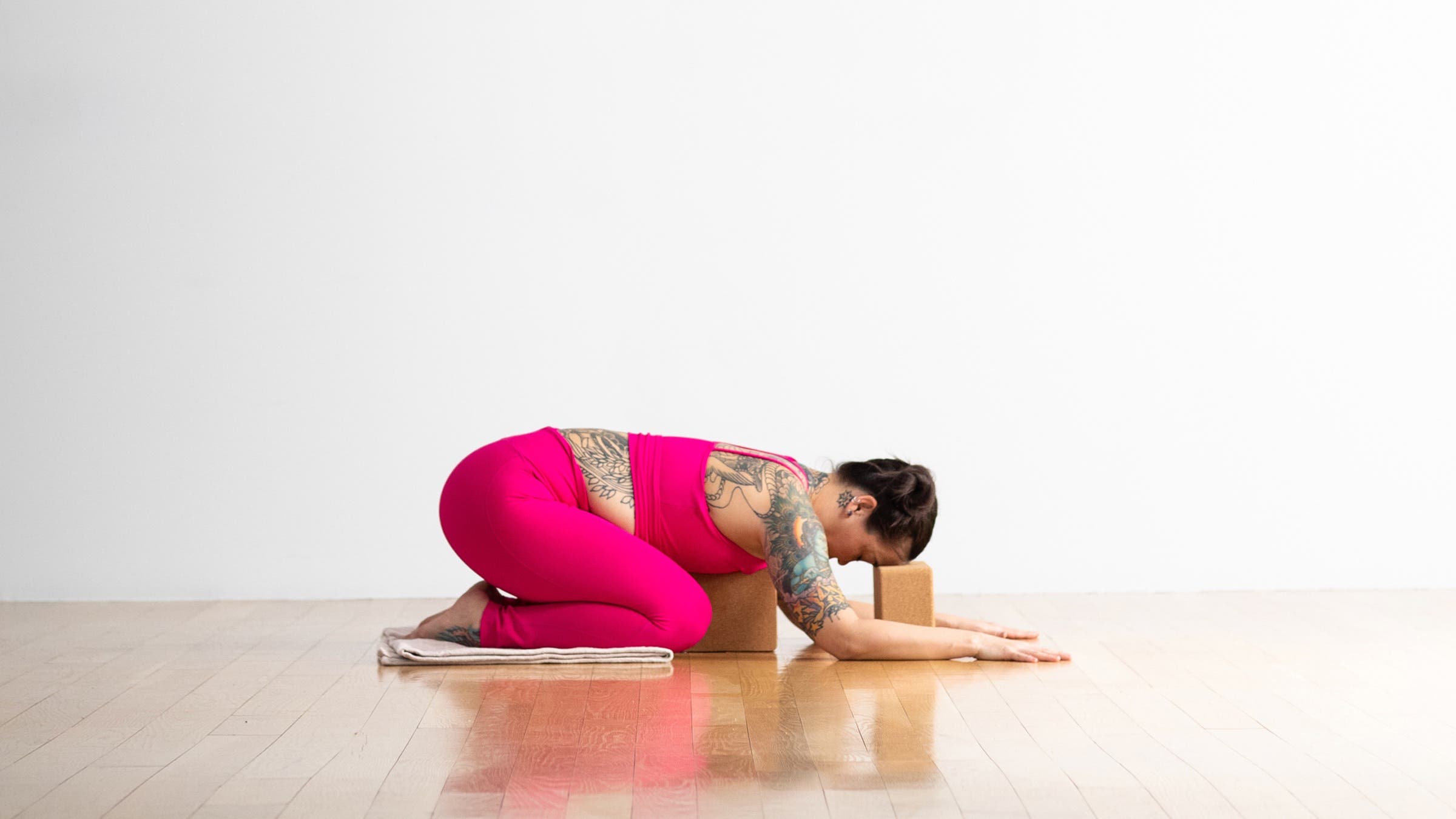
1. Child’s Pose (Balasana)
The lower back muscles release from their usual grip in Child’s Pose. Add a pillow or pillow under the chest to make the pose more supported.
How:
- Kneel on the mat. Touch your big toes together and keep your knees together or wide. Sit with your hips toward your heels.
- Exhale and walk your hands forward as you lower your chest toward the floor in Child’s Pose. Rest your forehead on the floor, a pillow, a folded blanket, or a block. You can also place a block under your chest. Extend your arms forward with your fingers spread wide. Let go of all effort here. Breathe here for as long as is comfortable.
2. Lying Knees to Chest (Apanasana)
Tightness in the hips and glutes often contribute to lower back pain. This stretch helps address both.
How:
- Lie on your back and pull your knees to your chest. Wrap your arms around your shins or gently hold your knees. Stay here or, if comfortable, move gently back and forth to massage the lower back. For a gentler stretch, pull one knee at a time toward your chest and place the other foot flat on the floor. Breathe here.
3. Supported Supine Spinal Twist (Supta Matsyendrasana)
Twisting can be challenging for the lower back, but this lying variation with supported knees allows for less rotation and more relaxation.
How:
- Lie on your back with your arms straight out to the sides in a T-shape. Bend your knees with your feet flat on the floor.
- Inhale as you lift one foot off the floor and then the other, pulling your knees over your hips. Exhale as you gently lower your knees to the left and place your lower calf on a block or stack of books or a few pillows. Keep your shoulders on the ground. Look at the ceiling or, if comfortable, direct your gaze to the right in Reclining Spinal Twist. Rest your legs in the support below. Take a few breaths here, then pull your legs back to the center and switch sides.
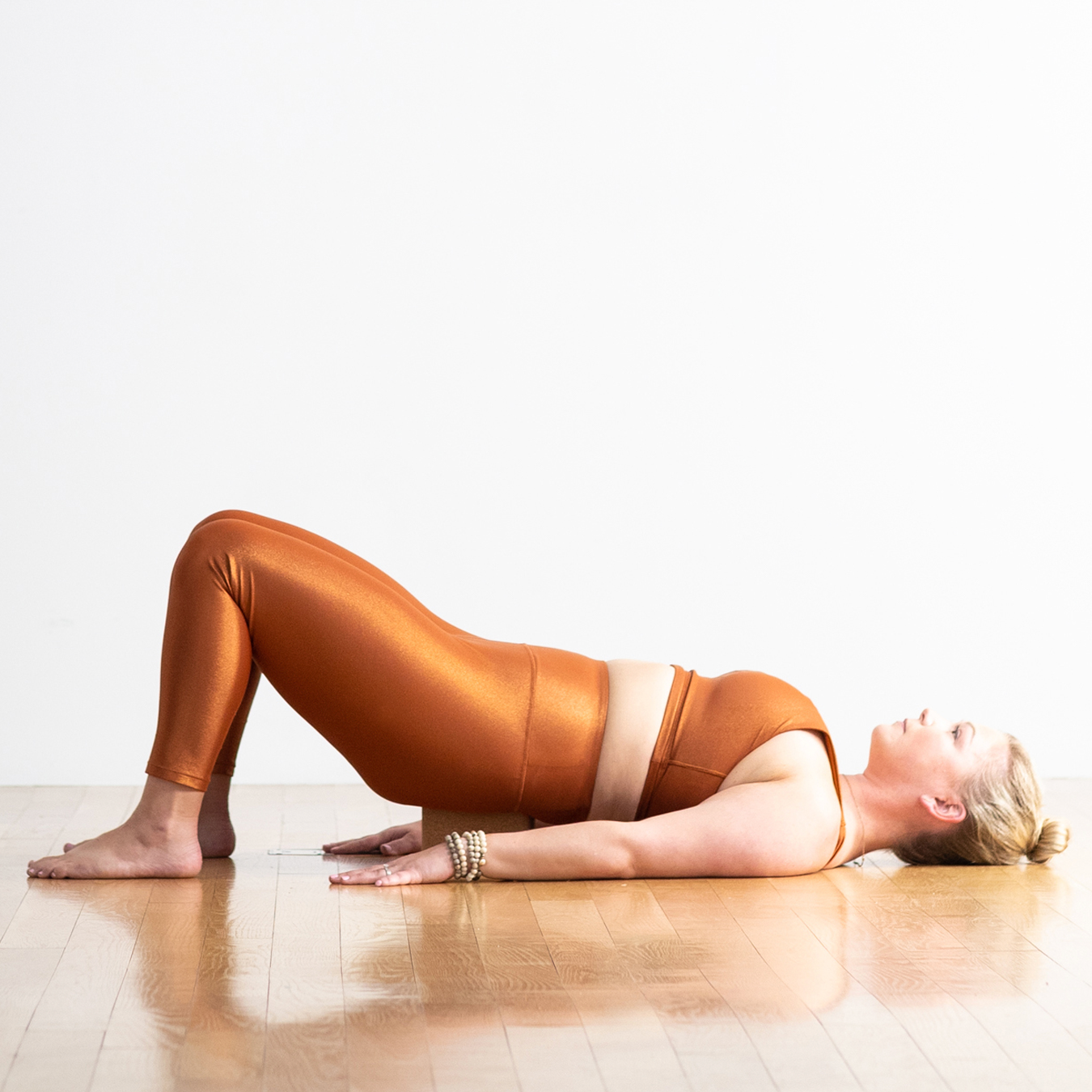
4. Supported Bridge (Setu Bandhasana)
The restorative version of Bridge Pose avoids over-extending the lower back and instead creates a supported way to loosen the surrounding muscles.
How:
- Lie on your back with your knees bent and your feet on the floor, hip-distance apart. Rest your arms at your sides with your palms facing down.
- Inhale and press your feet into the floor as you lift your hips. Place a block or a few pillows under your sacrum and rest your weight on the support. Pull your shoulder blades under you in Bridge Pose. Breathe here for 10-15 seconds.
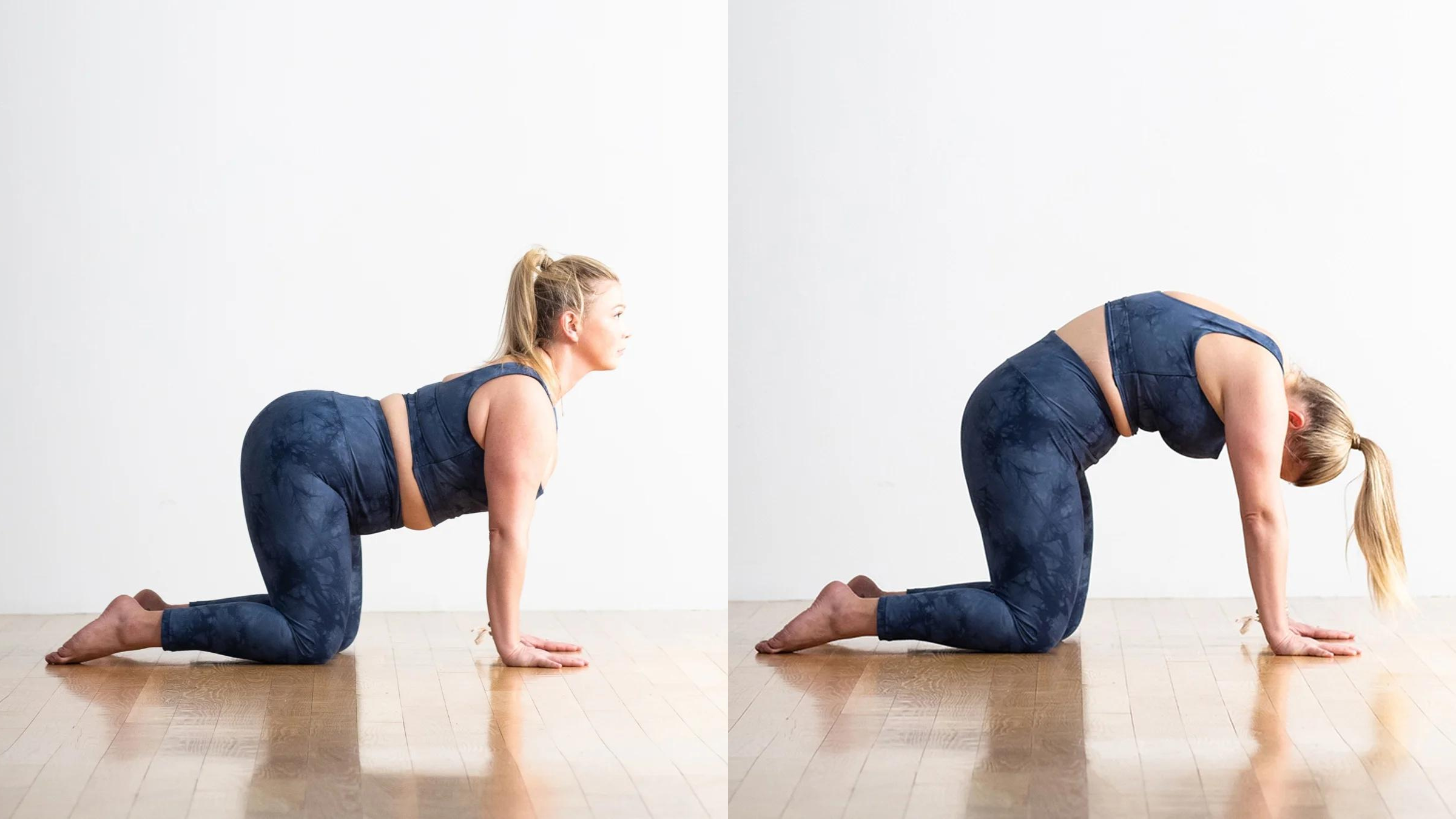
5. Slow Cat Cow (Marjaryasana-Bitilasana)
Taken slowly to the rhythm of breathing, Cat-Cow stimulates mobility in the spine and teaches controlled movements – a valuable lesson to apply outside the mat.
How:
- Come to your hands and knees with your shoulders over your wrists and your hips over your knees.
- As you inhale, lift your chest and arch your back so that your belly drops toward the mat in Cow Pose.
- As you exhale, round your back and pull your chin toward your chest in Cat Pose. Repeat this as often as feels comfortable.
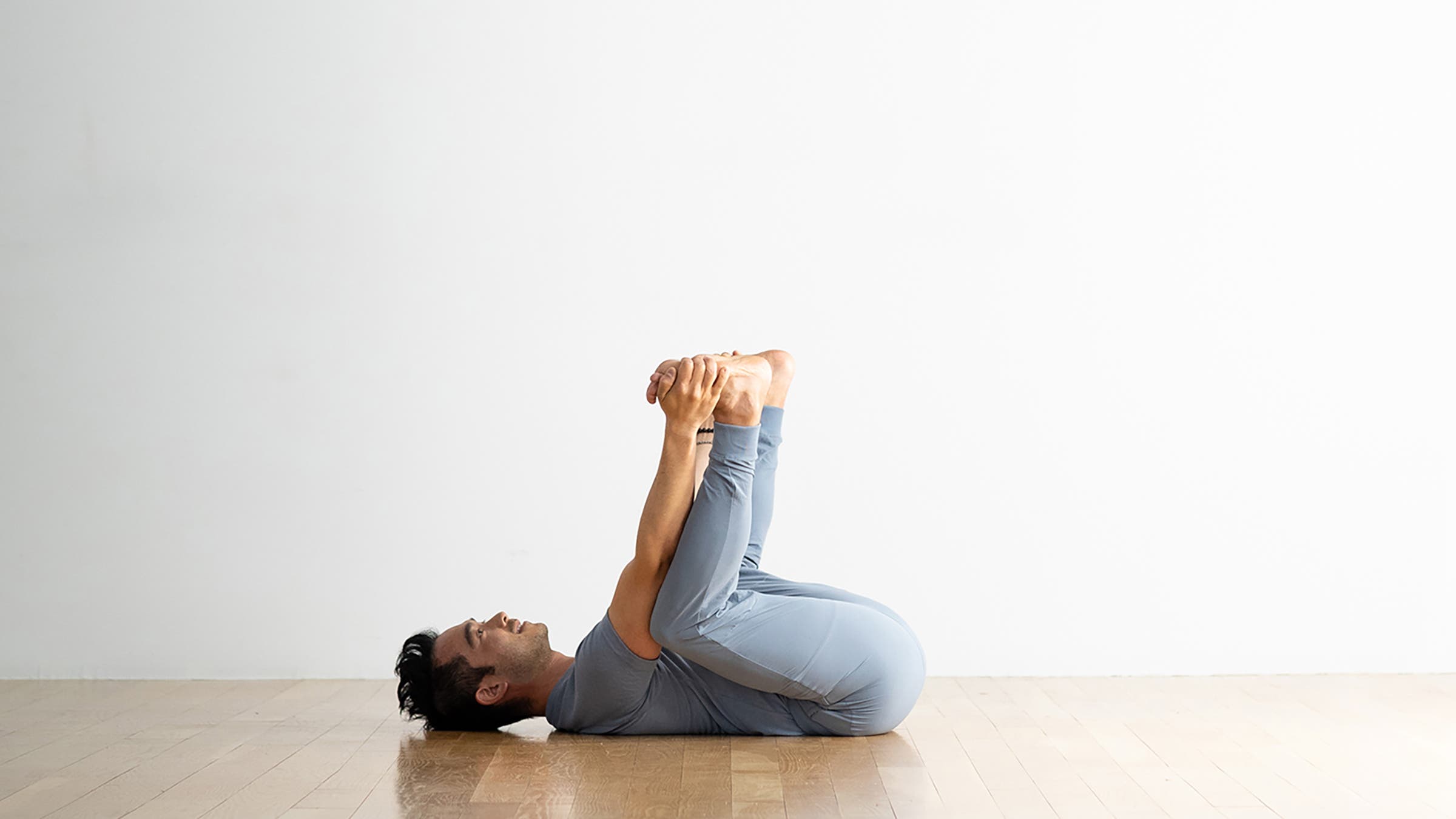
5. Happy Baby (Ananda Balasana)
A hip stretch that encourages the lower back to lengthen, Happy Baby helps balance the body after a long day of sitting or standing.
How:
- Lie on your back. As you exhale, bend your knees and pull your feet toward your stomach.
- Inhale and grasp your outer feet with both hands or loop a strap or strap around each foot. Exhale and open your knees slightly wider than your torso, pulling them toward your armpits. Pull your heels toward the ceiling in Happy Baby Pose. Stay here or rock gently back and forth to massage your lower back. Breathe here.
6. Supported forward fold (Paschimottanasana, restorative variant)
Instead of pushing yourself to the limit, the emphasis here is on surrender. Let the weight of your torso relieve tension in your lower back and hamstrings.
How:
- Sit on the mat with your legs extended in front of you and a rolled-up blanket or towel under your knees so that your legs are bent. Place a pillow or stack of pillows on your thighs.
- Exhale and bend forward from your hips, lowering your chest toward the pillow. Place your hands on the mat on either side of your thighs in a seated forward bend. Breathe here.
7. Supported Pigeon Pose
Extending the hips allows the pelvis to move more freely, reducing the pull on the lower back. Pigeon Pose helps with that. If this feels too intense, try practicing Supine Figure 4 instead.
How:
- Get on your hands and knees. Slide your left knee forward and rest your outer left shin on the floor. Place a block or stack of books under your left hip for the most support. Slowly slide your right leg back and extend your knee behind you. Lift your chest while pulling your right hip slightly forward. Supported pigeon pose. Take a few breaths here, then release and switch sides.
8. Seated Wide Angle Side Bend (Parsva Upavistha Konasana)
As you breathe deeply during this stretch, feel the tension slowly release from those often overlooked side body muscles.
How:
- Sit up straight with your legs spread as wide as is comfortable. Point your toes toward the ceiling.
- Reach your right arm above your head and to the left as you lean your left ribs over your left thigh. Keep both shoulders facing forward. Inhale here and then return to center. Reach your left arm above your head and repeat on the other side.
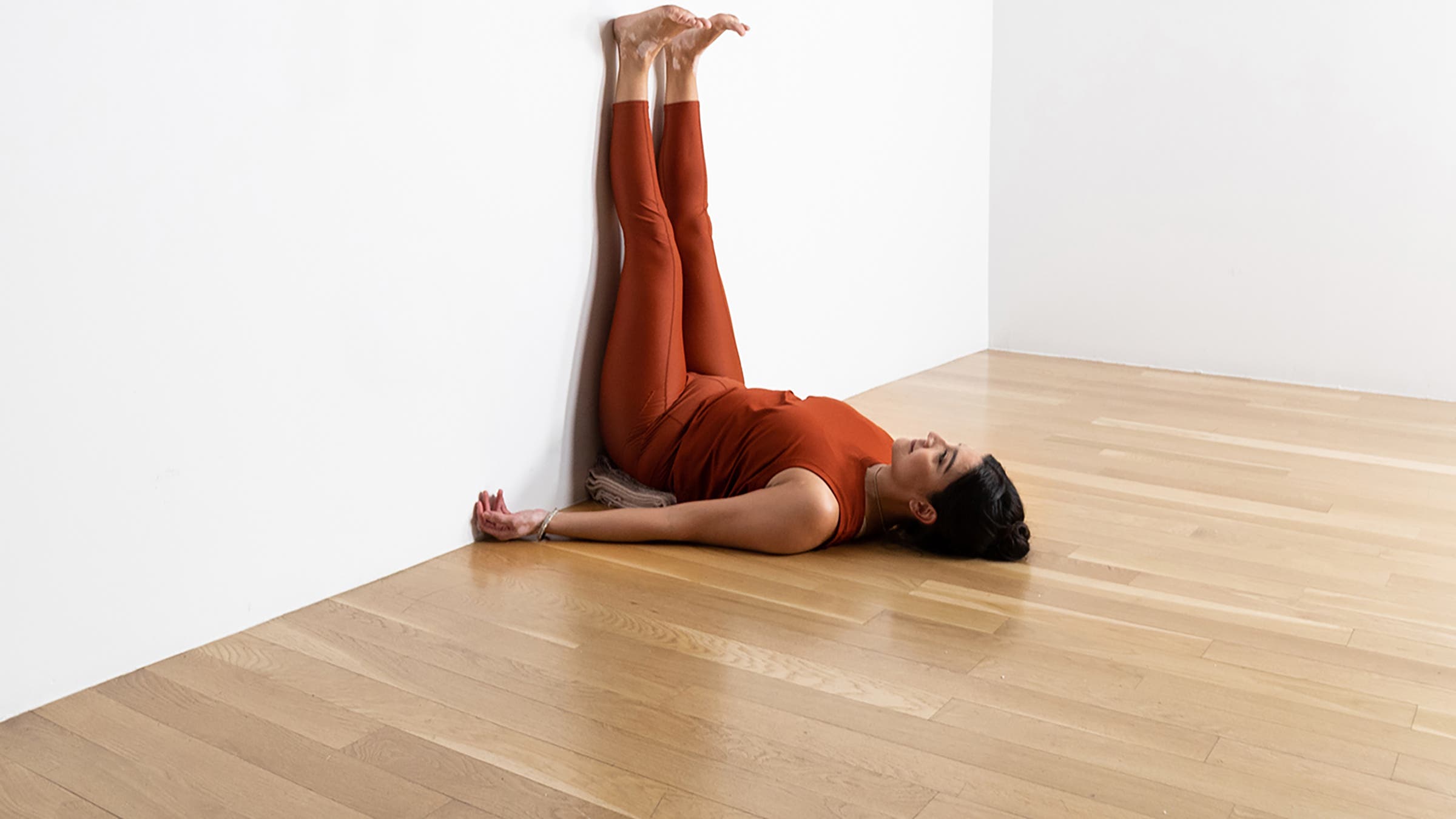
10. Legs against the wall or legs on a chair (Viparita Karani variation)
This gentle inversion allows gravity to do the work of decompressing the spine.
How:
- Sit on the floor with one hip against a wall. Lie on the floor on your other side, then roll onto your back and slowly swing your legs up against the wall. Slide your tailbone towards the wall. (It doesn’t have to touch the wall.) Or sit in front of a chair, lie on your back and rest your calves on the seat of the chair. For support, you can place a folded blanket or towel under your lower back. Place your feet hip-distance apart and rest your legs against the wall or chair. Relax your arms at your sides with your palms facing up in Legs Up the Wall of Chair. Breathe here for a few minutes.
#pain #gentle #stretches #provide #relief