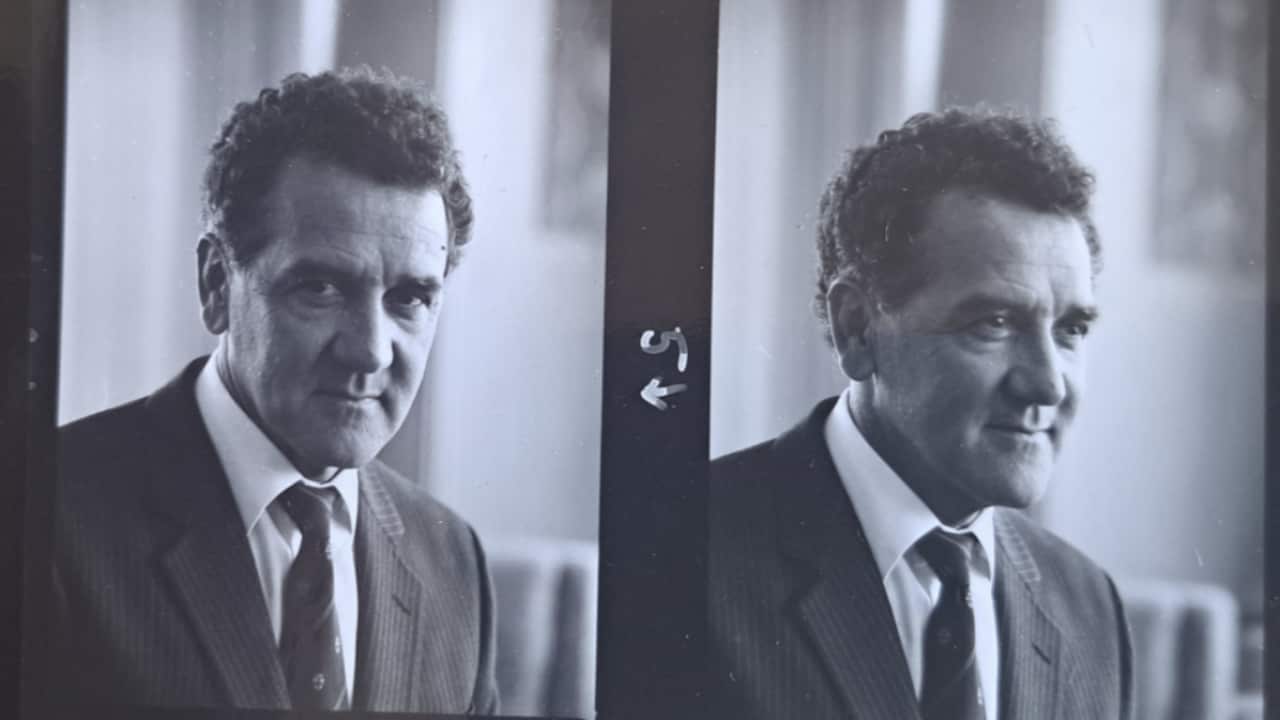
Champion of champions: in memory of Dr. Charles Perkins, 25 years after his death

Champion of champions: in memory of Dr. Charles Perkins, 25 years after his death

5 minutes, 17 seconds Read

This article contains references/and/or images of a deceased Aboriginal person.
Twenty-five years ago today, I worked at the 2000 Summer Paralympics in Sydney with a team of other Indigenous media representatives – an unforgettable moment in our country’s sporting and cultural history.
On the way to Homebush on the morning of October 18, my phone rang.
It was my boss in Canberra with heartbreaking news: Aboriginal leader Dr Charles Perkins had died after a three-month illness.
He asked me to transfer to a hospital in Sydney to help the Perkins family with the wave of media calls and inquiries that were already coming in.

At the time, Perkins was a commissioner on the Aboriginal and Torres Strait Islander Commission (ATSIC), where I worked, although my family had known the Perkins family since the late 1970s.

I met the family at the hospital, took over media requests, and later that day we gathered at their downtown home.
Over the next few hours, scores of friends, extended family, community leaders and people from all walks of life stopped by to offer their condolences and support for his wife Eileen and their children – Hetti, Rachel and Adam.
Perkins’ death headlined national news that day in print, television and radio.
The family decided to make a statement later that afternoon to the increasing number of media outlets now camped outside the family home.
Hetti, Rachel, Adam, and I adjourned the study to draft the words that would be shared publicly.
It was an emotional moment as the family tried to honor their father with dignity while dealing with an overwhelming outpouring of grief and attention from across the country.
How does a short statement summarize his extraordinary life?

Perkins was a fearless spokesperson and renowned activist for Aboriginal rights; many called him Australia’s Nelson Mandela because of his similar struggles against racial discrimination and for civil rights.

The handwritten note prepared by Perkins’ family to announce his death. Credit: Johannes Paulus Janke

He was born on the Alice Springs Telegraph Station Aboriginal Reserve in the Northern Territory in 1936.

At the age of 10 he was sent to a boys’ home in Adelaide, where he completed his education.
Perkins, a talented footballer, played as a professional for the English club Everton.
On his return to Australia he played for Croatian club Adelaide and Panhellenic club Sydney.
While studying at the University of Sydney, Perkins became increasingly active in Indigenous rights issues.
In 1965 he gained fame by leading a group of fellow students at the Freedom ride – a tour of rural NSW centers to highlight the discrimination that existed in many rural towns for Aboriginal and Torres Strait Islander peoples.

Perkins was one of the early leaders for Aboriginal rights and will be best remembered as a leader of the freedom drives of the 1960s.

The Foundation for Aboriginal Affairs in Sydney, in which Perkins played an important role in the 1960s, produced a new generation of Aboriginal activists.
Perkins combined activism and public service into one.
His appointment as the first Indigenous senior executive in the Australian Public Service in the 1970s, his leadership as department head and chairman of the Aboriginal Development Commission in the 1980s, and his work as an ATSIC commissioner all cemented his place at the forefront of modern Australian history.
At the age of 55 he was initiated as Arrernte wadi, a man at the beginning of his journey.
To his children, his bureaucratic achievements spoke for themselves: they wanted their words to focus on the gift of a kidney that would extend their father’s life.
At the time of his death, Perkins was the longest post-transplant survivor in Australia.
With our statement in hand, we walked outside and looked at the large media group that had gathered in front of their house.
Cameras, microphones and reporters filled the street. Aboriginal leader Christine Williams, then vice-chair of ATSIC’s Sydney regional council, spoke first.

Williams reflected on knowing Perkins since she was 11 years old, saying, “He would rummage and pluck some feathers, whatever needed to be done. He was listened to because he said it with a heart and he meant what he said – and he walked alongside his people, not above them.”
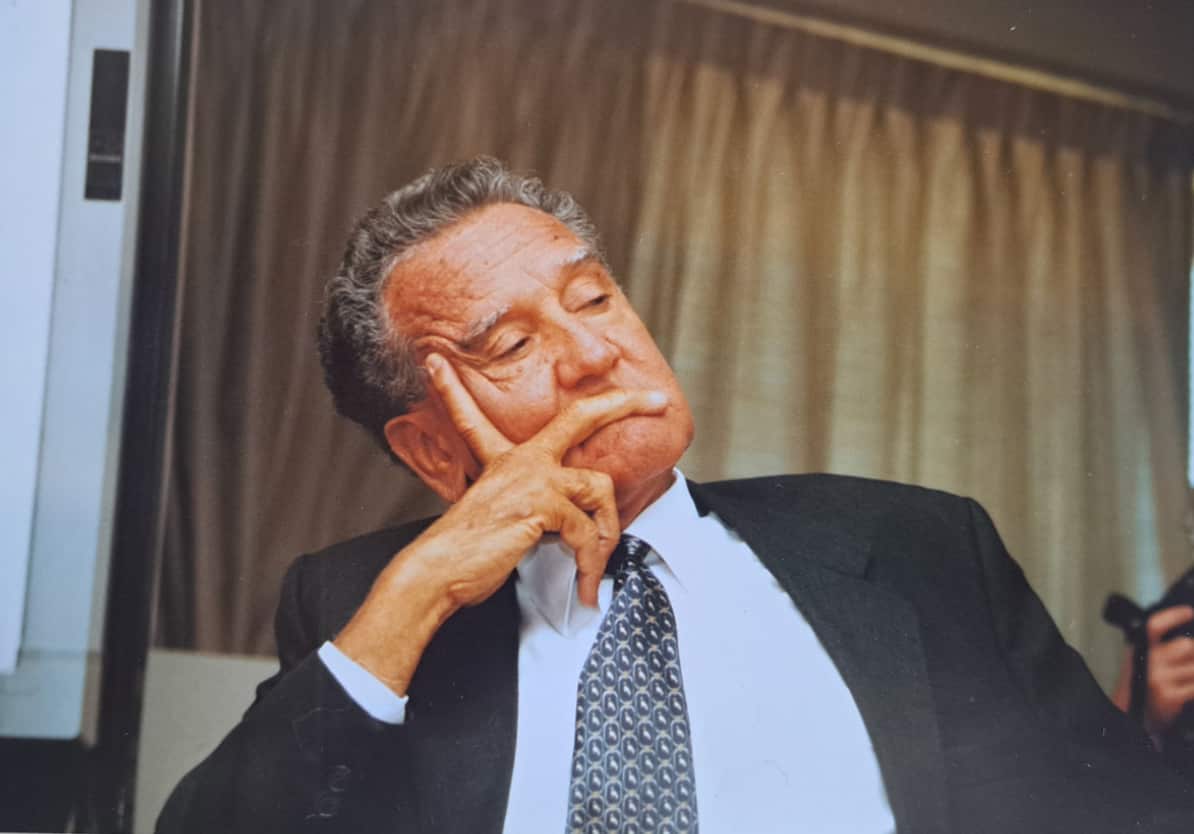
Charles Perkins sits down, wearing a black suit, light blue shirt and tie.

For decades, Charles Perkins combined Indigenous activism and public service into one. Source: Delivered

The Perkins children huddled next to each other – stoic, proud and with quiet strength.

Then his eldest daughter Hetti spoke.
“Dr Charles Nelson Perkins, a man from Arrernte and Kalkadoon, passed away around 10am today from complications related to kidney failure,” she said.
“He was surrounded by his family and friends in Sydney.
“The last thirty years of his life were made possible by a kidney donation. This generous gift enabled him to continue his fight for justice for his people. All Australians can draw strength from his legacy to continue to strive for recognition of the rights of Indigenous people,” she continued.
“Charlie’s spirit remains with us, the Aboriginal and Torres Strait Islander people of Australia,” Hetti concluded.
Cameras flashed as we returned to the house.
To this day, Perkins is still remembered as a man who dedicated his life to achieving justice for Australia’s Aboriginal and Torres Strait Islander people, a renowned activist and a fearless spokesperson; a man who loved his culture and his family.
He has never renounced his beliefs nor compromised them.
He fought tirelessly for indigenous rights, equality and self-determination.
His courage, leadership and vision helped transform Australia’s understanding of justice and reconciliation, leaving a powerful legacy for generations to come.
On the inside of the service booklet of his state funeral was a quote that is still as relevant today.
It said: ‘My expectation of a good Australia is that white people would be proud to speak an Aboriginal language, realizing that Aboriginal culture and everything associated with it, philosophy, art, language, kinship, are all part of their heritage. And that’s the most incredible thing of all: that it’s all there waiting for all of us. White people can inherit 40,000 or 60,000 years of culture, and all they have to do is ask for it.”
These words continue to resonate – a reminder of the lasting impact of Charles Perkins’ fight for equality and justice, and of the unfinished work that still lies ahead.
Dr. Charles Nelson Perkins AO – the champion of champions – was 64 years old.

#Champion #champions #memory #Charles #Perkins #years #death

Similar Posts

Leave a Reply

Your email address will not be published. Required fields are marked *