Ashwini’s biggest concerns today will cost the country ‘billions’ in the future

Ashwini’s biggest concerns today will cost the country ‘billions’ in the future

3 minutes, 34 seconds Read

Less than a third of teens said they feel very excited and hopeful about the next five years, while many worry about the future, according to a report released Monday.
The State of Australia’s Children Report, produced by UNICEF Australia and the Australian Research Alliance for Children and Youth, collected more than 100 data sets and input from at least 2,000 children.
The report also reveals a marked decline in life satisfaction as children get older, with 16- to 17-year-olds reporting lower well-being compared to their 12- to 13-year-old peers.

Other research shows that failing to identify health and development issues in young Australians costs the country $22.3 billion annually.

Concerns about affordability

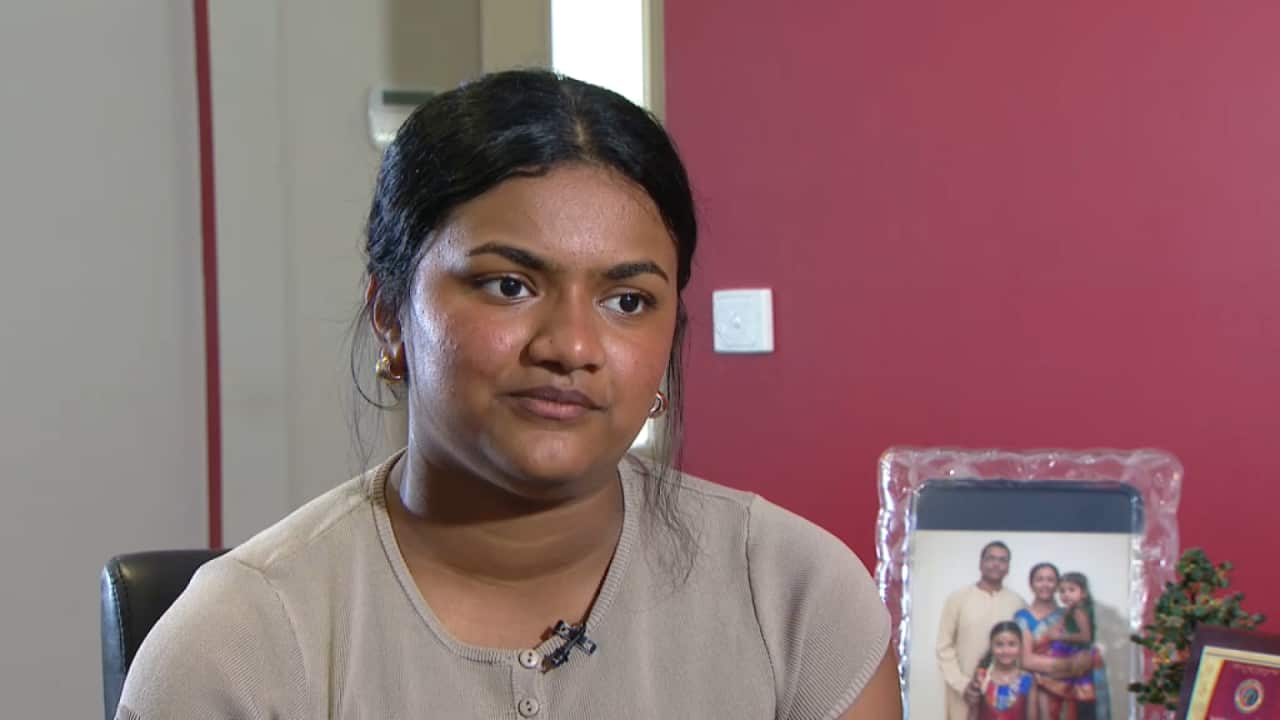
Ashwini Aravinthan, 17, is not just thinking about her high school results. She is also concerned about the rising cost of living in Australia and the need for a good salary to afford a house.
“I think it’s the exposure to all that [social media] information that concerns are certainly increasing,” Ashwini, a young UNICEF Australia ambassador, told SBS News.

“When it comes to final year exams, it’s about college admissions, it’s about, ‘Oh, am I getting a good education that’s going to give me a secure job and financial security?’ Financial security or job security is inextricably linked to housing and affordability as a whole.”

The Sydney Year 12 student said while she and her classmates are stressed about exams, seeing news and social media posts about the housing crisis adds extra pressure to perform well.
Nicole Breeze, lead advocate for children at UNICEF Australia, told SBS News that life is becoming increasingly difficult for young people.
“Children are already facing challenges,” she says.
“We have a growing number of children with caring responsibilities within their families, and children who leave care outside the home are at risk of becoming homeless within a year.”
‘Escalating’ mental health issues and bullying are also challenges.
Also a “worrying trend” is the increasing discrimination children face, she added.
“They talk about experiencing this in relation to their physical appearance, their gender or other aspects of their identity.

“And unfortunately, this experience of discrimination is more pronounced for young Aboriginal and Torres Strait Islander children and also for children and young people with disabilities.”

Key findings

The survey shows that almost one in three adolescents feels very excited and hopeful about the next five years.

Just over half had mixed or uncertain feelings, and 11 percent were worried.

When asked what they think are the biggest challenges their generation will face as they grow up, the biggest concerns were financial security and housing (43 percent), mental health and wellbeing (39 percent) and online safety and the pace of digital change (32 percent).

Source: SBS news

When asked what they would change if put in charge of Australia, 41 percent of children said they would make housing cheaper and easier for young people.

Ensuring that everyone is treated fairly, with respect and equality, regardless of their background, skin color or identity, was a priority for 37 percent of respondents.

Providing more financial support to struggling families and remote communities, and creating safer, violence-free neighborhoods and communities were key concerns for 34 percent and 31 percent, respectively.

Costs of late intervention

Research from the Minderoo Foundation estimates that failing to support young people through adolescence costs the economy billions of dollars every year.
Since 2019, the cost of late intervention has increased from $15.2 billion to $22.3 billion, exceeding inflation and population growth.

This equates to $838 for every person in Australia every year or $2,704 for every child and young person aged 24 or over.

Child protection expenditure is the largest cost item for late interventions for the government, consuming 43 percent of late intervention expenditure, or $10.2 billion per year.
This is followed by expenditure on youth crime and youth unemployment.
“The science is unequivocal: the first five years determine a lifetime,” says Nicola Forrest, co-founder of the Minderoo Foundation.
“These years are fleeting, yet too many children go to school without the foundation they need.”
Ashwini would like to see young people consulted more often when it comes to policy decisions.
“We have our own special needs and desires, but inevitably, like much of the population, we want an affordable life, one that we can enjoy and look forward to in the future.”
Additional reporting by the Australian Associated Press.

#Ashwinis #biggest #concerns #today #cost #country #billions #future

Similar Posts

Leave a Reply

Your email address will not be published. Required fields are marked *