

You’ve no doubt read the science and heard the warnings from seemingly everyone, whether TikTokkers or your exercise-obsessed friend, about how essential it is to practice strength training. And chances are, the areas you neglect most include arm-strengthening exercises and core workouts. This type of resistance training not only has benefits that relate to both daily functionality and athletic performance research suggests it can literally extend your lifespan.
So in theory, it certainly makes sense to make time to exercise every day. In reality, though, you’ll barely manage to do the other essentials on your endless list of must-dos, let alone make time for an hour-long yoga class at the studio or a weight-lifting session at the gym.
There is a compromise. Whether you’re a workout novice, an avid yoga goer, or an athlete in training, you can easily incorporate more physical activity into your lifestyle. And that’s by incorporating a few simple poses that take less than 10 minutes into your routine. The magic of these arm-strengthening exercises lies not only in the poses themselves, but also in the transitions between them, which effectively target your triceps, deltoids and rotator cuff muscles in the shoulders, as well as your forearm and biceps. Perhaps the most important benefit of the specific arm-strengthening exercises that follow is that they also target and strengthen your underused core stabilizing muscles. That’s the kind of multitasking we support.
7 arm strengthening exercises from yoga
If you have ten minutes to spare, practice these poses in a short, repetitive series. If you have a minute or two to spare between your other responsibilities, meetings, or adulting, sneak in one or two poses at a time. You can lower yourself to the mat at any time for a break in Child’s Pose.
The specific sequence is based on what is commonly referred to in yoga classes as a ‘vinyasa’ and partly constitutes the Sun Salutation A sequence, with some variations and additions for greater degree. But here you’re asked to slow it down and emphasize the strengthening aspect of each pose. Discover how different it feels when you’re asked not to rush through each pose. Don’t forget to breathe.
1. Plank pose
This strengthens the triceps, biceps, shoulders and chest. You want your body to be in a nice straight line, from the top of your head to your heels. Don’t let your hips sink or rise above the rest of your body.
How: Start in Plank Pose with your shoulders stacked over your wrists, your toes pressed into the mat and your feet hip-width apart. Reach your heels toward the wall behind you and pull your belly button toward your spine. Continue breathing as you hold this position for 20 seconds.
2. Chaturanga
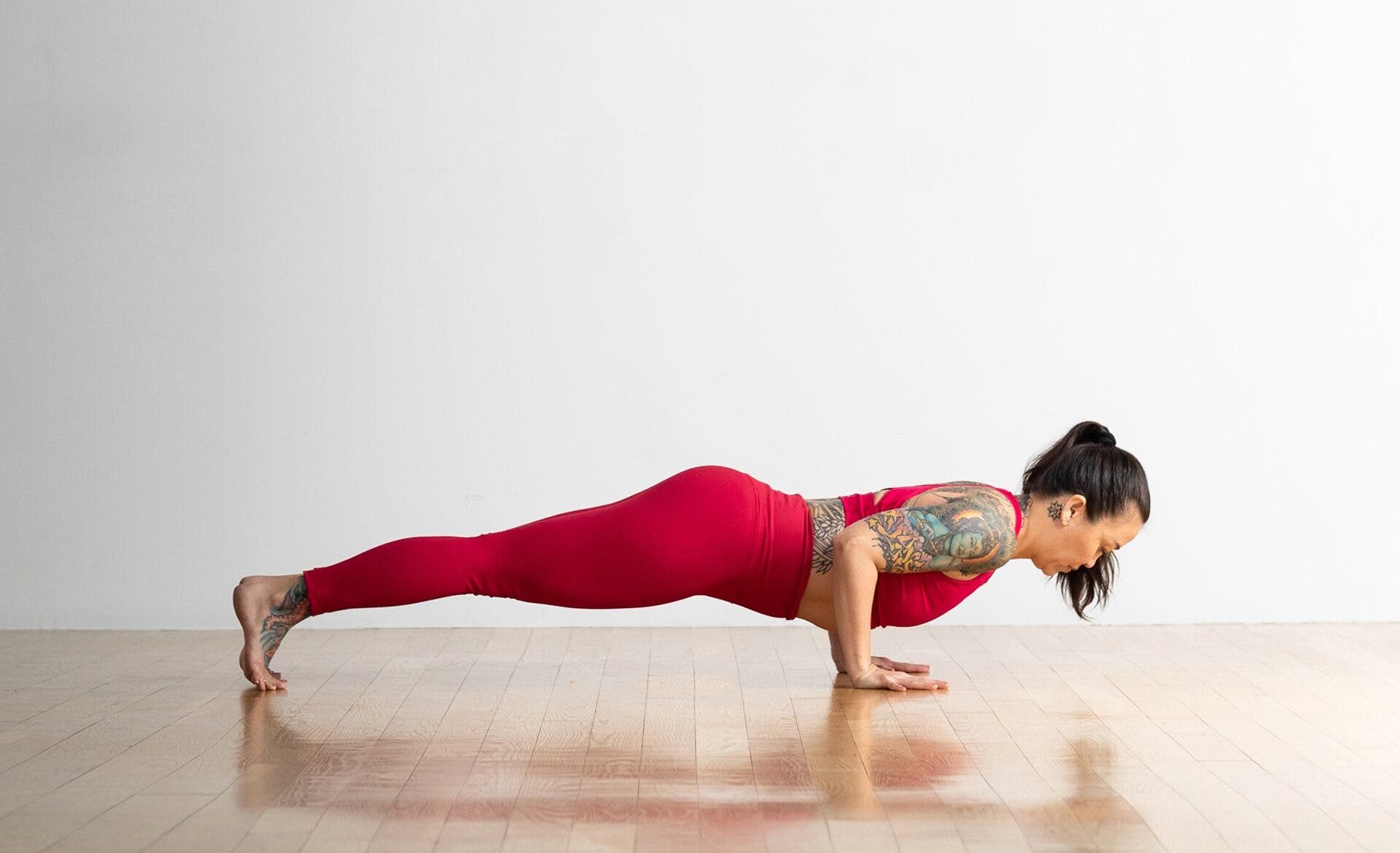
Essentially, nothing changes about your Plank other than bending your elbows.
How: From Plank Pose, transition into Chaturanga by exhaling as you bend your elbows and hug them to your sides. Lower your chest toward the mat, but not all the way down. Remember to keep your body in a straight line in Chaturanga. You will feel this in your triceps and deltoids. Continue to push through your heels as you stay here for another 20 seconds.
3. Cobra pose
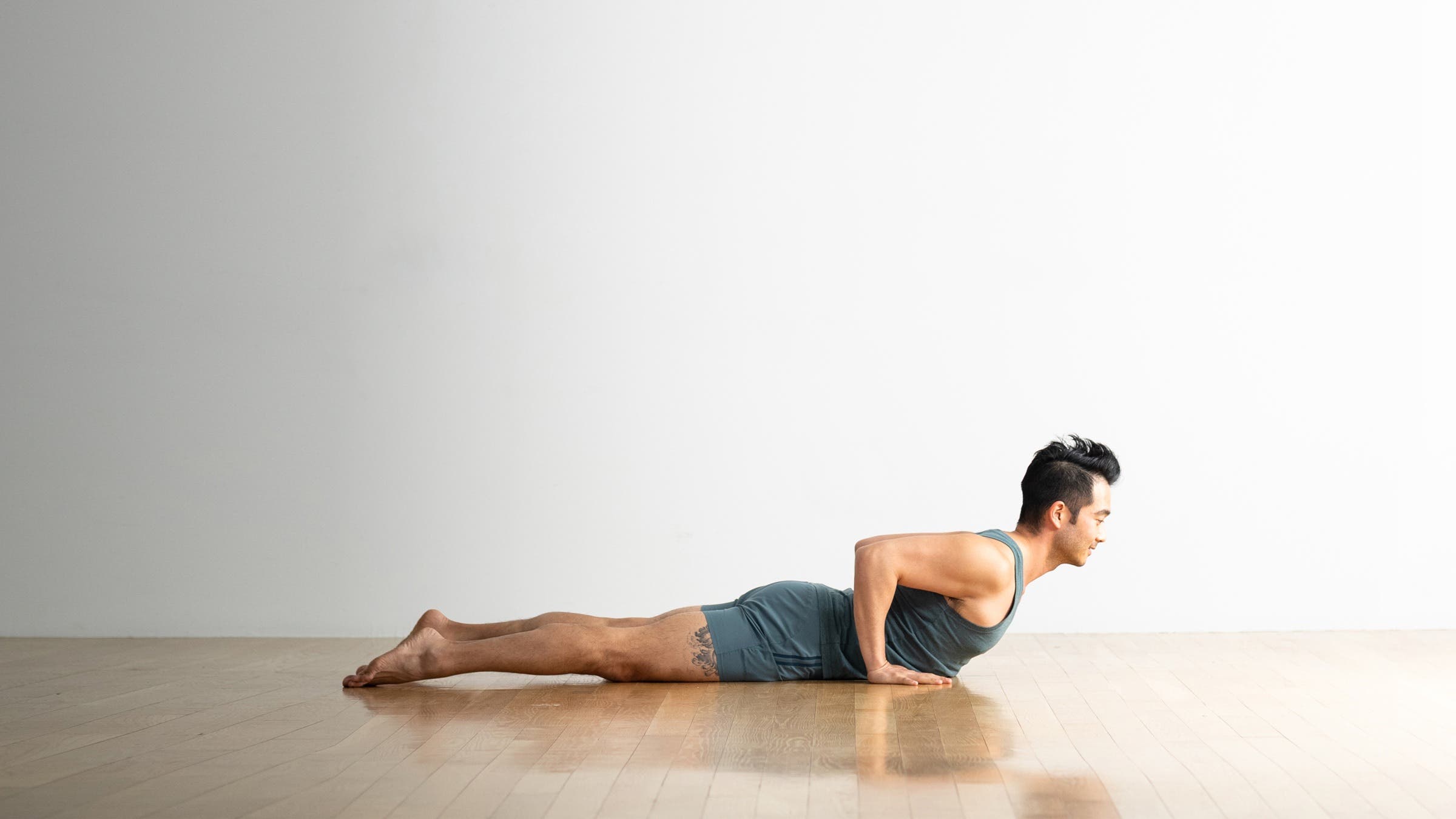
Normally this yoga sequence transitions from Chaturanga to Upward-Facing Dog. But during a quick 10-minute yoga workout, most of us aren’t warmed up enough to do such a dramatic backbend and chest stretch. Try Cobra. It’s a great intermediate position that still works the triceps while giving your spinal muscles and ligaments time to prepare for a greater range of motion.
How: From Chaturanga, lower yourself all the way to the mat. Release your toes, press the tops of your feet into the mat and pull your hips forward until your knees are slightly raised. Simultaneously press your palms into the mat as you roll your shoulders back and your shoulder blades together in Cobra Pose. You should feel the biceps and anterior (anterior) deltoids engage. Breathe here for 20 seconds.
4. Upward Facing Dog Pose
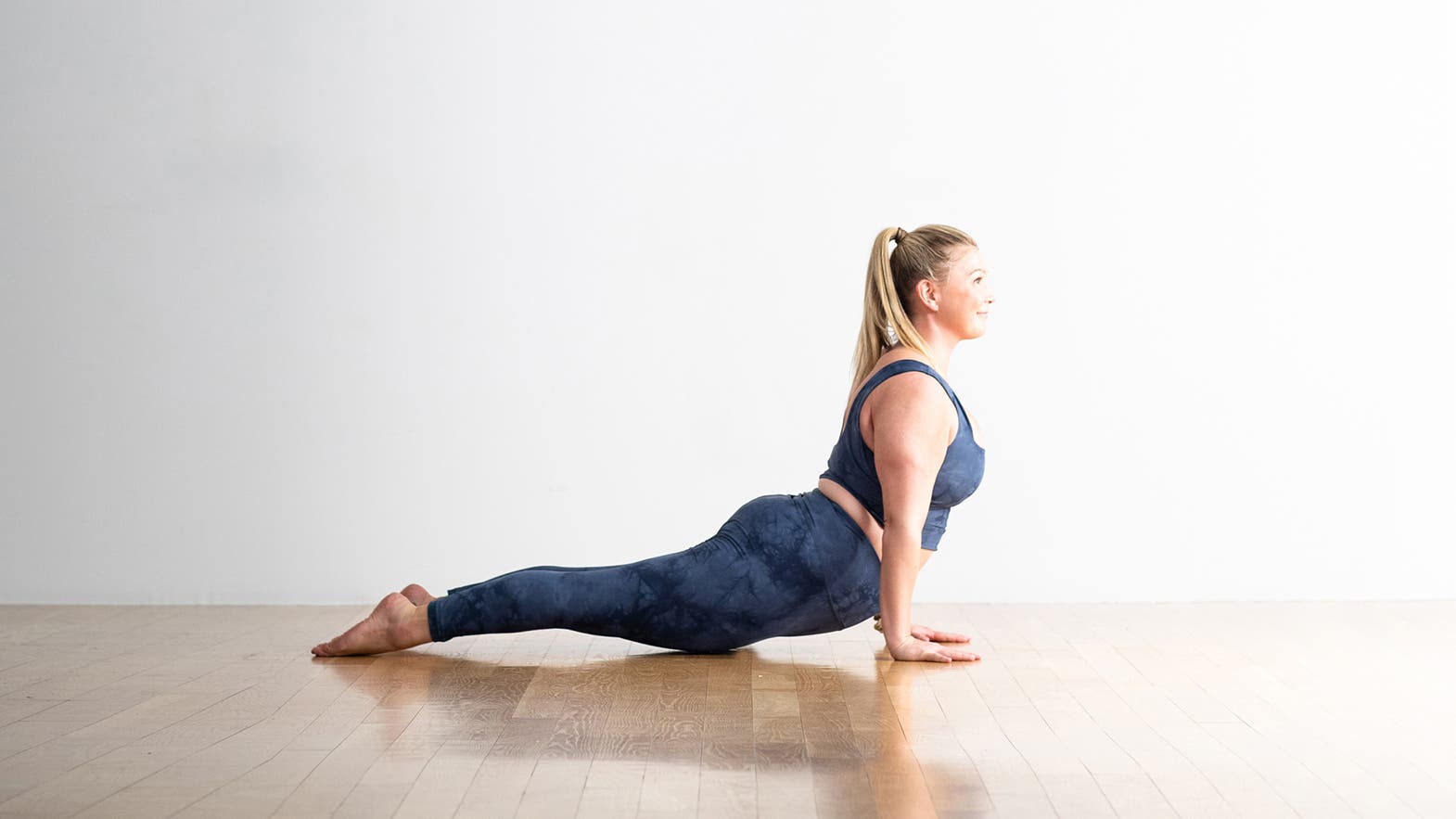
If you’re practicing these poses back to back, start with a few Cobra poses and then switch to this more intense backbend.
How: From Chaturanga, straighten your arms and lift your chest as you roll onto the tops of your feet or place the tops of your feet against the mat one at a time in Upward-Facing Dog. Your hips remain lifted off the mat and you feel your triceps and shoulder muscles tense (and possibly shaking!). Breathe here for 20 seconds.
5. Downward Facing Dog Pose
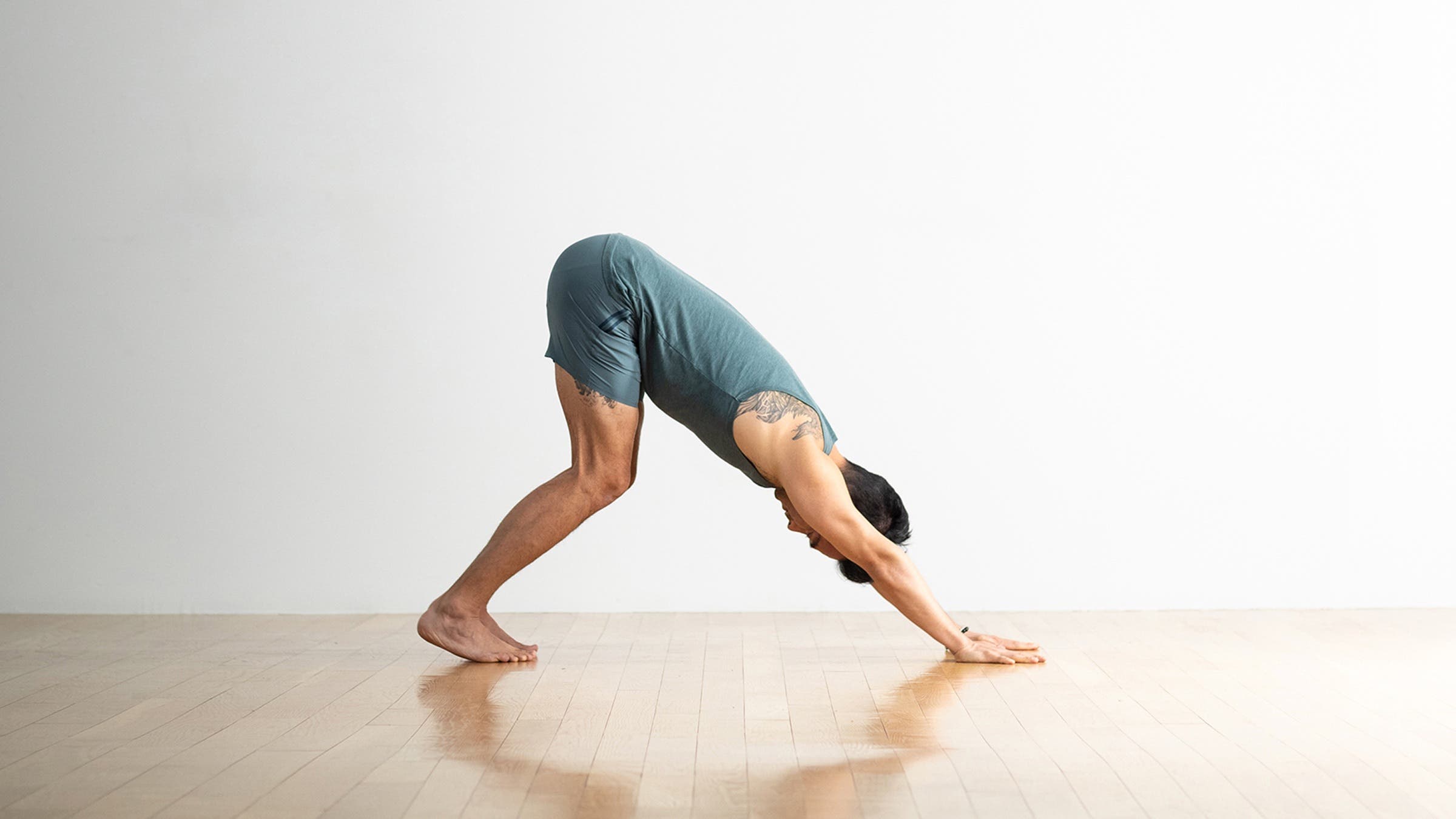
Getting into this pose, either as part of the sequence or simply by kneeling, activates your triceps. As you get into Down Dog shape, try making an upside-down letter V. Keep a straight line from your buttocks to your head and arms, and another straight line from your buttocks to your heels.
How: Place your hands in the mat, spread your fingers wide and lift your hips up and back into downward-facing dog. Press your heels toward the mat, even if they don’t touch each other. If your hamstrings or Achilles tendons feel tight, bend the knee slightly or use a yoga block under each hand. Hold the pose, but not your breath, for 20 seconds.
6. Side plank pose
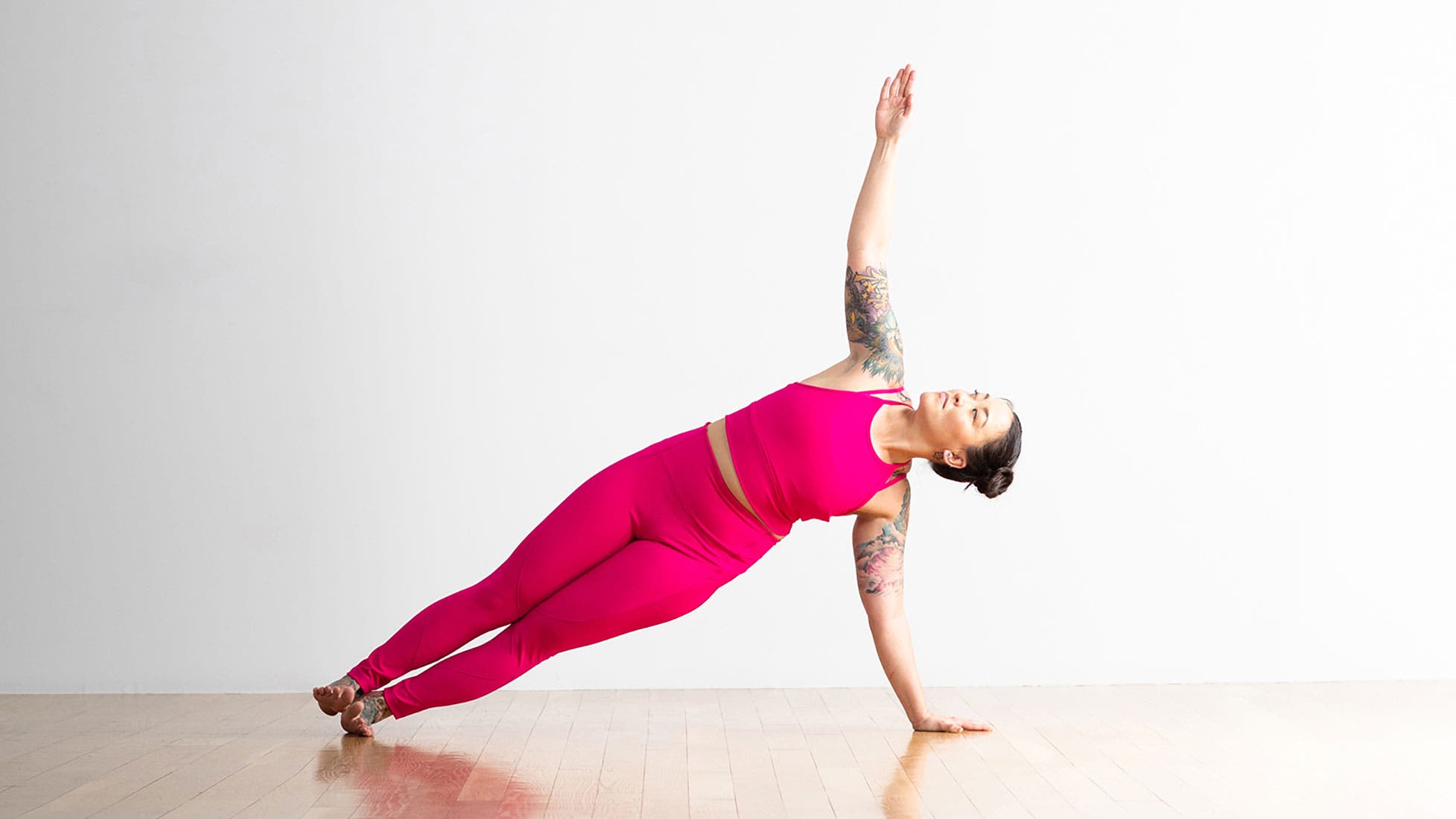
When you get into Side Plank Pose (Vasisthasana), the shoulder and core muscles are challenged to support your body on a different plane. Because you rely on one arm at a time, you effectively double the usual resistance of most arm balancing poses.
How: From Downward Facing Dog, walk your hands forward into Plank Pose. Shift your weight to the right side of your body and press your right hand firmly into the mat to activate the muscles of your upper body. Roll onto the outside edge of your right foot and stack your left foot on top of your right foot or spread your feet by placing your left foot slightly in front of the right foot. Reach your left hand toward the ceiling in Side Plank.
Engage your glutes and core to maintain your alignment. Pull your shoulder blades down to help tighten your shoulders and triceps. Breathe here for 20 seconds.
Return your left hand to the mat in a controlled manner, while also placing your left foot back, hip-distance away from your right foot, in Plank Pose. This transition involves your shoulder girdle and triceps. Switch to the side plank on the other side. Then come back to Plank and lower your knees to the mat to rest or take yourself through the final pose.
7. Upward or reverse plank
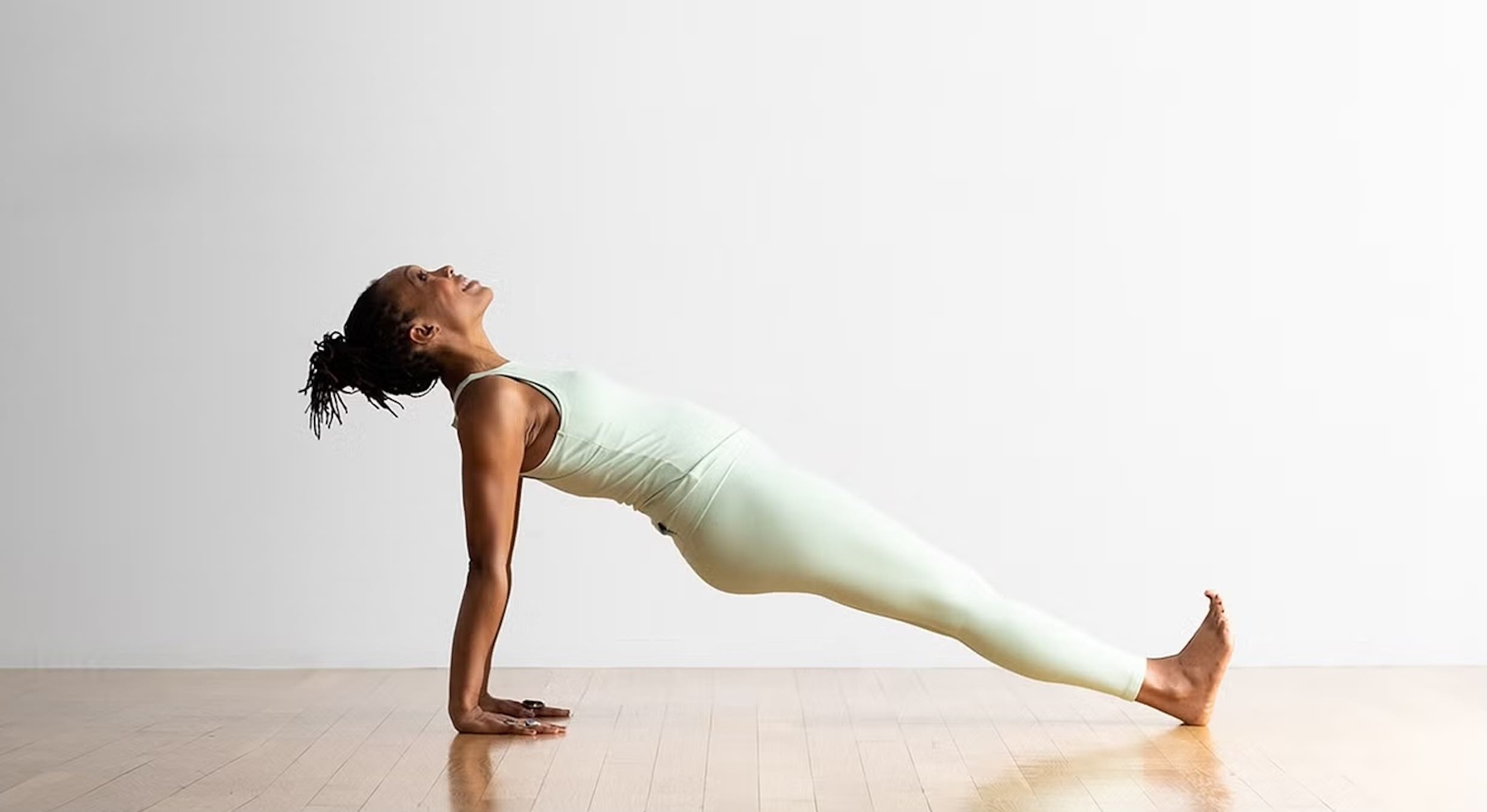
Reverse Plank is an often overlooked but fantastic pose for strengthening the arms, shoulders, back and glutes. It’s the final pose in your yoga arm-strengthening workout sequence.
How: Sit on the mat with your hands behind you, fingers pointing toward you and your legs straight in front of you. Press into your hands and point your toes as you lift your hips into the reverse or upward plank. You want to create a straight line with your body. Keep your chin slightly tucked in to keep your neck in line with your spine. Tighten your glutes and pull your shoulder blades together.
Continue to contract the muscles along the back of your body, as well as the triceps, shoulder muscles, forearm muscles, and wrist muscles as you hold this position for 20 seconds.
Slowly lower yourself to the mat. You can call it done or you can go through the series of arm-strengthening exercises again, resting yourself and your arms as needed.
For more short but effective yoga workout ideas, check out our 10-minute yoga workout for core strength here.
#Essential #ArmStrengthening #Exercises #Work #Core